All Articles

Salamis City, Cyprus

Salamis City, Cyprus

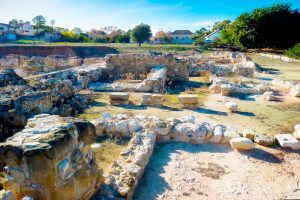
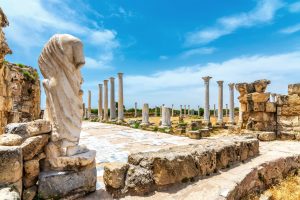
Salamis stands as one of the most important archaeological sites on the island of Cyprus. Located on the eastern coast near modern Famagusta, this ancient city flourished for over 1,800 years before nature forced its abandonment. The ruins spread across one square mile along the coast, offering visitors a remarkable glimpse into ancient Mediterranean civilization. cyprusparadise.com According to Greek legend, Salamis was founded by Teucer, son of King Telamon. After the Trojan War ended, Teucer could not return home because he failed to avenge his brother Ajax. Banished by his father, Teucer sailed to Cyprus and established a new city named after his birthplace, the island of Salamis near Athens. Archaeological evidence dates the earliest settlement to the 11th century…

Read more
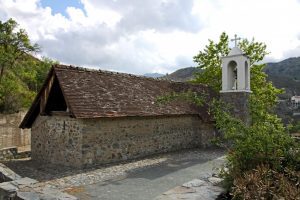
Church of Stavros tou Agiasmati Wall Painting

Church of Stavros tou Agiasmati Wall Painting

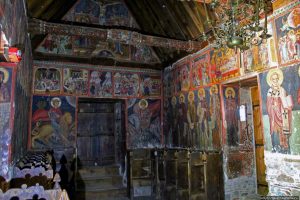
The Church of Stavros tou Agiasmati, situated in the Troodos Mountains near the village of Platanistasa, is one of the monuments included in the UNESCO World Heritage group known as the Painted Churches of the Troodos Region. Dating to the late 15th century, the church represents a mature phase of Cypriot ecclesiastical art during a period of political change and cultural interaction. Its decoration is attributed to the painter Philip Goul, a master whose work reflects the continued vitality of Orthodox artistic traditions under Venetian rule. The church’s importance lies in the completeness and narrative richness of its fresco cycle, which preserves a vivid visual expression of late medieval theology and devotion. ayda-ru During the 15th century, Cyprus stood at…

Read more
Church of the Transfiguration in Palaichori

Church of the Transfiguration in Palaichori

Church of the Transfiguration in Palaichori is a 16th-century Byzantine chapel in Cyprus's Troodos Mountains, renowned for its post-Byzantine frescoes that illustrate the persistence of Orthodox artistic traditions under foreign rule. Part of the UNESCO-listed Painted Churches, it preserves vivid paintings blending theological narratives with symbolic depth, reflecting medieval devotion in a rural setting. This site captures how faith endured and adapted, offering insights into Cyprus's cultural resilience amid external influences. sobory-ru A Testament to Enduring Faith in the Mountains The Church of the Transfiguration exemplifies the resilience of Byzantine religious architecture in Cyprus's highland regions, dedicated to Christ's Transfiguration - a pivotal event symbolizing divine glory and human potential for spiritual elevation. Situated in Palaichori village at an elevation…

Read more
Cyprus E4 Trail – Europe Long Distance Route

Cyprus E4 Trail – Europe Long Distance Route

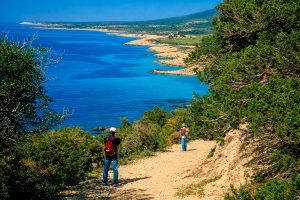
The E4 European Long Distance Path stretches over 10,450 kilometers from Tarifa in southern Spain to Cyprus, making it one of the most ambitious hiking routes in the world. The Cyprus section was added to the route in 2005 following a proposal by the Greek Ramblers Association to the European Ramblers Association. The trail connects Larnaca and Paphos international airports across approximately 540 to 660 kilometers depending on the route taken. The path crosses Spain, France, Switzerland, Germany, Austria, Hungary, Serbia, Bulgaria, Greece, and Crete before reaching Cyprus as its final destination. The Cyprus segment traverses the Troodos mountain range, the Akamas Peninsula, and long stretches of countryside through regions of exceptional natural beauty and ecological importance. Cyprus became only…

Read more
Cyprus Mining Museum Skouriotissa

Cyprus Mining Museum Skouriotissa

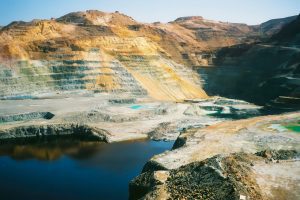
The Museum of Mining Heritage in Katydata village tells the story of Cyprus through its most defining resource: copper. Located near the Skouriotissa copper mine, the oldest continuously operated copper mine in the world, this small museum preserves the island's 4,000-year relationship with the metal that gave Cyprus its name. The museum sits in the centre of Katydata village, next to the Community Council office. The village lies approximately 13 kilometres from Astromeritis, positioned in the Solea Valley where Cyprus's richest copper deposits concentrate. The Community Council and Emigrants Association of Katydata created the museum to document the mining heritage that shaped their region and connected Cyprus to ancient Mediterranean civilizations. Inside the Mining Caverns The first hall recreates the…

Read more
Cyprus Biodiversity Protection

Cyprus Biodiversity Protection

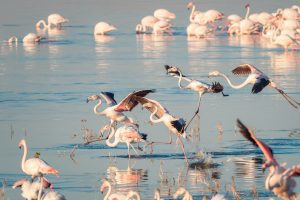
Cyprus holds exceptional biological diversity for an island of its size. The island hosts approximately 1,800 plant species, with 143 endemic taxa found only in Cyprus. Among animals, the island supports 385 bird species, 21 mammals, 24 reptiles, and 3 amphibians. Over 5,000 insect species have been documented. This diversity results from Cyprus's unique position at the crossroads of Europe, Asia, and Africa, combined with varied climate conditions and dramatic elevation changes from sea level to the 1,952-meter peak of Mount Olympus in the Troodos Mountains. The island's geological history as an uplifted oceanic plate rather than a continental fragment also contributed to the evolution of distinctive species. This combination of geographic isolation, habitat variety, and ancient history created conditions…

Read more
Kition Cyclopean Walls

Kition Cyclopean Walls

The Cyclopean Walls and Temple Complex of Kition represent one of Cyprus's most important archaeological landmarks, where monumental architecture, urban planning, and cultural traditions converged within one of the island's earliest city centers. Located in present-day Larnaca, ancient Kition was one of Cyprus's ten city-kingdoms and developed into a major center of trade, industry, and cultural exchange from the Late Bronze Age onward. The complex is characterized by its imposing defensive walls, constructed from enormous limestone blocks, which enclosed a series of ceremonial and administrative buildings associated with the Phoenician population that settled in the city. Archaeological evidence links several of these structures to figures prominent in Phoenician cultural traditions, including Astarte and Melqart. Serving the Phoenician community that became…

Read more
Coral Bay Beach, Paphos, Cyprus

Coral Bay Beach, Paphos, Cyprus

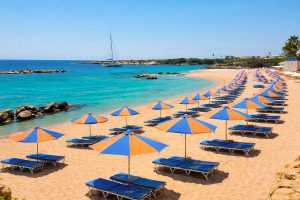
The beach stretches approximately 500 meters along a horseshoe-shaped bay. Two limestone headlands flank the shoreline and create natural protection from strong winds and waves. This geographical formation keeps the waters remarkably calm even when other beaches experience rough conditions. The sand at Coral Bay is fine and golden, considered among the best examples of sandy beach terrain in Cyprus. Unlike many Mediterranean beaches that feature pebbles or coarse sand, Coral Bay offers soft sand that remains comfortable for barefoot walks and beach activities. The waters are shallow and clear enough to see the seabed, which makes the beach particularly suitable for children and less confident swimmers. Cyprus recognized Coral Bay as its ninth plastic-free beach, part of a broader…

Read more
Cave of the 40 Martyrs Troodos

Cave of the 40 Martyrs Troodos

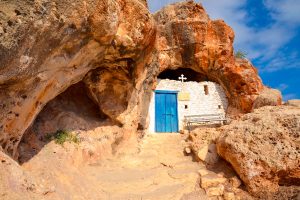
Hidden in the hills near Protaras, the Cave of the 40 Martyrs is a small chapel carved into limestone rock. This place brings together ancient faith, natural geology, and centuries of devotion in one simple, quiet space. The cave church, known locally as Ayioi Saranta, sits in a natural limestone formation on Fanou Hill. The name translates to the Forty Saints, a direct reference to the 40 Martyrs of Sebaste. This is not a grand cathedral with ornate decoration. It is a cave with a white wall, a blue door, and a stone dome above. Inside, rough rock walls hold a few icons and candles. The floor was paved, but otherwise the cave remains much as nature formed it. The…

Read more