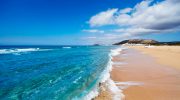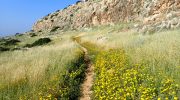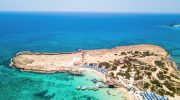
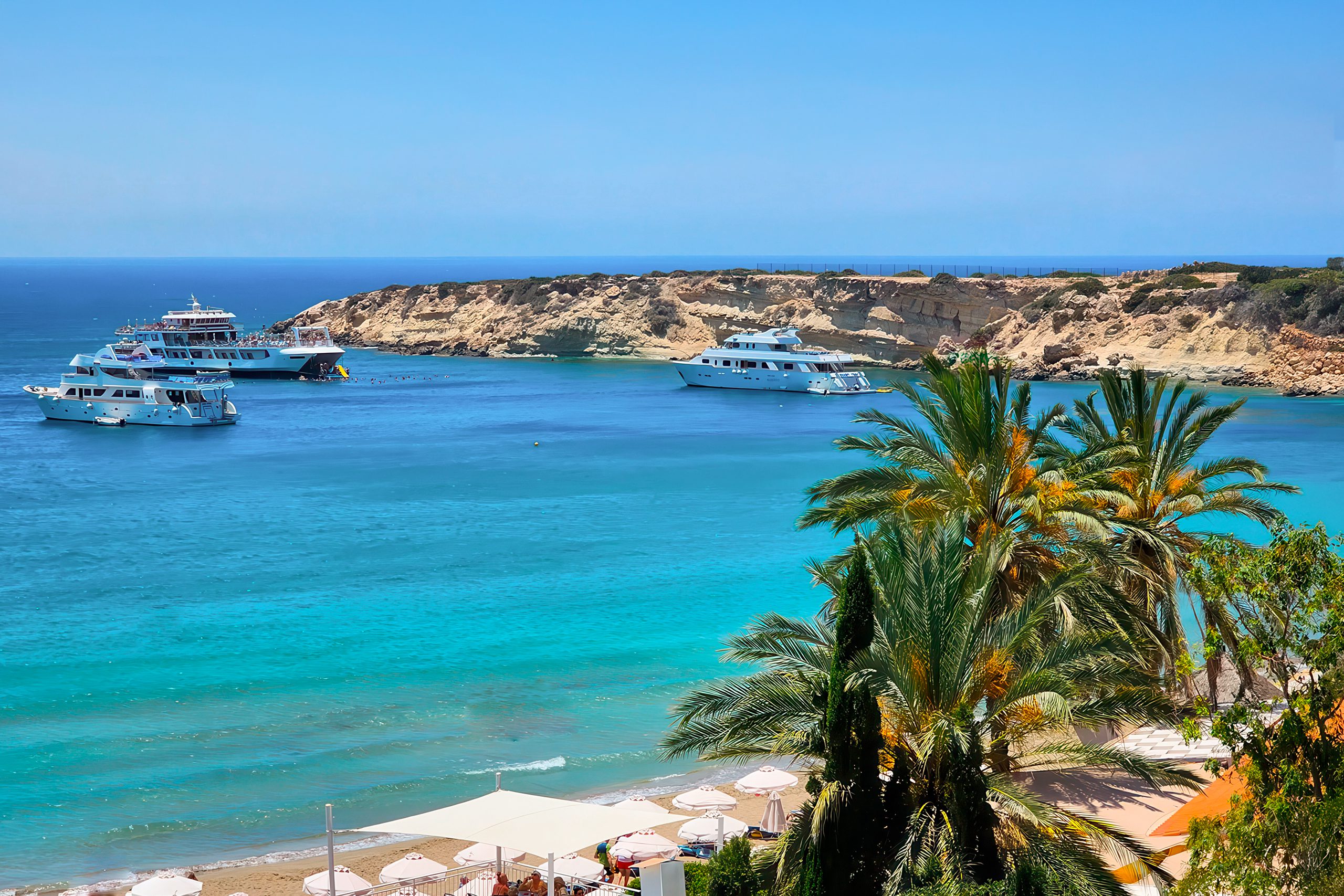
The beach stretches approximately 500 meters along a horseshoe-shaped bay. Two limestone headlands flank the shoreline and create natural protection from strong winds and waves. This geographical formation keeps the waters remarkably calm even when other beaches experience rough conditions.
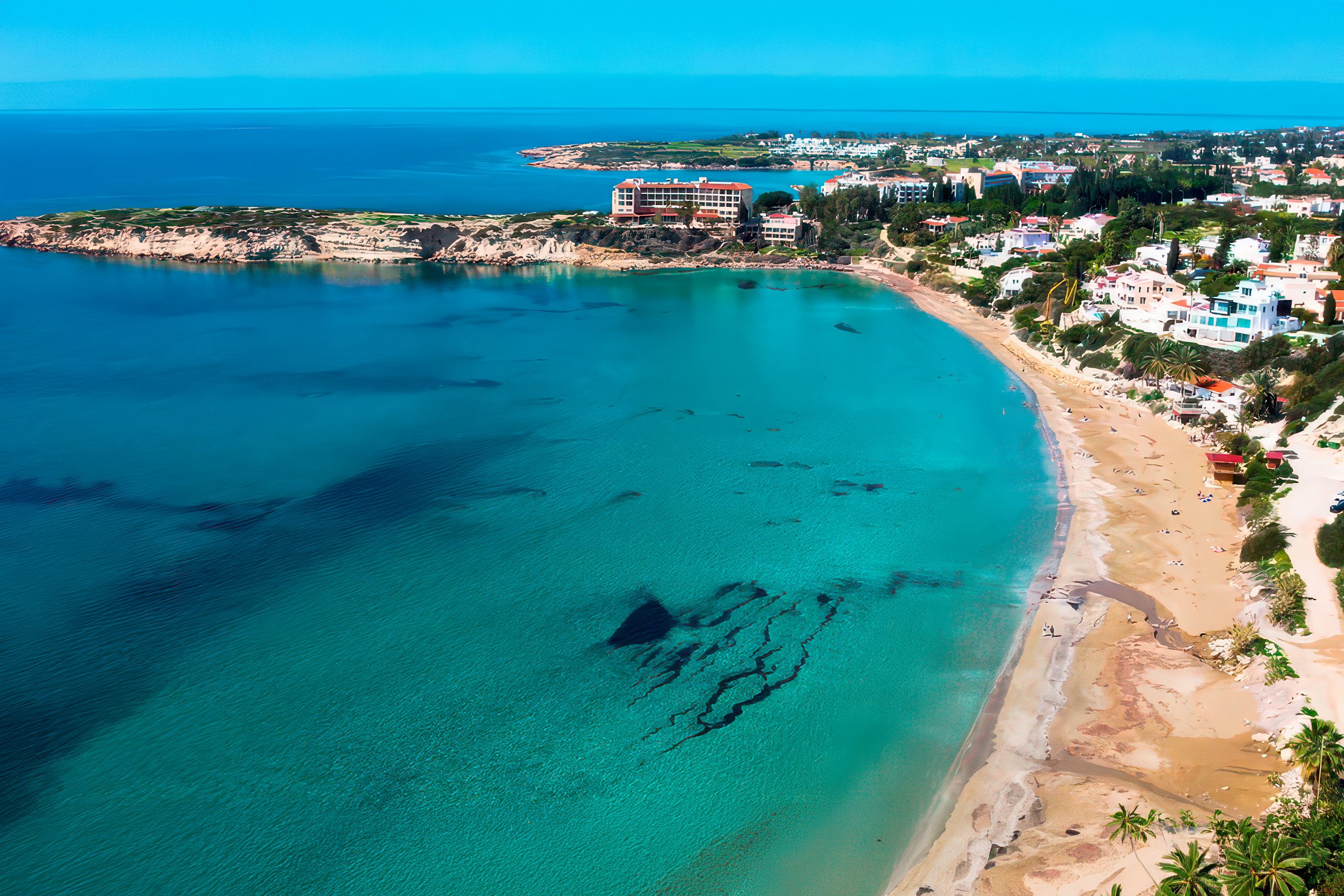
The sand at Coral Bay is fine and golden, considered among the best examples of sandy beach terrain in Cyprus. Unlike many Mediterranean beaches that feature pebbles or coarse sand, Coral Bay offers soft sand that remains comfortable for barefoot walks and beach activities. The waters are shallow and clear enough to see the seabed, which makes the beach particularly suitable for children and less confident swimmers.
Cyprus recognized Coral Bay as its ninth plastic-free beach, part of a broader environmental initiative to reduce plastic waste along the island’s coastlines. This designation reflects ongoing efforts to maintain the beach’s natural beauty and protect marine ecosystems.
Historical Background
At the northern end of Coral Bay sits the Maa-Paleokastro archaeological site, where the first Mycenaean Greeks settled in 1200 BC. These settlers arrived on Cyprus after the fall of the Mycenaean kingdoms in mainland Greece. The site marks the beginning of the Hellenization of Cyprus, the process through which Greek language and culture spread across the island.
The settlement takes its name from its imposing defensive walls, which were always visible and gave rise to the name Paleokastro, meaning “old castle” in Greek. The fortifications consist of two separate Cyclopean-style walls. The first wall protected the settlement from land-based threats, while the second offered defense from the sea. This dual protection system demonstrates the strategic importance settlers placed on this location.
Excavations at Maa-Paleokastro revealed houses, public buildings, and artifacts that show strong connections to the Aegean world. Some buildings feature large rooms with central hearths, an architectural style previously unknown in Cyprus but common in Mycenaean Greece. The site provides valuable insight into the end of the Late Bronze Age and the cultural transformation that followed the arrival of Greek-speaking peoples.
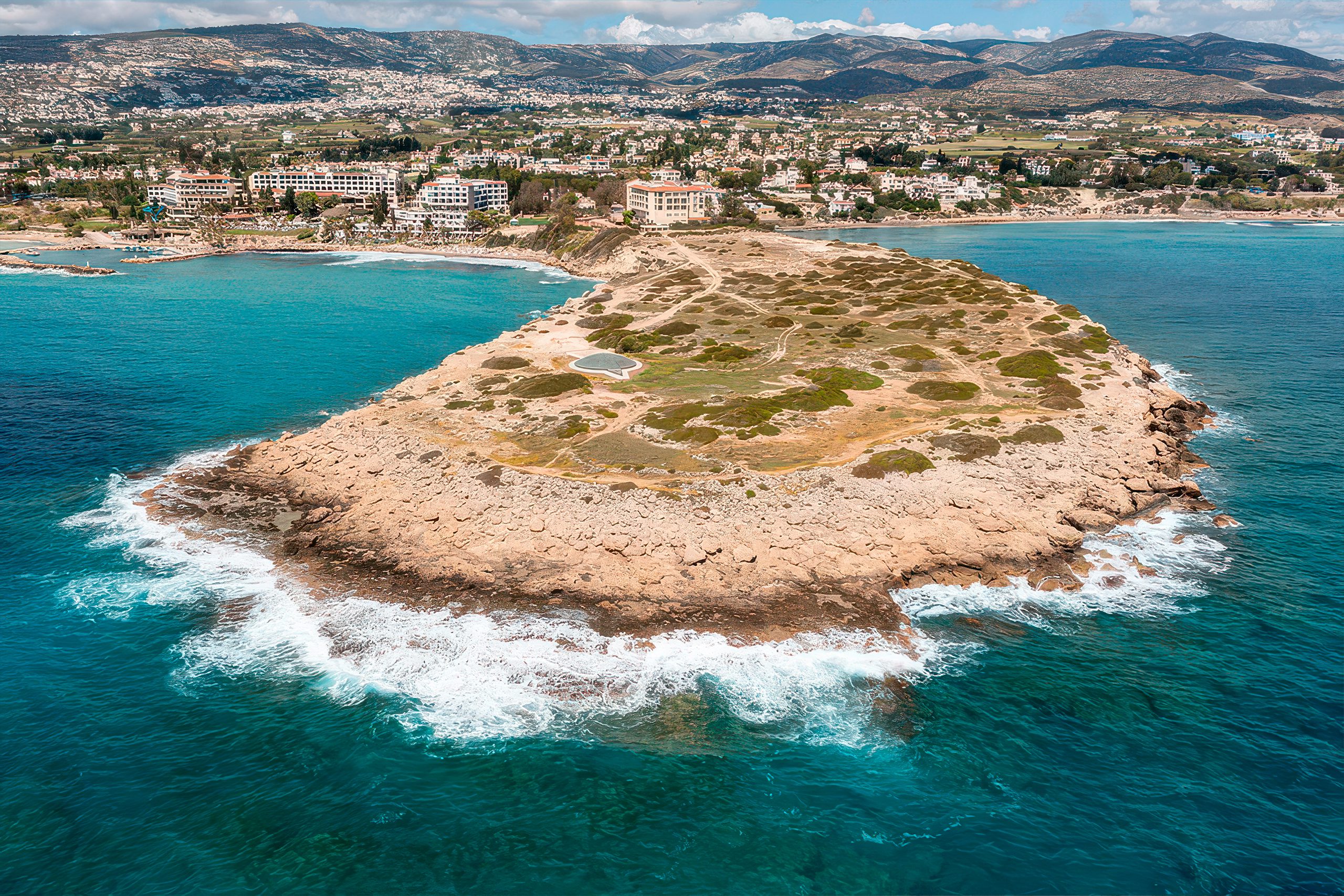
A small museum designed by Italian architect-conservator Andrea Bruno displays findings from the site. The museum’s unusual underground architecture preserves the natural landscape, with only a copper dome visible above ground. This museum sits just a short walk from the beach and offers historical context to the surrounding area.
Blue Flag Certification and Water Quality
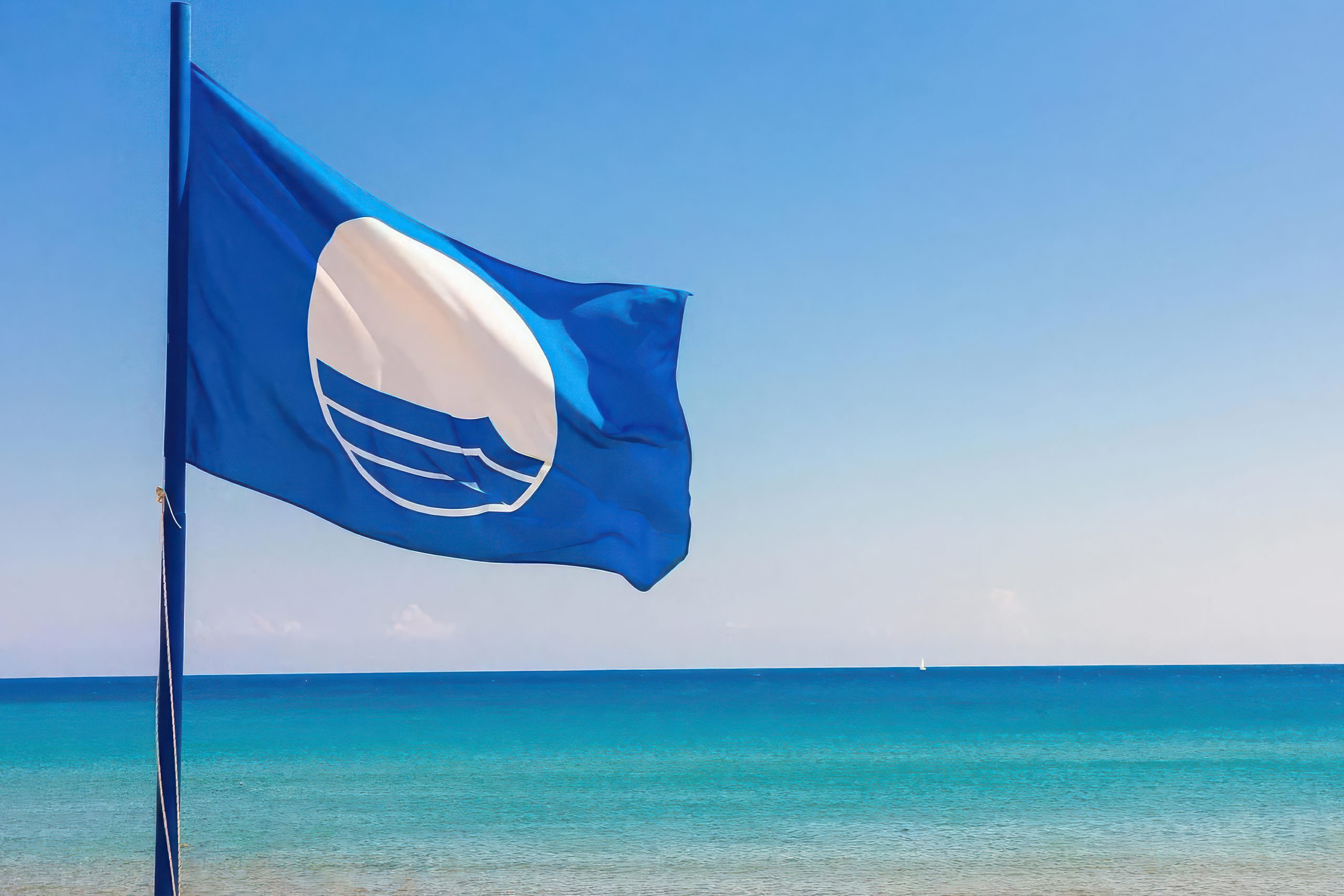
Coral Bay has held Blue Flag status for many years. The Foundation for Environmental Education awards this certification to beaches that meet strict criteria for water quality, environmental management, safety, and services. Cyprus earned recognition for having the cleanest bathing waters in Europe, consistently achieving a 100% score year after year. The Paphos district alone boasts 18 Blue Flag beaches.
Water quality testing occurs frequently throughout the swimming season. Beach cleaning happens daily to maintain the high standards required for Blue Flag certification. These efforts ensure visitors find clean sand and safe swimming conditions when they arrive.
The beach participates in the Green Cyprus Beaches initiative, a sustainable tourism program that involves volunteers and local organizations in maintaining environmental standards. This program demonstrates Cyprus’s commitment to balancing tourism development with environmental protection.
Beach Facilities & Services
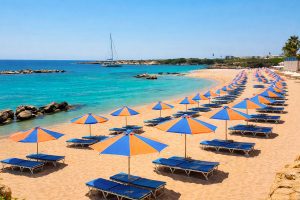
Coral Bay provides all the amenities visitors expect from a well-developed beach destination. Public toilets, showers, and changing rooms are available free of charge. Sun loungers and umbrellas can be rented at reasonable daily rates. While the beach itself is public and free to access, equipment rental involves a fee.
Lifeguards patrol the beach from April through October, typically operating from 9:00 AM to 6:00 PM. They are equipped with lifesaving equipment and first aid supplies. The extended season coverage and visible lifeguard presence give families confidence in the safety measures.
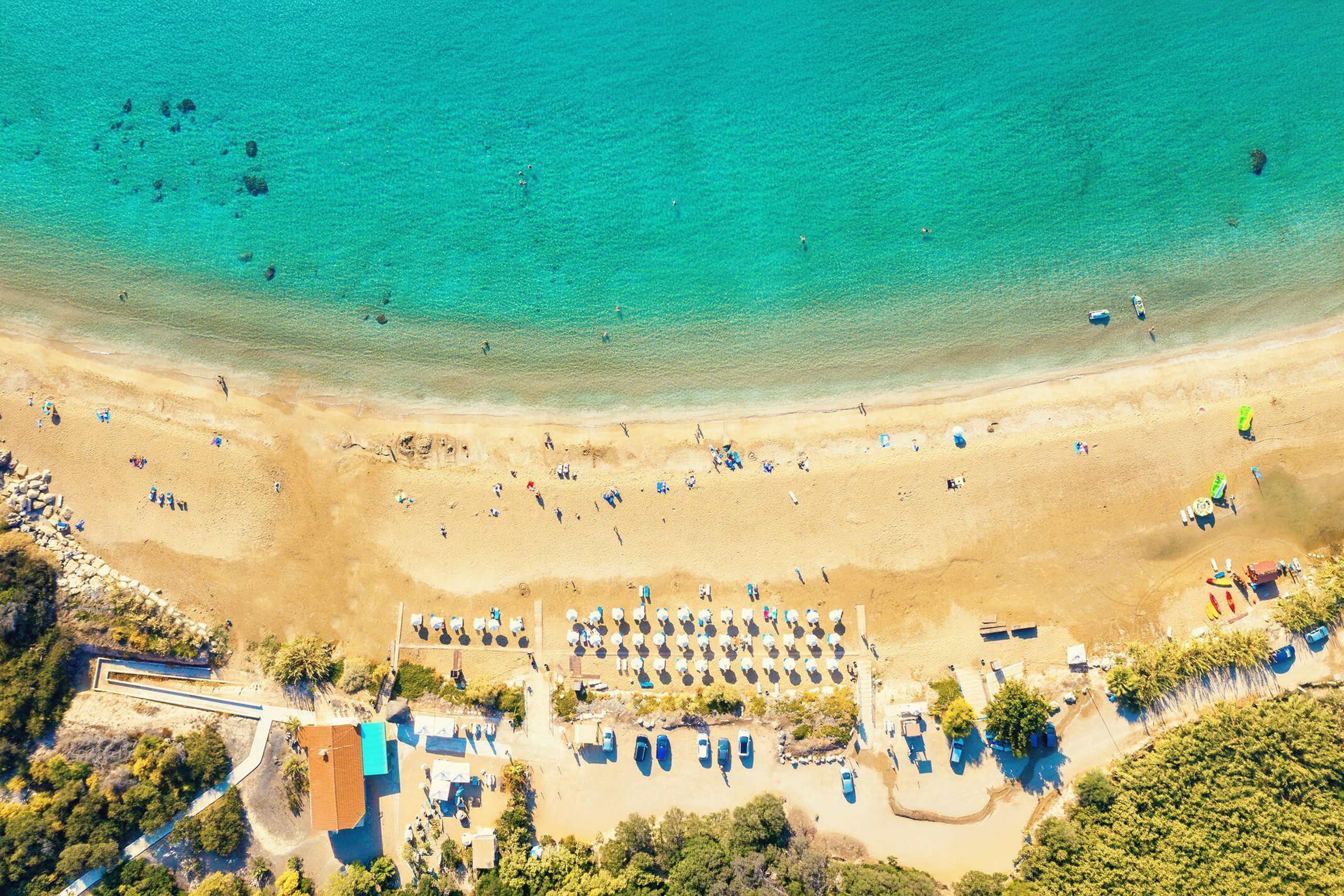
The beach offers wheelchair access and specialized equipment to help people with mobility issues enjoy the water. A municipal parking area provides convenient vehicle access, and bus service connects Coral Bay to Paphos and surrounding areas. Bus 615 runs regularly between Kato Paphos and Coral Bay, with the journey taking approximately 30 minutes.
A promenade runs along the beach and connects to nearby walking paths. This paved area provides easy access for strollers and wheelchairs while offering pleasant views of the bay.
Water Sports and Activities
Coral Bay caters to active visitors with a full range of water sports options. Available activities include jet skiing, parasailing, water skiing, windsurfing, and wakeboarding. The beach’s sheltered position and consistent sea breezes create good conditions for wind-powered sports.
Snorkeling is popular at Coral Bay due to the clear water and marine life visible near shore. The rocky areas around the headlands provide habitat for various fish species and other sea creatures. Snorkeling equipment can be rented from shops near the beach.
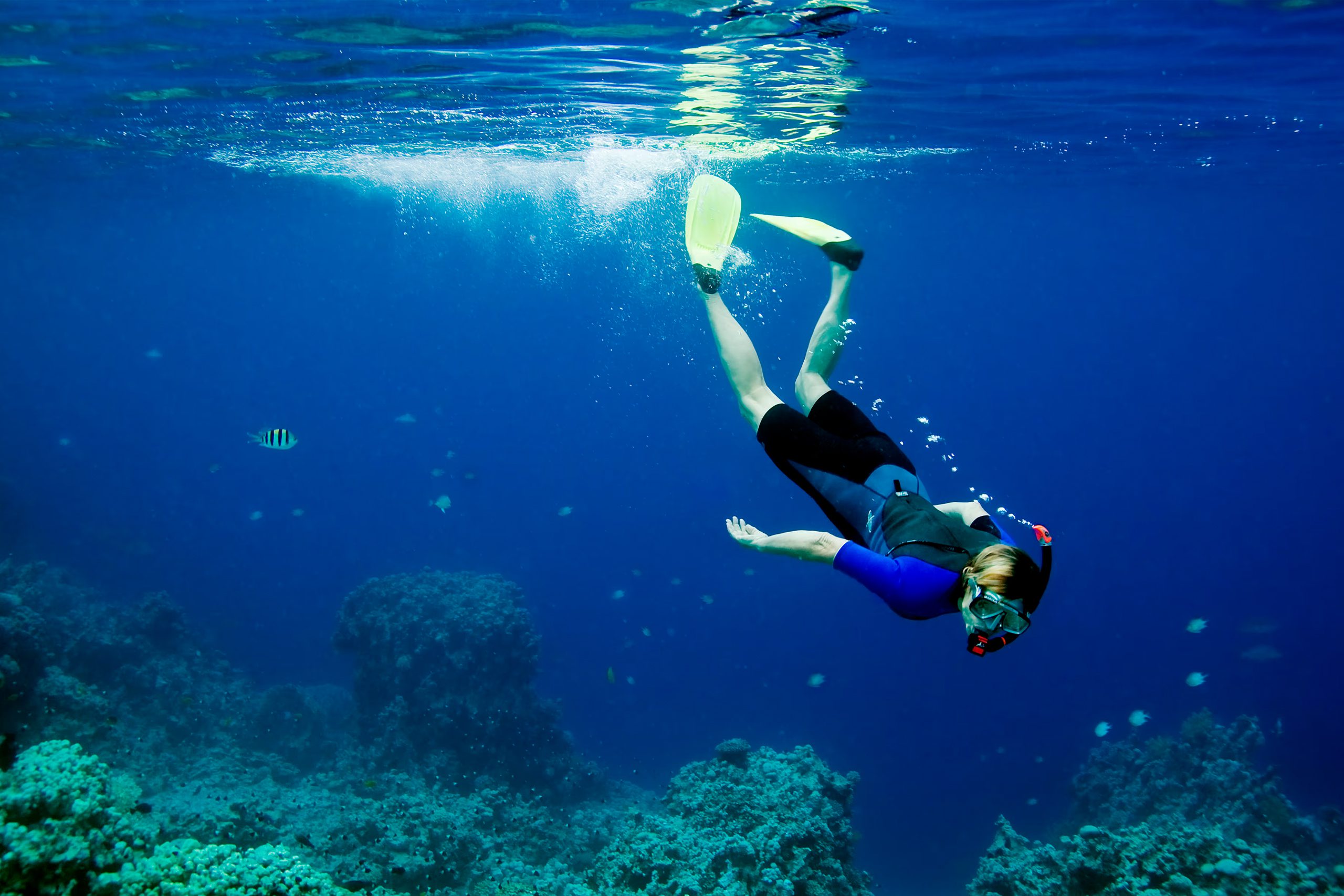
Paddle boats and pedalos offer a more relaxed way to explore the bay. These rentals appeal particularly to families with young children who want to experience the water without venturing far from shore.
Scuba diving operators, including Coral Bay Divers, offer courses and guided dives for both beginners and experienced divers. The protected waters and visibility make this an excellent location for learning to dive or exploring underwater features.
Dining and Nearby Attractions
Coral Bay Avenue runs behind the beach and hosts numerous restaurants, cafes, beach bars, and tavernas. The dining options range from traditional Cypriot meze houses to international cuisine. Fresh seafood features prominently on many menus, given the coastal location and fishing traditions of the area.
Beach bars serve refreshing drinks throughout the day and into the evening. Some establishments offer live music or entertainment during peak season. The atmosphere remains family-friendly even in the evening hours.
The village of Peyia sits on the hillside above Coral Bay and provides additional dining and shopping options. This traditional village features local shops, roadside stalls selling crafts and souvenirs, and authentic tavernas. A historic water well, known locally as a vrisi, stands in the village center.

The Sea Caves, located a short drive north of Coral Bay, offer dramatic coastal scenery where waves have carved formations into the limestone cliffs. The Edro III shipwreck, visible from shore further up the coast, attracts visitors interested in maritime history and photography.
Visiting Laourou Beach
About one kilometer west of the main Coral Bay beach lies Laourou Beach, often considered Coral Bay’s quieter sister beach. This smaller beach offers similar conditions with fine sand and shallow waters but attracts fewer crowds. Families seeking a more relaxed atmosphere often prefer Laourou, particularly on weekends when the main beach fills up.
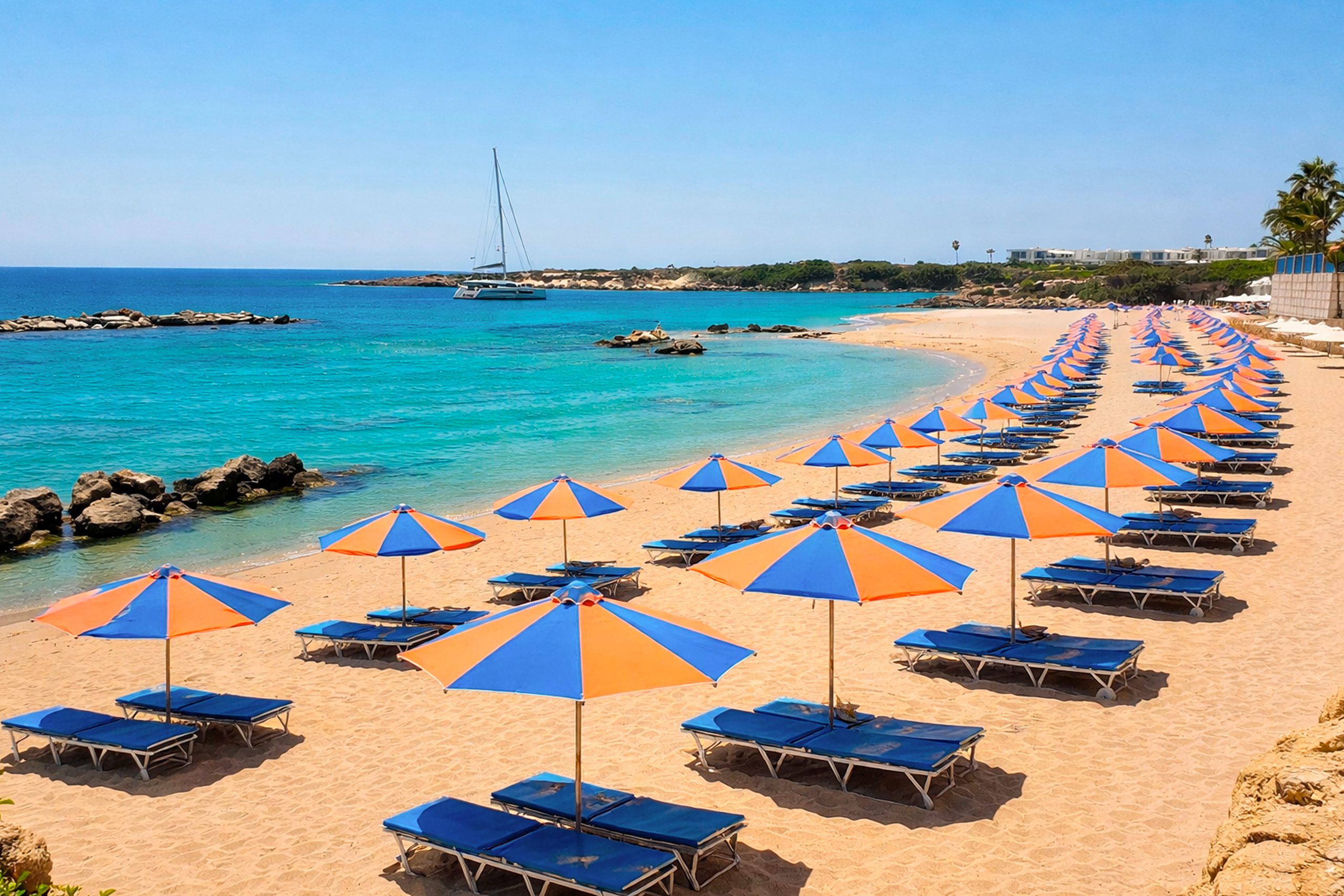
Laourou provides basic amenities including sun loungers, umbrellas, and a snack bar. The reduced development gives this beach a more natural feel while still maintaining necessary facilities. The proximity to Coral Bay means visitors can easily walk between the two beaches and choose their preferred atmosphere.
Best Times to Visit
Coral Bay experiences peak crowds during July and August when European summer holidays are in full swing. Weekend visits during these months can find the beach quite busy, with limited space for setting up towels and umbrellas. Arriving early in the morning, before 10:00 AM, helps secure better spots and allows you to enjoy calmer conditions.
The shoulder seasons of May, June, September, and October offer excellent weather with fewer visitors. Water temperatures remain comfortable for swimming during these months. The Mediterranean climate ensures hot, dry summers and mild winters, though most visitors find winter water temperatures too cool for extended swimming.
Weekday visits generally provide a more relaxed experience with thinner crowds. Local residents often visit on weekends, while international tourists tend to spread their visits throughout the week.
Transportation and Access
Coral Bay is easily reached from Paphos International Airport, which sits about 20 kilometers away. The drive takes approximately 25 to 30 minutes by car or taxi. Clear road signage directs drivers to the beach from both Paphos city center and the airport.
Public transportation offers a convenient alternative to driving. Bus 615 operates regular service between Paphos Harbor and Coral Bay throughout the day. The bus stop is located near the beach, requiring only a short walk to reach the sand. This accessibility makes the beach suitable for visitors without rental cars.
Bicycle routes connect Coral Bay to Paphos and neighboring areas. The relatively flat coastal road makes cycling a pleasant option during cooler parts of the day. Several shops near the beach rent bicycles for visitors who want to explore the coastline.
Connection to Cypriot Tourism
Coral Bay plays an important role in establishing Paphos as a major beach tourism destination. The combination of natural advantages and excellent management demonstrates that Cyprus can compete with other Mediterranean beach destinations. The Blue Flag certification provides international recognition that attracts visitors from across Europe and beyond.
The archaeological significance of nearby Maa-Paleokastro adds cultural depth to what could be just another beach resort. The connection to the first Greek settlements on Cyprus gives the area historical importance that extends beyond sun and sand tourism. This combination of beach relaxation and cultural heritage creates a more rounded destination.