All Articles

British Police Stations

British Police Stations

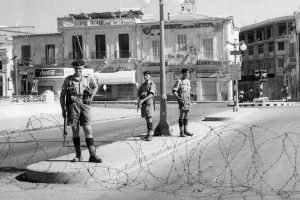
British Police Stations and Administrative Offices in Cyprus represent the architectural and institutional backbone of colonial rule, embodying the empire's strategies for maintaining order, surveillance, and administrative dominance over the island from 1878 to 1960. Constructed during the British administration, these structures blended Victorian functionality with local adaptations, serving as symbols of imperial authority while facilitating the enforcement of laws, collection of intelligence, and governance of a diverse population. Key examples include the Larnaca Police Headquarters, district administrative buildings in Limassol and Famagusta, and central offices in Nicosia, which housed colonial bureaucrats and police forces. These edifices not only projected power through their imposing designs but also became sites of resistance during the Cyprus Emergency, where they were targeted by…

Read more


Bishop Epiphanius of Salamis

Bishop Epiphanius of Salamis

Epiphanius of Salamis remains one of the most influential scholarly figures associated with late antiquity and the religious history of Cyprus. Born between 310 and 320 AD near Eleutheropolis in Palestine, he came from a Jewish background before later joining the early Christian movement during his youth. Historical tradition connects this transition to an encounter with a monk named Lucian, whose charitable actions reportedly left a strong impression on the young Epiphanius. This experience encouraged him to pursue religious education and monastic study, eventually leading him toward a career that would place him among the most recognized intellectual and ecclesiastical leaders of the fourth century. Following his conversion, Epiphanius traveled to Egypt and entered a monastic community associated with Hilarion…

Read more
Young Cypriots Rap About Life Today

Young Cypriots Rap About Life Today

Rap and hip-hop in Cyprus are not about imitation. For many young Cypriots, they have become one of the clearest ways to talk about pressure, identity, frustration, and belonging on a small island shaped by global culture and local tension. What sounds like music often functions as a public conversation, direct, emotional, and grounded in everyday experience. Through rhythm and dialect, young artists are documenting modern Cyprus as it is lived, not as it is marketed. A voice that arrived quietly, then stayed Hip-hop began to gain a foothold in Cyprus in the late 1990s, arriving without fanfare and often without understanding. At first, it lived on the margins of youth culture, overshadowed by rock, metal, and mainstream pop scenes…

Read more
Cyprus Carob Black Gold

Cyprus Carob Black Gold

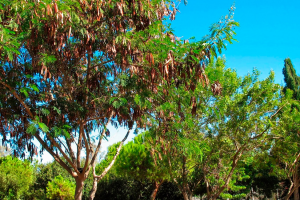
For centuries, the carob tree quietly underpinned life in Cyprus. Long before sugar, tourism, or modern industry reshaped the island, carob sustained rural families economically, nutritionally, and socially. Known locally as “black gold,” it was never glamorous, but it was dependable. In a land shaped by drought, invasion, and uncertainty, the carob tree endured, feeding people, funding villages, and anchoring tradition in the Cypriot landscape. A Tree Built for Hard Conditions The carob tree, Ceratonia siliqua, is perfectly adapted to Cyprus’s dry Mediterranean climate. Its deep roots draw moisture from far below the surface, allowing it to survive long summers without irrigation. Thick, leathery leaves reduce water loss, and slow growth produces a tree that can live for centuries. This…

Read more
Cyprus Citrus Groves

Cyprus Citrus Groves

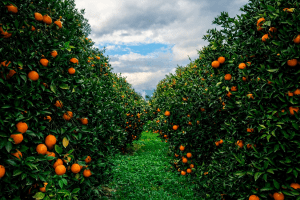
Citrus trees have never been a background crop in Cyprus. They reshaped coastal plains, sustained export economies, scented villages with orange blossom, and anchored everyday cooking. Oranges, lemons, grapefruits, and local hybrids thrive where mild winters meet long sunlight hours, making citrus one of the island's most recognisable and enduring farming traditions. Even as Cyprus modernises, citrus remains a quiet constant, rooted in land, memory, and daily life. Why Citrus Took Hold in Cyprus Citrus farming in Cyprus is defined by geography. The island’s coastal plains provide exactly what citrus trees require: frost-free winters, fertile soils, and long growing seasons. Unlike vineyards that climb into the mountains, citrus orchards stay close to the sea, shaping lowland landscapes around Morphou, Limassol,…

Read more
Cape Greco Natural Arch

Cape Greco Natural Arch

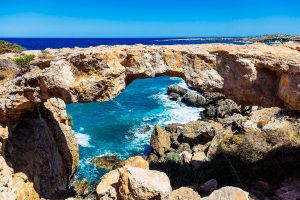
Cape Greco's natural arch, known locally as Kamara tou Koraka or "Crow's Arch," stands as one of Cyprus's most remarkable geological features. Located within Cape Greco National Forest Park on the southeastern tip of the island, this limestone bridge stretches over the Mediterranean Sea between the resort towns of Ayia Napa and Protaras. The arch sits alongside a coastal road that winds through the park, where visitors can observe this natural wonder without difficulty. The bridge was formed over millennia by the erosive forces of wind and water, creating a structure that appears both delicate and enduring. How Ancient Seas Created This Natural Bridge The geological story of Cape Greco's natural arch begins millions of years ago when Cyprus was…

Read more
Laouto (Lute)

Laouto (Lute)

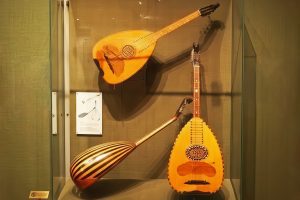
The Cypriot laouto is a plucked string instrument with a distinctive accompaniment style that plays a crucial rhythmic and harmonic role in the island's music, supporting both instrumental ensembles and vocal traditions while embodying strong regional identities. Its pear-shaped body and resonant tone allow for improvisation within ancient modal systems inherited from Byzantine and Ottoman influences, making it a cornerstone of Cypriot folk expression. This instrument not only preserves historical musical practices but also adapts to contemporary settings, raising interest in how such traditions endure in a modern world. A Core Element of Cypriot Musical Heritage The laouto, a lute-like instrument central to Cypriot folk music, features a large pear-shaped body, long neck, and four strings tuned in a way…

Read more
Cyprus Honey

Cyprus Honey

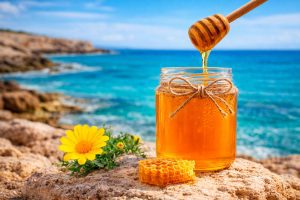
Honey in Cyprus is not simply a food product. It reflects landscape, climate, and survival shaped over centuries. Produced mainly in mountain and rural areas, Cypriot honey carries the character of wild thyme, pine forests, citrus groves, and seasonal movement across the island. Long before sugar became common, honey served as the primary sweetener, a form of medicine, and a symbol of hospitality. Its role has never disappeared. Instead, it has evolved alongside changing lifestyles and technologies. An Island That Shapes Its Honey Cyprus’s geography plays a decisive role in how honey is produced. Two mountain ranges, varied elevations, and sharply contrasting microclimates allow flowering to unfold in stages rather than all at once. Coastal plains warm early in the…

Read more
Lara Beach, Cyprus

Lara Beach, Cyprus

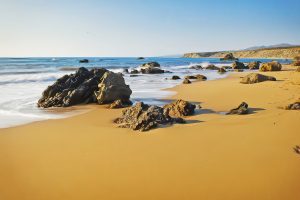
Lara Beach sits on the Akamas Peninsula in western Cyprus, roughly 27 kilometers northwest of Paphos. This stretch of golden sand is one of the Mediterranean's most important nesting sites for two endangered sea turtle species. Unlike the developed beaches that line most of Cyprus's coast, Lara remains untouched by commercial tourism. There are no sunbeds, no restaurants, and no permanent structures beyond a small conservation hut. The beach exists primarily for the turtles, with human visitors welcomed as guests rather than customers. Cyprus's First Turtle Conservation Station The protection of Lara Beach began in 1971 when the area was officially designated as a protected zone. In 1978, the Cyprus Fisheries Department launched a formal conservation project that included establishing…

Read more