Along the Cypriot coast, the sea was never a distant backdrop. It was a working space, a source of food, and a route that connected villages to the wider Mediterranean. For generations, this relationship depended on small wooden boats shaped by experience rather than theory. Among them, the caïque and the varka (or local skiff) represent traditions of craftsmanship and seamanship. This article explores how these boats were built, how they were used, and why they still matter, not as romantic symbols, but as practical responses to life by the sea.
- Boats Designed by Water, Not by Paper
- The Caïque: A Working Boat for Cypriot Waters
- The Dghajsa: Precision and Balance in Sheltered Waters
- Everyday Life at Sea
- Craftsmanship Rooted in Materials
- Belief and Protection at Sea
- Decline of a Living Tradition
- Why These Boats Still Matter
- Encountering This Heritage Today
- Why the Caïque and Dghajsa Are Worth Remembering
Boats Designed by Water, Not by Paper
Traditional Mediterranean boats were not designed on drafting tables. They were shaped directly by water conditions, weather patterns, and daily use. Boatbuilders worked from memory, observation, and repetition, adjusting proportions until a vessel behaved correctly at sea.
The caïque and the dghajsa belong to this tradition. Both are wooden craft, built by hand, and adapted to short journeys, frequent use, and close interaction with coastlines. Their forms reflect accumulated knowledge rather than innovation for its own sake.
Understanding these boats means understanding the environments they served.
The Caïque: A Working Boat for Cypriot Waters
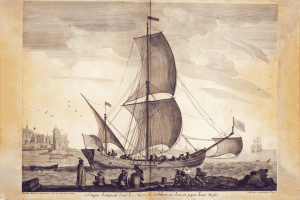
The caïque is the vessel most closely associated with Cyprus and nearby regions of the Eastern Mediterranean. It was primarily a working boat, built for fishing and small-scale coastal transport rather than speed or long-distance travel.
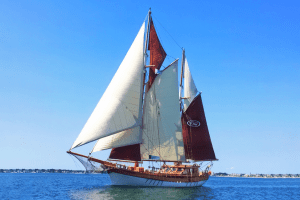
Its rounded hull and broad beam gave it stability in choppy coastal waters. Rather than cutting sharply through waves, the caïque was designed to move with them, reducing strain on both boat and crew. This made it reliable in changing conditions, especially close to shore.
Key characteristics of the caïque included:
- A wooden hull built from locally sourced timber
- A wide beam for balance and load-bearing
- Originally sail-powered, later adapted for engines
- Painted exteriors that reflected local taste rather than uniform standards
No two caïques were identical. Builders adjusted size and shape based on intended use, available materials, and personal experience. Each boat carried the signature of its maker.
The Dghajsa: Precision and Balance in Sheltered Waters
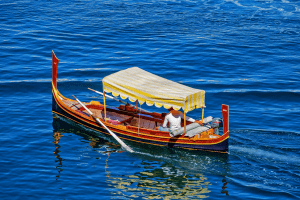
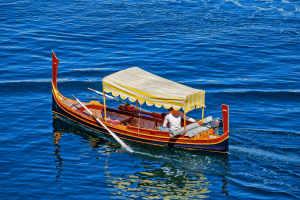
The dghajsa is exclusively Maltese. Most strongly associated with Malta, it evolved in calm harbors and protected waters where agility and balance mattered more than endurance.
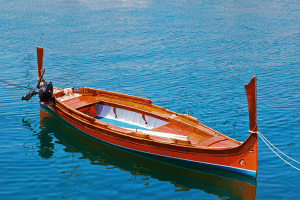
Compared to the caïque, the dghajsa is slimmer and more refined in profile. It has a shallow draft and curved ends that allow smooth movement and precise handling, especially when maneuvering near larger ships or within narrow harbor spaces.
Typical features included:
- A narrow wooden hull designed for glide rather than strength
- Oar propulsion or small motors
- Decorative details that combined identity with function
- Emphasis on balance and control
Although native to Malta and not found in Cyprus, the dghajsa provides a useful contrast in Mediterranean design. It shows how similar building traditions can produce very different boats when shaped by different waters.
Everyday Life at Sea
For coastal communities in Cyprus, the caïque was part of daily routine. Fishing trips began before sunrise. Nets were repaired by hand. Knowledge of weather, currents, and seasonal patterns determined success or failure.
Crews were often made up of relatives. Skills passed quietly from one generation to the next, learned through observation rather than instruction. The boat was not just a tool. It was a shared responsibility and, in many cases, the family’s livelihood.
In its native Malta, the dghajsa served as a water taxi. It moved people and goods between shore and ship, acting as a bridge between land and sea. Though its role was different, it required the same close attention to wind, water, and balance.
Craftsmanship Rooted in Materials
Traditional boatbuilding in Cyprus depended on deep knowledge of wood. Builders selected materials based on flexibility, strength, and resistance to saltwater.
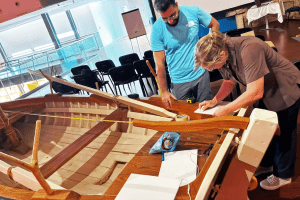
Common choices included:
- Pine from the Troodos Mountains for planking
- Oak or mulberry for ribs and structural supports
- Natural resins and tar for sealing
Construction followed a consistent sequence. The keel was laid first, then ribs were shaped and fitted, followed by planking carefully joined edge to edge. Seams were sealed using fibers and pitch, creating a hull that could flex slightly rather than crack under stress.
This method required time and patience. Maintenance was constant, but a well-kept wooden boat could serve for decades.
Belief and Protection at Sea
Life on the water carried risk, and belief played a role in managing uncertainty. Many traditional boats displayed painted eyes on their bows, a symbol believed to protect the vessel by allowing it to see danger.
Other customs were equally important:
- Boats named after saints or family members
- Blessings performed before first voyages
- Strict routines and taboos while at sea
These practices reinforced respect for the boat and strengthened bonds among crew members. The vessel was treated as something alive, deserving care and attention.
Decline of a Living Tradition
The twentieth century brought rapid change. Engines replaced sails. Fiberglass replaced wood. Modern boats were cheaper to maintain and easier to operate.
While these developments improved efficiency and safety, they also reduced the need for traditional skills. Wooden boatbuilding declined, and many caïques were dismantled or abandoned. Regulations and economic pressure accelerated the shift.
What disappeared was not only a type of boat, but a way of working that relied on accumulated local knowledge.
Why These Boats Still Matter
Today, caïques and dghajsa-style boats survive mainly as restored vessels, museum exhibits, or ceremonial craft. Yet their importance has not faded.
They remain visible:
- In maritime museums and old ports
- At coastal festivals
- In photographs, paintings, and memory
They remind Cyprus of a time when survival depended on cooperation with the sea rather than control over it. Preserving these boats preserves knowledge that cannot be recreated once lost.
Encountering This Heritage Today
Visitors can still connect with this tradition in subtle ways. Watching fishing boats return at dawn, standing beside a restored wooden hull, or visiting a small harbor reveals continuity that monuments alone cannot show.
These experiences offer insight into how ordinary tools shaped everyday life.
Why the Caïque and Dghajsa Are Worth Remembering
The caïque and the dghajsa are not symbols of nostalgia. They are examples of practical intelligence, developed slowly and tested repeatedly. They show how craftsmanship, environment, and culture can align without excess.
In Cyprus, the story of these boats is part of a larger maritime identity. It is a reminder that history often survives not in grand structures, but in the working objects that carried people through daily life, across calm water, and home again.