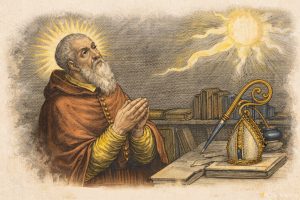
Epiphanius of Salamis remains one of the most influential scholarly figures associated with late antiquity and the religious history of Cyprus. Born between 310 and 320 AD near Eleutheropolis in Palestine, he came from a Jewish background before later joining the early Christian movement during his youth.
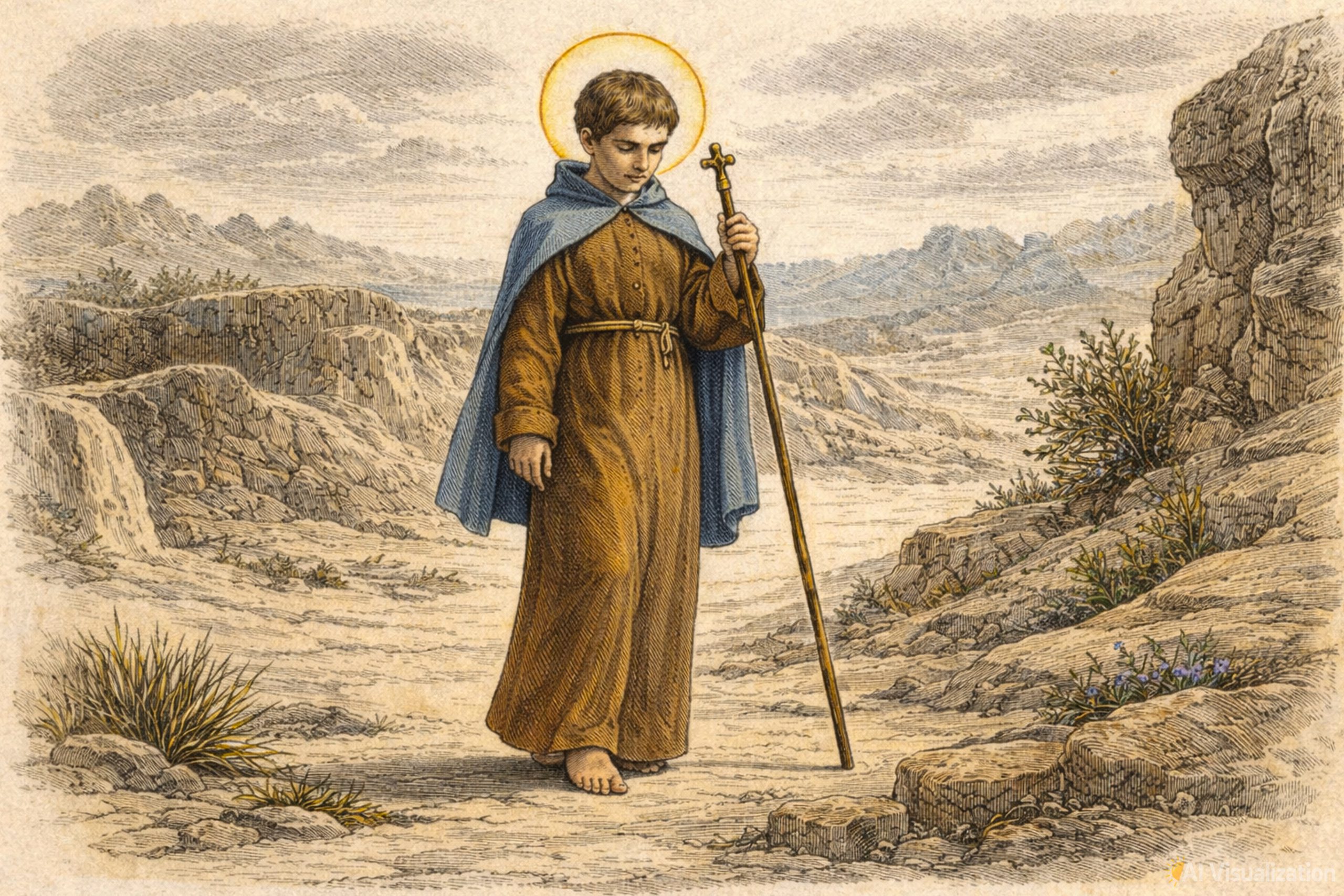
Historical tradition connects this transition to an encounter with a monk named Lucian, whose charitable actions reportedly left a strong impression on the young Epiphanius. This experience encouraged him to pursue religious education and monastic study, eventually leading him toward a career that would place him among the most recognized intellectual and ecclesiastical leaders of the fourth century.
Following his conversion, Epiphanius traveled to Egypt and entered a monastic community associated with Hilarion the Great, one of the prominent monastic figures of the eastern Mediterranean. His years in Egypt exposed him to a wide range of philosophical schools, religious traditions, and theological debates that shaped intellectual life during late antiquity.
Around 333 AD, he returned to Palestine and established a monastery near his birthplace, where he served as abbot for nearly three decades. During this period, he gained a reputation for discipline, scholarship, and literary activity that later contributed to his appointment as bishop in Cyprus.
From Monastery to Metropolitan
Throughout his years as a monastery leader, Epiphanius became widely known for his academic abilities and strict monastic lifestyle. Historical sources credit him with knowledge of several languages, including Hebrew, Syriac, Egyptian, Greek, and Latin. Because of this linguistic range, the scholar Jerome reportedly referred to him as “Pentaglossos,” meaning “Five-Tongued.”
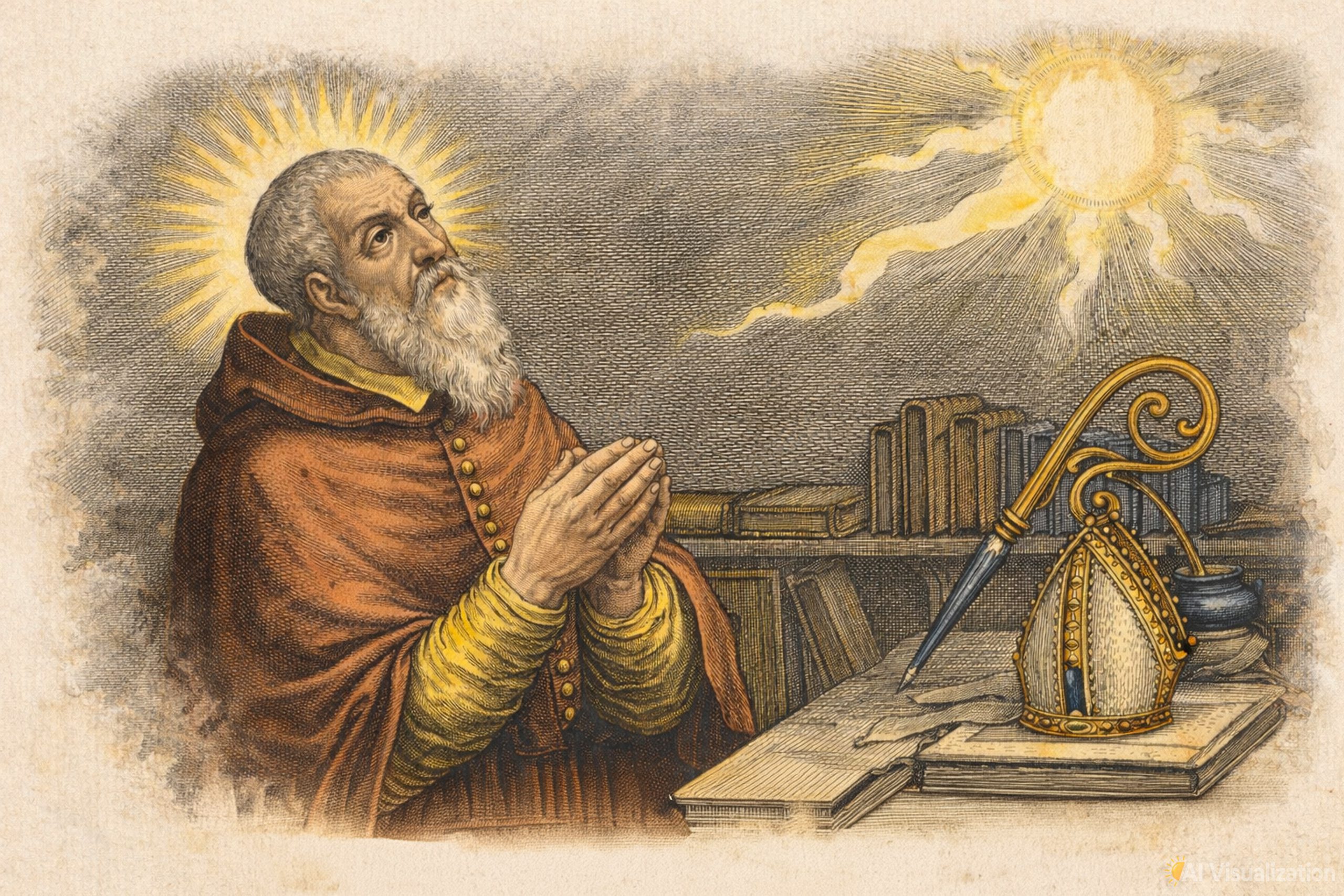
His multilingual background allowed him to study religious writings and philosophical works in their original forms, which proved valuable during the complex theological debates of the fourth century. This era witnessed intense discussions concerning doctrine, scriptural interpretation, and ecclesiastical authority across the Roman Empire.
In 367 AD, church authorities in Salamis selected Epiphanius as bishop of the city. He accepted the position and served for nearly forty years until his death in 403 AD. As Metropolitan of Cyprus, he held influence over religious administration across the island during a period when Christianity was becoming increasingly integrated into imperial and public life throughout the eastern Mediterranean.
Despite his high-ranking position, historical accounts describe him as maintaining relatively modest personal habits and continuing many aspects of monastic discipline. Contemporary writers also associated him with charitable work and support for poorer communities, which contributed to his reputation throughout Byzantine religious circles.
The Medicine Chest Against Heresies
Epiphanius became especially famous for his literary writings concerning religious controversies of the fourth century. His best-known work, the Panarion, was written between 374 and 377 AD. The Greek title translates roughly as “Medicine Chest,” reflecting his intention to present arguments against teachings he considered incorrect or harmful to mainstream Christian doctrine.
The Panarion catalogued approximately eighty religious groups, philosophical movements, and theological positions. These included both pre-Christian traditions and various branches of early Christianity. The work discussed subjects ranging from Gnosticism and Arianism to Jewish-Christian sects and local theological interpretations circulating throughout the Roman world.
Today, historians value the Panarion not only as a theological document but also as an important historical source. Many of the groups discussed by Epiphanius left behind few surviving records of their own. In some cases, his writings preserve quotations from texts that later disappeared entirely.
The work contains references to figures such as Arius and provides rare descriptions of lesser-known communities including the Audians, Ebionites, and Nazarenes. Scholars studying the religious diversity of late antiquity continue to rely on the Panarion because of the detailed information it preserves about competing schools of thought during the fourth century.
Notable Facts About the Scholar Bishop
Epiphanius wrote several other important works beyond the Panarion. His earliest known writing was the Ancoratus or “The Well-Anchored Man,” completed in 374 AD. This text defended Christian teaching on the Trinity and the Resurrection, particularly against Arian theology. The work included two creeds, one being the baptismal creed of the Church of Constantia and the other his own composition designed to protect believers from contemporary heresies.
Another significant work was On Weights and Measures, written in Constantinople in 392 AD for a Persian priest. This unusual text discussed the canon of the Old Testament, biblical geography, and provided detailed explanations of all the units of measurement mentioned in scripture. The complete version survives only in Syriac translation, though fragments exist in Armenian and Georgian. This work demonstrates Epiphanius’s wide-ranging intellectual interests beyond pure theology.

Jerome, one of the most learned scholars of the age, called Epiphanius “the last relic of ancient piety.” This tribute reflected both respect for his knowledge and recognition of his role as a living link to earlier Christian traditions. Epiphanius knew five languages at a time when most educated people knew only two or three. His monastery produced copies of Greek texts, contributing to the preservation of ancient literature. He also possessed the gift of speaking clearly to both educated theologians and common believers.
Defender of Orthodox Teaching
During his episcopal career, Epiphanius traveled extensively throughout the eastern Mediterranean to participate in church councils and theological disputes. These gatherings often addressed disagreements concerning doctrine, ecclesiastical authority, and interpretations of scripture.
In 376 AD, he attended a synod in Antioch focused on debates related to Trinitarian theology and Apollinarianism. During these discussions, he supported Paulinus, who received backing from Rome, rather than Meletius, who had stronger support among several eastern bishops.
Later, in 382 AD, Epiphanius attended the Council of Rome, where similar disputes concerning church leadership and doctrine continued to shape ecclesiastical politics.
One of the most significant controversies associated with Epiphanius involved the writings of Origen, the influential third-century scholar whose theological interpretations remained highly debated long after his death. Epiphanius viewed several of Origen’s ideas as problematic and linked them to later doctrinal disagreements emerging across the Christian world.
This opposition brought him into conflict with other influential religious leaders, including John, Bishop of Jerusalem, who held a more moderate position regarding Origen’s legacy. Tensions increased further in 394 AD when Epiphanius criticized Origenist interpretations while visiting Jerusalem and performed an ordination within another bishop’s jurisdiction without authorization, an act considered highly controversial within church administration.
Near the end of his life, Epiphanius became involved in another major ecclesiastical dispute centered in Constantinople. In 402 AD, Theophilus of Alexandria persuaded the elderly bishop to travel to the imperial capital and publicly oppose John Chrysostom, then bishop of Constantinople.
Historical accounts suggest that Epiphanius later realized the conflict involved political rivalry as much as theological disagreement. Unwilling to become further involved in the dispute, he departed Constantinople and attempted to return to Cyprus. He died during the sea voyage on May 12, 403 AD.
Legacy in Christian History

Following his death, Epiphanius became an important figure within the historical traditions of several Christian communities, including the Eastern Orthodox, Oriental Orthodox, and Roman Catholic traditions. Over time, he was recognized as both a Church Father and a significant theological writer of late antiquity.
His writings circulated widely for centuries and influenced medieval scholars, theologians, and monastic communities throughout Europe and the Near East. Various texts were later attributed to him, although modern scholarship has determined that some of these works were written by other authors.
Today, historians continue to study Epiphanius because his works preserve extensive information about the intellectual, religious, and cultural environment of the fourth century. His writings reveal how communities debated doctrine, organized institutions, and responded to the diversity of beliefs present across the Roman Empire.
Modern scholars hold mixed views regarding his legacy. Many acknowledge his extraordinary linguistic abilities, broad knowledge, and importance as a historical source. At the same time, they note his tendency toward rigid judgments and his willingness to criticize opposing viewpoints with limited investigation. For researchers of late antiquity, Epiphanius represents both the strengths and limitations of fourth-century religious scholarship.
Epiphanius and Cyprus Today
The historical connection between Epiphanius and Cyprus remains significant today, particularly within the cultural and ecclesiastical history of the island.
As Metropolitan of Cyprus during the fourth century, he helped shape patterns of church organization that later contributed to the independent status of the Church of Cyprus within the Byzantine world. The island’s long-standing ecclesiastical autonomy traces part of its historical foundation to this period.
Several churches, monasteries, and historical sites in Cyprus continue to bear the name of Epiphanius. These locations attract visitors interested in Byzantine architecture, religious history, archaeology, and the cultural heritage of late antiquity.
His reputation for scholarship and charitable activity also became part of Cypriot historical identity. Medieval traditions emphasized his support for poorer communities and presented him as a model of disciplined monastic leadership.
Academic institutions and theological libraries continue to analyze his writings for insight into the intellectual climate of the eastern Mediterranean during the fourth century. Modern English translations of the Panarion, published in the late twentieth century, made his works far more accessible to contemporary historians and researchers.
Ongoing studies of manuscripts preserved in Syriac, Armenian, Georgian, and other ancient languages continue to reveal additional information about how Epiphanius’s writings circulated throughout the Byzantine and Near Eastern worlds.
Why Epiphanius Matters
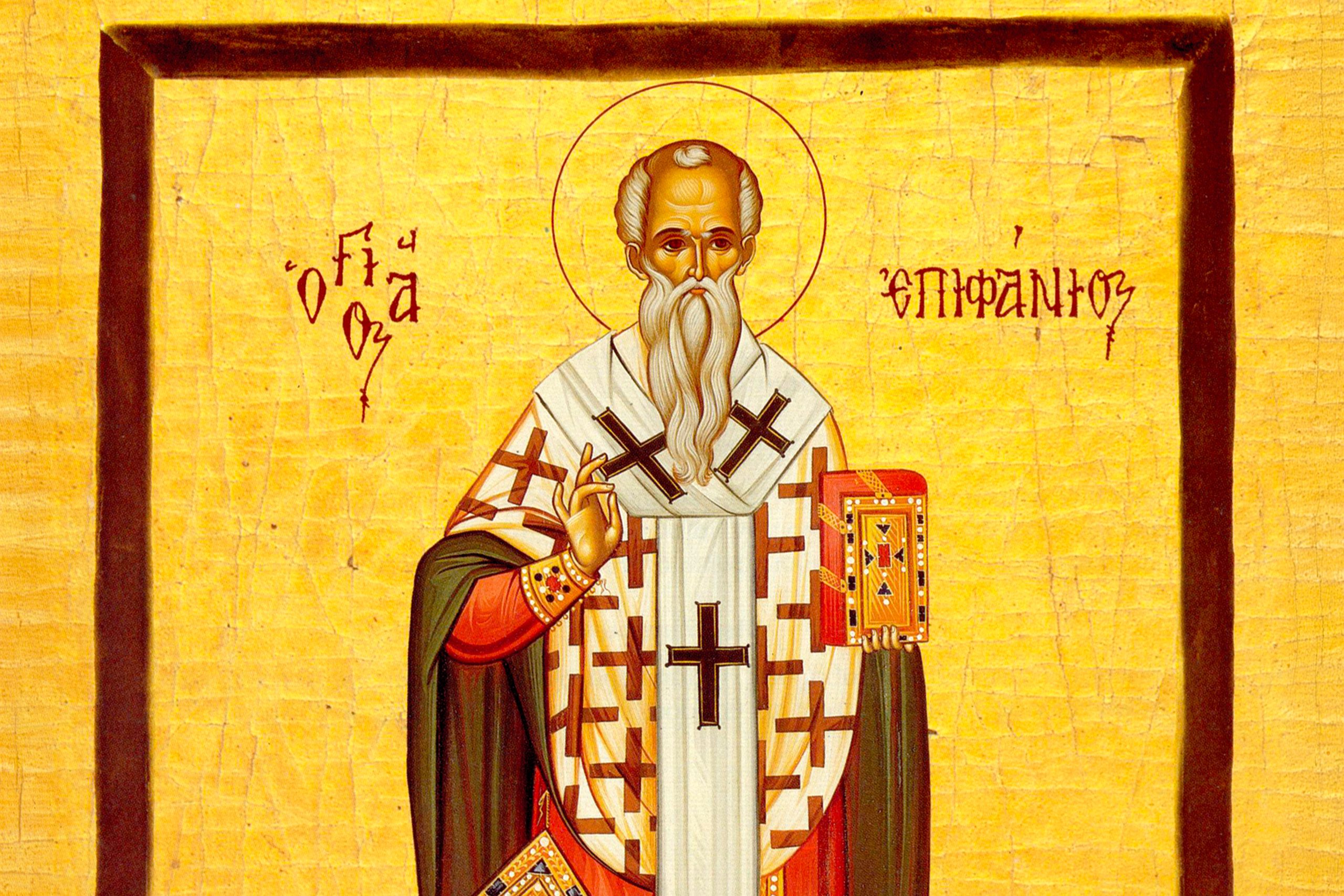
Epiphanius of Salamis remains historically important because he played a central role in documenting and shaping theological debates during a critical period of late Roman history.
The fourth century witnessed major transformations within the Roman Empire as Christianity evolved from a minority movement into a dominant public institution closely connected with imperial politics, education, and social life. Epiphanius participated directly in these developments through his writings, council participation, and administrative leadership in Cyprus.
Beyond theology, his legacy also demonstrates the broader importance of Cyprus as a cultural crossroads in the eastern Mediterranean. Positioned between the Levant, Anatolia, Egypt, and Greece, the island became an important meeting point for ideas, trade, and religious traditions during late antiquity.
Through his monastery, literary activity, and episcopal authority, Epiphanius contributed to making Cyprus a recognized center of scholarship and ecclesiastical influence within the Byzantine world. His life illustrates how intellectual and religious leadership in late antiquity extended far beyond major imperial cities such as Rome, Alexandria, and Constantinople.