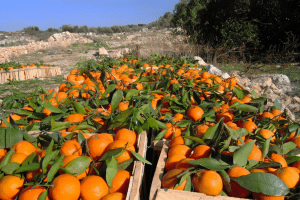
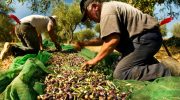
Citrus trees have never been a background crop in Cyprus. They reshaped coastal plains, sustained export economies, scented villages with orange blossom, and anchored everyday cooking. Oranges, lemons, grapefruits, and local hybrids thrive where mild winters meet long sunlight hours, making citrus one of the island’s most recognisable and enduring farming traditions. Even as Cyprus modernises, citrus remains a quiet constant, rooted in land, memory, and daily life.
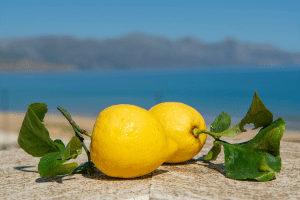
Why Citrus Took Hold in Cyprus
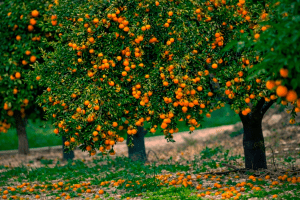
Citrus farming in Cyprus is defined by geography. The island’s coastal plains provide exactly what citrus trees require: frost-free winters, fertile soils, and long growing seasons. Unlike vineyards that climb into the mountains, citrus orchards stay close to the sea, shaping lowland landscapes around Morphou, Limassol, and Paphos.
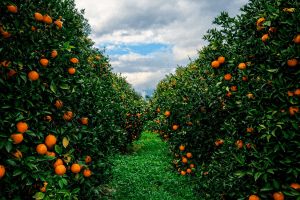
These groves were never ornamental. They provided reliable harvests, export income, and household staples, becoming as common in village courtyards as in commercial plantations. Over time, citrus trees blurred the boundary between agriculture and domestic life, integrating farming directly into everyday routines.
The Coastal Landscapes That Grow Citrus
Citrus orchards are closely tied to Cyprus’s coastal geography. The most productive groves sit on fertile alluvial soils where irrigation can be carefully managed. Historically, regions such as Morphou developed reputations as citrus heartlands due to access to natural springs and groundwater flowing from the Troodos foothills. Limassol’s coastal zones and parts of western Paphos followed, each offering slightly different microclimates.
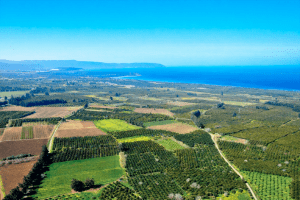
These regions share a common vulnerability: water. Citrus trees are productive but demanding, and Cyprus’s low rainfall has always made irrigation essential. Managing water shaped both traditional farming practices and modern technological innovations, influencing how groves expanded and survived.
A Crop That Arrived from Far Away
Citrus is not native to Cyprus. The earliest citrus to reach the island was the citron, introduced through Persian and Near Eastern trade routes. Lemons and sour oranges followed during the Roman and early Islamic periods, while sweet oranges arrived in the late fifteenth century through Genoese and Portuguese trade connections.
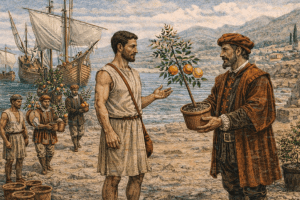
What Cyprus offered was not origin but adaptation. Over centuries, citrus varieties adjusted to local soils, water constraints, and climate extremes. The trees became familiar, integrated, and eventually inseparable from the island’s agricultural identity.
From Garden Trees to Export Power
For much of its history, citrus in Cyprus was grown primarily for local consumption. That changed decisively in the late nineteenth and early twentieth centuries, when British administration reorganised citrus into a commercial export crop. Infrastructure improved, ports expanded, and farmers gained access to credit, allowing orchards to grow in scale and efficiency.
By the mid-twentieth century, citrus stood as one of the island’s major agricultural exports, supplying European markets with winter fruit when northern producers could not. Citrus became both a local staple and a global commodity, connecting coastal villages to international trade networks.
The Citrus Varieties Cypriots Know Best
Cyprus produces a diverse range of citrus, allowing harvests to extend across much of the year. Oranges dominate production, from early navels to late-season Valencias that remain on the tree through summer. Lemons, particularly thin-skinned local varieties, are essential to everyday cooking and preservation. Grapefruits, especially red-fleshed types, are grown primarily for export, while Mandora, a local hybrid, combines easy peeling with balanced sweetness.
This diversity supports both domestic consumption and international trade, reducing reliance on a single crop cycle and providing resilience in fluctuating markets.
Farming Between Tradition and Technology
Citrus farming in Cyprus is a study in contrasts. In traditional orchards, trees are spaced generously, pruned by hand, and harvested carefully to avoid bruising. Many of these groves remain family-run, passed from one generation to the next with minimal mechanisation.
Alongside them, modern plantations operate with precision. Drip irrigation delivers water directly to roots, sensors monitor soil moisture, and satellite imagery helps farmers respond quickly to plant stress. These tools are not luxury upgrades but survival strategies in one of Europe’s most water-stressed countries.
Citrus in the Cypriot Kitchen
Citrus is inseparable from Cypriot food culture. Lemons sharpen salads and grilled meats, while oranges are eaten fresh, juiced, or preserved. Bitter citrus peels become spoon sweets offered to guests as a sign of hospitality, and citrus preserves help households store sweetness through winter.
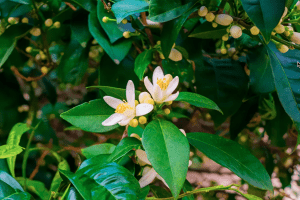
The fragrance of citrus blossoms marks seasonal change, filling villages with scent long before fruit appears. These sensory cues tie agriculture directly to daily life, reinforcing the relationship between landscape, season, and cuisine.
Economic Weight Beyond the Orchard
Although agriculture now contributes a smaller share of national GDP, citrus remains economically significant. It provides employment across farming, packing, transport, and export services, sustaining rural economies along the coast. European markets absorb most Cypriot citrus, particularly during the winter months when demand is high. Cooperative packing houses allow small producers to compete in international supply chains, maintaining a distributed agricultural structure.
The industry’s scale may fluctuate, but its structural importance to rural regions remains firm, supporting livelihoods and regional identity.
Challenges Facing the Golden Groves
Citrus farming today faces mounting pressure. Water scarcity is the most serious threat, as coastal aquifers become increasingly saline and rainfall patterns grow unpredictable. Rising energy costs make desalination expensive, while global competition from larger producers pushes prices downward.
Climate change adds further strain, affecting fruit size, colour, and yield consistency. Growers must balance tradition with adaptation, often at high financial and environmental cost.
Why Citrus Still Matters in Cyprus
Citrus survives in Cyprus because it adapted without losing its place in everyday life. The trees endure because they serve multiple roles: economic, cultural, and domestic. They feed export markets, anchor rural employment, scent courtyards, and appear on kitchen tables daily.
Cyprus’s citrus groves are not monuments to the past. They are working landscapes shaped by necessity, resilience, and care. As long as water can be managed and land respected, citrus will continue to define the island’s coastal identity, one harvest at a time.