All Articles

Green Transportation Options in Cyprus

Green Transportation Options in Cyprus

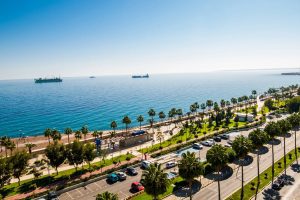
Cyprus faces a unique transportation challenge. With 658 automobiles per 1,000 people, the island holds one of the highest car ownership rates globally. Only 3% of journeys in Greater Nicosia use public transport, while cycling accounts for just 2%. This heavy reliance on private vehicles contributes to traffic congestion, air pollution, and carbon emissions. However, the island is actively developing sustainable alternatives through government initiatives, infrastructure improvements, and European Union support. Building a Greener Transport Network Cyprus has committed to ambitious environmental targets. The National Energy and Climate Plan aims to increase renewable energy sources to 23% of total consumption and 14% in the transport sector by 2030. The government launched Sustainable Urban Mobility Plans for Limassol and Larnaca, with…

Read more
Kourion Mosaics Apollo To Basilicas Guide

Kourion Mosaics Apollo To Basilicas Guide

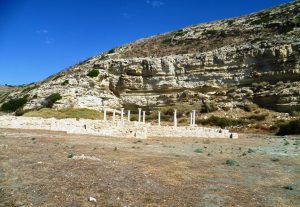
Kourion’s mosaics record Cyprus’s shift from a classical city organised around temples and civic life to an early Christian centre rebuilt under episcopal authority after mid-fourth-century earthquakes. In villas and basilicas, floors and inscriptions became a visual language that guided movement, reinforced belief, and redefined what power looked like in public space. This article explains how disaster opened the ground for change, how the Episcopal Complex reshaped the city’s core, and how mosaic imagery at sites like the House of Eustolios shows a community rebuilding identity as well as architecture. Apollo Hylates and Old Order For centuries, Kourion thrived as a Greco-Roman city, complete with temples, baths, theatres, and elite villas. Public life revolved around civic institutions and traditional religious…

Read more
Kyrenia Shipwreck Museum

Kyrenia Shipwreck Museum

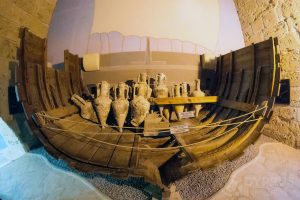
The Kyrenia Shipwreck Museum houses the oldest recovered Greek merchant ship in the world, located within Kyrenia Castle in the Turkish-occupied part of Cyprus. The vessel sank approximately one nautical mile off the coast around 300 BC during the era of Alexander the Great's successors. A local diving instructor named Andreas Cariolou discovered the wreck in November 1965 while collecting sponges at 33 meters depth during a storm. He lost the exact position and required over 200 dives before relocating it in 1967. The ship measures 15 meters in length and was constructed from Aleppo pine around 389 BC, sailing for about 80 years before its final voyage. The wreck represents a unique window into ancient Mediterranean trade, daily shipboard…

Read more
A Tapestry of Cyprus Sacred Spaces

A Tapestry of Cyprus Sacred Spaces

Most visitors to Cyprus know about its Greek Orthodox churches and ancient Christian monasteries, but the island's religious story is far richer and more complex. For millennia, Cyprus has been home to Jewish communities, Muslim mosques, Armenian and Maronite Christians, Sufi mystics, and Latin Catholic cathedrals - each faith leaving monuments that testify to survival, migration, and remarkable coexistence. Walking through Cyprus's cities means encountering this layered religious landscape where synagogues stand near mosques, Gothic cathedrals became prayer halls, and sacred springs were shared by people of different beliefs. Where Many Faiths Met and Mingled Cyprus has never belonged to a single religious tradition. Its position at the meeting point of Europe, Asia, and Africa made it a crossroads not…

Read more
Agios Nikolaos tis Stegis

Agios Nikolaos tis Stegis

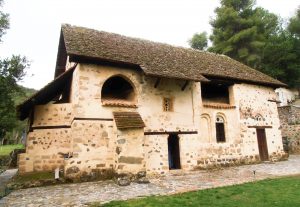
Agios Nikolaos tis Stegis, near Kakopetria in the Solea Valley, is one of Cyprus’s most important painted churches, preserving multiple phases of Byzantine frescoes inside a modest mountain building. Its steep timber roof, added for protection, helped these wall paintings survive centuries of harsh weather and shifting rule. This article explains how the church evolved, what the fresco layers show, and why the site remains a rare visual record of Byzantine life in Cyprus. Agios Nikolaos tis Stegis stands on the western bank of the Karkotis River, near the village of Kakopetria, at an elevation of roughly 700 meters. This mountain setting explains one of the church’s most defining features. Unlike urban Byzantine churches, which display their domes openly, this…

Read more
Ancient Amathus

Ancient Amathus

Amathus projected authority through stone: colossal vessels and carved reliefs that required skill, labour coordination, and long-term planning on a civic scale. These monuments turned ritual spaces into political statements, using weight, repetition, and hybrid symbols to make royal legitimacy feel permanent and divinely protected. This article traces how vessels, reliefs, and funerary sculpture worked together to communicate power at Amathus without relying on lengthy inscriptions. Monumental Scale, Local Identity Located on Cyprus’s southern coast, Amathus developed as one of the island’s most distinctive city-kingdoms during the early first millennium BCE. Unlike other centres that aligned themselves quickly with Greek traditions, Amathus retained a strong indigenous identity, often described as Eteocypriot. This sense of cultural independence was not passive. It…

Read more
Ancient and Modern Cyprus Winemaking

Ancient and Modern Cyprus Winemaking

Cyprus holds a remarkable place in wine history that few other regions can match. This Mediterranean island has been producing wine for nearly 6,000 years, with archaeological evidence placing its first vintages around 3500 BC. Today, Cyprus stands at an exciting crossroads where ancient traditions meet modern innovation, creating wines that honor the past while embracing the future. Historical Context In 2005, archaeologists made a discovery that changed our understanding of wine history. They analyzed pottery fragments found in the village of Erimi during the 1930s and confirmed these Chalcolithic wine jars dated back 5,500 years. The containers showed traces of tartaric acid, a key component of wine, proving that Cyprus produced the Mediterranean's first wines, predating Greek and Italian…

Read more
Salamis to Paphos Historic Routes

Salamis to Paphos Historic Routes

The story of Cyprus roads spans over 3,000 years, from Bronze Age trade routes to Roman highways and modern infrastructure. This network transformed the island from scattered settlements into a connected civilization, linking major cities and remote villages while facilitating trade across the Mediterranean. The earliest roads in Cyprus date back to the Bronze Age, when the island served as a crucial trading hub between the Aegean, Egypt, and the Levant. Cyprus became the principal intermediary station for Mycenaean Greece in accessing Middle Eastern markets, largely due to its copper resources in the Troodos Mountains. By the end of the Hellenistic period, the road network encircled the entire island. During the Late Bronze Age between 1400 and 1150 BCE, trade…

Read more
Freshwater Wetlands and Ponds Cyprus

Freshwater Wetlands and Ponds Cyprus

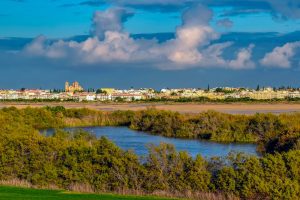
Freshwater Wetlands and Seasonal Ponds are temporary ecosystems in inland depressions across Cyprus, supporting amphibians, migratory waterfowl, and rare fish. These habitats form during winter rains, transforming dry basins into vibrant pools that host diverse life before evaporating in summer heat. They play a crucial role in the island's biodiversity, offering breeding grounds and stopovers in an otherwise arid landscape, highlighting nature's cyclical resilience. A Temporary Ecosystem Inland Freshwater wetlands and seasonal ponds in Cyprus represent ephemeral water bodies that appear in low-lying inland areas, filling with rainwater and runoff to create shallow, nutrient-rich habitats. These depressions, scattered across the Mesaoria Plains and Troodos foothills, range from small ponds of a few square meters to larger wetlands like the one…

Read more