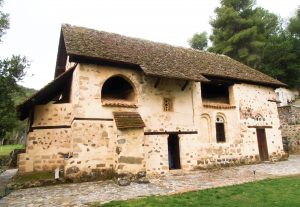
Agios Nikolaos tis Stegis, near Kakopetria in the Solea Valley, is one of Cyprus’s most important painted churches, preserving multiple phases of Byzantine frescoes inside a modest mountain building. Its steep timber roof, added for protection, helped these wall paintings survive centuries of harsh weather and shifting rule. This article explains how the church evolved, what the fresco layers show, and why the site remains a rare visual record of Byzantine life in Cyprus. Agios Nikolaos tis Stegis stands on the western bank of the Karkotis River, near the village of Kakopetria, at an elevation of roughly 700 meters.
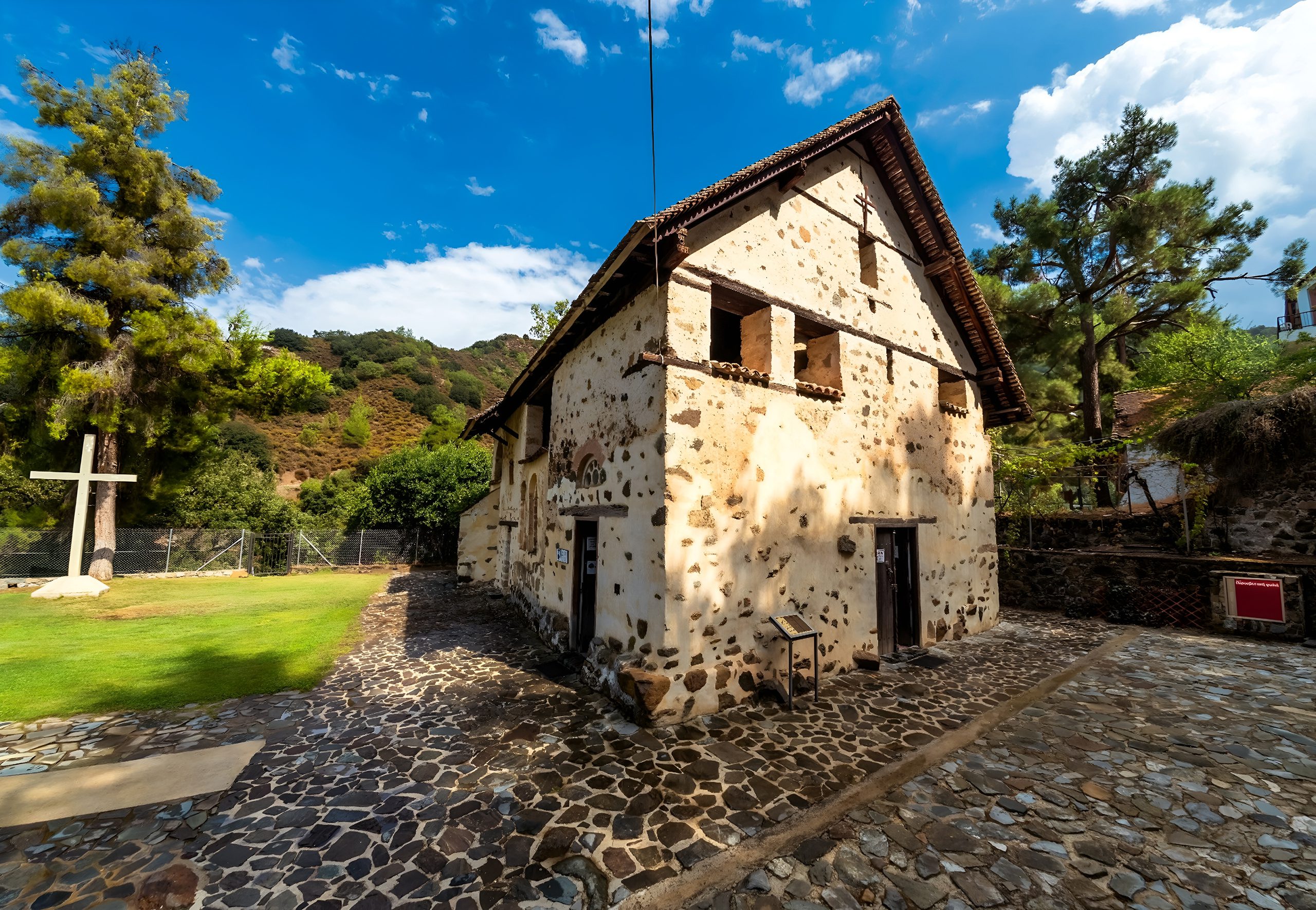
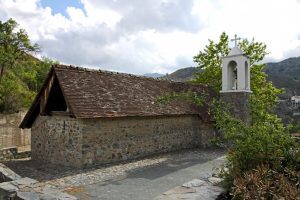
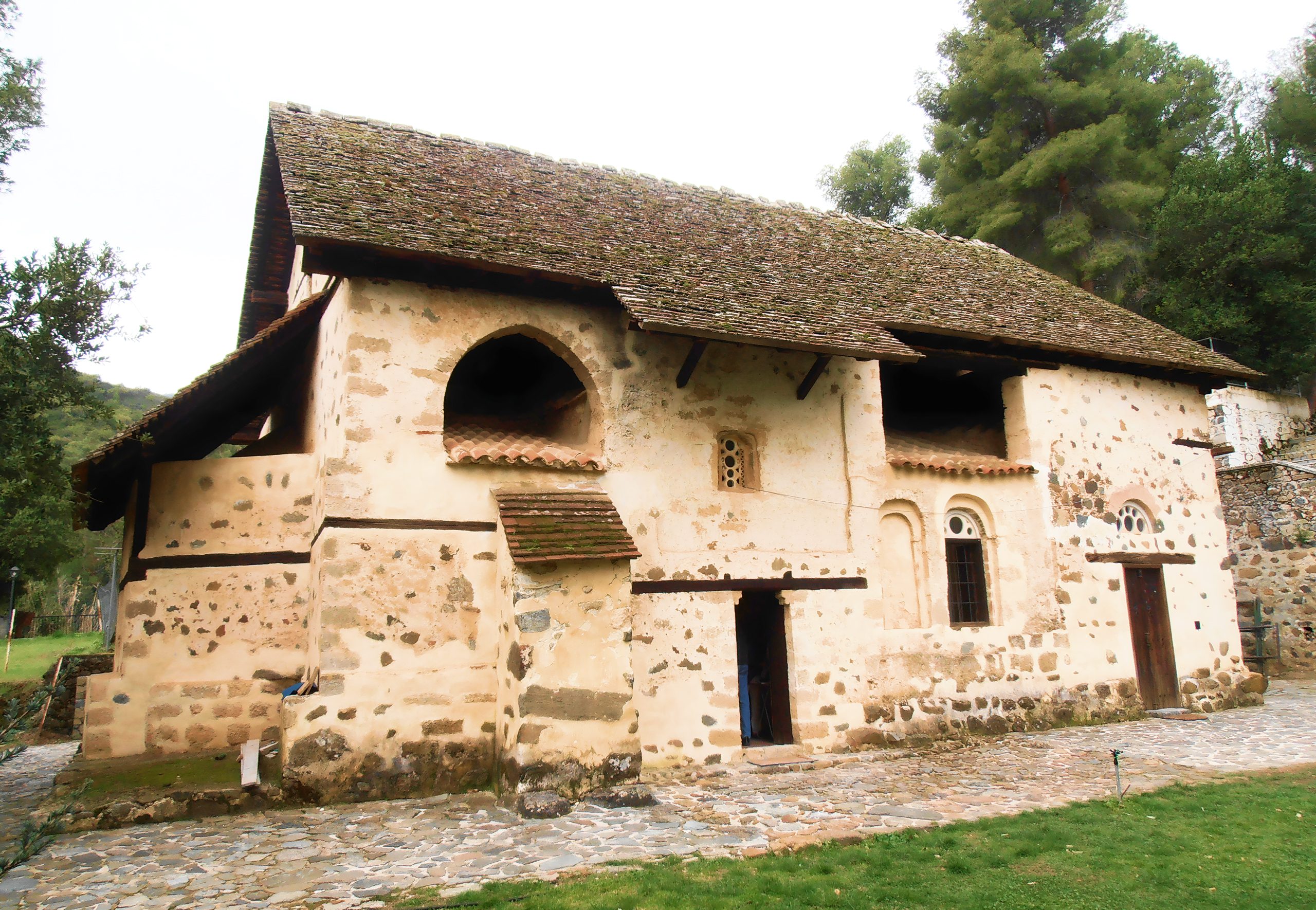
This mountain setting explains one of the church’s most defining features. Unlike urban Byzantine churches, which display their domes openly, this church is wrapped beneath a steep, timber roof covered in flat tiles. The roof was added in the medieval period to protect the masonry and paintings from heavy rain and winter snow.
The solution was practical, not symbolic, yet it transformed the church’s identity. The word Stegis means “of the roof,” and the shelter became so closely associated with the building that it distinguished this Saint Nicholas from countless others across the Orthodox world. What began as a climatic adaptation ultimately became a defining architectural signature unique to the Troodos region.
From Monastery to Mountain Archive
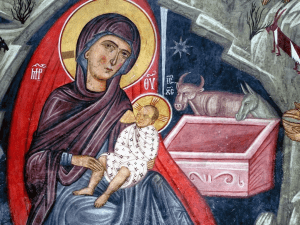
The church was founded in the eleventh century as the katholikon of a small monastery, during a period when Byzantine authority and Orthodox life were being reasserted across Cyprus. Written records from the early centuries are limited, but the interior walls preserve a far more detailed account. Each layer of fresco corresponds to a different moment in the church’s life, allowing the building itself to function as a visual archive.
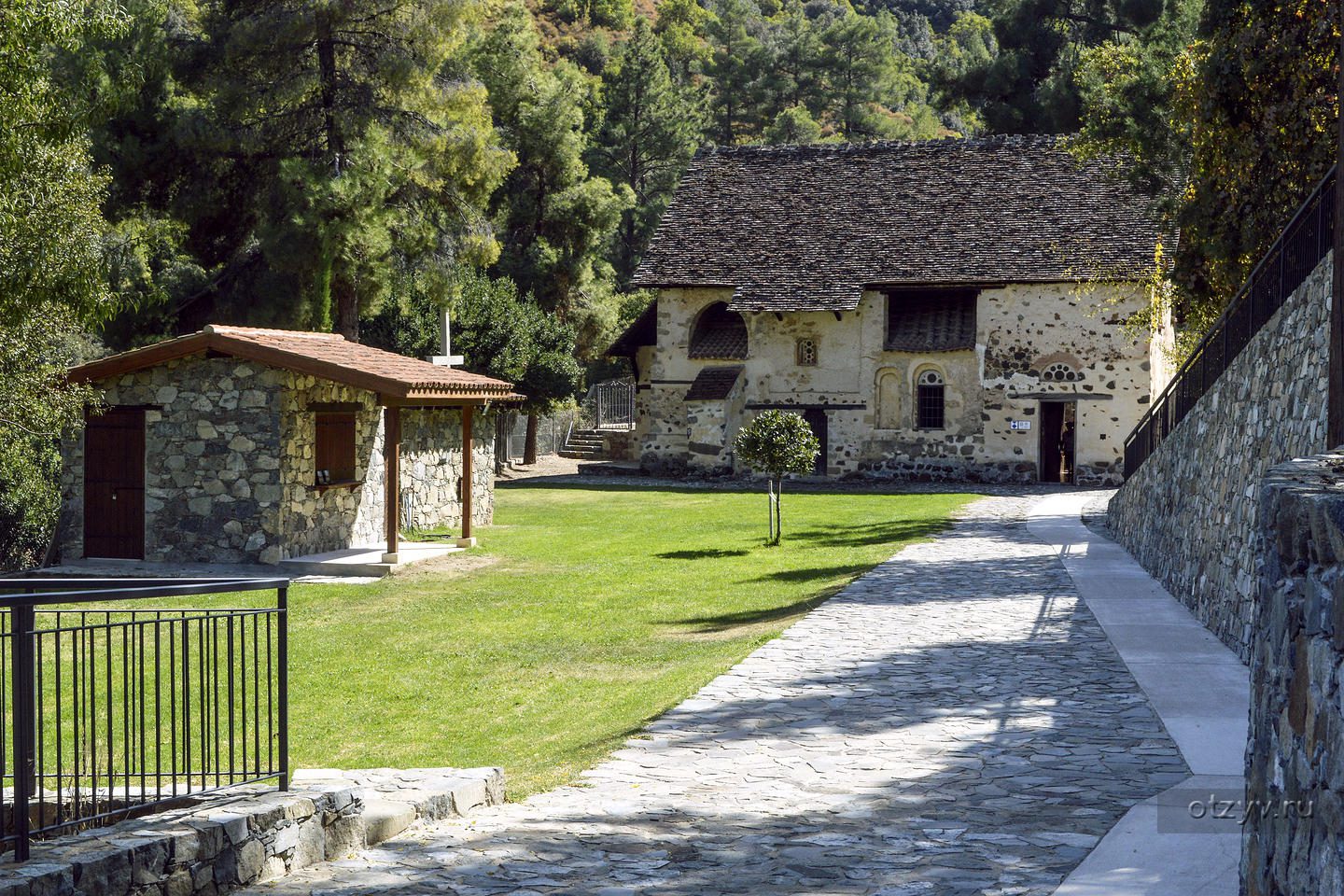
After the Frankish conquest of Cyprus in the late twelfth century, Orthodox institutions across the island faced uncertainty. Yet Agios Nikolaos tis Stegis continued to operate without interruption. The Latin rule did not erase local religious practice here. Instead, the church absorbed stylistic influences while maintaining theological continuity. Over time, repainting did not replace earlier images entirely but built upon them, creating a dialogue between generations of artists and worshippers.
By the eighteenth century, the monastic community had diminished, and by the nineteenth century, it disappeared altogether. What survived was not an abandoned shell, but a church whose painted interior recorded centuries of continuous use, adaptation, and care.
Six Centuries of Fresco Layers
What distinguishes Agios Nikolaos tis Stegis from most Byzantine churches in Cyprus is the survival of multiple, clearly identifiable fresco phases within a single interior. The walls are densely painted from floor to dome, creating an immersive environment where different centuries coexist rather than compete.
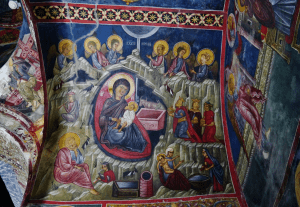
The earliest frescoes date to the eleventh century and belong to the Middle Byzantine period. These images are marked by restraint and intensity. Figures face the viewer directly, defined by strong outlines and large, attentive eyes. Their purpose is not realism but presence. Scenes such as the Transfiguration and the Raising of Lazarus stand among the earliest surviving examples on the island, notable for their emotional clarity and theological focus.
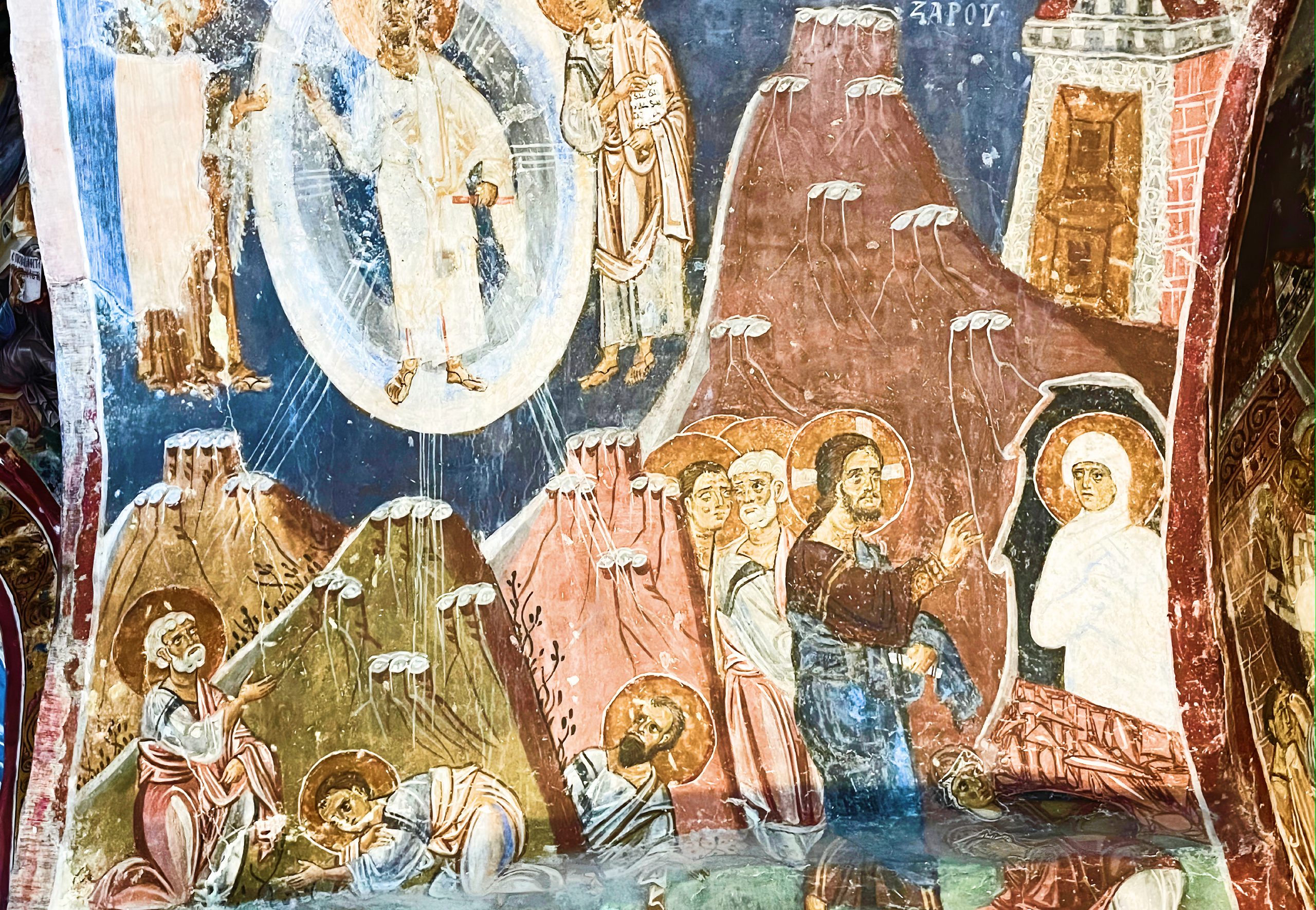
During the twelfth century, parts of the church were repainted in a style associated with the Comnena period. Here, figures become more fluid, facial features more softly modelled, and gestures more expressive. The refinement of these images suggests contact with artistic centres beyond Cyprus, possibly through itinerant painters trained in traditions linked to Constantinople.
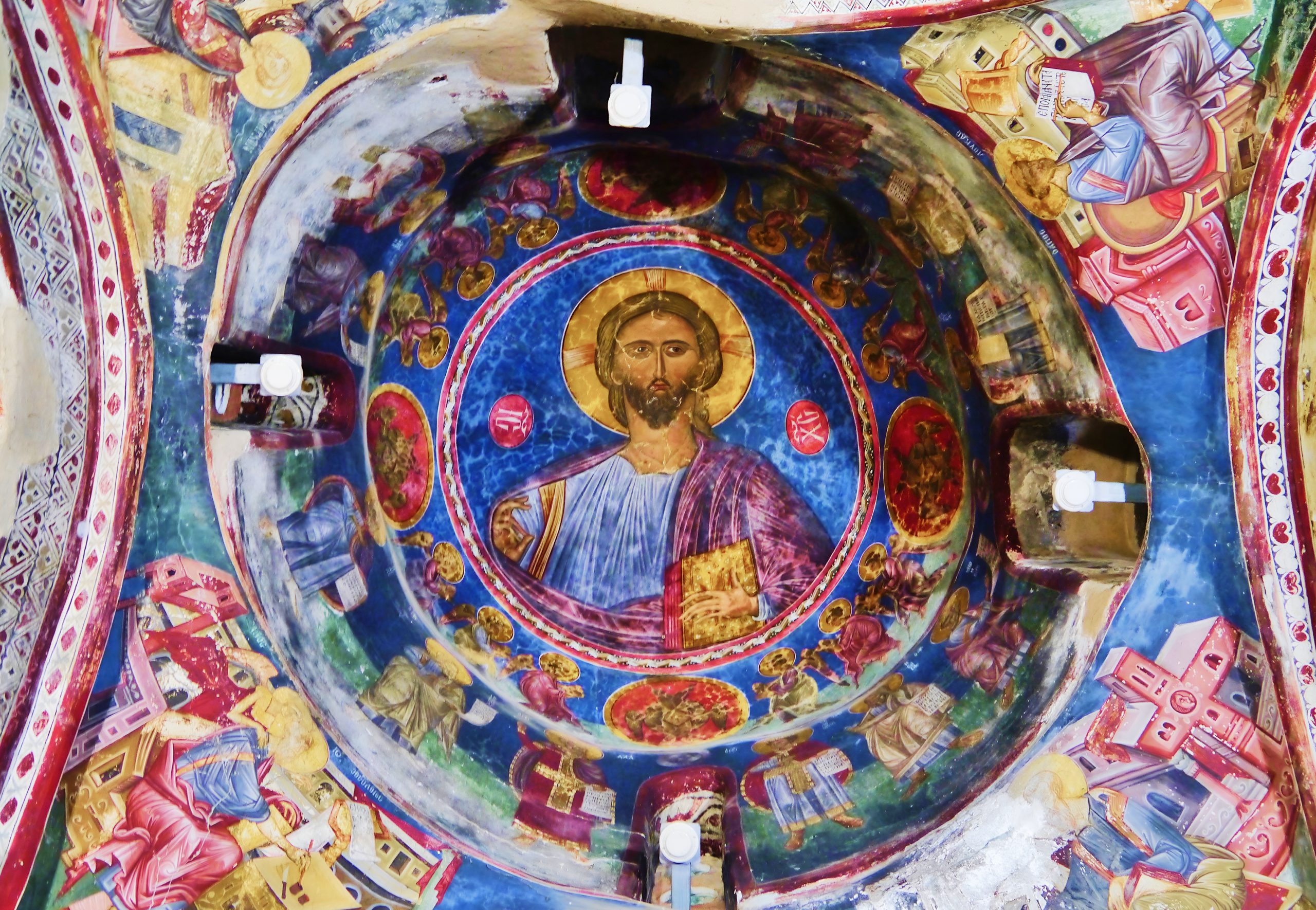
The most extensive transformation occurred in the fourteenth century, when the dome and upper walls were repainted to reflect a more monumental and hierarchical visual language. Christ Pantocrator now dominates the interior, encircled by prophets and evangelists arranged in a carefully structured order. These paintings reflect a world shaped by political uncertainty, where visual clarity and divine authority offered reassurance and stability.
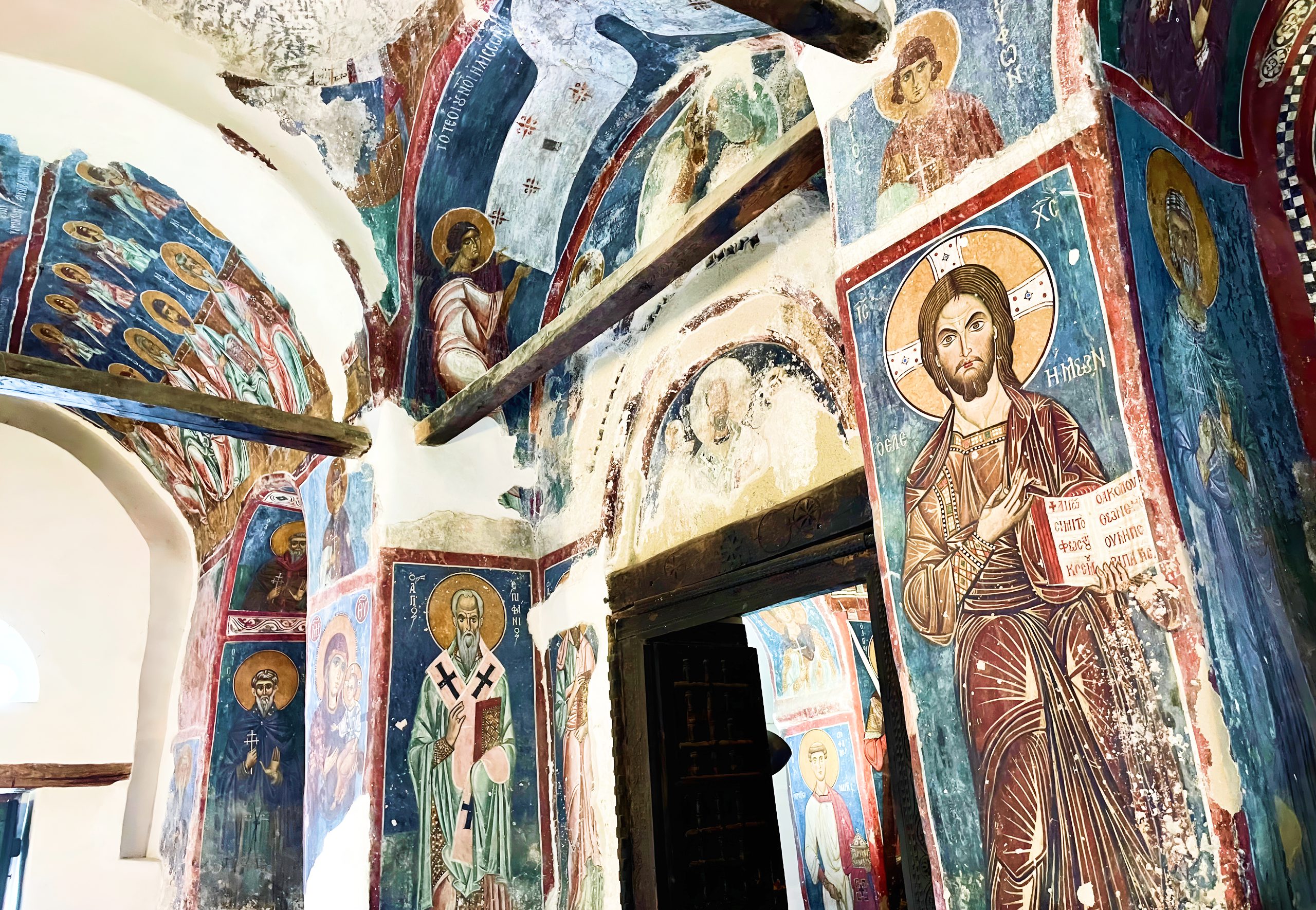
A final phase in the seventeenth century introduced additional figures and decorative elements. Rather than signalling decline, these later works demonstrate the persistence of Byzantine artistic language long after the fall of Byzantium itself, adapted to local conditions and continuing devotional needs.
The Theology Painted on Walls
The fresco program at Agios Nikolaos tis Stegis was never intended as decoration alone. Its purpose was instructional and spiritual, guiding worshippers through a structured vision of the Christian world. The arrangement follows a clear theological logic that would have been immediately understood by the faithful.
Christ occupies the highest point of the interior, ruling from the dome. Below him, prophets and evangelists mediate between heaven and earth. At eye level, saints and narrative scenes unfold where believers stand, placing sacred history directly into the lived space of worship.
Several images are particularly significant for their rarity and early date. The depiction of the Dormition of the Virgin is among the oldest known examples in Cyprus. Over time, military saints such as George and Theodore appear with increasing prominence, reflecting a society shaped by insecurity and the desire for protection. These choices reveal how theology, historical circumstance, and everyday concerns shaped visual expression inside the church.
Preservation through concealment and care
The survival of Agios Nikolaos tis Stegis owes much to circumstances that once seemed unremarkable. The heavy timber roof, added for practical reasons, altered the church’s outward appearance. Local tradition suggests that during periods of Ottoman rule, the building’s barn-like silhouette helped it avoid attention and destruction. Whether legend or fact, the roof undeniably shielded the frescoes from light, moisture, and temperature extremes for centuries.
In the twentieth century, systematic conservation efforts by the Department of Antiquities stabilised the structure and carefully revealed earlier layers of painting. In some cases, later frescoes were removed and transferred to the Byzantine Museum of the Archbishop Makarios III Foundation in Nicosia. This allowed scholars to study the full range of artistic phases while ensuring the long-term preservation of the originals.
Today, photography inside the church is prohibited, and visitor access is carefully managed. These measures are not symbolic. They are essential protections for pigments that have already endured far longer than their creators could have anticipated.
Rare Scenes and Protective Saints
Although the monastery no longer exists, Agios Nikolaos tis Stegis remains part of the religious and cultural life of the Solea Valley. Services are still held on occasion, particularly on the feast day of Saint Nicholas. The church continues to function as a place of memory and meaning rather than a static relic.
Its inclusion in the UNESCO World Heritage listing as part of the Painted Churches of the Troodos Region reflects this living value. The designation recognises not only artistic excellence, but the way faith, environment, and community interacted across centuries to sustain the building and its images.
How the Roof Helped Them Survive
Agios Nikolaos tis Stegis matters because it preserves continuity rather than spectacle. It is not defined by a single moment or style. Instead, it records how belief adapts without erasing its past. The roof protected the walls. The walls recorded devotion. Together, they created a space where change accumulated rather than replaced.
In a mountain valley shaped by weather and time, this small church offers one of the clearest insights into the lived experience of Byzantine Cyprus. Its frescoes do not seek attention. They endure. Beneath their sheltering roof, they continue to tell a story written slowly, one layer at a time.