All Articles

Cyprus Crossroads That Accumulated

Cyprus Crossroads That Accumulated

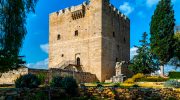
Cyprus is best understood as a layered island, where newcomers rarely erased what came before, and daily life absorbed languages, customs, and beliefs over centuries of close contact. Positioned between Europe, the Levant, and Anatolia, it became a crossroads early through trade, then accumulated Roman, Byzantine, Arab, Latin, Venetian, Ottoman, and British influences without turning into any single one of them. This article traces how those layers formed, where coexistence was practical rather than ideal, and why "Cypriot" identity still carries many histories at once. Ten Thousand Years of Settlement Human settlement in Cyprus stretches back more than ten thousand years. Long before empires arrived, early communities established farming villages and ritual spaces that tied life closely to land and…

Read more

Archangel Michael Frescoes Pedoulas

Archangel Michael Frescoes Pedoulas

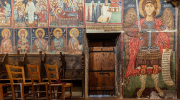
The Church of Archangel Michael in Pedoulas contains one of Cyprus's most complete late-medieval fresco cycles. Painted in 1474 and signed by the artist Minas, the interior preserves an extraordinary collection of wall paintings that provide insight into the artistic traditions, social realities, and cultural identity of mountain communities during the late Byzantine period. Within a modest timber-roofed church, the frescoes combine religious imagery with details drawn from contemporary life. Elements such as Western-style armour appearing in key scenes reveal the political and cultural influences that shaped Cyprus during the fifteenth century. This article explores how the church was adapted to the Troodos climate, how its fresco program was designed to be viewed and understood, and why its artwork remains…

Read more
Cyprus Marine Habitats Biodiversity and Care

Cyprus Marine Habitats Biodiversity and Care

Cyprus marine waters support diverse habitats that harbor exceptional biodiversity despite increasing environmental pressures. The island's coastal ecosystems include Posidonia oceanica seagrass meadows, rocky reefs, soft bottom communities, and caves that provide essential services to both marine life and human populations. Recent mapping efforts estimate 10 to 17 square kilometers of seagrass meadows around Cyprus, storing approximately 19,000 metric tons of carbon in their tissues and sediments.  These underwater gardens produce oxygen, support fish nurseries, protect coastlines from erosion, and filter water while sequestering carbon. The European Union classifies Cyprus waters as part of the oligotrophic Levantine Basin, characterized by warm temperatures, high salinity, and low nutrient levels that create unique ecological conditions. Six Natura 2000 sites protect critical marine…

Read more
Best Inland Mountain Routes Across Cyprus

Best Inland Mountain Routes Across Cyprus

The Troodos Mountains cover one-third of Cyprus and rise to 1,952 meters at Mount Olympus. This massive range stretches across most of the western side of the island, offering cool pine-scented air, traditional villages, and winding roads that climb from sea level through multiple climate zones. These mountain routes provide a complete contrast to coastal Cyprus, both in landscape and atmosphere. Three main routes connect Nicosia to the Troodos region, each offering distinct scenery and driving experiences. The most scenic path runs through Evrychou, Galata, Kakopetria, Platania, outside Kyperounta, Amiantos, and finally Platia Troodos. This route covers approximately 100 kilometers and takes between 90 minutes to two hours depending on traffic and stops. The road features numerous curves and requires…

Read more
Cyprus Folk Dances And Weddings Festivals

Cyprus Folk Dances And Weddings Festivals

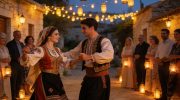
Cyprus folk dances represent living traditions that connect modern Cypriots to Byzantine heritage through choreographed movements, traditional costumes, and communal participation. These dances appear at weddings, religious festivals, harvest celebrations, and family gatherings, serving social functions beyond entertainment by reinforcing community bonds, facilitating courtship under supervision, and displaying cultural identity.  The basic repertoire includes syrtos and kartzilaumas, performed as paired confrontational dances or circle formations, alongside specialty performances like tatsia where dancers balance wine-filled glasses on sieves, and drepani, the sickle dance demonstrating agricultural skills.  Men and women traditionally danced separately, with social conventions restricting female dancing primarily to weddings while men performed at coffee shops, threshing floors, and festivals. The movements emphasize improvisation within communal constraints, with dancers competing…

Read more
Woodcarving for Ecclesiastical Use

Woodcarving for Ecclesiastical Use

Woodcarving for Ecclesiastical Use in ancient and medieval Cyprus involved highly detailed work on icon screens, pulpits, and church furnishings, where technical mastery met spiritual symbolism to create sacred objects. Craftsmen used local woods like cypress or olive to carve intricate designs that conveyed theological meanings, from crosses for salvation to vines for eternal life. This tradition not only enhanced worship spaces but also preserved cultural narratives, making it a vital part of the island's religious heritage. A Sacred Craft of Wood and Faith Woodcarving for ecclesiastical purposes in Cyprus represents a profound intersection of artistry and spirituality, where everyday materials were transformed into symbols of divine presence. Focused on elements like iconostases (screens separating nave from sanctuary), pulpits for…

Read more
Ottoman Influence and Adoption

Ottoman Influence and Adoption

Koupes are one of the most iconic legacies from the period of Ottoman rule in Cyprus, bearing resemblance to Levantine kibbeh. The dish arrived on the island during the centuries of Ottoman control, when eastern Mediterranean food culture spread throughout the empire. The broader kibbeh family includes variations found in Lebanon, Syria, Palestine, Jordan, Iraq, Egypt, and Turkey, where it appears as içli köfte. Each region adapted the basic concept of bulgur-encased meat to local tastes and available ingredients. In Cyprus, the dish evolved into koupes with its distinctive cylindrical shape and specific spice combination. The use of extra-fine bulgur became standard, creating a delicate shell texture different from coarser versions found elsewhere. By the 19th century, koupes had become…

Read more
Hidden Waterfalls & Springs in Cyprus Mountain Valleys

Hidden Waterfalls & Springs in Cyprus Mountain Valleys

Cyprus contains a surprising network of waterfalls and natural springs hidden within the Troodos mountain range. These water features flow year-round despite the island's reputation as a dry Mediterranean destination. The mountains capture rainfall that would otherwise evaporate in coastal plains, creating conditions where water persists through even the hottest summers. Most waterfalls cluster between 650 and 1,600 meters elevation where annual precipitation reaches 1,000 millimeters compared to 300 millimeters at sea level. The Troodos region produces 80 percent of Cyprus's surface water, feeding rivers that supply reservoirs and aquifers across the island. These waterfalls and springs formed over millions of years as mountain streams carved through volcanic diabase and limestone rock, creating spectacular cascades surrounded by dense pine forests,…

Read more
Architecture of Thread: Lace in Streets

Architecture of Thread: Lace in Streets

In a handful of European towns, lace is not confined to drawers or museums, but spills into streets, shopfronts, and daily routines, turning private handwork into public identity. From Pano Lefkara in Cyprus to Burano, Idrija, and Croatian lace centres, makers and local institutions keep the craft visible so it continues to shape how places look and how they remember themselves. This article traces how lace moved into urban space, what each town’s setting adds to the tradition, and why visibility is the key to lace surviving as living heritage. When Lace Leaves the Home Lace has traditionally belonged to the domestic world. It was made indoors, often by women, and passed down quietly through generations. What makes certain towns…

Read more