All Articles

The European Eel in Cyprus

The European Eel in Cyprus

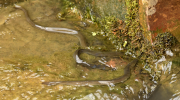
Across the rivers, reservoirs, and quiet wetlands of Cyprus, a remarkable migratory fish still moves almost unseen. The European eel (Anguilla anguilla) is one of the island’s most mysterious freshwater inhabitants – a species whose life connects Cyprus not only to the Mediterranean, but to the distant Atlantic Ocean and the legendary Sargasso Sea. Its story is one of endurance, disruption, and surprising rediscovery. A Journey Across Oceans and Islands The European eel belongs to a group of fish known as catadromous species – animals that grow in freshwater but return to the sea to reproduce. After hatching in the Sargasso Sea, tiny transparent larvae drift for thousands of kilometres before reaching European and North African coasts. Cyprus sits at…

Read more
Blunt Nosed Viper of Cyprus

Blunt Nosed Viper of Cyprus

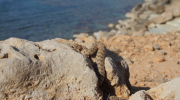
Few animals in Cyprus inspire as much fascination – or as much fear – as the blunt-nosed viper (Macrovipera lebetina lebetina).  Ask almost any Cypriot about snakes, and sooner or later the conversation will turn to the "fina": a large, thick-bodied viper said to chase people, guard water sources, climb trees, or even jump several meters through the air. Like many stories passed down through generations, these tales contain a mixture of observation, exaggeration, and folklore.  The reality is far more interesting.  The blunt-nosed viper is not only Cyprus's largest snake but also one of the island's most important predators. Hidden among stone terraces, vineyards, river valleys, and rocky hillsides, it quietly performs a vital ecological service by controlling rats and mice.  For most visitors to Cyprus, seeing one in the wild is…

Read more
The Endemic Insects of Cyprus

The Endemic Insects of Cyprus

Cyprus is famous for its orchids, mouflons, and reptiles, but some of its most remarkable wildlife is so small that it often goes unnoticed. Across the island, hundreds of insect species have evolved in isolation, and many exist nowhere else on Earth. They are tiny treasures that tell the story of Cyprus itself. An Island that Creates Its Own Species Insects are the most diverse animals on Earth. They pollinate flowers, recycle dead plants, control pests, and provide food for birds, reptiles, and mammals. Without them, ecosystems would simply collapse. Cyprus is particularly special because it is an island. For millions of years, populations of insects became separated from their mainland relatives. With little opportunity to mix with other populations,…

Read more
Eleonora’s Falcon: Cyprus’s Clever Autumn Hunter

Eleonora’s Falcon: Cyprus’s Clever Autumn Hunter

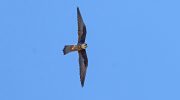
Every autumn, a sleek and fearless falcon arrives on the sunbaked limestone cliffs of Cyprus, riding in from a journey that spans half the world. It is not the largest bird of prey in the skies above the island, nor the most famous – but those who have watched it hunt, twist, and dive over the crashing waves below will tell you it may well be the most thrilling. This is Eleonora's Falcon, and its story is stranger, older, and more remarkable than you might ever expect. Cousin of the Peregrine, Child of the Mediterranean Eleonora's Falcon belongs to the family Falconidae, a group of birds that includes peregrines, kestrels, and hobbies. Within this family, it sits in the so-called…

Read more
Dusky Grouper: Ancient Keeper of Rocks

Dusky Grouper: Ancient Keeper of Rocks

There is a fish in the waters around Cyprus that most people have eaten but far fewer have ever truly seen. It rests on rocky ledges in the semi-darkness, patient and watchful, like an old guardian who has been sitting in the same cave for longer than some of us have been alive. It is one of the most important fish in the Mediterranean Sea – and it carries a secret that most people would find astonishing. This is the story of the dusky grouper, and why it matters more than we may realise. From the Family of Giants – What Is a Grouper? Groupers belong to a large and ancient family of sea fish called Serranidae, commonly known as…

Read more
Neptune Grass of Cyprus

Neptune Grass of Cyprus

Beneath the turquoise surface of the Cypriot sea, invisible to the sunbathers on the shore above, lies one of the most extraordinary living communities on Earth. It is not a reef, not a forest of kelp, but something far more ancient and remarkable – a meadow of flowering grass, swaying gently in the current, older than most civilisations. And Cyprus, it turns out, may be home to one of the most resilient stands of this grass anywhere in the Mediterranean. Not an Alga – A True Flowering Plant Many people who encounter Neptune grass – either as tangled brown leaves washed up on a beach or glimpsed through a snorkel mask – assume it must be a seaweed. It is…

Read more
The Mediterranean Monk Seal Of Cyprus

The Mediterranean Monk Seal Of Cyprus

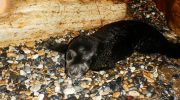
Imagine standing on a rocky ledge along the wild Akamas coast, gazing out at the turquoise water below, when a large, dark shape quietly surfaces – blinking at you with wide, soulful eyes before silently slipping back beneath the waves. That is the Mediterranean Monk Seal, and if you are lucky enough to witness this, you are looking at one of the rarest mammals on Earth. What makes this moment even more extraordinary in Cyprus is that, not so long ago, most scientists believed this animal was completely gone from the island's waters forever. What Exactly Is a Monk Seal? Seals belong to a group of marine mammals called pinnipeds – a Latin word meaning "fin-footed" – a family that…

Read more
Cyprus Wheatear

Cyprus Wheatear

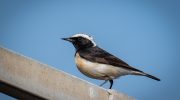
On a warm spring morning anywhere on Cyprus, perched on a stone wall or a swaying pine branch, a small black-and-white bird fills the air with a strange buzzing rattle of a song. This is the Cyprus Wheatear – and this island is the only place in the world where it breeds. That alone makes it worth getting to know. What Kind of Bird Is It? The Cyprus Wheatear belongs to a group called wheatears, small, energetic birds found from the Arctic to the Sahara, almost always in open rocky landscapes. About thirty species exist worldwide, and they are all recognised by the same thing: a bright white flash on the rump as they fly. The scientific name of the…

Read more
Flamingoes in Cyprus

Flamingoes in Cyprus

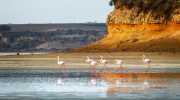
Every year, as the first autumn rains begin to fill Cyprus's ancient salt lakes, something extraordinary happens. The shallow, glittering water starts to turn pink – not from the sunset, but from thousands of long-legged, rose-coloured birds wading in perfect, unhurried formation. The Greater Flamingo has arrived. And once you have seen it, you will never quite forget it. The Family of Flame-Coloured Birds Flamingos are among the most instantly recognisable birds on Earth. They belong to the family Phoenicopteridae – an ancient and rather exclusive club with only six living species in the world, found across Africa, the Mediterranean, the Middle East, and the Americas. The name "flamingo" itself traces back to the Portuguese and Spanish word flamengo, meaning…

Read more