All Articles

The Eurasian Hoopoe in Cyprus

The Eurasian Hoopoe in Cyprus

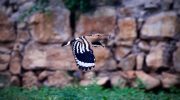
Somewhere between February and April each year, a flash of cinnamon, black, and white appears in the olive groves and pine forests of Cyprus, and a soft, rhythmic call drifts across the hillsides: oop-oop-oop. The bird has arrived. The Hoopoe is back – and if you have ever seen one raise its magnificent feathered crown, you will understand why this bird has captivated people for thousands of years. Meet the Bird That Named Itself The Eurasian Hoopoe (Upupa epops) is a medium-sized bird found across Europe, Asia, and Africa. It is one of the most colourful birds found across Afro-Eurasia, notable for its distinctive "crown" of feathers. Despite its flamboyant appearance, it is not a parrot, a pheasant, or anything…

Read more
Cyprus Warbler: The Island’s Hidden Singer

Cyprus Warbler: The Island’s Hidden Singer

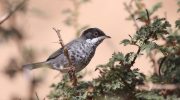
Somewhere in the sun-baked scrubland of Cyprus, perched on the very tip of a thorny branch, a small grey bird opens its beak and fills the warm Mediterranean air with a fast, rattling, slightly scratchy song. It is not the most melodious sound in the bird world, but it is entirely its own. The Cyprus Warbler is one of only three bird species on Earth that breed exclusively on this island, and that alone makes it extraordinary. But there is more to this little bird than you might expect. What is it’s Local Name, and Why? The Cyprus Warbler is known in the Cypriot dialect as τρυπομάζης (trypomazis), τρυποράσ'ης (tryporassis), τρυποβατούιν (trypovatuin), and μαυροτσιροβάκος (mavrotsirovakos). The first three names all…

Read more
European Roller Of Cyprus

European Roller Of Cyprus

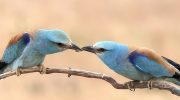
Every spring, a small miracle arrives unannounced across the open fields and olive groves of Cyprus. A bird so astonishingly blue it looks almost painted – as though someone dipped a jay-sized creature into a pot of turquoise and let it fly. The locals call it the Κράγκα (Krangka), and if you've ever caught one sitting on a telephone wire in the morning sun, you'll understand why people stop their cars to look. What Exactly Is a Roller? The European Roller (Coracias garrulus) belongs to the family Coraciidae – the rollers – a small, ancient group of birds found mostly across Africa and tropical Asia. Think of them as the jewel-coloured cousins of kingfishers and bee-eaters: bright, bold, sit-and-wait hunters…

Read more
Gilthead Sea Bream of Cyprus

Gilthead Sea Bream of Cyprus

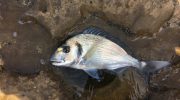
There is a fish in the warm blue waters surrounding Cyprus that wears a golden crown – quite literally. It is one of the most prized fish of the Mediterranean world, celebrated at Roman banquets, immortalised in ancient mosaics, and farmed today in the crystal-clear seas off the Cypriot coast. Meet the Gilthead Sea Bream – beautiful, clever, and surprisingly full of surprises. Of Porgies and Sparidae – A Royal Family The Gilthead Sea Bream, known in Cyprus as tsipoura (τσιπούρα), belongs to the family Sparidae – the sea breams and porgies – one of the most ecologically and commercially important fish families in the Mediterranean. The Sparidae are a diverse and ancient family within the order Spariformes, comprising over…

Read more
The Cyprus Scops Owl

The Cyprus Scops Owl

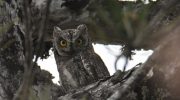
On a warm spring evening in Cyprus, as the last light fades over an olive grove and the first stars appear, a small, haunting sound rises from the trees – a soft, rhythmic double whistle, repeated over and over into the dark. You might not see the creature making it, but you will certainly hear it, and once you know what it is, you will never forget it. That sound belongs to one of Cyprus's most treasured and exclusive residents: the Cyprus Scops Owl, Otus cyprius – a bird that exists nowhere else on Earth. A Tiny Owl with a Big Claim to Fame Owls belong to one of nature's most ancient and successful bird groups, the order Strigiformes, which…

Read more
Red Mullet of Cyprus

Red Mullet of Cyprus

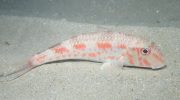
Just below the surface of Cyprus's warm, clear Mediterranean waters, a small but spectacularly crimson fish goes about its unhurried business – probing the sandy seabed with its whisker-like barbels, digging for worms and shellfish with the focus of a seasoned detective. It is the red mullet, and it has been doing exactly this for millions of years. What makes this modest-looking creature so fascinating is not just what it does underwater, but the extraordinary story it carries with it through human history. Meet the Goatfish Family The red mullet belongs to the family Mullidae, a group of fish found throughout tropical and temperate seas worldwide, known collectively as goatfish. The name comes from those distinctive chin barbels – a…

Read more
The Goddess’s Bird: Cyprus Rock Doves

The Goddess’s Bird: Cyprus Rock Doves

Columba livia | Αγριοπερίστερο (Agriopéristero)  Most of us have walked past a pigeon without a second glance. Yet perched on the sea cliffs of Cyprus – far from any city square or café terrace – lives a bird that shaped civilisation, inspired goddesses, and carried messages across wars. This is not the feral city pigeon you brush off in a park. This is the wild rock dove, and its story on this island is older, richer, and far more surprising than you might expect.  From One Family, a Thousand Faces  The rock dove belongs to Columbidae, a family of over 350 species found on every continent except Antarctica. The rock dove itself, Columba livia, is the wild ancestor of every domestic pigeon ever bred – the racing homers, the white wedding doves, the fancy breeds,…

Read more
Swifts of Cyprus

Swifts of Cyprus

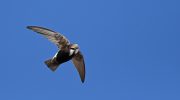
Every evening in late spring, as the light over Cyprus turns golden and the air begins to cool, the sky fills with a sound that stops you mid-step. A wild, piercing scream – not one bird, but ten, twenty, fifty – tearing between the church towers and old stone walls of village after village. If you've heard it, you'll never forget it. And if you look carefully, you may realise that not all these dark, boomerang-winged shapes above you are the same bird at all. Cyprus is home to four recorded species of swift. Together, they form a living mosaic in the island's skies – each one a different chapter of the same remarkable story. What Is a Swift? Swifts…

Read more
Aphrodite’s Ancient Companion: The Cyprus Hare

Aphrodite’s Ancient Companion: The Cyprus Hare

Long before the island became famous for its beaches and bronze, this fleet-footed creature was already racing through its fields – sacred, storied, and irreplaceable.  If you have ever driven through the Cypriot countryside at dusk and caught a pair of amber eyes frozen in your headlights before vanishing into the darkness, there is a good chance you havealready met the Cyprus hare. This golden-brown creature – Lepus europaeus cyprius – is not just a wild animal. It is an endemic subspecies found nowhere else on Earth, a living thread woventhrough ten thousand years of Cypriot history, mythology, and daily life. And it is far more interesting than you might think.  Ears Long, Heart Faster Still  The hare belongs to the Order Lagomorpha – an ancient group of plant-eaters that includes hares, rabbits, and the small round-eared pikas of mountain regions. Despite their appearance,lagomorphs are not rodents. They form their own distinct branch of the mammal family tree, one that stretches back at least 53 million years into the geological past. There are around 32 speciesof hare in the world, from the Arctic hare of the frozen north to the Cape hare of Africa's savannahs.  The European brown hare (Lepus europaeus) is one of the most widespread, ranging from Western Europe across Central Asia and into the Middle East. But the animal living on Cyprus issomething special – it has been isolated on this island long enough to develop its own identity. Formally described as a distinct subspecies in 1903 by British zoologist George Edward HamiltonBarrett-Hamilton, the Cyprus hare is recognised as unique to the island, shaped by millennia of island life into something subtly but meaningfully its own.  Arrived with the First Farmers  Cyprus was probably never connected to the mainland by a land bridge. Every land animal on the island arrived either by swimming, floating on driftwood, or – most commonly – being broughtby people. The Cyprus hare is believed to have been introduced by Neolithic settlers arriving from the Levant and Anatolia, probably around 10,000–9,000 years ago, during the same remarkablewave of human activity that also brought the island its first sheep, goats, foxes, and domestic cats.  These early settlers were already accomplished farmers and hunters. Cyprus offered extraordinary hunting grounds, and the hare would have been a welcome and practical addition to theisland's fauna – fast-breeding, easily hunted, and nutritionally rich. Over the millennia that followed, with no wolves, bears, or large cats to challenge it, the hare flourished across the landscapeand quietly evolved into its own island form.  Hare bones have been found at Neolithic sites across the island, confirming that this animal was a significant food source for Cyprus's earliest communities. In a very real sense, the hare has beenpart of Cypriot life longer than written history itself.  The hare is the main and largest prey species on Cyprus – present in every district of the island in satisfactory numbers, remarkable given the intense hunting pressure it endures year after year.  A Study in Speed and Stillness  About the size of a small cat but leaner, longer, and built entirely for speed, the Cyprus hare weighs 3.5–5 kg and wears a warm tawny-brown coat that fades to white on the belly. Those famous long ears swivel independently to catch any sound – and double as a summer cooling system, radiating heat away from the body like living radiators. Unlike rabbits, hares never dig burrows. They rest in shallow ground hollows called forms, and their young – called leveret – are born fully furred and wide-eyed, ready to scatter within hours of birth. In late winter, something remarkable happens: normally shy and nocturnal, hares appear in broad daylight, chasing each other across fields and boxing. For years this was…

Read more