All Articles

Souskiou Cemeteries, Cyprus

Souskiou Cemeteries, Cyprus

The Souskiou cemeteries represent one of the most important archaeological discoveries in Cyprus, shedding light on burial practices and social organization from nearly 5,000 years ago. These sites, located in southwestern Cyprus near the village of Souskiou, revealed elaborate rock-cut tombs filled with grave goods that challenge previous assumptions about prehistoric life on the island. The Souskiou complex consists of four separate cemetery areas and a settlement, all dating to the Chalcolithic period around 3000 BC. The most extensively studied cemetery, known as Souskiou-Vathyrkakas Cemetery 1, sits along the southern edge of a ravine, directly opposite the contemporary settlement on the other side of a stream. This deliberate separation of the living from the dead marked a significant departure from…

Read more

Nicosia Municipal Arts Centre (NiMAC)

Nicosia Municipal Arts Centre (NiMAC)

NiMAC is housed in the renovated building of the Old Powerhouse, located in the historical centre of Nicosia, after an agreement between the Electricity Authority of Cyprus and the  Nicosia Municipality. The institution operates in association with the Pierides Foundation and serves as the oldest and largest contemporary art center on the island. The building is in itself a fine example of industrial architecture, and was recognized with the Europa Nostra award in 1994 following its restoration. The power station once supplied electricity to Nicosia, and its transformation into a cultural venue demonstrates successful adaptive reuse of industrial heritage. The complex includes multiple exhibition halls, an educational center for children, and the Demetrios Z. Pierides History of Art Library. Since…

Read more
Traditional Cypriot Attire

Traditional Cypriot Attire

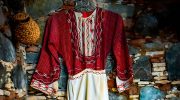
Traditional Cypriot clothing is not just about what people wore. It is about how they lived, what they valued, and how they understood their place in the world. Across villages, towns, and generations, dress functioned as a visible language, communicating age, status, profession, and regional identity without a single word being spoken. This article explores how Cypriot attire developed over time, what made it distinct, and why these garments still matter today, not as costumes, but as cultural memory woven into fabric. An island shaped by layers, stitched into cloth Cyprus has always stood at the crossroads of civilisations, and its clothing reflects this layered history. Byzantine restraint, Venetian refinement, Ottoman opulence, and later European influence all left their marks…

Read more
How Feast Days Transform Cyprus Streets

How Feast Days Transform Cyprus Streets

Easter in Cyprus, known as Pascha or "Lambri" meaning "the Bright One," represents the most important celebration in the Orthodox Ecclesiastical calendar. For nearly 82% of Cyprus' 1.1 million inhabitants who follow the Greek Orthodox Church, this period transforms the island into a living expression of faith, tradition and community identity. Unlike many Western holidays focused on individual celebration, Easter in Cyprus unfolds as a week-long social and spiritual event where neighbourhoods, villages and families reconnect through shared rituals that have remained largely unchanged for centuries. The streets fill with people, the air fills with the aroma of traditional foods and the island shifts into a rhythm that belongs entirely to the celebration of resurrection and renewal. Holy Week: The…

Read more
Community Spaces in Cyprus

Community Spaces in Cyprus

Community spaces in Cyprus function as the invisible framework that holds daily life in place. The kafeneion with its backgammon players, the plateia shaded by ancient trees, the municipal park where families gather on Sunday afternoons. These are not monuments or attractions. They are the places where neighbors meet, where conversations happen, where children play while parents talk. Cyprus measures its social life not in grand gestures but in these small, repeated gatherings. A village square might see the same faces every morning for decades. A coffee shop operates as an unofficial town hall. A public park becomes the setting for birthdays, first dates, and quiet evenings. Understanding Cyprus means understanding these spaces. The Kafeneion: More Than Just Coffee Traditionally,…

Read more
Environmental Legislation in Cyprus

Environmental Legislation in Cyprus

Cyprus maintains an extensive environmental legal system designed to protect natural resources, manage pollution, preserve biodiversity, and promote sustainable development. As a European Union member since 2004, the island has harmonized national laws with over 300 EU environmental directives and regulations. The framework addresses air and water quality, waste management, nature conservation, climate change, and industrial emissions. This legal infrastructure aims to balance economic development with environmental protection across both public and private sectors. The Evolution of Cyprus Environmental Law Environmental governance in Cyprus formally began in 1986 with the establishment of the Environmental Service, which evolved into the Department of Environment in 2010. The first Director of the Service was appointed in 1992. Early environmental measures focused primarily on…

Read more
Research & Environmental Collaboration In Cyprus

Research & Environmental Collaboration In Cyprus

Cyprus has developed into a recognized center for environmental research in the Eastern Mediterranean and Middle East region. Multiple research institutions conduct studies on climate change, air and water quality, biodiversity, energy systems, and agricultural sustainability. These organizations collaborate with international partners from Europe, North America, and the Middle East to address environmental challenges through scientific investigation, technological innovation, and policy development. The research infrastructure spans government agencies, independent research centers, universities, and private sector partners who share data, resources, and expertise. Building the Research Foundation The Cyprus Institute stands as the primary driver of environmental research since its establishment in 2005 under the Cyprus Research and Educational Foundation. Planning occurred between 2000 and 2004, led by international scholars including…

Read more
Expat Life in Cyprus

Expat Life in Cyprus

Cyprus has quietly become one of Europe's most attractive destinations for people seeking a new home abroad. The Mediterranean island combines year-round sunshine, affordable living costs, and a welcoming environment that has drawn over 260,000 foreign residents to its shores. Nearly 20% of the population comes from other countries, which creates a diverse community where newcomers can settle comfortably without feeling isolated. The expat population represents a mix of retirees, digital nomads, business owners, and families looking for better quality of life. British nationals form the largest group with around 60,000 residents, followed by significant communities from Romania, Bulgaria, Russia, and Greece. Americans and Canadians represent a smaller but growing segment of the expat population. Safety ranks as one of…

Read more
Famagusta Canbulat Museum

Famagusta Canbulat Museum

The Canbulat Museum sits within the Arsenal Bastion, a fortified structure that forms part of the massive Venetian walls surrounding old Famagusta. The bastion was first opened as a museum in 1968, then underwent renovation and reopened in 2008. The museum occupies a site that witnessed one of the most decisive moments in Cypriot history. The building dates back to the Venetian period and houses a tomb made of cut stone surrounded by iron railings. Visitors enter through the southern section of the fortress walls, adjacent to the Canbulat Pasha Gate. The location holds both historical and spiritual significance for many Turkish Cypriots, who regard it as a pilgrimage site honoring Ottoman military courage. Historical Background The Ottoman conquest of…

Read more