
Easter in Cyprus, known as Pascha or “Lambri” meaning “the Bright One,” represents the most important celebration in the Orthodox Ecclesiastical calendar. For nearly 82% of Cyprus’ 1.1 million inhabitants who follow the Greek Orthodox Church, this period transforms the island into a living expression of faith, tradition and community identity.
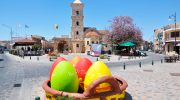
Unlike many Western holidays focused on individual celebration, Easter in Cyprus unfolds as a week-long social and spiritual event where neighbourhoods, villages and families reconnect through shared rituals that have remained largely unchanged for centuries.
The streets fill with people, the air fills with the aroma of traditional foods and the island shifts into a rhythm that belongs entirely to the celebration of resurrection and renewal.
- Holy Week: The Sacred Framework of Celebration
- The Preparations and Symbolic Foods
- Good Friday: Solemnity and Procession
- Holy Saturday Night: The Resurrection Service
- Easter Sunday: The Family Feast
- Easter Monday: Games and Community Spirit
- Remarkable Facts About Cypriot Easter
- Deeper Spiritual Significance
- Cyprus Easter Today and Its Relevance
- Visiting Cyprus During Easter
Holy Week: The Sacred Framework of Celebration
Easter in Cyprus follows the Orthodox Calendar, which places it as the first Sunday after the full moon that occurs at the spring equinox. This means the date shifts each year, typically falling between mid-April and early May. The week leading to Easter Sunday is called Holy Week, and each day carries distinct spiritual meaning and customs.
Palm Sunday marks the beginning with people bringing palm and olive branches to churches, then carrying them around the church while following an icon of Christ to recall Jesus’ Triumphal Entry into Jerusalem. These blessed branches then remain in homes throughout the year as symbols of protection and blessing.
Holy Monday brings families who clean their homes in preparation, while Holy Tuesday features churches resonating with special hymns. By midweek, the focus shifts toward spiritual preparation with Holy Wednesday devoted to themes of healing and forgiveness.
The Preparations and Symbolic Foods
Holy Thursday marks a turning point in preparations. Families prepare traditional Easter foods such as arkatena (rusks made using a chickpea-based starter) and stavrokouloura (breads shaped with crosses). Most importantly, this day is when the famous red egg dyeing takes place. The red colour symbolises the blood of Christ shed during the Crucifixion.

The traditional way of dyeing eggs was with onion leaves, yellow daisies, yarrow, special seaweeds and roots such as wild rubia, which were thrashed and boiled in water. Though some families now use commercial dyes, the practice of preparing eggs by hand remains central to the holiday preparation.

The flaounes (cheese pies) are intricately linked with Easter in Cyprus, so much so that a traditional Cypriot proverb says “no flaounes before Easter, no dowry before the wedding”. Holy Thursday is also associated with baking, and preparation for kneading the flaounes started on Holy Friday. These pastries flavoured with mint and mahlab represent far more than food, they embody the island’s commitment to preserving tradition.
Good Friday: Solemnity and Procession
Good Friday is the most solemn day of Holy Week. In the morning, young women traditionally gather at churches to decorate the Epitaphios with flowers following the service commemorating the deposition of Christ from the Cross. The Epitaphios represents the burial of Jesus Christ.
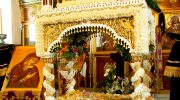
In the evening, the Epitaphios procession moves through the streets in a great procession that ends back at the church. Worshippers follow the procession and sprinkle fragrant herbs along the route. This public display of faith transforms streets into shared sacred spaces where the entire community participates in commemoration, regardless of religious practice.
In many homes a simple meal is prepared, often lentils cooked with vinegar, recalling the vinegar offered to Christ when he said “I thirst” while on the Cross. This fasting tradition continues to shape meals throughout Holy Week as families prepare spiritually for the resurrection.
Holy Saturday Night: The Resurrection Service
The most significant moment of the entire Easter celebration occurs at midnight on Holy Saturday. A midnight vigil is held to herald the Resurrection of Christ. Wood is gathered and piled up to prepare a place to burn Judas Iscariot in effigy.
At nightfall, Cyprus turns from making noise to making light, the old-fashioned way. Bonfires are lit all around, including in towns, cities and villages. Crowds of participants gather around them to admire the preparation and watch them burn in flames.

This tradition is known as Lambratzia, a bonfire lit in churchyards where an effigy of Judas is burned to condemn both his betrayal of Christ and any form of betrayal in society. Lambratzia means Fire in the Cypriot dialect, and the preparation starts well before Holy Saturday, with teens and children scouring their neighbourhoods to gather scrap wood in friendly competition among parishes to create the biggest and most impressive bonfire.
When midnight arrives, the church bells ring out in celebration. The priest announces “Christos Anesti” (Christ is Risen). The congregation lights candles from the Holy Flame. Attendees then pass the “Holy Flame” from candle to candle, beginning with the candle of the priest. All walk home carrying their candle and saying to those they see “Christ is risen!” The traditional reply is, “He is risen indeed!”
There are also fireworks displays on the way home, turning the night sky into a display of light and celebration that extends beyond the church walls into every neighbourhood.
Easter Sunday: The Family Feast
Easter Sunday is when the celebrations really begin. Feasts of souvla (large pieces of lamb or pork, or chicken are cooked on an open charcoal fire), salads, cakes, sweets, and alcoholic beverages are on the menu. The smell of outdoor barbeques infuses the whole island.
Lamb is the main traditional Easter meal as the early Christians adopted this custom from the ancient Jews who sacrificed lambs for their Passover celebrations. Families gather around long outdoor tables where whole lambs turn slowly on spits over charcoal, and the smoky, festive aroma fills every neighbourhood.

The highlight of Easter Sunday includes a friendly competition called tsougrisma. The red egg tapping game sees the last person to hold an uncracked egg said to enjoy luck and blessings all year long. This simple game, which children and adults play together, symbolises the breaking open of Christ’s tomb and the Resurrection.
Easter Monday: Games and Community Spirit
Easter Monday continues the celebrations with community events and traditional games organised in villages and neighbourhoods. Activities often include folk dancing, outdoor competitions and games such as sack races or tug-of-war. From Sunday lunchtime until Tuesday night, in village squares and churchyards, games and traditional Cypriot music is the order of the day.
In some areas of Cyprus, processions are held on Monday and Tuesday. The village of Omodos in the Limassol district has a tradition of taking out the piece of the holy cross left there by St Helen, and marching it through the town. Gunfire follows the procession.
Remarkable Facts About Cypriot Easter
The cypress tradition of burning an effigy of Judas reflects ancient customs that survive nowhere else in such visible form. Many people collect wood for weeks to set up an enormous burning spot for Judas, be careful though. Don’t get very close because there is a custom of throwing fireworks into the fire.
The greeting exchange on Easter carries profound meaning. Traditionally, people greet each other with ‘Christos Anesti’ on Easter, which means ‘Christ is risen’. People will answer with ‘Alithos Anesti’ meaning ‘Truly he has risen’. This exchange is universal across the island, shared among strangers and family alike.
In the morning at the church priests throw bay leaves at the congregation, a symbol of victory throughout Greek history, while the people start banging their seats for 1-2 minutes straight.
Deeper Spiritual Significance
For Orthodox Christians, Easter celebrates the resurrection of Jesus Christ and represents the most sacred event in the Christian calendar. The celebration follows a period of fasting and reflection known as Lent, which lasts for forty days and leads into Holy Week. Fasting is recommended for 50 days but many only observe it during Holy Week. Christians are not supposed to eat meat, dairy products or oil.
The various symbols embedded in Easter traditions carry layers of meaning. Red eggs symbolise resurrection and eternal life. The burning of Judas represents the rejection of betrayal. The palm branches signify triumph. The breaking of the egg represents the opening of Christ’s tomb. Each action, each food, each ceremony connects individuals to centuries of faith and tradition.
Cyprus Easter Today and Its Relevance
In modern Cyprus, Easter represents far more than a religious observance. Streets fill with folk games, traditional music, and generations of families reconnecting. Children play, while elders exchange blessings and homemade delicacies. Markets buzz with the smell of freshly baked goods, and courtyards overflow with shared meals and open doors.
For Cypriots living abroad, Easter becomes a point of cultural return and identity affirmation. For visitors, it offers an authentic encounter with a way of life that remains largely unchanged. The celebration affirms that tradition and modernity can coexist, that communities can still gather around shared values and rhythms. In an increasingly fragmented world, Easter in Cyprus stands as a powerful reminder that people still find meaning in coming together, whether through faith, food or the simple act of sharing space and time.
With Easter often falling in April or early May, the holiday naturally coincides with Cyprus’ most beautiful season, spring. The timing means Easter celebrations unfold against a backdrop of blooming wildflowers, lush countryside and perfect weather, connecting spiritual renewal with seasonal renewal.
Visiting Cyprus During Easter
Those visiting Cyprus during Easter enter a world where the ordinary rules of daily life temporarily suspend. Many shops and restaurants close during the midnight service. Village streets transform into processional routes. Private homes become open gathering places where strangers receive warm invitations to join family meals.
The experience demands patience and respect for religious observance. It also rewards visitors with memories that last far beyond the holiday itself, as they witness how an entire culture pauses to honour something sacred, together.