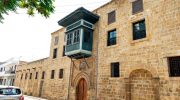
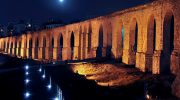
The Canbulat Museum sits within the Arsenal Bastion, a fortified structure that forms part of the massive Venetian walls surrounding old Famagusta. The bastion was first opened as a museum in 1968, then underwent renovation and reopened in 2008.
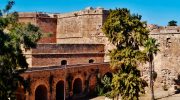
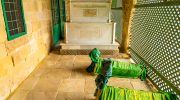
The museum occupies a site that witnessed one of the most decisive moments in Cypriot history. The building dates back to the Venetian period and houses a tomb made of cut stone surrounded by iron railings.
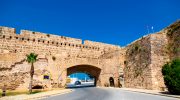
Visitors enter through the southern section of the fortress walls, adjacent to the Canbulat Pasha Gate. The location holds both historical and spiritual significance for many Turkish Cypriots, who regard it as a pilgrimage site honoring Ottoman military courage.
Historical Background
The Ottoman conquest of Cyprus began in July 1570 when invasion forces sailed from Anatolia. Famagusta fell to the Ottomans in August 1571 after a siege that lasted nearly a year.
The large and wealthy island had been under Venetian rule since 1489, together with Crete, representing one of the major overseas possessions of the Republic. The Ottoman forces kept pressure on for eleven months, while their artillery relentlessly pounded the city’s bulwarks. After capturing Nicosia in September 1570, where 20,000 members of the garrison and citizens were massacred, the Turkish cavalry appeared before Famagusta on September 15, 1570.
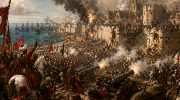
The Venetian defenders numbered about 8,500 men with 90 artillery pieces under the command of Marco Antonio Bragadin. They faced an Ottoman force that would eventually number more than 60,000 men with 145 guns, backed by approximately 150 ships enforcing a naval blockade.
The Legend of Canbulat Bey
Canbulat was the Bey (provincial governor) of Kilis in Turkey who joined the invading forces when the decision was taken to conquer Cyprus. Because he played a key role in the siege of Nicosia, he was promoted to become the commander of the right wing of the Ottoman army to the south of the walled city of Famagusta.
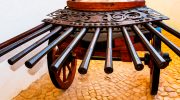
The Arsenal Bastion became the site of a dramatic moment that turned into legend. Canbulat Bey heroically attacked the revolving cannon trap while defending the bastion during the Ottoman siege of Famagusta, rendering it unusable and sacrificing his life. The Venetians had placed sharp blades on a turning wheel at the entrance to the bastion to cut attackers to pieces. According to popular folklore, Canbulat rode his horse directly into the bladed wheel, destroying the device and killing himself instantly in the process, but allowing Ottoman forces to breach the defenses.
The Museum Collections on Display
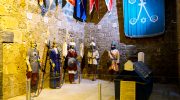
The museum exhibits archaeological finds and Ottoman-era artifacts including weapons, plates, wall tiles, and the wooden tomb inscription of Kutup Osman. The rooms surrounding Canbulat’s tomb house displays of pottery, portraits of Ottoman generals, reproductions of paintings depicting Famagusta during the siege period, and examples of traditional Turkish costumes.
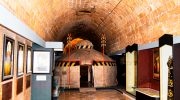
Artillery pieces from the 16th century demonstrate the military technology used during the conquest. Ottoman battle flags surround the sarcophagus of the commander, creating a memorial atmosphere within the fortification.
The museum also preserves documents from the era that provide historical context for the conquest. A particularly notable item is a hand-written Koran that represents the religious dimension of the Ottoman campaign. Military uniforms, tools, and everyday objects from the period help visitors understand daily life during Ottoman rule in Cyprus.
Cultural Beliefs and Traditions
The museum site became associated with fertility beliefs among Turkish Cypriots. In the recent past, it was believed that women who ate the fruits of the fig tree beside the tomb would give birth to sons as strong as Canbulat.
This fig tree grew over the tomb and became part of the site’s folklore. The legend extended to include supernatural elements. According to local tradition, on cold winter nights, people sometimes reported seeing a headless figure above the Arsenal Gate, holding his head under his arm.
Another variation of the legend claims that after Canbulat’s head was cut off, he picked it up, mounted his horse, and continued fighting for several days with his skull under his arm, motivating Ottoman soldiers to continue the onslaught until the Venetians surrendered.
Modern Significance in Cyprus
The Canbulat Museum represents Ottoman heritage on an island with complex historical layers. The site serves as a reminder of the 1571 conquest that ended three centuries of Western European presence in Cyprus and began more than 300 years of Ottoman rule that lasted until 1878.
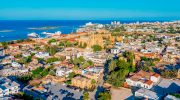
For Turkish Cypriots, the museum functions as a connection to their historical roots and military heritage. The museum sits within the broader context of Famagusta’s old town, where visitors can also explore the Venetian walls, Lala Mustafa Pasha Mosque (formerly the Cathedral of St. Nicholas), and Othello’s Tower.
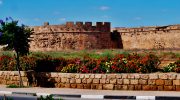
The preservation of both the tomb and the fortification demonstrates how different periods of Cypriot history coexist in the same physical space. The museum contributes to understanding how the Ottoman conquest fundamentally changed the island’s demographic composition, religious landscape, and political structure.
Visiting the Historic Site
The museum operates different hours by season: in winter (November to March) from 08:00 to 15:30, in summer (April to October) from 08:00 to 19:00. Everyone entering Famagusta’s Old Town through the port side walls passes this museum location.
Parking is not permitted directly near the museum, but visitors can park in the Old Town along the city walls, at the parking area between Canbulat Stadium and Othello Castle. A visit typically takes 30 minutes to one hour, depending on interest in the exhibits and historical context.
The museum charges a low entrance fee, making it accessible for budget travelers. Staff members provide information about the siege and Canbulat’s role in the conquest. The location offers an opportunity to walk along the Venetian walls and gain views of both the old city and the surrounding area.
Why This Museum Deserves Attention
The Canbulat Museum preserves a moment when the balance of power in the Eastern Mediterranean shifted dramatically. The eleven-month siege of Famagusta delayed Ottoman forces long enough for Christian European states to assemble the Holy League fleet that would defeat the Ottoman navy at Lepanto in October 1571, fundamentally altering Mediterranean naval power dynamics.
The museum documents Ottoman military culture, religious devotion, and the transformation of Cyprus from Venetian to Ottoman control. The combination of tomb, fortification, and artifact collection creates a complete picture of how conquest shaped the island’s trajectory for the next three centuries.
This site matters because it shows how individual acts of military courage, whether legendary or historical, become foundational stories for communities and how physical spaces preserve these narratives across generations.