There is a small, unremarkable fish lurking in almost every pond, ditch, irrigation channel, and wetland across Cyprus. Most people walk right past it without a second glance. It arrived decades ago on a very deliberate mission: to save human lives by devouring the larvae of malaria-carrying mosquitoes. In that narrow sense, it succeeded.
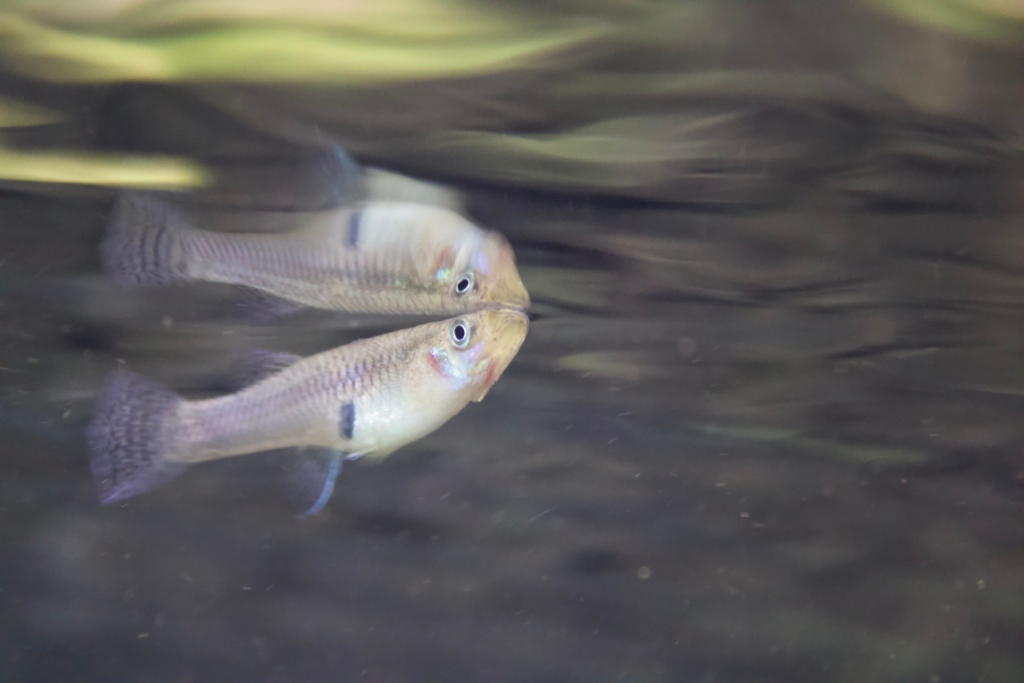
But in almost every other way, this finger-length visitor from North America has become one of the island’s most consequential ecological accidents – and understanding its story means understanding something surprising about the price of good intentions.
- Small Body, Big Appetite
- Shipped Around the World to Fight a Plague
- Plain to Look At, Extraordinary to Survive
- Surprising Things About the World's Most Widespread Freshwater Fish
- The Guppy's Wild Cousin – And Its Family's Remarkable Biology
- Live-Bearers of the Freshwater World
- Good Intentions, Lasting Damage
- ⚠ Conservation Alert: The Cyprus Killifish Under Threat
- Where to See Gambusia – and What to Look For
- Why It Matters
Small Body, Big Appetite
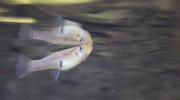
The Eastern Mosquitofish – known scientifically as Gambusia holbrooki – is a tiny freshwater fish rarely exceeding four or five centimetres in length. Females are slightly larger than males, and both are plain in appearance: silvery-grey with semi-transparent fins, easy to overlook in the shallow, weedy margins of a pond. It belongs to the family Poeciliidae, the same group that includes guppies, swordtails, and mollies – all of them famous in the world of home aquariums. Unlike most fish, Gambusia does not lay eggs: it gives birth to live young, a trait that gives it a powerful advantage when it comes to establishing itself quickly in new places.
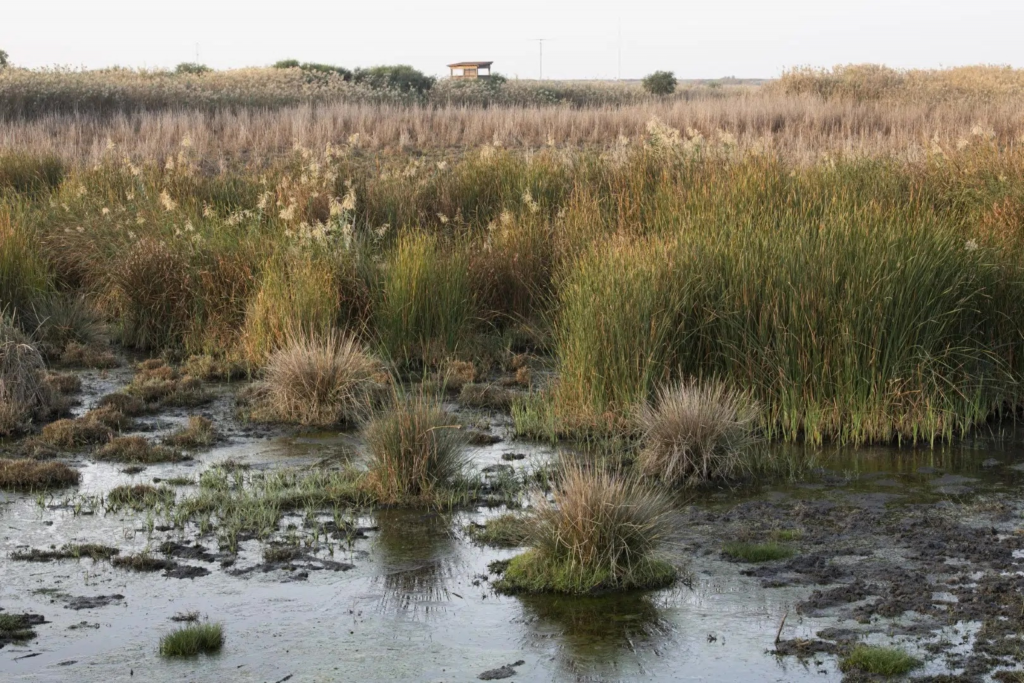
Its home is the eastern and southern United States, from Florida to New Jersey and across to Alabama and Tennessee. It is a fish of warm, slow-moving, and still water – shallow ponds, flooded ditches, marshes, and backwaters – exactly the kind of habitat that breeds mosquitoes in abundance. That ecological pairing is what made it so attractive to public health authorities in the early twentieth century, who saw in this modest fish a biological weapon against one of humanity’s oldest enemies.
“A fish barely longer than a human finger was shipped across oceans and released into wetlands around the world – all in the name of fighting malaria. Few decisions in the history of environmental management have had such lasting and unexpected consequences.”
Shipped Around the World to Fight a Plague
Malaria was once a constant presence in Mediterranean life. For centuries it shaped where people could live, how long they survived, and how productive their land could be. Cyprus was no exception. When the British took control of the island in 1878, they found malaria deeply embedded in the lowland plains and coastal wetlands – a disease caused by a parasite transmitted through the bite of Anopheles mosquitoes. It weakened communities, cost lives, and in the eyes of the colonial administration, held the island back economically.
The story of malaria’s defeat in Cyprus is one of the most remarkable, and least remembered, public health achievements of the twentieth century. In 1946, a Turkish Cypriot health inspector named Mehmet Aziz – who had studied under the Scottish malariologist Sir Ronald Ross, the very man who first proved that mosquitoes transmitted malaria – secured funding from the British Colonial Development Fund to launch a full-scale eradication campaign. By January 1950, Cyprus was officially declared free of malaria, making it arguably the first country in the world to achieve this milestone.
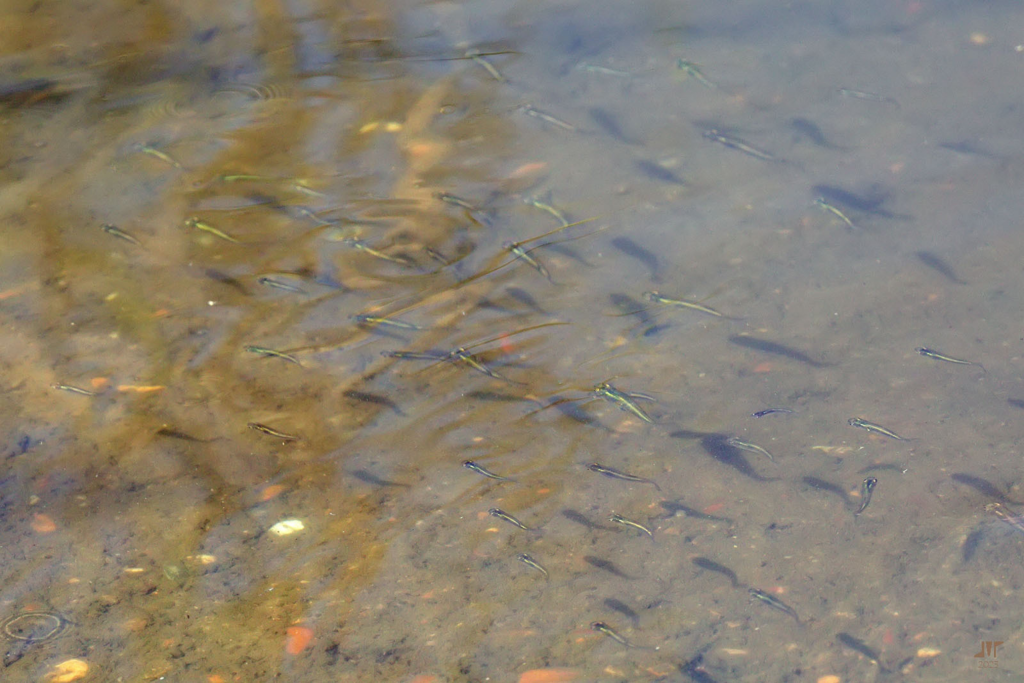
The campaign used multiple tools: draining standing water, applying insecticides, and distributing anti-malarial drugs. But the Gambusia fish was also part of the arsenal. As early as 1905, American health authorities had begun releasing these fish into water bodies as a biological control agent – a living, self-reproducing mosquito larva eating machine. The idea spread rapidly. By the 1920s and 1930s, Gambusia was being shipped to Europe, Asia, Australia, and beyond. It was introduced to Cyprus during the anti-malaria campaign of the 1940s, released deliberately into ponds, channels, and wetlands across the island with the best of intentions.
The Akrotiri wetlands in the south of Cyprus – a Ramsar-designated site of international importance, and one of the key battlegrounds between native and introduced fish species.
Nobody asked, at the time, what the fish might do to the creatures already living there.
Plain to Look At, Extraordinary to Survive
Look closely at a Gambusia and you will notice a few telling details. The mouth is angled upward – perfectly designed for feeding at the surface of the water, exactly where mosquito larvae hang suspended in the shallower depths. The body is compact, the head slightly flattened. Females are notably larger than males and can be identified by a distinctive black spot near their belly, just above the vent, which becomes particularly visible when they are carrying young. Males are slender and possess a modified anal fin called a gonopodium – an internal fertilisation organ that, under a magnifying glass, reveals the fish’s relationship to other live-bearing Poeciliids like the guppy.
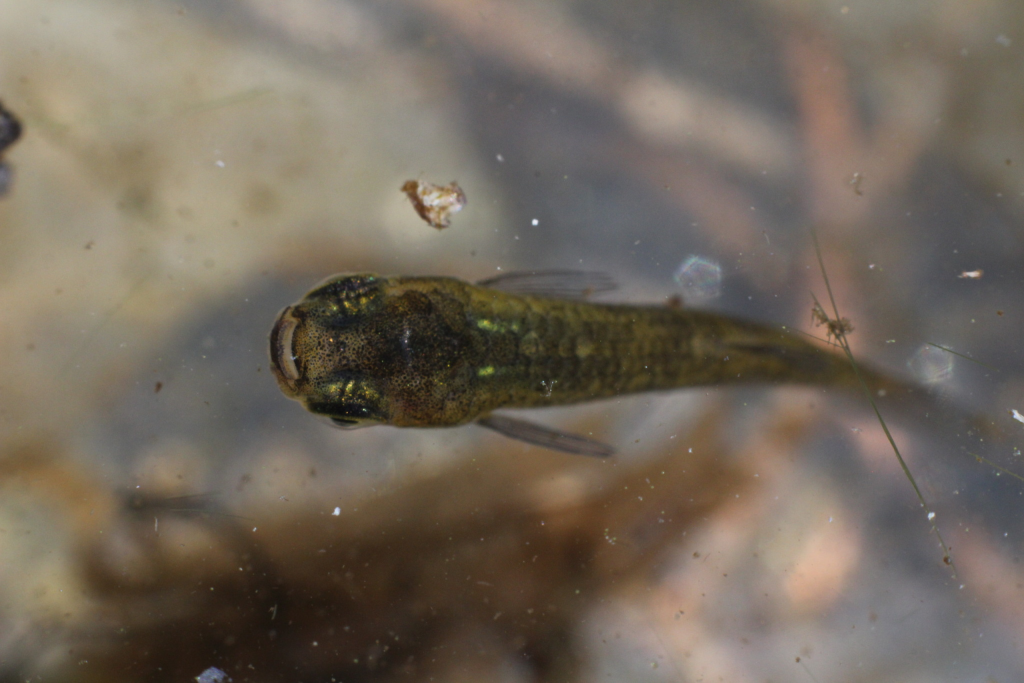
What truly sets Gambusia apart is not how it looks but how it lives. It is a generalist in the truest sense: it can tolerate warm and cool water, fresh and mildly brackish conditions, low oxygen, high salinity, and even water barely three millimetres deep – about half its own body thickness. It can survive in the sun-baked edge of a drying puddle where other fish have long since perished. This extraordinary resilience is precisely what made it such an effective coloniser, and such a difficult problem once it arrived somewhere it was not supposed to be.
Gambusia is also a fast breeder. Females can begin reproducing when just a few weeks old. Gestation takes as little as fifteen days, and a single female can produce up to one hundred live young per brood, with two or three broods possible in a single season. When conditions are warm and food is plentiful, populations can explode almost overnight.
Surprising Things About the World’s Most Widespread Freshwater Fish
- 113 Countries invaded
Gambusia holbrooki and its close relative G. affinis have been introduced into at least 113 countries – making them collectively the most geographically widespread freshwater fish on Earth.
- 100 Worst invasive species
The IUCN lists Gambusia among the 100 worst invasive alien species in the world – a list that includes rats, cats, and cane toads.
- 3 mm Minimum water depth needed
Gambusia can travel through water just 3 mm deep – half its own body depth – allowing it to colonise drainage channels, irrigation ditches, and seasonal puddles that other fish simply cannot reach.
- 1982 WHO reversed its recommendation
In 1982, the World Health Organisation quietly reversed its earlier support for Gambusia as a malaria control agent, concluding that evidence for its effectiveness was weak and its ecological damage significant.
- 100+ Live young per brood
A single female Gambusia can deliver up to one hundred live, swimming young in one brood, with multiple broods per season. No eggs, no nest, no waiting – just a rapid population explosion.
- 1905 Year of first global introduction
Hawaii received the first shipment of Gambusia from Texas – 150 fish released to test their mosquito-eating ability. Within five years their descendants had been spread to five Hawaiian islands.
The Guppy’s Wild Cousin – And Its Family’s Remarkable Biology
Gambusia belongs to the family Poeciliidae, one of the most fascinating groups of freshwater fish when it comes to reproductive biology. Unlike the vast majority of fish – which cast thousands of eggs into the water and leave them to chance – Poeciliids practise viviparity: the female retains fertilised eggs inside her body and gives birth to fully formed, free-swimming young. It is a strategy more commonly associated with mammals than fish, and it gives the young a dramatic head start on survival.
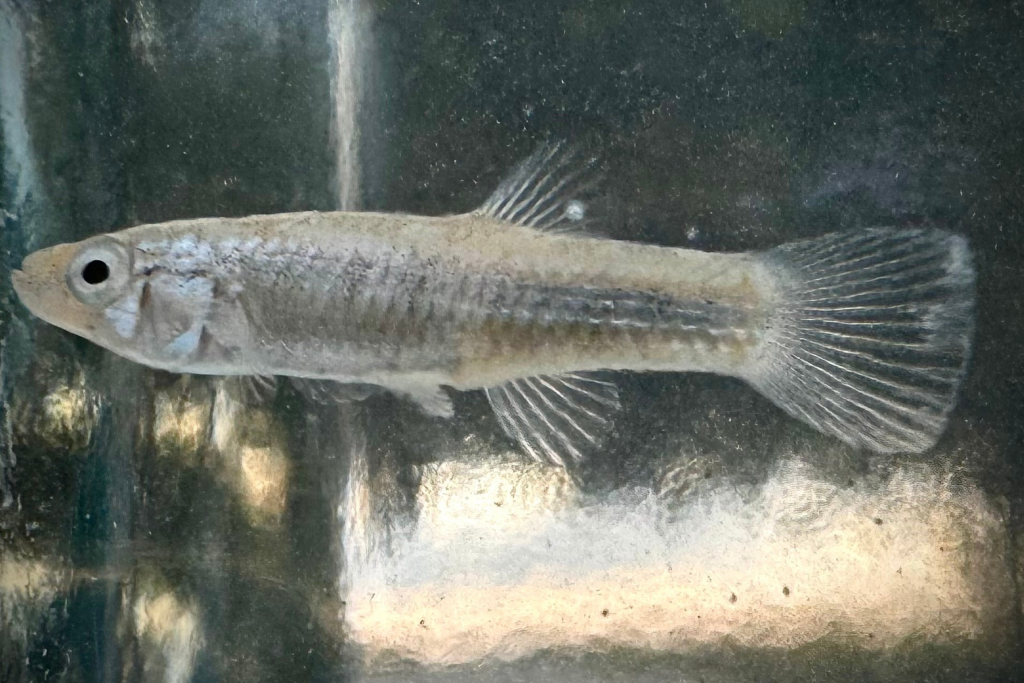
The male Gambusia achieves internal fertilisation through its specialised gonopodium, a modified anal fin. What is particularly remarkable is that females can store sperm for extended periods after mating, producing multiple broods from a single fertilisation event. This means that a single pregnant female, transported to a new location, can theoretically establish an entire population on her own.
Within the broader order Cyprinodontiformes – which includes killifishes, toothcarps, and their relatives – Gambusia sits at an interesting evolutionary juncture. Its closest ecological counterpart in the Mediterranean world is the native killifish Aphanius fasciatus, a small brackish-water fish that naturally inhabits the same kinds of shallow coastal wetlands. These two species, despite coming from opposite sides of the Atlantic, share similar diets, similar habitats, and similar body sizes. That overlap is precisely what makes their encounter so destructive.
Live-Bearers of the Freshwater World
The family Poeciliidae contains some of the best-known aquarium fish in the world: guppies, mollies, swordtails, and platys. What unites them all is viviparity – live birth – and a body plan that favours warm, shallow, vegetated water. Most are sexually dimorphic, with males smaller and often more colourful than females. They are native to the Americas, and almost all species found elsewhere in the world have been introduced by humans, either deliberately for mosquito control or accidentally through the aquarium trade.
Gambusia holbrooki (the Eastern Mosquitofish) and its sibling species G. affinis (the Western Mosquitofish) were once considered a single species with two subspecies. Only in the 1980s were they recognised as distinct. In Europe and Mediterranean countries including Cyprus, it is G. holbrooki that was introduced – its native range covering the eastern seaboard of the United States.
Good Intentions, Lasting Damage
Today, Gambusia is found throughout Cyprus – in reservoirs, ponds, irrigation channels, coastal wetlands, and wherever slow or still freshwater exists. It has become a permanent, irremovable feature of the island’s aquatic landscape. And its presence has come at a serious cost to native wildlife.
⚠ Conservation Alert: The Cyprus Killifish Under Threat
The Mediterranean Killifish (Aphanius fasciatus) is one of only three fish species considered native to Cyprus’s inland waters. In the Akrotiri area, local introductions of Gambusia by individuals have been identified as a major driver of the killifish’s decline. Gambusia outbreeds killifish, consumes their eggs and fry, and aggressively nips the fins of adult fish. The killifish’s eggs – attached to vegetation – are particularly vulnerable compared to Gambusia’s live-born young.
A Darwin Initiative project running from 2018 to 2019 monitored both species at Akrotiri, gathering baseline data on their populations. Researchers from the Vector Ecology and Applied Entomology Group in Cyprus continue to monitor the situation, documenting the ongoing competition between the two species. Aphanius fasciatus is now listed under Annex II of the EU Habitats Directive and in the Bern Convention – a legally protected species struggling in the shadow of a fish that was never meant to stay.
The Akrotiri Salt Lake and its surrounding wetlands – a Ramsar site of international importance – are the most significant remaining habitat for native aquatic wildlife in southern Cyprus. Flamingos winter on the salt flats. Herons and waders feed along the margins. And in the shallow channels and reed-fringed pools, the last Cypriot populations of the killifish are holding on, surrounded by Gambusia at almost every turn.
The reduction in salinity caused by changes to drainage systems around the Limassol and Akrotiri area since the 1990s has made conditions even more favourable for Gambusia, which thrives in freshwater, and less hospitable for Aphanius, which prefers brackish conditions. Human modification of the landscape continues to tip the balance in the invader’s favour.
Perhaps most sobering of all is what science now tells us about Gambusia’s effectiveness as a mosquito control agent. While it does consume mosquito larvae, it also eats the zooplankton, invertebrates, tadpoles, and native fish fry that support healthy aquatic ecosystems. Balanced aquatic communities – with a full range of predators and prey – are actually better at controlling mosquitoes than a monoculture of Gambusia. The original justification for introducing the fish, it turns out, was built on evidence that did not hold up to scrutiny. The WHO withdrew its recommendation in 1982. The fish, of course, stayed.
Where to See Gambusia – and What to Look For
Gambusia is not difficult to find in Cyprus. If anything, the challenge is avoiding it. But finding it intentionally, and understanding what you are seeing, transforms a walk around a wetland or reservoir into something genuinely illuminating.
- Where to look
Any slow-moving or still freshwater habitat across Cyprus – ponds, irrigation reservoirs, drainage channels, flooded fields
The Akrotiri wetlands near Limassol – where both Gambusia and the native killifish Aphanius fasciatus can sometimes be found in the same water body
The margins of Kouris, Asprokremmos, and Polemidia reservoirs, where Gambusia is well established
Urban park ponds and ornamental water features in Nicosia, Limassol, and Larnaca
- What to do when you find them
Crouch quietly at the water’s edge and watch the surface – Gambusia feed just below the film of the water, and groups of them are visible on calm days
Look for the larger females with their distinctive black belly spot, and watch for the tiny, angular males darting in pursuit
Bring a hand lens or phone camera – close-up images reveal the upturned mouth and the transparent fins with remarkable clarity
If you see a smaller, slightly rounder, patterned fish in the same area, it may be the native killifish – a much rarer and more precious sight
Do not release aquarium fish into wild water bodies – many Poeciliid escapes from tanks have added to the problem
Report unusual fish sightings through the iNaturalist app, which helps researchers track distribution across the island
- Best time to visit
Spring and early summer (March to June) when Gambusia are most active and populations are swelling with new young
Morning visits when water surfaces are calm and fish activity is highest
Winter at Akrotiri Salt Lake – for flamingos on the salt flats and killifish monitoring in the surrounding channels
Why It Matters
The story of Gambusia in Cyprus is not really a story about a fish. It is a story about the complexity of nature, the limits of human foresight, and the long shadow of decisions made with the best of intentions. A disease was beaten – a genuine triumph of public health that saved countless lives. And in winning that battle, a different kind of harm was quietly set in motion, one that ecologists and conservationists are still working to understand and address today. For anyone who wants to understand the natural world – in Cyprus or anywhere else – this finger-length fish is a reminder that ecosystems are not machines with spare parts. Every species, however small and plain, belongs to a web of relationships that took thousands of years to weave, and which can unravel with unexpected speed when something new is introduced. The Gambusia swims on, indifferent to all of this. It is simply doing what it has always done, in a world that brought it here and then changed its mind.