Somewhere in the deep blue waters off the coast of Cyprus, beyond the reach of sunlight, a creature moves that ancient mariners feared, fishermen revered, and philosophers wrote about with genuine wonder. It is the swordfish – one of the ocean’s most dramatic animals, and a species that has a very particular relationship with the seas around this island. What makes that relationship so remarkable is not just the history, but the science.
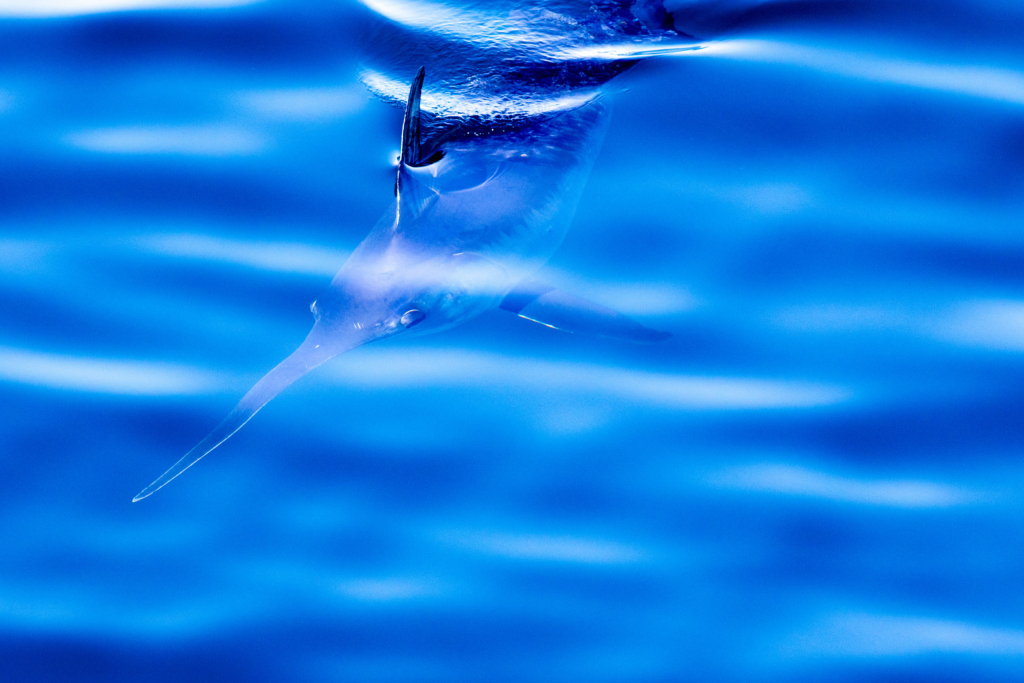
Cyprus, it turns out, sits at the very heart of one of the swordfish’s most critical places on Earth.
The Last of Its Kind – in More Ways Than One
The swordfish, known in Greek and Cypriot as xifías (ξιφίας), is one of the ocean’s largest and most powerful predatory fish. It belongs to a group called the billfishes – large, fast-moving, open-ocean hunters that share the distinctive feature of an elongated upper jaw extended into a sharp, flat bill. But among its billfish relatives, the swordfish is unique: it is the sole member of its entire family, Xiphiidae, with no close relatives anywhere in the world. In other words, it belongs to a family of exactly one.
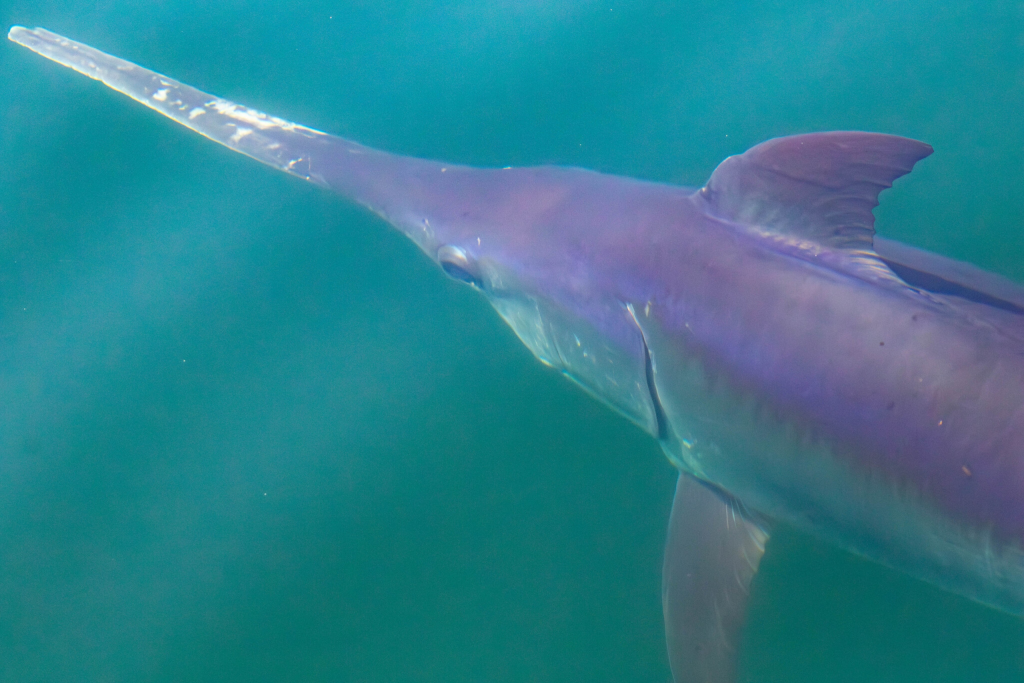
Its nearest neighbours on the family tree are the marlins and sailfishes, which share a separate family (Istiophoridae) and are placed together with it in the order Istiophoriformes. But in terms of biology, anatomy, and behaviour, the swordfish stands apart – a genuinely singular animal, carrying millions of years of evolution in a body that looks, and functions, like nothing else in the sea.
Written in Greek, Carved in Latin
The swordfish is one of the oldest named fish in Western literature. The ancient Greeks called it xiphias, from xiphos – meaning sword – a word that found its way into the creature’s scientific name: Xiphias gladius, where gladius is the Latin for the short sword carried by Roman legionary soldiers. The fish, in short, was named twice over after the most recognisable military weapon of the classical world.
Aristotle wrote about it in his natural histories. Pliny the Elder, the Roman encyclopaedist, described swordfish driving their bills into the hulls of ships during storms – a tale retold by sailors and scholars for centuries. Whether this actually happened is debatable, but swordfish bills have in fact been found embedded in ship timber, which suggests at least some confrontations were very real. The fish was considered almost fearsomely courageous, a creature that attacked not to flee, but to fight.
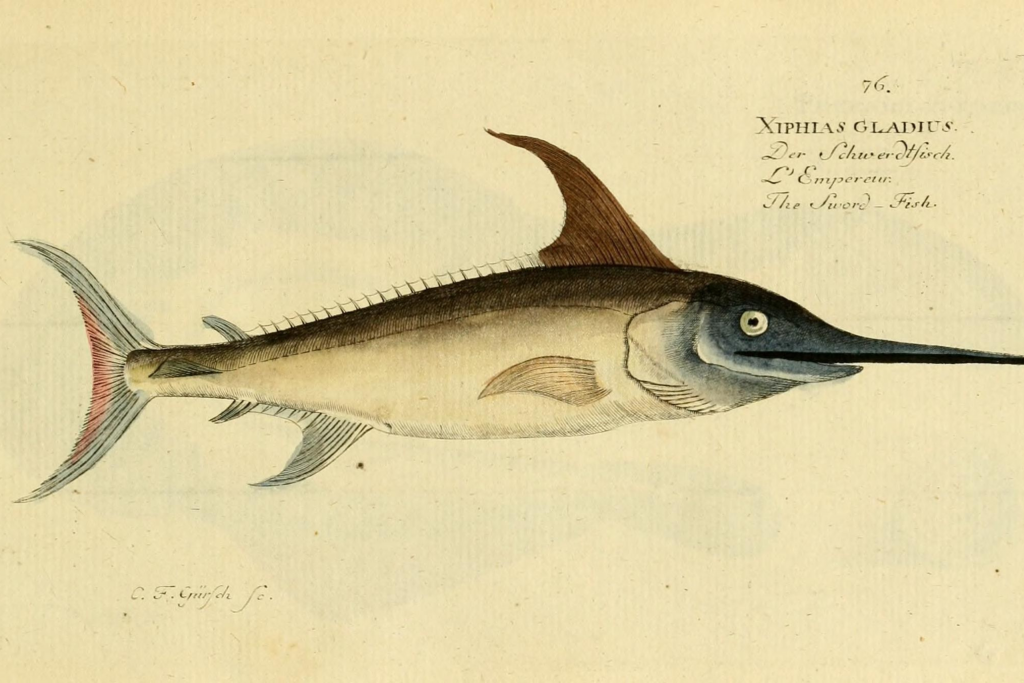
For the ancient Greeks and later the Byzantines – whose cultural world extended across the entire eastern Mediterranean and very much included Cyprus – the swordfish was not merely food. It was a creature worthy of literature, of curiosity, of something approaching respect. In Sicilian fishing tradition, landing a swordfish was described almost in the language of a duel: the fish was not caught, it was met.
The ancient Greeks named it xiphias; the Romans called it gladius. Sword upon sword – a fish that entered Western literature already dressed for battle.
A Body Built for Speed – and Strangeness
The swordfish is immediately recognisable. Its body is long, powerful, and almost cylindrical – shaped not unlike a torpedo – with a large crescent-shaped tail and a single, towering dorsal fin. The upper jaw extends into a long, flat, sword-like bill that can account for nearly a third of the animal’s total length. Unlike its billfish relatives, whose bills are rounded, the swordfish’s is genuinely flat – more like a blade than a spike.
- 4.5m Maximum recorded length
- 650kg Maximum recorded weight
- 80km/h Estimated top burst speed
Adults in the Mediterranean are typically smaller – usually under 230 kg – but they remain formidable animals. What is perhaps most remarkable is what the swordfish loses as it matures. Young swordfish have teeth. They have scales. By the time they reach adulthood, both are gone entirely. No other billfish does this. It is as though the fish gradually strips itself down to essentials, becoming smoother, sleeker, more purely hydrodynamic as it grows.
The colouring is a study in simplicity: dark brownish-black along the upper body, fading to a lighter, almost metallic sheen beneath. In the water, this counter-shading makes the animal near-invisible from above and below – a predator designed to arrive unannounced.
Things Worth Knowing About Xifías
🧠
A WARM-BLOODED BRAIN
Swordfish have a specialised heating organ – converted from an eye muscle – that keeps their brain and eyes up to 15°C warmer than the surrounding seawater. This gives them far superior vision in the cold dark depths.
🛢️
BUILT-IN LUBRICATION
In 2016, scientists discovered an oil-producing gland in the swordfish’s head that oozes oil through microscopic pores in the skin – potentially reducing drag and helping the fish cut through water more efficiently.
⚔️
A SWORD THAT SLASHES
The bill is not used to spear prey. Instead, the swordfish sweeps it rapidly through schools of fish, stunning or injuring them, then turns to pick off the victims. It hunts in bursts of extraordinary agility.
🐟
LONE RANGER
Unlike tuna or mahi-mahi, swordfish are almost entirely solitary. They do not school, do not travel in groups, and rarely share feeding grounds peacefully. They are creatures of singular purpose.
🌊
VERTICAL MIGRANT
Swordfish spend their days at depths of 600 metres or more, then rise to warmer surface waters at night to feed. A single fish may travel vertically through hundreds of metres of ocean in a single day.
🔬
ONE FAMILY, ONE FISH
Xiphiidae, the swordfish’s family, contains just one species. No extinct relatives have been found in the same family line. It is, scientifically speaking, quite alone in the world.
The Hidden Engineer: Eyes, Oils, and Warm Blood
Most fish are cold-blooded – their body temperature matches the water around them. The swordfish is different. It possesses a remarkable heating system housed in a modified muscle beside its eye, dense with mitochondria (the energy-producing structures of cells), that generates heat and maintains the temperature of both the brain and eyes at up to 15 degrees above the surrounding water. This seemingly small advantage is in practice transformative: research has shown that a warm retina can process visual information far faster than a cold one – allowing the swordfish to detect fast-moving prey with up to ten times the clarity of a cold-bodied competitor. It is, in effect, hunting with a supercharged visual system in an environment where its prey cannot keep up.
This heating organ – unique in structure among all fish – is one reason scientists believe the swordfish evolved into such a successful deep-water predator. It dives to extraordinary depths during the day, into waters approaching freezing point, and its eyes keep working perfectly throughout.
Then, in 2016, an even stranger discovery was announced. Scientists had found a previously unknown oil-producing gland near the base of the swordfish’s sword, connected via tiny capillaries to microscopic pores on the skin of the head. When heated, this gland releases oil, creating a slick coating across the front of the animal’s body. The leading hypothesis is that this reduces friction drag, making the swordfish’s already extraordinary speed even more efficient. No other fish has anything like it.
The Mediterranean swordfish is considered a distinct population from its Atlantic counterparts, shaped by millennia of isolation and the particular conditions of this enclosed sea. Photo: Mediterranean marine life archive.
✦
Cyprus at the Centre of the World
For most people, Cyprus brings to mind beaches, archaeology, or the legend of Aphrodite rising from the foam. Marine biologists think of something else: one of the most important swordfish spawning grounds on the planet.
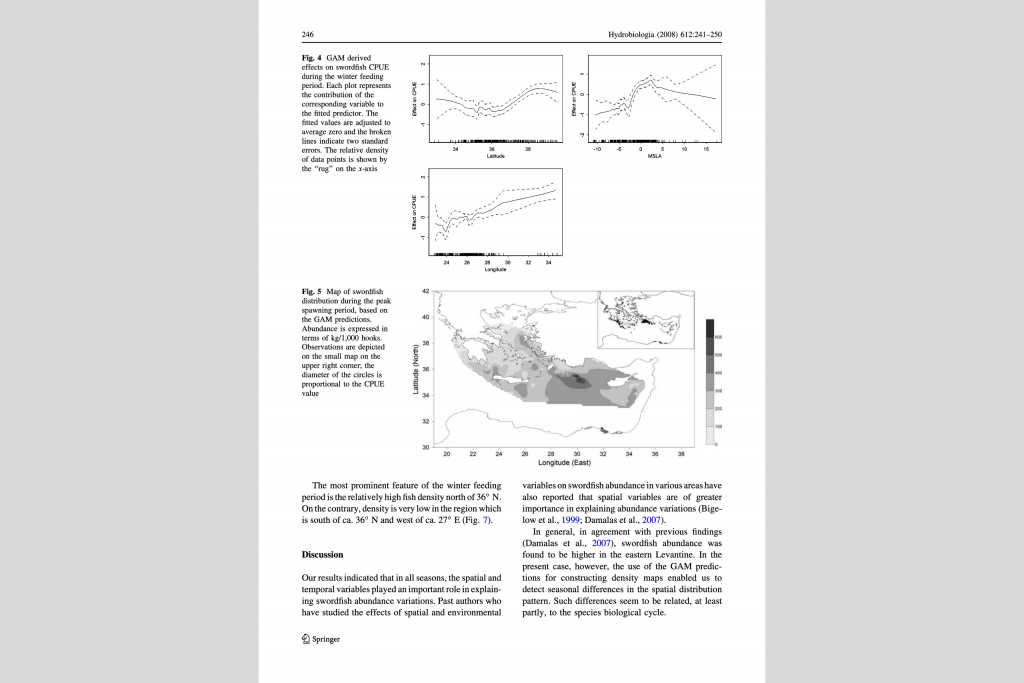
Scientific research has confirmed that the waters between Cyprus and the nearby island of Rhodes form one of only three recognised spawning areas for Mediterranean swordfish. During the summer months – from June to August – adult swordfish migrate into the warm, deep waters of the Levantine Basin to breed. The swirling ocean currents around Cyprus, including a particular pattern of rotating eddies known as the Rhodes gyre, create conditions that are ideal for egg-laying and larval development. The water temperature, the depth, the circulation – it all comes together in the sea directly to our north and east.
One of three Mediterranean spawning grounds: Scientific distribution mapping has identified a major swordfish spawning area in the Levantine Sea directly between Cyprus and Rhodes – one of only three such breeding zones across the entire Mediterranean. The Rhodes gyre and surrounding ocean eddies create uniquely favourable conditions for swordfish reproduction in these waters.
(с) Tserpes, George & Peristeraki, Panagiota & Valavanis, Vasilis. (2008). Distribution of swordfish in the eastern Mediterranean, in relation to environmental factors and the species biology. Hydrobiologia. 612. 241-250. 10.1007/s10750-008-9499-5.
This is not a peripheral footnote to the swordfish’s story. It means that Cyprus, geographically, sits near one of the critical foundations of the entire Mediterranean swordfish population. The future of the species in this sea is partly determined by what happens in the waters that surround this island.
Swordfish genetic research has also revealed that the Mediterranean population is highly distinct from its Atlantic relatives, with very little movement of genes between the two groups. This Mediterranean stock has its own ancient history, still bearing in its DNA traces of the last glacial maximum – a period of dramatic climate change roughly 20,000 years ago. The swordfish we see in Cypriot waters today are, in a real sense, descendants of a lineage that has been shaped by this sea for tens of thousands of years.
Xifías on the Table – and a Fish Under Pressure
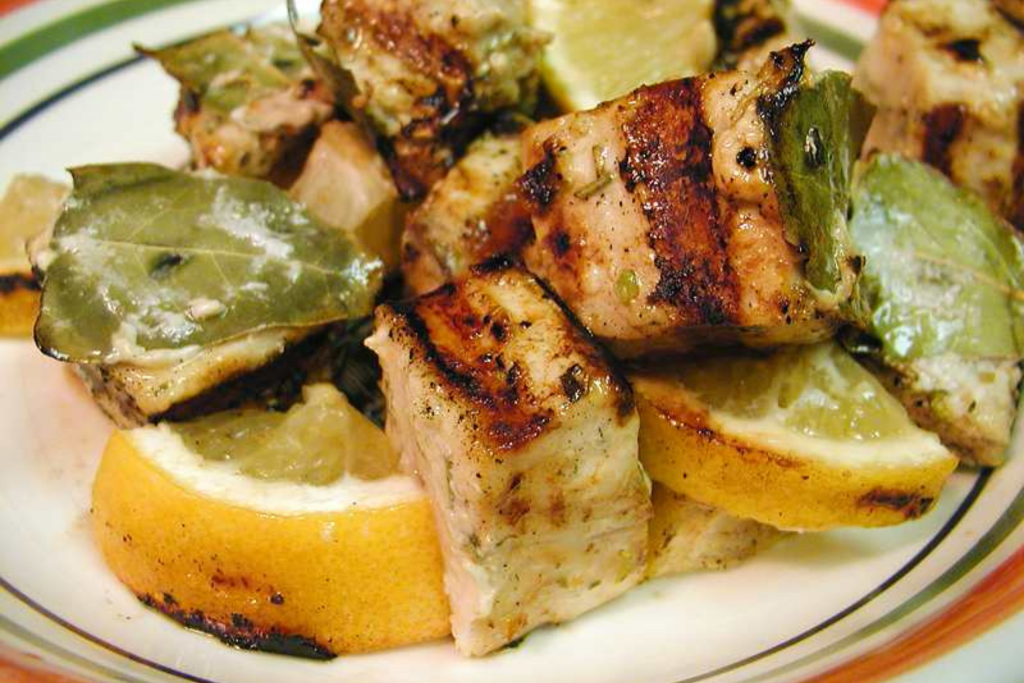
In Cyprus, as across the Greek-speaking world, the swordfish remains a culinary icon. Known simply as xifías in Greek, it appears regularly on the menus of seaside tavernas from Paphos to Ayia Napa – typically grilled over charcoal, finished with lemon juice, olive oil, and dried oregano. The flesh is dense, meaty, and mild, with a texture closer to a good beef steak than to most fish. It absorbs marinades beautifully. It holds together on the grill. It is, by any honest measure, one of the finest table fish in the Mediterranean.
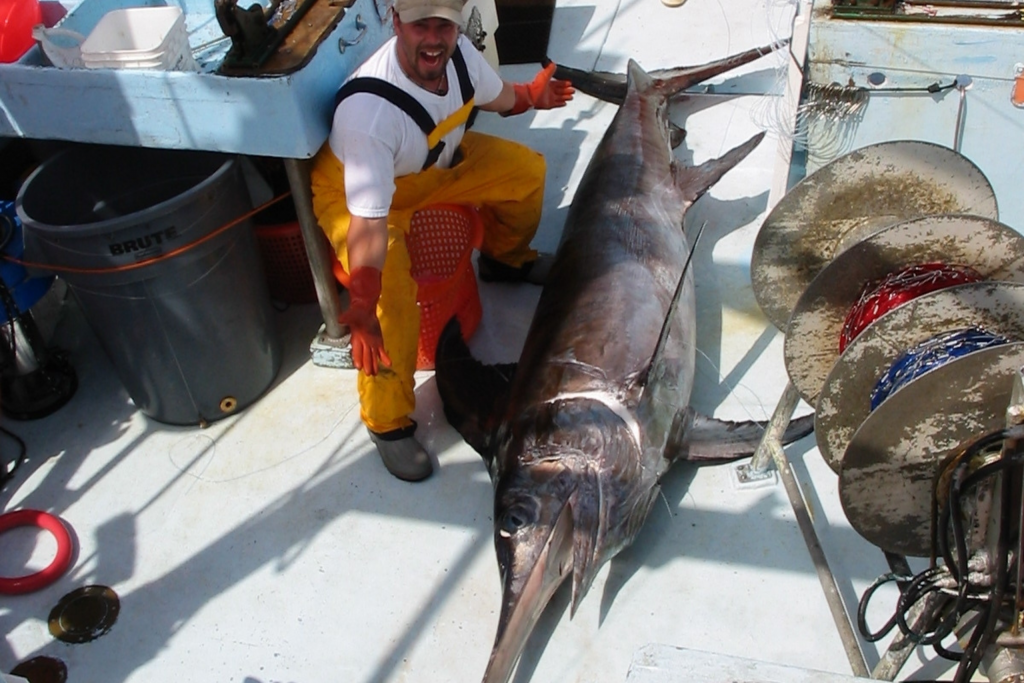
Cypriot fishermen operating out of Paphos, Limassol, and Cape Greko have long targeted swordfish using longlines – long stretches of baited hooks set at depth overnight. The species also attracts sport-fishing charters, particularly out of the northern coast, where conditions favour the fish during summer months. To hook a swordfish on a line is considered a genuine achievement; the fish are notoriously strong fighters, and bringing one to the boat can take considerable time and effort.
A species in decline: The International Commission for the Conservation of Atlantic Tunas (ICCAT) considers the Mediterranean swordfish stock to be overfished. Since the 1990s, catches have increasingly consisted of juvenile fish – a sign that the population is not replacing itself fast enough. In 2016, a 15-year recovery plan was introduced, including catch limits, minimum size rules, and a closed fishing season. As of 2020, the spawning stock biomass remained approximately 30% below sustainable levels. The swordfish’s role as a spawning species in Cypriot waters makes local awareness of this situation particularly important.
Where to Find Your Own Encounter
Seeing a swordfish in the wild is a rare privilege anywhere in the world. In Cyprus, the chances are highest from a boat, well offshore, during the summer months when the fish are present in Levantine waters. Deep-sea fishing charters operating from Paphos, Limassol, Cape Greko, and Latchi offer the best opportunities – both for those who wish to fish and those who simply want to be out on the water where swordfish live.
PRACTICAL GUIDE FOR ENCOUNTERING THE SWORDFISH IN CYPRUS
- BEST SEASON June to August (peak spawning migration); also present into autumn
- TOP LOCATIONS Paphos, Limassol, Cape Greko (Ayia Napa), Latchi – all offer offshore charter boats
- ON THE TABLE Ask for xifías at any coastal fish taverna – Paphos harbour restaurants are particularly well-supplied with fresh catches
- FISHING PERMITS Required for sea fishing in Cyprus; available from the Department of Fisheries and Marine Research (DFMR), tel: +357 22 807 807
- WHAT TO EXPECT An open-sea experience in deep, intensely blue water – the feeling of being far from shore in a sea that was old when Homer wrote about it
- RESPONSIBLE CHOICE If ordering at a taverna, ask about the source – locally caught, seasonal swordfish is preferable to imported product from intensively fished stocks
- For those who cannot get out to sea, simply ordering xifías from the grill at a Cypriot fish taverna is its own kind of encounter – a connection to the animal, to the sea, and to a culinary tradition stretching back to the ancient Greeks, who named this extraordinary fish and ate it with great enthusiasm on these very shores.
The swordfish is one of those rare creatures that manages to be simultaneously ancient and entirely modern. It has been written about for two and a half thousand years, cooked in Cypriot kitchens for as long as people have lived on this island, and studied by scientists who keep discovering new wonders in its biology. It is also, right now, a species that needs our attention – a fish whose future is being decided, in part, in the very waters that surround Cyprus. To know the swordfish is to understand something important about this sea: that its beauty is not merely aesthetic, and that the creatures living within it are woven into the history, the culture, and the identity of this remarkable island.