Out beyond Cyprus’s rocky shores and clear blue shallows lies a very different world – the open Mediterranean. Here, in deeper waters where the seabed disappears into blue infinity, live some of the most powerful and fast-moving fish in the sea. These are the pelagic species, and they have shaped Cypriot fishing culture for centuries.
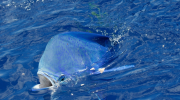
But who are these ocean travellers, and how are they fished today in Cyprus?
Life Without a Seafloor
Pelagic fisheries focus on fish that live in the open water column, away from the seabed. Unlike reef or bottom-dwelling species, these fish migrate over vast distances and often travel in large schools or as solitary hunters.
In Cyprus, pelagic fishing is both a commercial industry and a popular game fishing tradition, especially during the warm months when migratory species pass through the eastern Mediterranean.
Following the Ancient Currents
Fishing for large pelagic species in Cyprus is not new. For thousands of years, Cypriot fishers have followed seasonal movements of tuna and swordfish across the eastern Mediterranean.
In modern times, Cyprus fisheries are managed within broader Mediterranean frameworks, especially under international agreements like ICCAT (International Commission for the Conservation of Atlantic Tunas), which regulates highly migratory species such as tuna and swordfish.
Historically, pelagic fishing expanded with the introduction of surface longlines and polyvalent vessels, allowing fishers to reach farther into international waters where large migratory fish roam.
Hunters of the Blue Wilderness
Cyprus pelagic fisheries are dominated by a few key species and fishing methods:
🌊 Targeted commercial species
The main pelagic species targeted are:
- Atlantic Bluefin Tuna (Thunnus thynnus)
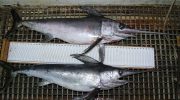
- Swordfish (Xiphias gladius)
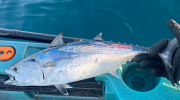
- Albacore tuna (Thunnus alalunga)
These are highly migratory predators that move through Cypriot waters seasonally and are fished mainly using surface drifting longlines and polyvalent gear systems.
🎣 Other pelagic and semi-pelagic species
Depending on season and location, fishers may also encounter:
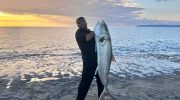
- Amberjack (Seriola dumerili)
- Mahi-mahi / Dolphin fish (Coryphaena hippurus)
- Barracuda (Sphyraena spp.)
- Various small tuna species and jacks
These species are often less regulated and appear in both commercial and recreational catches.
🚤 Fishing zones
Pelagic fishing takes place:
- Within Cyprus territorial waters
- In the wider eastern Mediterranean (“international waters”)
- Around offshore canyons and upwelling zones where baitfish concentrate.
Strange, Swift, and Spectacular
- Bluefin tuna can migrate thousands of kilometres, sometimes crossing the entire Mediterranean in a single season.
- Cyprus has one of the most active recreational pelagic fisheries in the eastern Mediterranean.
- In some years, recreational catches of pelagic fish may rival commercial landings in total weight.
- Albacore tuna season in Cyprus is typically short – often just a few months in summer.
- Dolphin fish (mahi-mahi) are among the fastest-growing pelagic fish, doubling in size in a matter of months.
The Floating Web of Life
Pelagic fish are ecological “connectors” of the Mediterranean. They move energy across ecosystems by feeding on smaller fish and squid and being prey for larger predators like sharks and marine mammals.
Cyprus sits in a biologically rich corridor of the eastern Mediterranean, where warmer waters and seasonal currents attract migratory species. This makes the island an important monitoring point for population trends of tuna and swordfish in the region.
Recreational fishing – including boat angling, spearfishing, and shore-based spinning – plays a surprisingly large role in total pressure on these species, especially near coastal zones.
Between Tradition and the Open Sea
Today, pelagic fisheries in Cyprus are carefully balanced between tradition, recreation, and conservation.
- Commercial fleets are strictly licensed and quota-managed under ICCAT rules
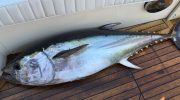
- Recreational anglers target tuna, amberjack, and dolphinfish using rods and trolling techniques
- Some species have seasonal closures to protect spawning periods (for example tuna and swordfish restrictions in regional regulations)
At the same time, changing ocean temperatures and invasive species are altering the ecosystem. Native fish distributions are shifting, and fishers increasingly report changes in abundance and species composition.
Stepping into the Blue
For visitors and locals alike, pelagic fishing in Cyprus is often experienced through:
- Boat angling trips from ports like Larnaca, Limassol, and Paphos
- Trolling excursions targeting tuna and mahi-mahi
- Spearfishing (licensed) for pelagic predators near reefs and drop-offs
- Seasonal fishing charters during summer migrations
Even from shore, lucky anglers sometimes encounter fast-moving predators chasing baitfish close to the coast – a brief but unforgettable moment when the open ocean meets the land.
The Island and the Infinite Horizon
Pelagic fisheries in Cyprus are a story of movement – fish that travel vast oceans, and people who follow them across generations. From ancient fishermen reading the seas to modern anglers using sonar and longlines, the relationship remains deeply rooted in the island’s identity.
In these open waters, Cyprus is not just an island – it is a crossroads of life in constant motion, where every season brings a new chapter written by the sea.