Beneath the feet of visitors in ancient Cypriot villas and churches lie millions of tiny colored stones arranged into gods, heroes, beasts, and sacred symbols. These mosaics aren’t just beautiful floors—they’re historical documents that record how Cyprus transformed from a world of Greek myths to Christian faith, all while maintaining artistic traditions that stretched across centuries. Walking over these ancient artworks means literally standing above stories that shaped Mediterranean civilization.
Art Underfoot
Mosaic art transforms floors into narratives. Instead of hanging paintings on walls, ancient Cypriots created elaborate scenes from thousands of small stone cubes called tesserae, pressing them into wet mortar to form images that would last millennia. These weren’t simple decorative patterns—they were complex compositions showing mythological dramas, philosophical concepts, religious symbols, and scenes from daily life.
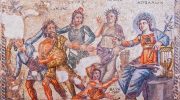
Cyprus developed one of the Mediterranean’s richest mosaic traditions, blending Greek mythology, Roman technical skill, Near Eastern symbolism, and Christian theology into a distinctive visual language. The island’s position as a cultural crossroads meant ideas flowed here from multiple directions, and mosaic artists absorbed and transformed these influences into something uniquely Cypriot.
From Pagan Luxury to Christian Sacred Space
Mosaic art appeared in Cyprus during the Hellenistic period but truly flourished under Roman rule when wealthy homeowners began installing elaborate mosaic floors in their villas. These weren’t simple decoration—they were statements of identity, education, and power. A floor depicting Dionysus riding a chariot or Theseus slaying the Minotaur immediately told guests that the homeowner knew Greek mythology, valued classical culture, and had enough wealth to commission skilled artists.
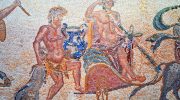
The complexity and beauty of a mosaic floor functioned like a résumé made of stone. Visitors entering a reception room would understand the household’s status before a single word was spoken. Mythological scenes demonstrated the owner’s education, geometric patterns reflected their appreciation for order and harmony, and the sheer craftsmanship proved their resources.
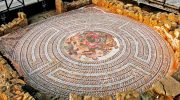
When Christianity spread across Cyprus in the 4th century AD, mosaic art didn’t vanish—instead, its message transformed. Pagan gods gave way to crosses, saints, birds, vines, and abstract forms representing divine order. Dionysus’s wine-laden vines, once celebrating pleasure and fertility, were reinterpreted as symbols of Christ. The same artistic techniques that once honored Olympian deities now served the new faith, showing remarkable continuity through radical religious change.
Earthquakes, invasions, and gradual abandonment buried many mosaic floors under rubble and soil. This accidental sealing preserved them for centuries, protecting delicate tesserae from weather and human traffic. Modern archaeologists uncovering these floors found some of the best-preserved mosaics in the entire Mediterranean world, their colors still vibrant after nearly two thousand years underground.
Stone Paintings Underfoot
Cypriot mosaics are known for their storytelling power, bold imagery, and technical sophistication. What makes them distinctive is how they blend influences from across the ancient world—Greek mythological subjects rendered with Roman compositional techniques, incorporating Eastern symbolic elements, and later adapting to Christian theological needs.
Many Cypriot mosaics are large narrative scenes rather than simple decorative carpets. They show gods feasting with mortals, heroes battling monsters, personifications of abstract concepts like Time and Fortune, and elaborate representations of cosmic order. The House of Aion mosaics at Paphos, for example, explore philosophical ideas about eternal time, rebirth, and fate—among the most intellectually ambitious mosaics in the Roman world.
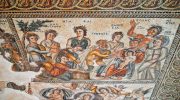
Creating these masterpieces required careful stages of construction. Artists laid a stone foundation, then rough mortar, then finer mortar, and finally pressed thousands of tesserae into the wet surface. They sketched designs in red pigment before setting the stones, cutting each tessera with iron tools to fit curves and outlines precisely. Colors came from natural stone—white limestone, black basalt, red terra cotta—or imported colored glass for more vibrant hues.
Workshops likely trained apprentices and traveled between cities, as some mosaics show consistent styles suggesting organized production rather than individual artists working alone. The best mosaicists were probably well-known and well-paid, their skills essential to any wealthy household or public building project.
Mosaics appeared primarily in villas, bathhouses, public buildings, churches, and baptisteries. People walked across these images daily, turning art into part of lived experience rather than something precious and untouchable. This intimacy—the fact that ancient feet trod the same stones modern visitors see—creates a powerful connection across time.
Remarkable Details in Stone
- A Million Tiny Stones – Some of the largest Cypriot mosaics contain over a million individual tesserae, each one cut and placed by hand. The patience and precision required staggers the imagination, making these floors monuments to human dedication as much as artistic skill.
- Hidden Artist Signatures – Mosaic artists sometimes tucked their signatures into designs, often in Greek letters hidden within geometric borders or incorporated subtly into scenes. These rare signatures remind us that real people—with names, pride, and craft traditions—created these works.
- Earthquakes as Preservers – The same earthquakes that destroyed ancient cities also preserved their mosaics. When buildings collapsed, rubble sealed mosaic floors away from weather, vandalism, and later construction. Paradoxically, disaster became the best conservator.
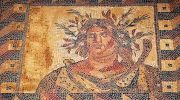
- Dionysus Everywhere – The god Dionysus appears more frequently than any other deity in Cypriot mosaics, reflecting his importance to wine-loving Roman culture and Cyprus’s own viticulture. His image graced dining rooms where wine flowed and guests celebrated.
- Visible Ancient Repairs – Some mosaics show repairs made in antiquity using mismatched stones or cruder workmanship. These patches reveal that ancient Cypriots maintained and valued their floors for generations, fixing damage rather than replacing entire compositions.
- Designed for Walking – Certain mosaics were clearly designed to be read while walking through a space. Border patterns guide movement, narrative scenes unfold in sequence, and the viewing angle assumes the observer is standing on the floor, not hovering above it like a modern visitor behind barriers.
What Mosaics Reveal Beyond Beauty
Cypriot mosaics function as encyclopedias of ancient life, recording far more than just artistic taste. The clothing styles worn by mythological figures reflect actual Roman fashion. Tools and implements shown in agricultural scenes document real farming practices. The specific myths chosen reveal which stories mattered most to Cypriot audiences.
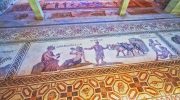
The materials themselves prove Cyprus’s extensive trade connections. Some colored stones and glass tesserae were imported from Egypt, Greece, or the eastern Mediterranean, showing how artistic ambition drove commerce. Plants and animals depicted in mosaics often mirror real Cypriot environments—native birds, local flowers, Mediterranean fish—grounding mythological scenes in observable nature.
The subjects commissioned by different patrons reveal social meaning. Dionysus suited banqueting rooms where wine and conversation flowed. Geometric patterns suited churches where figural imagery became suspect. Bathhouses favored marine imagery—dolphins, fish, sea creatures—connecting the water in the pools to the broader ocean. Entrance mosaics welcomed visitors with protective symbols or impressive scenes, while altar mosaics sanctified space with crosses and symbolic plants.
As Christianity reshaped Cyprus, mosaic iconography shifted dramatically but the craft continued. The Nea Paphos Basilica mosaics show this transition clearly—earlier nearby villas display Dionysus and Aphrodite in vibrant detail, while later basilicas replaced pagan gods with crosses, birds, and stylized vines. The Kourion Episcopal Complex mosaics went further, avoiding human figures entirely and emphasizing spiritual order through geometry and symbolic animals.
Living Heritage in Modern Cyprus
Cypriot mosaics appear on stamps, coins, logos, tourism posters, and school textbooks. They’ve become symbols of national heritage and cultural sophistication, representing Cyprus’s role as a Mediterranean crossroads where East met West and ancient traditions survived into the present.
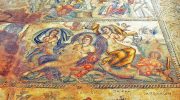
Modern Cypriot artists create mosaics inspired by ancient designs, adapting classical techniques to contemporary subjects. Art schools teach mosaic-making as both historical preservation and living craft. Conservation has become a respected profession, with specialists training specifically to stabilize, clean, and protect these fragile artworks.
The mosaics draw hundreds of thousands of visitors annually to sites like Paphos Archaeological Park, making them economically important beyond their cultural value. International scholars study Cypriot mosaics to understand Roman art, early Christianity, and the mechanics of cultural change across the Mediterranean world.
Protection and preservation require constant balance. Tourism brings awareness and funding but also wear and tear. Some mosaics remain in their original locations under protective shelters, allowing visitors to experience them in context. Others have been carefully lifted and moved to museums where climate control and restricted access ensure long-term survival. Both approaches have merit—context versus conservation—and Cyprus employs both strategically.
Walking Above Ancient Stories
- Paphos Archaeological Park – This UNESCO World Heritage site contains Cyprus’s most famous mosaics, including the House of Dionysus, House of Theseus, and House of Aion. Gods, heroes, and mythological scenes are depicted in stunning detail, with protective shelters allowing close viewing. The Dionysus chariot mosaic and the Theseus and Minotaur scene are particularly spectacular. Plan at least two to three hours to explore properly, and visit early morning or late afternoon when light angles make the colors glow.
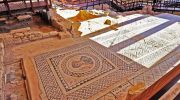
- Kourion Archaeological Site – The Episcopal Complex here features Christian mosaics with geometric patterns, birds, and symbolic plants that guided ancient worshippers through sacred space. The setting on a clifftop overlooking the sea adds dramatic context. Nearby villa mosaics show earlier Roman work, allowing comparison between pagan and Christian styles.
- Ancient Salamis – Bathhouse mosaics here depict marine animals, athletes, and geometric designs reflecting health, leisure, and social life. These show how mosaic art extended beyond private luxury into public culture where ordinary citizens experienced artistic beauty daily.
- Tamassos (Ayios Herakleidios) – The basilica mosaics here are simpler than Paphos’s grand compositions but show strong devotion and demonstrate that mosaic art spread beyond wealthy cities into countryside worship. They connect elite artistic traditions with everyday religious life in rural communities.
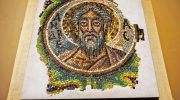
- Cyprus Museum, Nicosia – Several smaller mosaics and mosaic fragments are displayed here, along with explanatory materials about techniques and conservation. It’s an excellent complement to seeing mosaics in situ, offering close-up views impossible at outdoor sites.
Why These Floors Matter
Cyprus’s mosaics are history laid in stone, recording transformations from gods to saints, from private luxury to sacred space, from classical mythology to Christian theology. They show how art adapts to new beliefs while fundamental techniques endure across centuries and civilizations.
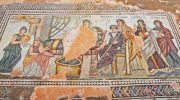
These artworks survive precisely because they were walked upon—sturdy enough for daily use, buried when buildings collapsed, and rediscovered when modern archaeology revealed what had been hidden. Today they allow viewers to stand literally above ancient stories, seeing the past preserved beneath their feet in millions of colored stones arranged by human hands nearly two thousand years ago.
In Cyprus, the most important art isn’t framed on walls or protected in glass cases—it’s embedded in the ground itself, one tessera at a time, waiting for patient eyes to read the stories written in stone.