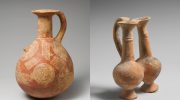
Red Polished Pottery Tradition is a distinctive ceramic style descended from prehistoric techniques, hand-shaped and finished with a glossy red slip that has become one of Cyprus’s most iconic material legacies. Dating back to the Early Bronze Age, it features simple forms and incised decorations that reflect daily life and ritual practices on the island. This tradition highlights how ancient Cypriots transformed local clay into enduring symbols of their culture, leaving a legacy that continues to intrigue archaeologists and artisans alike.
A Timeless Ceramic Heritage
Red Polished Pottery, known locally as a hallmark of ancient Cypriot craftsmanship, represents a fundamental aspect of the island’s early material culture. This style emerged from basic hand-building methods using local resources, resulting in vessels and figurines with a characteristic red hue and polished surface. It provided essential tools for storage, cooking, and rituals, while its decorative elements offered glimpses into the beliefs and daily experiences of prehistoric communities. The pottery’s simplicity belied its importance, serving as a bridge between utilitarian needs and symbolic expression in a society transitioning to settled life.

The Ancient Origins and Development
The roots of Red Polished Pottery trace to the Early Bronze Age, around 2500 BC, when Cyprus’s inhabitants began shifting from Neolithic farming villages to more complex societies fueled by copper mining and trade. Archaeological excavations at sites like Vounous in northern Cyprus, conducted by James Stewart in the 1930s, revealed the pottery’s emergence during the Philia phase (2500-2300 BC), where it evolved from earlier plain wares. Influenced by migrations from Anatolia, as evidenced by similar styles in Cilician ceramics, Cypriot potters adapted techniques to local red clay, rich in iron oxides that produced the signature color when fired in oxidizing kilns at temperatures around 800-900°C.

By the Middle Bronze Age (1900-1650 BC), the tradition had matured, with widespread use across the island. Digs at Bellapais-Vounous by the Swedish Cyprus Expedition in the 1920s uncovered tombs with over 2,000 pieces, showing evolution from basic bowls to elaborate jugs with incised lines filled with white lime for contrast. The Late Bronze Age (1650-1050 BC) saw refinements, as trade with the Aegean and Levant introduced new forms, but Cypriots maintained the red polish, using it for export ware found in Egyptian tombs like those at Tell el-Dab’a. This period’s prosperity from copper allowed for specialized production, with workshops in Enkomi yielding molds and tools that indicate organized craft guilds.
The tradition declined in the Iron Age (1050-750 BC) as new gray wares emerged, but elements persisted in local pottery, influencing Geometric styles with incised decorations. Historical records from Greek sources, like Hesiod’s mentions of Cypriot crafts in the 8th century BC, suggest its cultural staying power, linking to myths of Aphrodite’s island where beauty and utility merged in everyday objects.
Characteristics That Define the Style
Red Polished Pottery is distinguished by its hand-shaped construction, without the wheel, resulting in asymmetrical forms that convey a handmade charm. Potters used coiling or pinching techniques to build vessels, then applied a slip of fine red clay, polished with stones or bone for a glossy finish that resisted wear. Decorations were incised before firing, with motifs like linear bands, zigzags, or circles symbolizing water, sun, or fertility – common in over 80% of pieces from Vounous tombs.

Types vary: bowls for eating, jugs for pouring liquids, and figurines like “plank idols” with flat bodies and incised eyes, possibly ritual objects for ancestor veneration. Colors ranged from orange-red to deep crimson, depending on firing, with white paste fills adding contrast in 20% of samples. Sizes ranged from small cups (10 cm) to large storage jars (50 cm), suited to household or funerary use. This style’s uniformity across Cyprus suggests shared cultural practices, with regional variations – coastal pieces more polished for trade, mountain ones rougher for utility.
Firing in pit kilns at low temperatures preserved the red hue, a technique analyzed in modern labs showing iron reduction processes unique to Cypriot clay. The pottery’s durability – many pieces intact after 4,000 years – made it ideal for tombs, where 70% of finds are Red Polished, as per Dikaios’s Choirokoitia digs.
Intriguing Facts That You Need to Know
One quirky detail: some jugs have “horned” handles resembling bull horns, symbolizing strength, found in 30% of Enkomi tombs. A legend claims Kinyras, mythical king, used such pots for divine wine, tying to Homer’s Iliad. UNESCO notes similarity to Anatolian wares, traded via ships like the Uluburun wreck (1300 BC) carrying Cypriot pottery. Famous “Red Polished IV” phase pieces from Bellapais include a “scenic” bowl with incised hunters, like early comics. And in folklore, broken pots’ shards warded evil, a practice from ancient burials.
Restorations reveal white fills made from crushed shells, adding luminescence under light. A 20th-century revival saw replicas for Queen Elizabeth II’s 1953 visit, now in royal collections.
Deeper Insights Into Cultural Significance
The pottery’s symbolism extends to theology: circles and spirals echo cosmic cycles, linking to early cults of renewal. In rituals, vessels held offerings for dead, as 90% of tomb goods are Red Polished, per Swedish excavations at Lapithos. Socially, finer pieces in elite graves show status hierarchies emerging with copper wealth. Economically, it fueled trade, with exports to Egypt’s 18th Dynasty tombs like Tutankhamun’s, where Cypriot-style red ware appears.

Cultural depth: motifs like zigzags symbolize water for fertility, influenced by river gods in myths. In Bronze Age society, weaving patterns on pottery mimicked textiles, showing interdisciplinary craft. Ethnoarchaeology at the University of Cyprus analyzes shapes for use – wide mouths for pouring, narrow for storage – tying to daily life.
Influences from Anatolian red wares added polish, Aegean incised lines for decoration, but Cypriots made it matte for grip in humid climates.
Red Polished Pottery in Cyprus Today
In contemporary Cyprus, Red Polished Pottery inspires replicas in museums and crafts, with potters in Lemba using ancient techniques for tourism. Amid division since 1974, it symbolizes shared prehistory, with joint exhibits at the Leventis Museum promoting unity. Climate change affects clay sources, prompting sustainable mining initiatives.

Artists incorporate motifs in modern ceramics for galleries, like Nicosia’s “Bronze Echoes” series. In a globalized world, UNESCO’s heritage status spurs exports, with sales supporting rural artisans.

Opportunities for Exploration
Cultural centers like the Cyprus Museum in Nicosia display original pieces, open daily for €4.50. Festivals like the Enkomi Folk Festival in September feature pottery demos, free to attend with workshops. Guided archaeology tours through the Cyprus Tourism Organization cost €15-20, visiting sites like Vounous for sessions. Spring or fall avoids heat, pairing with hikes where ancient kilns echo. Many venues offer online videos for remote access.

A Tradition That Endures
Red Polished Pottery Tradition matters as a guardian of prehistoric techniques, where hand-shaped ceramics with glossy slips preserve Cyprus’s distinctive legacy. This wasn’t just utility; it’s a link to historical roots, blending history with craft in every vessel. Knowing it enriches appreciation for Cyprus as a ceramic crossroads. Engagement with its form or motif evokes renewed wonder at cultural endurance. In a modern age, it affirms handmade’s power to connect past and present.