Saint Basil Day on January 1 serves as Cyprus’s primary gift-giving occasion rather than Christmas Day, honoring the fourth-century bishop known for his charity and liturgical contributions to Orthodox Christianity. Cypriots call the celebration Protochronia, meaning first day of the year, combining religious observance with New Year festivities.

The centerpiece tradition involves cutting vasilopita, a special cake containing a hidden coin that brings good luck to whoever finds it in their slice. Families gather at midnight on New Year’s Eve or the morning of January 1 to perform the ceremonial cake cutting, with slices allocated to Christ, Saint Basil, the house, absent family members, and each person present.
The day also features the renewal of waters ritual, where all water containers in homes are emptied and refilled with fresh Saint Basil’s Water blessed with a basil sprig and cross. Children receive gifts from Agios Vasilis, the Cypriot equivalent of Santa Claus, maintaining ancient traditions of generosity and new beginnings.
Saint Basil the Great and His Legacy
Basil of Caesarea, born around 330 AD in Cappadocia, was one of the most influential theologians in early Christianity. As bishop of Caesarea in modern Turkey, he established hospitals, soup kitchens, and hospices for the poor and sick, creating what historians consider the first organized charitable institutions in Christian history. His theological writings shaped Orthodox doctrine, particularly regarding the Holy Trinity and the nature of the Holy Spirit. The Divine Liturgy of Saint Basil, still used in Orthodox churches on specific feast days, represents his lasting contribution to Christian worship.
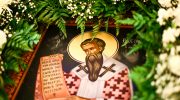
The vasilopita tradition connects to a legend from Basil’s time as bishop. According to the story, the Roman emperor demanded an enormous tribute from Caesarea’s citizens to lift a military siege. Basil called on residents to contribute whatever gold and jewelry they possessed, and the community responded generously. When the tribute was collected, the emperor was so impressed by the collective giving that he withdrew his forces without taking payment.
Basil then faced the problem of returning the valuables to their rightful owners without knowing which items belonged to which families. He ordered all the gold and jewelry baked into loaves of bread and distributed them throughout the city. Miraculously, each family received bread containing exactly what they had contributed.
The Vasilopita Cake and Its Ceremonial Cutting
Vasilopita, also called vasilopoulla in Cyprus, varies by region and family recipe. Most versions resemble a sweet bread or cake flavored with mastic, mahlab, orange zest, and vanilla. Some families make rich butter cakes with ground almonds and icing sugar coating, while others prefer simpler bread dough sweetened with honey. The common element across all variations is the hidden coin baked into the dough before cooking.

Preparation begins on New Year’s Eve, with mothers and grandmothers mixing ingredients according to recipes passed through generations. The coin, wrapped in foil to prevent contamination, is inserted into the raw dough at a specific moment, with prayers or wishes for family prosperity. Modern families typically use a euro coin or commemorative medal, though older generations recall using gold sovereigns when those were common currency. The baking process fills homes with aromatic spices that signal the approaching new year.
The cutting ceremony follows strict protocol. At midnight on New Year’s Eve or the morning of January 1, the family head, typically the father or eldest male, makes the sign of the cross three times over the vasilopita with a knife. The first slice goes to Christ or the Holy Trinity, the second to Saint Basil, and the third to the house itself. Subsequent slices are cut for absent family members, the poor, the church, and sometimes for the Kalikantzari goblins as appeasement before they depart. Only after these symbolic slices are distributed do living family members receive portions, allocated by age from eldest to youngest.
The Renewal of Waters Ritual
Another essential Saint Basil Day custom involves the renewal of waters, a household ritual performed on January 1 to symbolize fresh beginnings and spiritual purification. Families empty all water containers including pitchers, bottles, and decorative vessels, then refill them with fresh water blessed according to Orthodox tradition. This blessed water, called Saint Basil’s Water or Agiasmos, receives consecration through a simple home ritual involving a cross and fresh basil sprig.
The head of household places a small wooden cross wrapped with basil into a bowl of fresh water while reciting prayers. The basil plant holds significance in Orthodox tradition as the herb Saint Helena reportedly discovered growing at the site of Christ’s True Cross during her pilgrimage to Jerusalem in 326 AD. The Greek word for basil, vasilikos, means kingly or royal, creating linguistic connection to both Saint Basil and the sacred. The blessed water serves protective and purifying functions throughout the coming year.
Some families maintain the blessed water in a decorative bowl near their home iconostasis, dipping the basil-wrapped cross daily to sprinkle rooms and family members. This practice continues ancient traditions of using blessed substances to sanctify domestic space and protect against evil influences. The water sprinkled on Epiphany, January 6, when priests visit homes for formal blessings, often comes from the same Saint Basil’s Water prepared on New Year’s Day.
Gift Giving and Agios Vasilis
Unlike Western Christmas traditions centered on December 25, Cypriots exchange gifts on January 1, Saint Basil’s feast day. Children go to bed on New Year’s Eve expecting to wake and find presents under the Christmas tree, left by Agios Vasilis during the night. Parents maintain the fiction that the saint enters homes while families sleep, rewarding good behavior and leaving gifts for deserving children. This tradition mirrors Western Santa Claus mythology but attaches to a genuine Orthodox saint with historical basis.
The figure of Agios Vasilis in popular imagination follows Western Santa Claus iconography, depicted as an elderly man with white beard dressed in red and white robes carrying a large sack of presents. This visual representation developed during the 20th century as Cyprus absorbed Western cultural influences through British colonialism and global media. Earlier generations envisioned Saint Basil in traditional Orthodox bishop vestments rather than the commercialized Santa costume.

Children write letters to Agios Vasilis requesting specific gifts and promising improved behavior in the coming year. Families leave a piece of vasilopita and wine for the saint on New Year’s Eve, similar to Western cookies and milk traditions. On January 1, children discover the food consumed and gifts arranged under the tree, maintaining the magical atmosphere parents create for young believers. The tradition strengthens family bonds and religious connection while satisfying children’s expectations of holiday presents.
The Podariko Tradition and First Footers
The podariko custom determines who first enters the home after midnight, as this person supposedly influences the household’s fortune for the entire year. Families carefully select someone considered lucky, virtuous, or successful to be their first-footer. The chosen person, often a child or young person with a good reputation, must enter the house stepping with their right foot first to bring good luck. Entering left foot first or having an unlucky first-footer could doom the household to misfortune.
The first-footer traditionally carries symbolic items including pomegranate, bread, salt, or coins representing abundance, sustenance, flavor, and prosperity. Upon entering, they may recite traditional blessings wishing the family health, wealth, and happiness. In some villages, the first-footer receives small gifts or treats as thanks for performing this important role. The custom reflects ancient beliefs about liminal moments and the power of beginnings to shape subsequent outcomes.
Some families combine podariko with pomegranate smashing, where the first-footer throws a ripe pomegranate against the front door or threshold. The fruit bursts open, scattering hundreds of seeds across the entrance. The more seeds that spread, the greater the prosperity and fertility the household will enjoy. This practice connects to ancient Greek associations of pomegranates with Persephone, abundance, and the cycle of life and death. The red juice symbolizes life force and vitality entering the home for the new year.
Contemporary Celebrations and Cultural Continuity
Modern Saint Basil Day celebrations blend ancient customs with contemporary entertainment. Cities organize public concerts, fireworks displays, and organized countdown events at midnight on New Year’s Eve. Limassol’s seafront, Nicosia’s old town, and Paphos harbor feature large gatherings with live music, dancing, and communal celebrations. Hotels and restaurants offer special New Year’s packages combining traditional meals with modern entertainment.

Despite commercialization and Western influences, core traditions persist. Families continue baking vasilopita according to grandmother’s recipes, children still believe in Agios Vasilis, and the water renewal ritual maintains its spiritual importance. The balance between preservation and innovation allows Saint Basil Day to remain culturally relevant across generations with different relationships to tradition and technology.
The day’s religious character stays strong despite increasing secularization. Churches fill for Saint Basil liturgies on January 1, with special services honoring the saint’s charitable works and theological contributions. Priests deliver sermons connecting historical Basil to contemporary needs for generosity and community support. The combination of sacred observance and secular festivity creates layered celebrations satisfying both spiritual and social needs.