Cyprus wedding traditions blend Orthodox Christian ceremony with cultural practices maintained for generations in mountain villages and coastal towns. These customs involve entire communities, from engagement negotiations between families to multi-day celebrations featuring ritual preparations, church ceremonies, and elaborate feasts.
While many couples now incorporate modern elements, traditional rituals like the groom’s shaving ceremony, the dancing of wedding clothes, and the tying of red scarves around waists persist across the island. Cyprus’s identity as the birthplace of Aphrodite, Greek goddess of love, adds symbolic weight to matrimonial ceremonies celebrated here.
From Proposal to Formal Engagement
Traditional Cypriot engagements begin when the groom’s family visits the bride’s family to formally request permission for the marriage. This meeting addresses practical matters including the dowry, wedding date, and financial arrangements. The groom’s family brings gifts such as jewelry, clothes, and money to demonstrate goodwill and seriousness of intent.
After families reach agreement, the couple exchanges rings worn on the right hand until the wedding day. Orthodox tradition places rings on the right hand because it represents God’s blessing hand. The engagement announcement spreads to relatives and friends who offer congratulations and blessings to the couple.
The groom’s family accepts responsibility for making glistarkes, traditional sesame-coated breads that the bride’s family distributes as wedding invitations. These round breads carry symbolic meaning related to fertility and abundance. Making glistarkes requires time and skill, representing the family’s commitment to honoring the marriage properly.
Pre-Wedding Rituals at Home
The night before the wedding, elaborate preparation ceremonies occur separately at the bride’s and groom’s childhood homes. These rituals mark the separation of the couple from their families and their transformation into married adults. Music, particularly violin and traditional songs, accompanies all these pre-wedding customs.
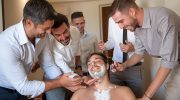
The shaving of the groom ranks among the most symbolic traditional rituals. The groom’s best man, called the koumbaros, performs this final shave at the groom’s home while friends and relatives watch, sing traditional songs, and tease him playfully. The shaving symbolizes the groom’s transition from boyhood to manhood and readiness to assume his role as husband. After shaving, the koumbaros dresses the groom in shirt, waistcoat, cravat, and dark suit while music plays.
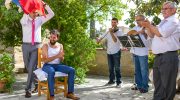
The dancing of the wedding clothes occurs at both the bride’s and groom’s homes. Wedding garments are placed in a basket and blessed, traditionally by a priest crossing them three times with a censer and blowing incense in the shape of a crucifix. Today, the groom’s mother typically performs this blessing by circling the clothes three times with the censer above the basket.
Then, accompanied by violins and traditional songs, three women and three men dance with the clothes. Additional dancers can join as long as the total number remains odd. Each dancer makes the sign of the cross before picking up the basket to dance. The dancer performs three circles around the bride or groom, or around the chair holding the basket. This ritual invites blessings and good fortune on the marriage.
The Zosimon and Kapnisman Rituals
The zosimon ritual involves tying a red kerchief around the waist of both bride and groom. For the bride, the red scarf symbolizes virginity, while for the groom it represents fertility. This ceremony takes place after the bride dresses in her wedding gown, with parents, chief attendant, and close friends gathered around while musicians play beautiful traditional wedding songs.
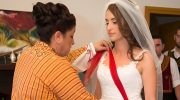
The kapnisman ritual, or holy smoke ceremony, protects against the evil eye. Incense burns in a censer and smoke is waved around the bride and groom to ward off negative influences. This practice reflects deep-rooted beliefs in the protective power of religious ritual and the danger of envy from others.
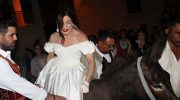
After these home ceremonies conclude, the groom and his family and companions make their way to the bride’s house. Everyone then departs together for the church. In village weddings, the bridal party walks to church on foot. In larger towns, the bride arrives by car, limousine, or horse-drawn carriage.
The Orthodox Church Ceremony
Village wedding dress codes require conservative attire, with the bride’s gown covering the tops of her arms and avoiding flashy elements. Town weddings allow short or long evening dresses. The bride’s parents give her away outside the church, where the groom waits with her bouquet. The couple walks up the aisle together with both sets of parents standing beside them throughout the ceremony.

The chief bridesmaid places the stefana, a ceremonial crown or headband, on the bride’s head. Traditionally made from lemon leaves, olive branches, vines, or more elaborate materials like gold and jewels, the stefana symbolizes God’s blessings. The best man places a similar crown on the groom. A ribbon binds the two crowns, representing the lasting union between bride and groom. This ribbon must be kept intact for a lifetime.
The priest says prayers over the newlyweds and their stefana, wishing them God’s blessings and hoping the family will be ruled wisely. The crowns hold extreme importance, with couples often saving them for display in their homes or even being buried with them.
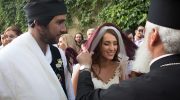
During the ceremony, the priest serves the couple prosfora, ceremonial bread, and koumandaria, red Cypriot wine, three times. This symbolizes the wedding at Cana in Galilee where Christ blessed marriage and turned water into wine. The couple exchanges rings three times before placing them on the fourth finger of each other’s right hand.
The Dance of Isaiah follows, with the priest leading the couple three times around the table holding the Gospel and Cross. The best man and chief bridesmaid walk behind ensuring the stefana remain in place. This circular procession represents the couple’s journey together and their commitment to follow God’s path.
The Reception and Traditional Foods
The ceremony concludes with guests throwing rice at the newlyweds as they exit the church, signifying unity, good health, and happiness. The reception begins with the Chairetisma, or congratulation ceremony, at a designated venue like a cafe or restaurant. Guests receive small gifts upon arrival, usually paper-wrapped cake, sweets, or souvenirs.
Guests form a line to approach and congratulate the newlyweds who stand on a raised platform or dais. They offer formal greetings to the married couple and their parents, then socialize at the cocktail buffet. Guests bring money and other gifts placed in a basket near the greeting platform. In modern times, the bride’s father often provides financial assistance toward building or furnishing a house for the couple.
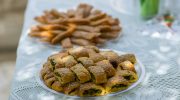
Traditional lukumia biscuits are distributed among guests by bridesmaids or flower girls. These treats made from semolina, butter, and flour, filled with nuts like almonds or pistachios and covered with icing sugar, have been baked for weddings for generations. Modern couples sometimes substitute brownies, macaroons, cupcakes, or pralines.
The wedding feast features traditional Cypriot cuisine including kleftiko, large chunks of goat, mutton, and beef wrapped in aluminum foil and slow-cooked for hours in traditional ovens. Other dishes include souvlaki with local vegetables, makaronia tou phournou, a variety of pasta bake, koupepia, meat-stuffed vine leaves, keftedes meatballs, roast potatoes, and salads.
In Paphos district villages, a special dish called resi appears at traditional weddings. This mixture of coarsely ground wheat boiled in meat broth requires time-consuming preparation carried out as a ritual. Fellow villagers help wash and beat the wheat while a violin plays. The wheat is ground, dried in the sun, and washed at the village fountain before the meat is thoroughly boiled and mashed to remove bones. Resi symbolizes abundance and hospitality.
Music, Dance, and Celebration
Music plays an integral role throughout Cypriot weddings, from traditional folk songs during dinner to dance floor beats keeping guests active all night. The newlywed dance serves as the evening’s centerpiece, during which guests pin money on the couple’s clothes to start them on their married journey.
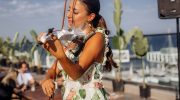
Popular dances include the Tsamiko, Tsiftetelli, Sirtaki, and eventually the Zeipekiko, all part of Cyprus folk dancing tradition. Closer to evening’s end, guests engage in the Vareda, a heavy or drunk man dance featuring varied steps from light to heavy-footed movements.
Traditional customs include the bride tossing her bouquet and the groom throwing the garter to unmarried guests. Before removing her shoes, female guests write their names inside them. The name remaining when the bride removes the shoes supposedly belongs to the next woman who will marry.
Why These Traditions Endure
Cyprus wedding customs maintain relevance despite modernization because they provide continuity with the past and strengthen community bonds. The rituals connect contemporary couples to centuries of cultural heritage and family history. Parents and grandparents participate actively in ceremonies, transmitting traditions to younger generations through direct involvement.
The emphasis on family participation reflects Cypriot values prioritizing extended family relationships and community support. The elaborate preparations, multiple ceremonies, and communal feasts create opportunities for relatives and friends to demonstrate commitment to the new couple. Financial and emotional support from families helps young people start married life with stability and confidence.

Villages particularly treasure wedding traditions as expressions of local identity. The panigyri atmosphere of traditional weddings, with entire communities participating in music, dancing, and feasting, reinforces social cohesion. These celebrations maintain cultural distinctiveness in an increasingly globalized world.
The traditions also fulfill psychological needs for ritual marking major life transitions. The symbolic elements like red scarves, stefana crowns, and ritual shaving provide tangible markers of change from single to married status. These visible transformations help couples and communities acknowledge and accept new social roles.