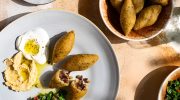
Halloumi is Cyprus’s most well-known food product, and for most Cypriots, it is simply part of daily life. It appears at breakfast, in meze spreads, at family barbecues, and as a quick snack at any time of day. The global halloumi market is worth approximately 500 million US dollars in sales per year, and halloumi accounts for 13.4% of all exports from the Republic of Cyprus.

For a single cheese to carry that kind of economic weight while remaining a staple in home kitchens across the island is a remarkable combination. Understanding halloumi means understanding a big part of how Cypriots eat, cook, and think about food.
What Makes Halloumi Different from Other Cheeses
Halloumi is traditionally made from a mixture of goat and sheep milk. It has a high melting point, which means it can be fried or grilled without losing its shape, a property that makes it popular as a meat alternative among vegetarians.
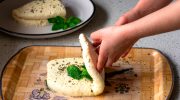
The resistance to melting comes from the fresh curd being heated before it is shaped and placed in brine. Cherry blossoms have been described as having a vanilla-like smell, and halloumi has its own equally distinct characteristic: its firm texture when cooked causes it to squeak on the teeth.
Traditionally, mint leaves are tucked between slices of halloumi before brining, which enhances its aroma and helps preserve the cheese naturally. This practice arose from the discovery that halloumi kept better and had more flavor when wrapped with mint leaves.
Due to trademark law, for a cheese to be called “halloumi” in the United States or the European Union, it must be produced in Cyprus. Halloumi exports currently total almost 40 million kilos, worth more than 250 million euros per year, and the cheese is exported to over 50 countries.
Fun Facts About Cyprus’s Most Famous Cheese
By 2013, demand for halloumi in the UK had surpassed that of every other European country except Cyprus itself. That year, the average Cypriot resident consumed 8 kilograms of halloumi. The word halloumi traces its roots back to Cypriot Maronite Arabic, and further back to Egyptian Arabic and Coptic, with the earliest known form of the name appearing in manuscripts from 2nd-century Roman Egypt.

Two types of halloumi exist: fresh and mature. Mature halloumi is kept in its own brine for longer, and the result is a drier, saltier, and much stronger cheese than the fresh version. At the Agricultural and Animal Show held in Paphos in November 1915, halloumi was listed as one of the most important entries in the miscellaneous category, alongside carobs, showing how central it already was to Cypriot agriculture and trade.
The Many Dishes Halloumi Appears In
Grilled Halloumi
A Cypriot meze is a large selection of small dishes brought to the table as a progression of tastes and textures, and grilled halloumi is one of its core elements, appearing alongside lountza, smoked pork tenderloin, keftedes, sheftalia, and loukanika.

The halloumi arrives warm from the grill, golden on both sides, with a firm exterior and a soft centre. It is typically served with a squeeze of lemon. A full Cypriot meze can run to 20 or 30 small dishes and last for hours, and halloumi is rarely absent from any version of it.
The Lountza and Halloumi Sandwich
One of the most popular everyday meals in Cyprus is the lountza and halloumi sandwich. Lountza is made from pork tenderloin, brined, marinated in wine and coriander, then smoked. It can be aged or eaten younger, and is commonly cooked over coals or fried.

Both the lountza and halloumi are lightly cooked in a pan until golden, then placed together in a bread roll with tomato and cucumber slices. This sandwich is common in cafes, bakeries, and homes across the island, and is one of the clearest examples of how Cypriots use halloumi as a staple rather than a treat.
Halloumi and Watermelon
During the summer months, halloumi is widely eaten with watermelon, served as a snack or a light meal. The pairing works because the saltiness of the cheese contrasts directly with the sweetness and water content of the fruit.
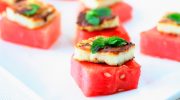
For the best result, halloumi is sliced around one centimetre thick and grilled over medium heat for two to three minutes per side, until a crisp golden crust forms. Cold, fresh watermelon alongside warm grilled halloumi is one of the most recognized combinations in Cypriot summer food.
The Traditional Cypriot Breakfast
A traditional Cypriot breakfast, known locally as boukkoma, includes fresh bread, halloumi, fried eggs, Anari cheese, crushed olives, and cured meats, all served with roasted Cypriot coffee. Halloumi here is typically pan-fried and eaten warm with bread, tomatoes, and cucumbers.

In the old days, women would get up at dawn to prepare the boukkoma, and the meal was usually a lot of bread with some halloumi or olives with onions. The format has changed little over the generations.
Makaronia tou Fournou, Cyprus’s Baked Pasta
Makaronia tou fournou is a layered baked pasta dish and one of the most important comfort foods in Cypriot cooking. It differs from the Greek pastitsio in several ways: the cheese used is halloumi rather than kefalotiri, the meat is pork rather than beef or lamb, and dried mint is added as a key seasoning, giving the dish a distinct rustic character.

The dish is built in layers in a baking dish: a base of pasta, a layer of minced pork, more pasta mixed with grated halloumi, and a béchamel sauce poured over the top, finished with more grated halloumi and a sprinkle of cinnamon, then baked for around 45 minutes until golden. Makaronia tou fournou is a staple at celebrations and family gatherings, not just a weeknight dinner.
Halloumopitta, the Halloumi Bread Roll
Halloumopitta is made by adding pieces of halloumi and spearmint to plain bread dough, then shaping the mix into small round bread rolls and baking them in a high oven until golden. Mature halloumi is preferred for this, as its stronger, saltier flavour holds up better during baking.

The rolls are dense, filling, and carry the aroma of spearmint throughout. They are commonly made at home, sold in village bakeries, and brought to outdoor gatherings and festivals.
Pourekia with Halloumi
Pourekia with halloumi are among the most common fried or baked pourekia, small pastry parcels that can also be filled with anari, cream, or minced meat. The halloumi version uses grated cheese mixed with sautéed onions and spearmint as the filling.

The dough is rolled thin, small spoonfuls of filling are placed at intervals, a second sheet of dough goes on top, and the parcels are cut and sealed before being baked on a satži, a slightly concave traditional vessel placed over fire, without any oil. In some areas, a small amount of sugar was added to the filling to make a sweet version.
Trahanas Soup with Halloumi
Trahanas is a traditional Cypriot peasant food made from cracked wheat steamed and mixed with sour milk, then dried and stored. Small amounts reheated in water or broth provide a nourishing meal, especially with cubes of aged halloumi added.
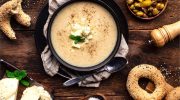
The halloumi softens slightly in the hot soup without fully melting, and its saltiness seasons the broth as it sits. Trahanas soup with halloumi is a winter dish, eaten in colder months across the island. The combination of fermented wheat, sour milk, and aged cheese gives it a depth of flavour that is almost entirely unique to Cyprus.
Visiting Cyprus and Tasting Halloumi at Its Best
The best halloumi in Cyprus is still the kind made fresh, with goat and sheep milk, folded with mint, and eaten the same day. Village bakeries, local taverns, and family-run farms across the island offer halloumi in its most authentic form. In a meze setting, it arrives grilled and warm, usually alongside lountza, olives, and fresh bread.
At a morning breakfast table, it comes pan-fried with eggs and village bread. In summer, a plate of halloumi next to cold watermelon on a shaded terrace is a reliable and genuinely Cypriot experience. For anyone visiting the island, trying halloumi in these traditional contexts tells you far more about Cyprus than any supermarket version ever could.