Somewhere off the wild, rocky tip of Cyprus’s Karpasia peninsula, on a cluster of tiny uninhabited islets called the Kleides, a small colony of elegant gulls returns each spring to nest. They are quiet, graceful, and almost entirely unknown to most people – even those who live nearby.
They are Audouin’s Gulls, Ichthyaetus audouinii, and what makes them remarkable is not just their beauty, but how close they have come to disappearing, and how Cyprus stands at the very edge of their world.
What Kind of Bird Is This?
Gulls – those loud, squabbling birds we associate with fish-and-chip wrappers and noisy harbour walls – belong to the family Laridae, one of the most successful and adaptable bird families on earth. There are roughly 55 species worldwide, found on every continent, from Arctic tundra to tropical coasts. Most gulls are generalists: bold, opportunistic, and perfectly at ease raiding a bin or following a trawler.
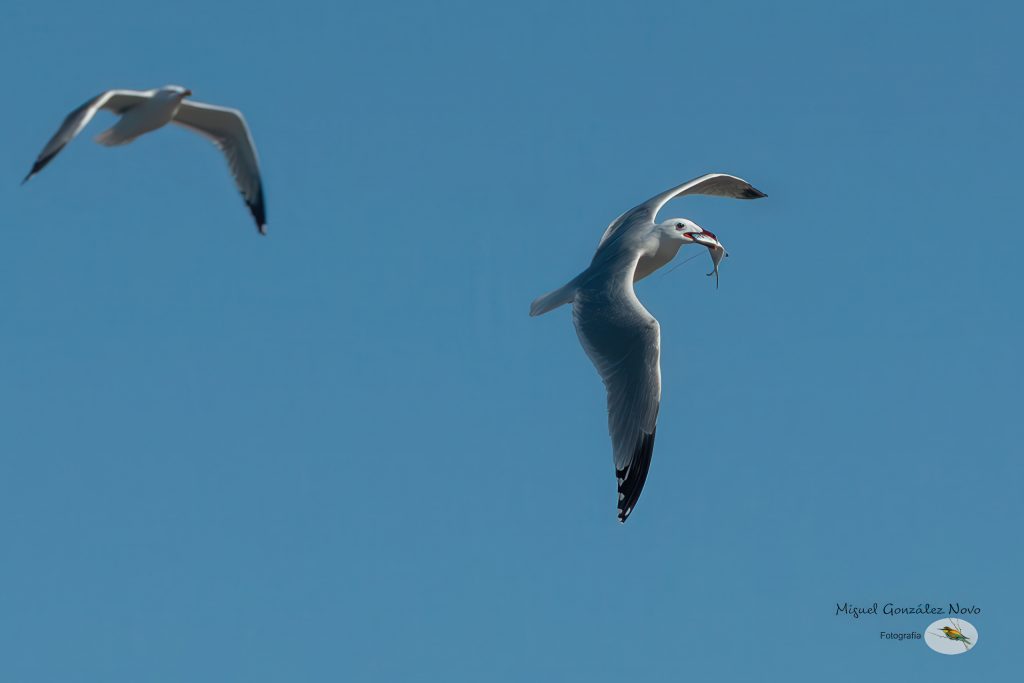
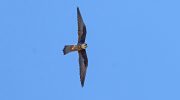
Fish Eagle in action © Novomig www.inaturalist.org
Audouin’s Gull belongs to the genus Ichthyaetus, a name derived from Ancient Greek meaning quite literally “fish eagle” – a fitting tribute to a bird that hunts like one. Unlike its scrappy cousins, this species is a refined, specialist predator: strictly coastal, elegantly built, and entirely focused on the sea.
Named for a Frenchman, Born in the Mediterranean
The species was first formally described in 1826, with its type locality recorded as Sardinia and Corsica. The scientific name audouinii honours the French naturalist Jean Victoire Audouin, a 19th-century zoologist who made significant contributions to Mediterranean natural history. The bird he inspired has been associated ever since with the ancient, sun-warmed waters of the inland sea he studied.
In the late 1960s, Audouin’s Gull was among the world’s rarest gulls, with a global population of only around 1,000 pairs. Coastal development, human disturbance at nesting sites, competition from the much more abundant Yellow-legged Gull, and changes in fishing practices had pushed the species to the very edge. It became something of a cause célèbre in European conservation, a symbol of what the Mediterranean was losing.
In Greek, it is known as Αιγαιόγλαρος – literally “Aegean Gull” (Αιγαίο = Aegean Sea + γλάρος = gull)
A Bird of Quiet Elegance
This bird is 44–52 cm long with a wingspan of 117–128 cm – slightly smaller and more delicate than a common herring gull, with a slender body and long, narrow wings. Where most gulls are chunky and assertive, Audouin’s has the profile of a bird that was designed for open water and long, effortless flight.
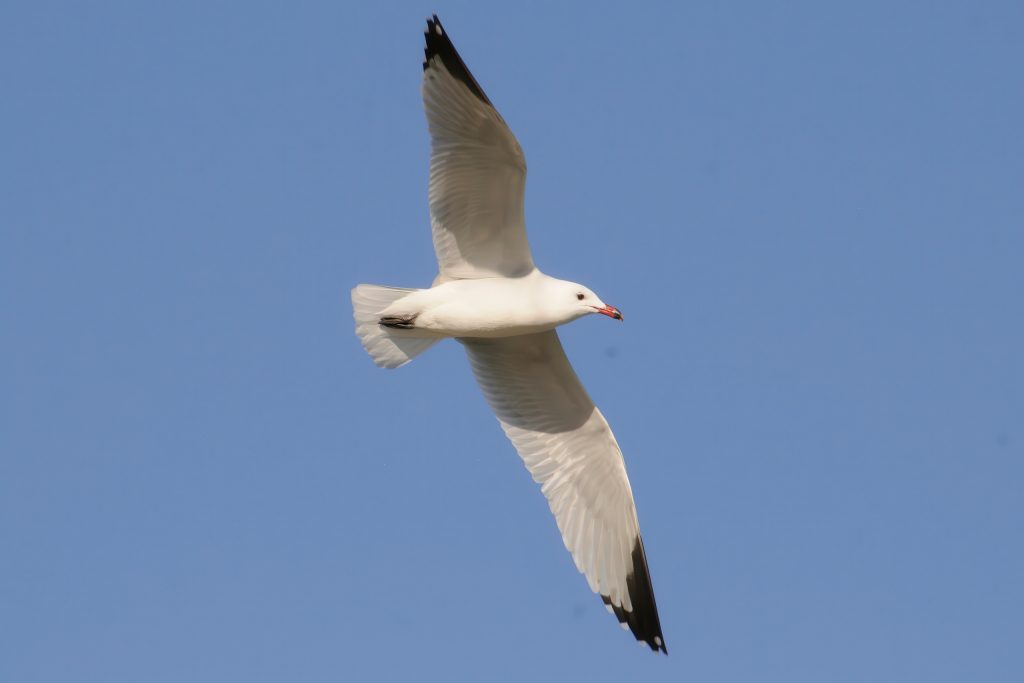
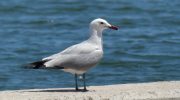
This gull is a bit smaller than Herring Gull © Pablo Pozo www.inaturalist.org
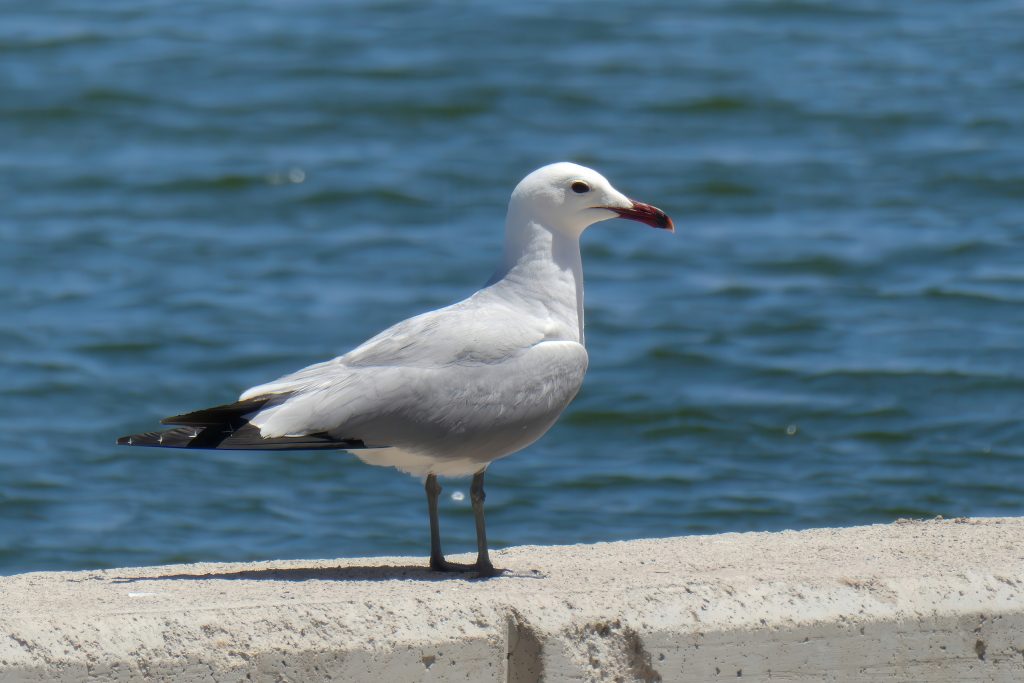
Its most distinctive feature is a long coral-red bill, often tipped with black and yellow, and dark eyes surrounded by a red orbital ring. The body is pristine white, the back pale grey, and the wingtips black – not aggressively so, but with a subtle, almost painterly contrast. The legs are a muted grey-green. In flight, it moves with a tern-like grace that immediately sets it apart from other gulls overhead.
Juveniles take three years to acquire full adult plumage, wearing mottled brown-grey coats in their early years – easy to overlook, easy to misidentify, which has likely led to the bird being underrecorded for much of its history.
Fun Facts
- Audouin’s Gull will actually feed at night, patrolling out at sea and occasionally dangling its legs in the water to increase drag while hunting. No gull chips here – this one prefers moonlit fish.
- The species shows almost no tendency to wander. A single vagrant turned up in England in May 2003, and one extraordinary individual spent several months in Trinidad between 2016 and 2017 – making it one of the most newsworthy seabirds in the Atlantic that year.
- The Ebro Delta in Spain once harboured nearly 67% of the entire global breeding population within a single colony – a remarkable and precarious concentration of a species’ entire fate in one place.
- Unlike nearly every other large gull, Audouin’s Gull rarely scavenges, preferring instead to catch live prey. In a world of opportunists, it remains a purist.
The Fisher-King of the Mediterranean
Audouin’s Gull hunts on the high seas much like a shearwater, feeding mostly on small fish and cephalopods, snatched in flight from the surface or in deeper plunge-dives. It follows the movements of prey, which shift with currents and weather, meaning the birds themselves are always moving – restless, nomadic in winter, yet deeply faithful to their breeding islands each spring.
The species breeds exclusively within the Mediterranean basin, with the largest populations in the western Mediterranean. Colonies range in size from a few pairs to several thousand, and the gulls are known to be monogamous for at least several years, often returning to the same nesting colony annually. Nests are shallow scrapes lined with pebbles, shell fragments, and dried grass – modest architecture for such a distinguished bird.
Cyprus: The Very Last Eastern Outpost
In Cyprus, a small population breeds on the Kleides islets off Cape Andreas on the Karpasia peninsula, at the northeast tip of the island. The Kleides colony represents the easternmost breeding site of the species in the world. That is not a small distinction. These rocky, windswept islets mark the absolute geographical limit of the species’ range – beyond them, Audouin’s Gull does not breed anywhere on Earth.
Since 2007, BirdLife Cyprus has carried out systematic monitoring of the colony in cooperation with Turkish Cypriot ornithological society KUŞKOR. Each year during the breeding season, a small team visits the Kleides by boat to count adults, nests, and chicks, contributing data to an international Action Plan for the species.
The news from those surveys has not always been encouraging. Historically more than 40 pairs bred at the site, but numbers have steadily fallen. While active nests and young birds continue to be recorded each breeding season, long-term trends show a decline in populations. Threats include disturbance by fishermen landing on the islands, predation pressure from the larger Yellow-legged Gull, and the possible presence of rats – even stepping on these small islands during nesting season can cause the birds to abandon their nests entirely.
A Living Symbol, Protected Anew
In 2025, the European Union adopted an international action plan for Audouin’s Gull, designating the Kleides islets as a conservation priority and placing renewed focus on protecting this site critical to the species’ survival in the Levant. The plan, prepared by BirdLife International using data from 15 countries, sets targeted conservation priorities across the species’ entire Mediterranean range.
For Cyprus, this is a moment of both recognition and responsibility. The island is not a supporting character in this story – it hosts the last breeding colony at the species’ easternmost frontier. What happens on those small rocks off Cape Andreas matters not just to Cyprus, but to the broader fate of a bird that nearly vanished from the Mediterranean entirely.
Can You See Them?
Audouin’s Gulls are not easy to observe during breeding – and deliberately so. The Kleides islets are sensitive protected sites, and disturbance during the nesting season is one of the key threats the birds face. Landing on the islands without a permit is prohibited.
However, the birds can occasionally be seen offshore along the northern Karpasia coastline, particularly in spring and early summer when adults are commuting to and from fishing grounds. Patient birdwatchers with binoculars, a boat trip, or a long lens near Cape Andreas may be rewarded with a distant sighting of these lean, graceful birds gliding low over blue water – a reminder that wildness still clings to the margins of the island.
For those who cannot reach the northeast, the BirdLife Cyprus website maintains updates on the monitoring programme, and sightings can be logged through iNaturalist at [inaturalist.org](https://www.inaturalist.org/taxa/144522-Ichthyaetus-audouinii).
Why This Bird Matters
In a Mediterranean world of crowded coastlines and overfished seas, Audouin’s Gull is something quietly extraordinary: a bird that refuses to compromise, that insists on clean water, live fish, and undisturbed rocks on which to raise its young. Its presence at the Kleides islets is a measure – fragile, honest, and real – of the health of the sea that surrounds Cyprus.
To know this bird exists, and that Cyprus is its last eastern home, is to understand something important: that the island’s wild edges are not empty. They are full of life, full of stories, and full of creatures that have nowhere else to go.