Ottoman architecture in Cyprus refers to the Islamic buildings and urban structures constructed or adapted during Ottoman rule from 1571 to 1878. This three century period significantly reshaped the physical appearance of Cypriot cities, especially Nicosia and Famagusta. The Ottomans introduced architectural forms developed in Istanbul and Anatolia, including domed mosques, hans or caravanserais, hammams or bathhouses, covered markets, and medrese schools.
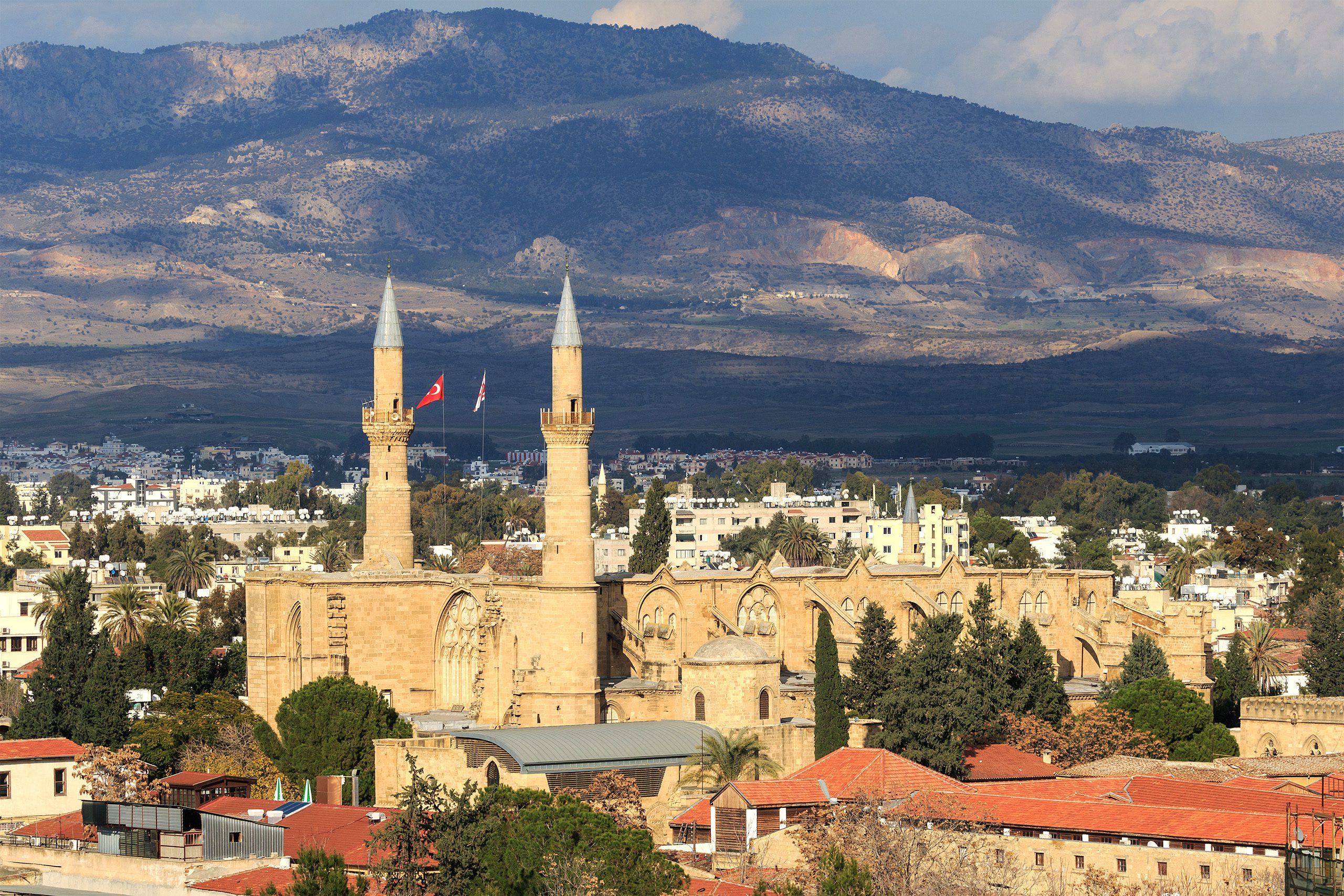
Unlike other Ottoman territories where Islamic architecture replaced earlier structures, Cyprus presented a distinct situation. The Ottomans inherited large scale Gothic buildings from the Lusignan and Venetian periods, particularly cathedrals that were too monumental to demolish. Instead of destroying these structures, Ottoman authorities converted them for Islamic use through the addition of minarets, the removal of Christian imagery, and the installation of prayer niches. This practical approach produced hybrid monuments that combine French Gothic exteriors with Ottoman Islamic interiors.
- Historical Background
- Converted Cathedrals: Selimiye and Lala Mustafa Pasha Mosques
- Purpose-Built Mosques: Arab Ahmet and Ottoman Classical Style
- Caravanserais: Commercial Architecture
- Bathhouses and Urban Infrastructure
- Ottoman Legacy in Modern Cyprus
- Visiting Ottoman Architecture in Cyprus
- Architecture as Historical Evidence
Historical Background
The Ottoman conquest reached its conclusion in August 1571 when Famagusta fell after a brutal ten month siege during which six thousand Christian defenders resisted an Ottoman force exceeding one hundred thousand soldiers. Lala Mustafa Pasha, the Ottoman commander who led the invasion, became the first Turkish governor of Cyprus and immediately initiated the conversion of major churches into mosques.
The transformation of urban landscapes reflected a deliberate policy aimed at establishing Ottoman authority through architecture. Nicosia became the administrative provincial capital and underwent redevelopment that mirrored essential features of an Ottoman town. This architectural strategy appeared across the island as economic infrastructure expanded and Islamic presence became visually established through religious and commercial buildings.
The rapid pace of construction highlights Ottoman priorities. Büyük Han rose immediately after the conquest of Nicosia between 1570 and 1572, which made it one of the earliest Ottoman buildings on the island. Governor Muzafer Pasha imposed a special duty of two paras on all city residents to finance the project. This additional tax angered inhabitants and later contributed to his overthrow and execution. Despite this outcome, the caravanserai was completed, demonstrating that trade facilitation and pilgrimage support ranked among the primary objectives of the new administration.
Converted Cathedrals: Selimiye and Lala Mustafa Pasha Mosques
The most dramatic examples of Ottoman architectural transformation are the two great Gothic cathedrals that became mosques. St. Sophia Cathedral in Nicosia, constructed from 1209 onward, was converted into what is now the Selimiye Mosque. The Ottomans added twin minarets to the western towers while preserving the Gothic structure essentially intact, including pointed arches, ribbed vaults, and rose windows.
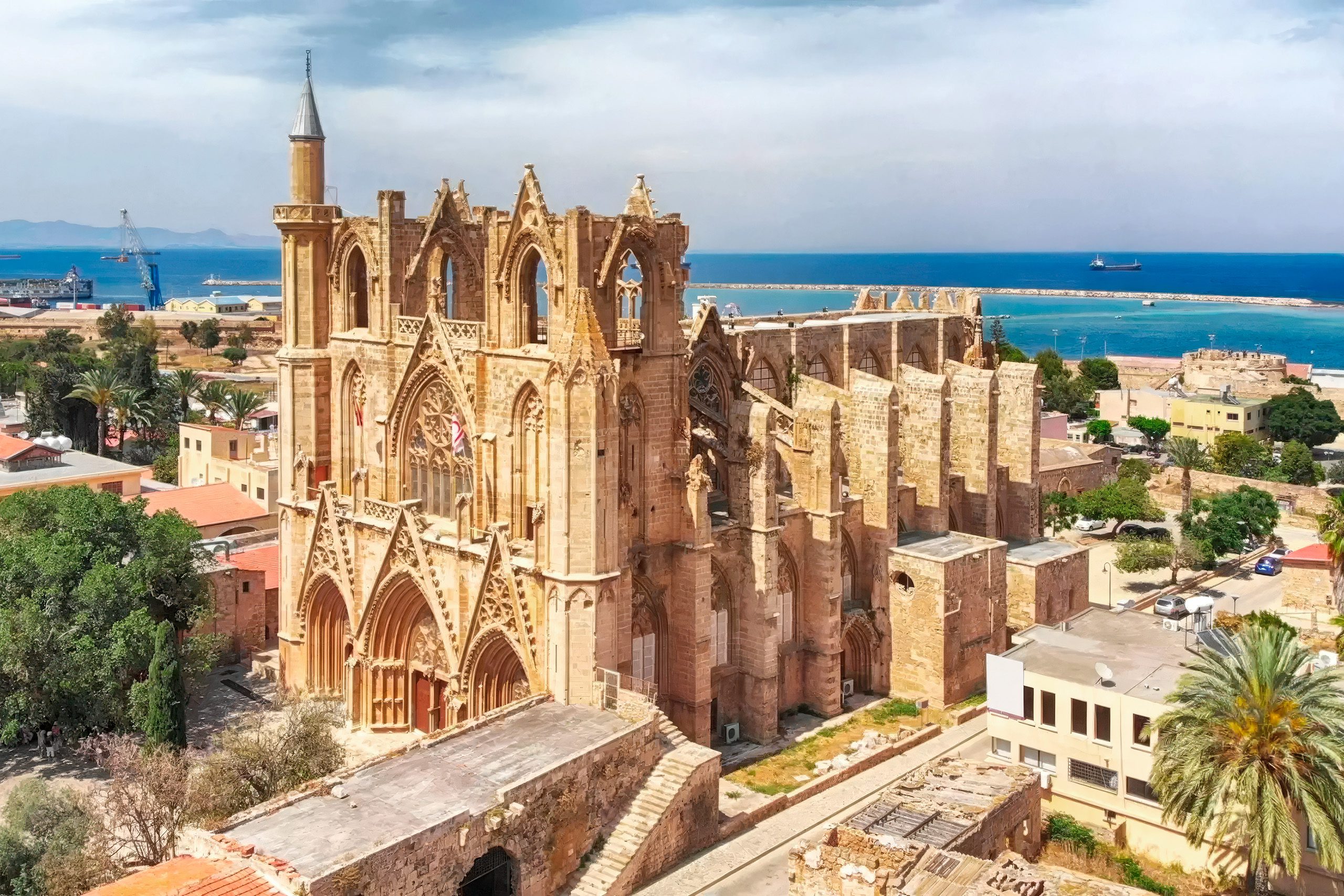
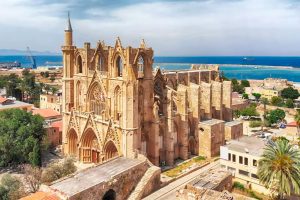
The Cathedral of Saint Nicholas in Famagusta was built between 1298 and c. 1400 and consecrated as a Catholic cathedral in 1328. Following the Ottoman conquest, it was converted into a mosque and, in 1954, was renamed the Lala Mustafa Pasha Mosque after the grand vizier who served Murat III and led Ottoman forces against the Venetians in Cyprus.
The conversion process followed Islamic requirements while pragmatically preserving Gothic architecture. Nearly all statuary, stained glass, frescoes, and paintings were removed or plastered over, as were most tombs and the altar. A mihrab (prayer niche indicating the direction of Mecca) and minbar (stepped pulpit) were installed. The upper parts of the cathedral’s two towers suffered from earthquakes and were badly damaged during the Ottoman bombardments of 1571, and were never repaired. A minaret was added to one of the unfinished bell towers.
The preservation of Gothic structures proved fortunate. These conversions spared the buildings from Baroque additions and 19th-century restorations that modified most European Gothic cathedrals. The Ottoman period essentially froze these structures in their medieval form, maintaining architectural integrity that might otherwise have been lost.
Purpose-Built Mosques: Arab Ahmet and Ottoman Classical Style
The Arab Ahmet Mosque was built in the late 16th century in the western Arab Ahmet Quarter of Nicosia and is named after a commander of the 1571 Ottoman army. Unlike the converted cathedrals, this represents authentic Ottoman architecture imported to Cyprus. The mosque exhibits classical Ottoman features: it is rectangular and the only mosque in Cyprus to exhibit a typical Turkish dome, with a large central dome covering the main body and three smaller ones covering its entrance, plus four more covering its corners.
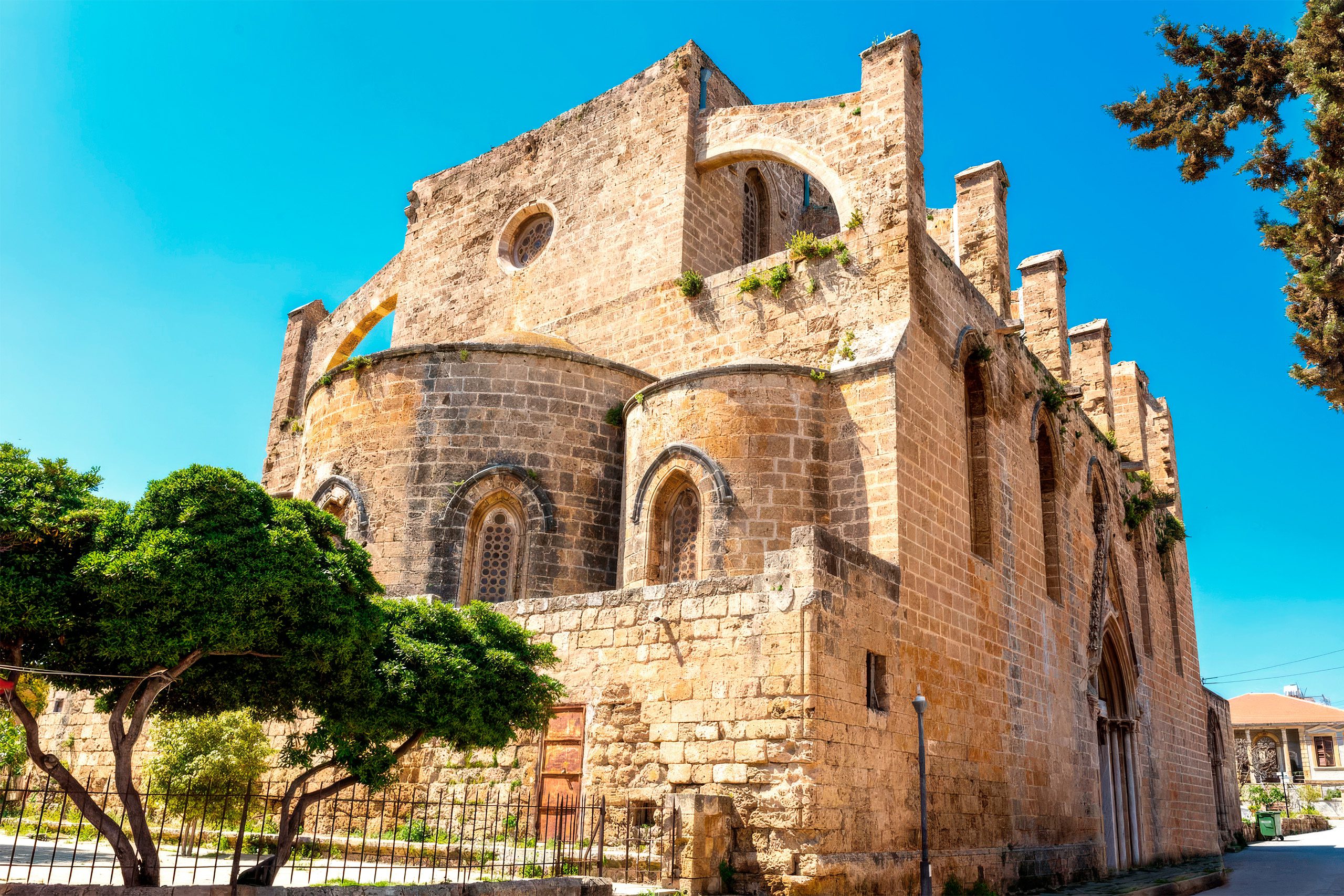
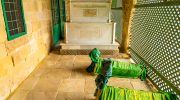
The Arab Ahmet Mosque was extensively renovated in 1845 due to deterioration. Its garden contains tombs of important historical figures, including Mehmet Kamil Pasha, born in Nicosia in 1833, who became Grand Vizier in the Ottoman Empire and was the only Cypriot ever to achieve this position. British Governor Sir Ronald Storrs produced a memorial for Kamil Pasha’s grave and composed the English inscription carved on the headstone, demonstrating how Ottoman heritage was respected even during British colonial rule.
Caravanserais: Commercial Architecture
Caravanserai, which literally translates as “palace for caravans,” served as a hotel for merchants and any other travelers who moved between cities. These facilities provided space to feed and water camels, horses, and donkeys while merchants rested and conducted business. In the Ottoman Empire, such facilities were called “han.”
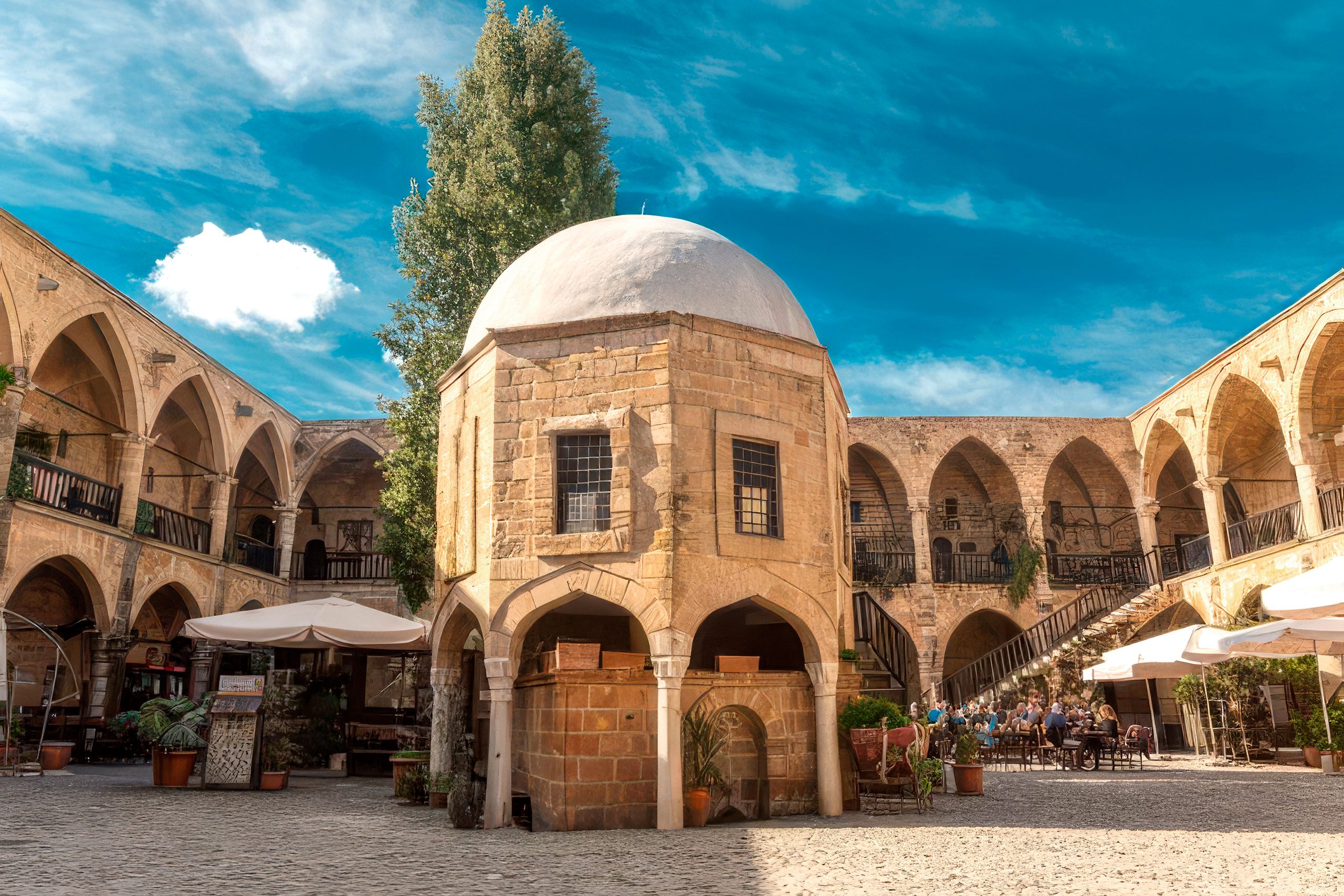
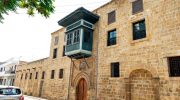
Büyük Han in Nicosia represents Cyprus’s largest and finest caravanserai. The building measures almost square at approximately 50 by 45 meters and contains 68 rooms arranged across two floors around a central courtyard. At the courtyard’s center stands a small mosque elevated on pillars, with an ablution fountain beneath. This architectural arrangement is characteristic of Ottoman caravanserais across the empire.
Bathhouses and Urban Infrastructure
Ottoman bathhouses, known as hammams, introduced a bathing culture derived from Roman thermae but adapted to Islamic requirements for ritual purification. These structures featured domed chambers with underfloor heating, separate sections for men and women, and complex water distribution systems. Although several hammams were built across Cyprus, most no longer survive in their original form or show extensive later modification.
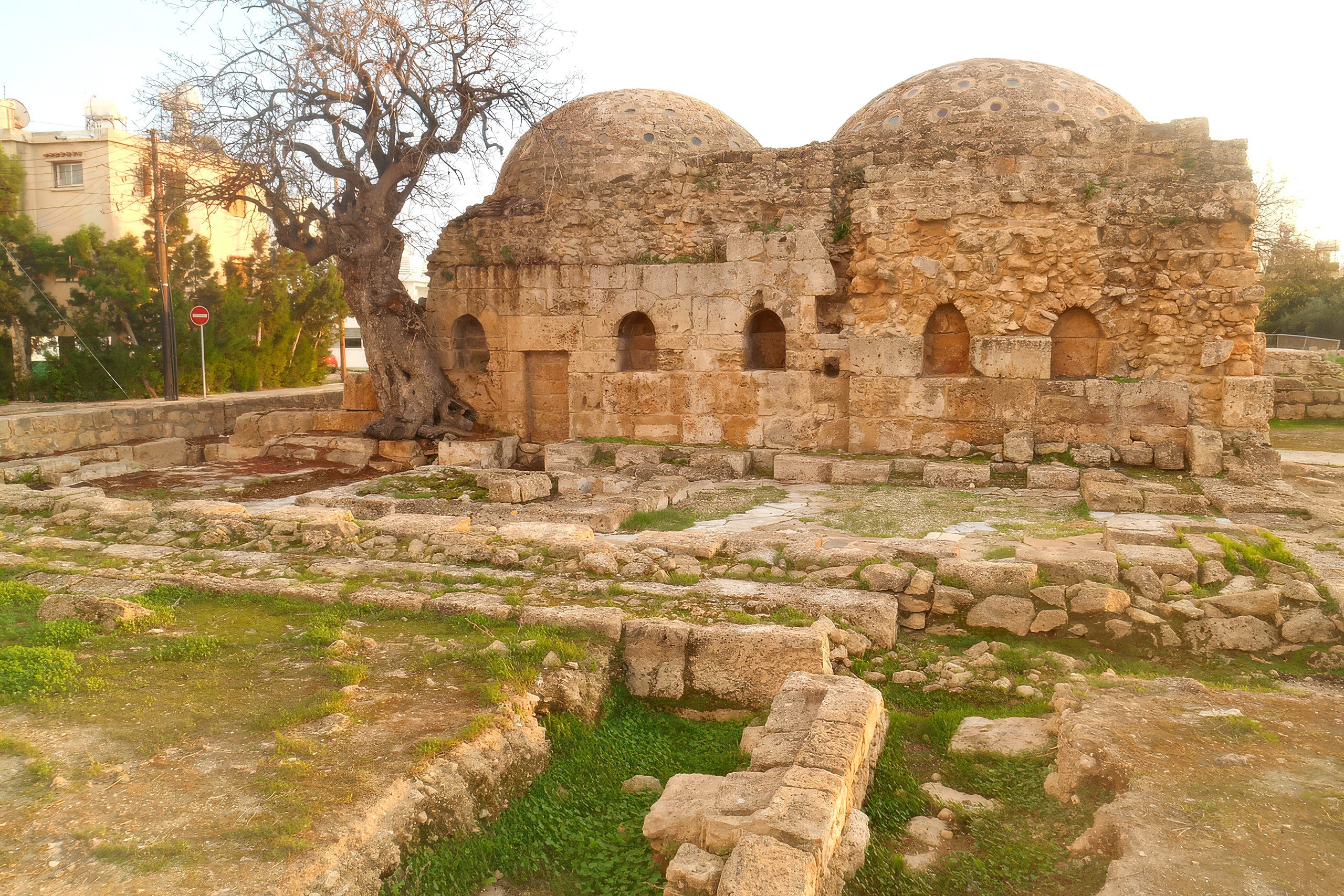
The Ottoman administration also developed covered markets known as bedesten, public fountains called çeşme, and infrastructure that supported Islamic religious and social life. Small neighborhood mosques referred to as masjids served residential communities, while larger Friday mosques accommodated congregational prayer. Educational institutions, or medrese, were attached to major mosques and provided instruction in Islamic law and literature.
Ottoman Legacy in Modern Cyprus
The Ottoman architectural legacy remains visible across Cyprus, especially in Nicosia, where several major monuments survive in relatively intact condition. Selimiye Mosque continues to function as the primary mosque for Turkish Cypriots and stands as the most recognizable landmark of Nicosia. In Famagusta, the Lala Mustafa Pasha Mosque dominates the old town and ranks among the island’s most visited historical sites.
These structures represent contested heritage within contemporary Cyprus. For Turkish Cypriots, Ottoman mosques and related buildings provide a cultural and religious connection that affirms their historical presence on the island. For Greek Cypriots, the same monuments reflect the conversion of Christian sacred spaces and recall three centuries of Ottoman rule that preceded the island’s division.
Despite these differing perspectives, growing recognition acknowledges Ottoman architecture as an integral component of Cypriot cultural heritage that belongs to all communities regardless of ethnic or religious identity. International organizations and bi communal initiatives have supported the restoration of Ottoman monuments, recognizing their historical value beyond modern political divisions.
Visiting Ottoman Architecture in Cyprus
The most significant Ottoman architecture is located in the Turkish-occupied part of Nicosia, accessible through crossing points from the Republic of Cyprus with a passport or an EU identity card. Selimiye Mosque is open to visitors outside prayer times, though modest dress and removal of shoes are required. The building’s interior reveals how Gothic architecture was adapted for Islamic worship while maintaining structural integrity.
Lala Mustafa Pasha Mosque in Famagusta welcomes visitors during daylight hours except during prayer times. The mosque’s location in Namik Kemal Square makes it the focal point for exploring Famagusta’s medieval city. The contrast between the Gothic exterior and the Islamic interior provides unique insight into religious and cultural transformation.
Architecture as Historical Evidence
Ottoman architecture in Cyprus matters because it provides physical evidence of the island’s complex history. These buildings document how conquering powers imposed new identities on captured territories while pragmatically adapting to existing conditions. The conversion of cathedrals rather than their destruction shows Ottoman religious tolerance combined with assertions of political control.
The buildings also reveal economic priorities. The immediate construction of caravanserais demonstrates Ottoman focus on facilitating trade and integrating Cyprus into empire-wide commercial networks. The subsequent building of bathhouses, fountains, and markets shows a commitment to urban infrastructure that would support permanent settlement rather than simply military occupation.