1. Prehistoric and Neolithic periods

Kantou-Koufovounos

Kantou-Koufovounos

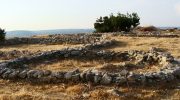
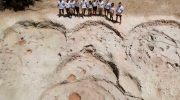
High on a hill near the Kouris River in the Limassol district of Cyprus sits Kantou Koufovounos, one of the island’s most significant Late Neolithic settlements. This archaeological site has quietly rewritten our understanding of life on Cyprus between 4,400 and 3,900 BC. Unlike the dramatic clifftop fortresses or coastal harbors that often capture imaginations, Kantou-Koufovounos was simply a community where people lived, worked, raised families, and built a society that lasted longer than many of its contemporary neighbors. The site takes its name from Koufovounos Hill, where it rests approximately 20 to 50 centimeters below the modern ground surface. This shallow depth speaks to how close we still are to these ancient inhabitants. The settlement sits on the western…

Read more
Kalavasos Tenta, Cyprus

Kalavasos Tenta, Cyprus

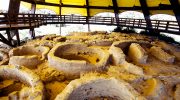
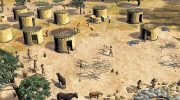
Four kilometers from the village of Kalavasos, on a small hill overlooking the Vasilikos River valley, archaeologists uncovered one of Cyprus's earliest permanent settlements. Kalavasos-Tenta dates to around 8000-6000 BC and predates the more famous Choirokoitia by nearly a millennium. Today, a distinctive cone-shaped shelter protects the circular stone houses where some of the island's first farming communities lived over 9,000 years ago. Kalavasos-Tenta is an Aceramic Neolithic settlement located 38 kilometers southwest of Larnaca and 45 kilometers south of Nicosia. The site occupies a naturally defensible hill on the west side of the Vasilikos valley, positioned to command views of the surrounding agricultural land and the river that provided water for crops and livestock. The settlement represents the Aceramic…

Read more
Shillourokambos Archaeological Site

Shillourokambos Archaeological Site

Six kilometers east of Limassol in southern Cyprus sits Shillourokambos, a Neolithic village that rewrote what archaeologists thought they knew about early Mediterranean life. This site rests on a low plateau near the modern village of Parekklisia, occupying land that people first settled at the end of the 9th millennium BC. When excavations began in 1992, researchers could hardly have anticipated the discoveries waiting beneath the soil. Shillourokambos belongs to the Pre-Pottery Neolithic B period, a time when communities across the Near East were making the crucial transition from mobile hunter-gatherers to settled farmers. The settlement passed through four distinct phases between approximately 8,200 BC and the second half of the 8th millennium. Each phase left behind evidence of how…

Read more
Sotira-Teppes, Cyprus

Sotira-Teppes, Cyprus

On a hilltop in southern Cyprus, approximately 6.5 kilometers from the coast, archaeologists discovered one of the most important Neolithic settlements in the Mediterranean. Sotira-Teppes stands as the defining site for the Ceramic Neolithic or Sotira Culture, which flourished between 4500 and 3800 BCE. Discovered in 1934 by Porphyrios Dikaios, curator of the Cyprus Museum, the site was excavated during the late 1940s and 1950s. The material culture found here was so distinctive that it gave its name to an entire phase of Cypriot prehistory, marking when island communities embraced pottery production and established new settlement patterns. The Hilltop Settlement The inhabitants chose their location strategically. The hill rises to approximately 330 meters above sea level and offers commanding views…

Read more
Khirokitia Figurines: Stone Ancestors at Home

Khirokitia Figurines: Stone Ancestors at Home

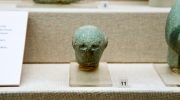
The stone figurines of Khirokitia are among Cyprus’s earliest human representations, carved over 9,000 years ago within one of the island’s first permanent farming settlements. Found in domestic and burial contexts, they were not decoration but durable objects that helped households maintain identity, lineage, and a living relationship with ancestors buried beneath the home. This article explains why the figures are intentionally abstract, why hard stone was chosen despite the labour, and what their placement reveals about memory and belonging at the dawn of settled life in Cyprus. Khirokitia Above the Maroni River The Neolithic settlement of Khirokitia lies on a steep hillside above the Maroni River in southern Cyprus. Occupied during the Aceramic Neolithic period, it represents the island’s…

Read more
Cyprus’s Prehistoric and Neolithic Periods

Cyprus’s Prehistoric and Neolithic Periods

Long before the ancient Greeks built their temples or the Romans laid their mosaics, Cyprus was home to some of the Mediterranean's earliest farming communities. These prehistoric pioneers built villages, grew crops, and created a culture that would lay the foundation for thousands of years of Cypriot civilization. The Island's First Settlers Cyprus's prehistoric story begins over 11,000 years ago when the island's landscape looked dramatically different from today. The first humans to arrive found a land inhabited by pygmy hippos and dwarf elephants - miniature versions of their mainland cousins that had evolved in isolation on the island. These early settlers were hunter-gatherers who eventually gave way to organized farming communities. By around 7000 BCE, Cyprus had developed a…

Read more
Khirokitia UNESCO Chalcolithic Village

Khirokitia UNESCO Chalcolithic Village

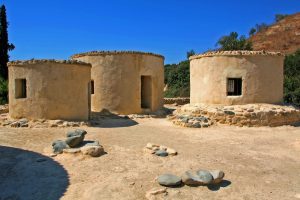
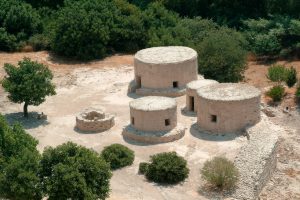
Khirokitia (also spelled Choirokoitia) represents the peak of Cyprus's Aceramic Neolithic period, when communities built permanent settlements without any knowledge of pottery production. The site covers approximately 3 hectares at its maximum extent and consists of circular stone and mudbrick houses clustered together on a hillside. These structures were protected by massive stone walls that enclosed the settlement on multiple sides. The archaeological remains document a sophisticated farming society that thrived for over 1,500 years. Residents cultivated wheat and barley, raised domesticated sheep, goats, and pigs, and supplemented their diet through hunting and gathering wild foods. The settlement's name likely derives from the Greek words for pig (χοίρος) and cradle (κοιτίς), suggesting an area where pigs were raised, though several…

Read more