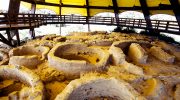
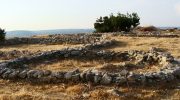
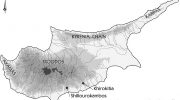
Six kilometers east of Limassol in southern Cyprus sits Shillourokambos, a Neolithic village that rewrote what archaeologists thought they knew about early Mediterranean life. This site rests on a low plateau near the modern village of Parekklisia, occupying land that people first settled at the end of the 9th millennium BC. When excavations began in 1992, researchers could hardly have anticipated the discoveries waiting beneath the soil.
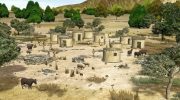
Shillourokambos belongs to the Pre-Pottery Neolithic B period, a time when communities across the Near East were making the crucial transition from mobile hunter-gatherers to settled farmers. The settlement passed through four distinct phases between approximately 8,200 BC and the second half of the 8th millennium. Each phase left behind evidence of how life evolved as people adapted to new challenges and opportunities.
The Famous Cat Burial That Changed History
In 2004, French archaeologists led by Jean-Denis Vigne uncovered a burial that would capture worldwide attention and fundamentally alter our understanding of human-animal relationships. The grave, dated to approximately 7,500 BC, contained the skeleton of a human aged 30 years or older alongside an eight-month-old cat. The two were buried just 40 centimeters apart, close enough to suggest an intentional and meaningful connection.
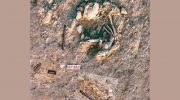
This discovery pushed back evidence of cat taming by nearly 4,000 years. Before Shillourokambos, ancient Egypt held the title as the birthplace of cat domestication, with clear depictions of house cats in paintings from around 2,000 BC. The Cypriot burial proved that humans and cats had formed special bonds thousands of years earlier than anyone suspected.
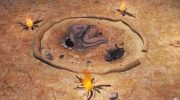
The cat belonged to the species Felis silvestris, the wildcat, which is significantly larger than modern domestic cats. Analysis of the skeleton showed it closely resembled the African wildcat, the direct ancestor of today’s house cats. The bones showed no signs of butchering, another strong indication that this was not a food animal but something altogether different, perhaps a companion or a creature with symbolic importance.
Rich Burial Offerings Tell Their Own Story
The human grave contained ten ceremonial items, an unusually high number for the Pre-Pottery Neolithic period in Cyprus. The collection included a marine shell, a stone pendant, a rare discoid flint scraper, two small polished axes with one broken, a pumice stone, a fragment of ochre, a large flint piercing tool, and several unmodified flint blades and bladelets. This rich assemblage suggests the buried individual held special status within the community.
The body had been placed in a semi-seated position, probably wrapped in a bag before burial. Arms were crossed against the chest and legs completely folded. A small pit containing 24 complete sea shells lay nearby. The cat’s grave measured 43 by 25 centimeters and was positioned just steps from the human burial. The careful treatment of both bodies demonstrates intentional ritual practice, not casual disposal.
How Shillourokambos Residents Built Their Village
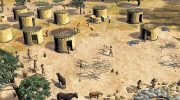
The earliest phases of settlement at Shillourokambos, dated from 8,200 to 7,500 BC, featured circular structures made from wattle and daub. Builders cut post holes directly into the bedrock to anchor these buildings. Some deep pits discovered at the site may have served as wells, providing precious fresh water to the community. The village also contained large wooden enclosures designed to hold livestock.
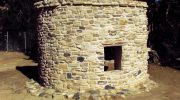
As time passed, construction methods evolved. The middle and late phases after 7,500 BC saw residents shift to circular stone houses, comparable to those found at other contemporary sites like Kastros. This architectural change aligned Shillourokambos more closely with the wider Khirokitia culture that dominated Cyprus during this period.
Evidence of Early Farming and Animal Keeping
Shillourokambos holds tremendous importance because it proves cattle were present on Cyprus during the Pre-Pottery Neolithic. Cattle bones found at the site are in the size range of wild species rather than showing the smaller dimensions typical of domesticated animals. This suggests people were in the early stages of managing these animals, perhaps controlling herds of wild cattle that had not yet undergone the physical changes associated with full domestication.
Interestingly, cattle disappeared from Cyprus during the 8th millennium and were not reintroduced until the later Ceramic Neolithic period. Only dog and pig bones from Shillourokambos show clear morphological signs of domestication, specifically size reduction compared to their wild ancestors. Sheep and goat bones remain in the range of wild species, the mouflon and bezoar ibex respectively.
The presence of fox and Persian fallow deer bones indicates hunting continued alongside animal management. Butchered remains of various species found near the site show that killing and processing took place in the immediate vicinity, making pre-domestication status probable for several species.
Plant remains reveal that residents cultivated cereals, including wheat and barley. These agricultural practices mark Shillourokambos as one of the earliest farming communities on Cyprus, representing the crucial transition from mobile foraging to settled food production that defined the Neolithic revolution.
Long-Distance Trade Networks and Valuable Obsidian
Approximately 300 blades made from Anatolian obsidian have been recovered from Shillourokambos. This volcanic glass does not occur naturally on Cyprus, so its presence proves extensive trade connections with the mainland. Obsidian from Anatolia was highly prized throughout the Neolithic world for its sharp cutting edges and workability.
The tools themselves show sophisticated manufacturing techniques. Sickles were constructed from multiple component parts rather than single pieces. Projectile points made from bipolar blades were common at Shillourokambos, though these distinctive tools are notably absent from the later Khirokitia culture. This technical diversity suggests skilled craftspeople experimenting with different production methods.
Cyprus also had its own valuable resource that may have attracted traders from elsewhere. The island possessed deposits of translucent chert, a high-quality stone suitable for tool production. This native material could have drawn people to Cyprus and facilitated exchange networks across the eastern Mediterranean.
Life Without Pottery in the Pre-Ceramic Age
The complete absence of pottery at Shillourokambos defines it as a Pre-Pottery Neolithic site. Instead of ceramic vessels, residents used containers and tools made from stone, bone, wood, and other perishable materials. This absence is not due to lack of sophistication but reflects the chronological period when pottery had not yet been invented or adopted in this region.
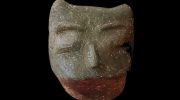
Archaeological discoveries include stone artifacts, bone tools, and figurines that reveal early symbolic and cultural practices. These objects demonstrate that even without pottery, Shillourokambos residents possessed complex material culture and artistic expression. The variety and quality of stone tools show advanced technical knowledge passed down through generations.
Taming Versus Domestication
Archaeologists use specific terms to describe different stages in the human-animal relationship. Domestication refers to animals that show clear morphological changes from their wild ancestors, such as smaller body size or shortened faces. These physical modifications result from generations of selective breeding by humans.
Taming describes the earlier stage when animals live closely with humans but have not yet developed the physical characteristics of domestic breeds. The Shillourokambos cat falls into this category. It was large like a wild cat and showed no skeletal modifications associated with domestication. However, the deliberate burial alongside a human with rich offerings clearly indicates a special relationship that goes beyond simple tolerance or opportunistic pest control.
The term fits well for cats, which experts sometimes call exploiting captives. Unlike livestock that humans control completely, cats maintain a degree of independence even when living with people. The Shillourokambos burial suggests this complicated relationship was already established 9,500 years ago.
Why This Site Matters to Archaeology
Shillourokambos provides invaluable insights into the Neolithic transition across the Mediterranean. The site documents the shift from hunter-gatherer societies to settled farming communities, capturing this transformation in remarkable detail. The complex architectural structures, storage facilities, and diverse artifacts indicate a relatively advanced and organized community for its time.
The excavations, led by Jean Guilaine under the direction of the Cyprus Department of Antiquities and the French School of Athens, have produced data that extends far beyond Cyprus. Findings about animal management, trade networks, and social organization inform our understanding of Neolithic development throughout the Near East.
The final archaeological analysis of Sector 1, completed after the 2004 excavation season, revealed that proportions of different mammal species varied significantly throughout successive occupations. These changes were structured enough to independently reconstruct phases of settlement, demonstrating how careful analysis of animal bones can reveal patterns of human behavior and adaptation over time.
The Legacy of a 9,500-Year-Old Bond
The cat burial at Shillourokambos stands as one of the most significant archaeological discoveries of recent decades. It demonstrates that the bond between humans and cats began not with Egyptian temples and goddess worship, but in a small Neolithic village where someone cared enough about a young cat to ensure it accompanied them into the afterlife.
Today, domestic cats are among the most popular pets worldwide, with an estimated 600 million living in households. They have spread to every continent except Antarctica, becoming one of the most successful carnivores on Earth. This global presence traces back to relationships forged in places like Shillourokambos, where Neolithic people first recognized something special in the wildcats that came to their settlements.
The site continues to inform archaeological understanding of early Cyprus and the broader Neolithic world. Every season of excavation brings new insights about how people lived, what they valued, and how they transformed their environment. Shillourokambos reminds us that even 9,500 years ago, humans were capable of complex emotions and meaningful relationships with other species. The careful burial of that eight-month-old cat speaks across millennia about bonds that transcend simple utility, suggesting that love and companionship have always been part of what makes us human.