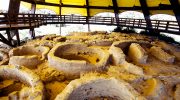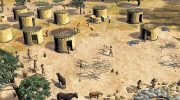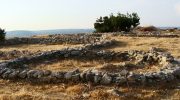
On a hilltop in southern Cyprus, approximately 6.5 kilometers from the coast, archaeologists discovered one of the most important Neolithic settlements in the Mediterranean. Sotira-Teppes stands as the defining site for the Ceramic Neolithic or Sotira Culture, which flourished between 4500 and 3800 BCE.
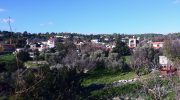
Discovered in 1934 by Porphyrios Dikaios, curator of the Cyprus Museum, the site was excavated during the late 1940s and 1950s. The material culture found here was so distinctive that it gave its name to an entire phase of Cypriot prehistory, marking when island communities embraced pottery production and established new settlement patterns.
The Hilltop Settlement
The inhabitants chose their location strategically. The hill rises to approximately 330 meters above sea level and offers commanding views of the Kouris River Valley and southern coast. The naturally defensible position featured steep northern and western slopes, while gentler southern slopes provided the main living areas. At least three perennial springs near the settlement ensured reliable water supply.
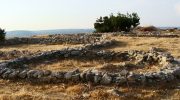
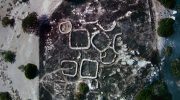
Excavations revealed approximately 47 houses packed onto a plateau covering 0.25 hectares. The northern slopes featured a massive retaining wall built from limestone boulders bound with yellow mud. The wall may have widened the plateau for habitation or provided defense, though the latter seems less likely since inhabited southern areas lacked such protection.
Houses and Architecture
Sotira-Teppes houses marked a significant architectural departure. While the preceding Aceramic Neolithic featured strictly circular structures, Sotira buildings were mainly free-standing, sub-rectangular or sub-angular with rounded corners. Stone foundations approximately 40 to 50 centimeters wide supported single-story superstructures made of mud brick or rammed earth, with roofs of reeds and mud. Average floor area was around 16 square meters. Both circular and rectangular house types appeared, suggesting a transitional phase in building traditions.

The settlement experienced three main occupation phases. Phase 1 saw low-density settlement with scattered houses, ending when fire destroyed the northern section. Phase 2 brought significant expansion creating a densely packed village at peak population. The destruction layer marking Phase 2 end suggests a major earthquake that collapsed most structures. Phase 3 saw reoccupation of damaged buildings and construction of the northern retaining wall, but limited new building suggests this final phase was brief before permanent abandonment.
The Signature Pottery
Pottery gave the Sotira Culture its name. The ceramic assemblage was dominated by handmade Combed Ware, decorated by dragging multi-pronged tools across wet clay surfaces, producing parallel grooves and sinuous bands. Some vessels featured red monochrome slip combed away to reveal white slip beneath, creating striking visual contrasts.
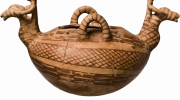
Red-on-White painted pottery also appeared, though in smaller quantities than at northern Cyprus sites. Painted designs were relatively simple. Deep bowls, open bowls with spouts, milk bowls, and jugs were the four most common shapes. These functional forms suggested ceramic technology largely replaced stone vessels used in the preceding Aceramic Neolithic. Scientific analysis revealed ceramic production was a local, household-level industry. Potters used distinct recipes for different wares, demonstrating sophisticated knowledge of raw materials and firing properties.
Daily Life and Tools
Well-preserved house floors provided remarkably complete pictures of domestic life. Many houses had designated work areas screened off by low walls, containing querns, grinders, pestles, and seats positioned near grinding stones. Other screened corners held clay vessels. Stone troughs, probably for bread-making, were wedged into floors.
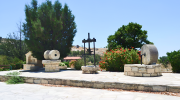
The tool assemblage was extensive. Numerous querns, rubbers, pounders, and mortars processed cereals. Axes, adzes, and chisels served woodworking needs. One house preserved a complete flint-working corner with stone hammer, flint cores, and the craftsperson seat still in place. The chipped stone industry relied on chert, but Sotira was located far from high-quality chert sources, meaning inhabitants either conserved materials carefully or engaged in long-distance procurement. Craft production was integrated into household activities rather than segregated workshops.
Self-Sufficient Economy
The economy combined farming, animal husbandry, and wild resource exploitation. Abundant grinding equipment and flint blades with sickle gloss indicate cereal cultivation. Evidence from contemporary sites confirms cultivation of olives and grapes. Large, coarse-ware trays with drainage holes may have separated olive oil from water.
Faunal remains show reliance on herding sheep and goats, supplemented by hunting deer and birds, and collecting sea shells. This diversified strategy made the community self-sufficient. The near-total absence of imported goods supports this conclusion.
Egalitarian Society and Burials
The settlement layout reveals social structure. Houses across the excavated area were of similar size and construction, with no building significantly larger or more elaborate. This lack of architectural differentiation suggests largely egalitarian social organization without clear evidence for ruling elites or significant wealth disparities. Each house was a multi-purpose unit with food preparation and craft activities integrated within the same space.
Burial customs differed significantly from earlier traditions. While sites like Khirokitia featured burials beneath house floors, Sotira dead were interred outside the settlement. An extramural cemetery containing twelve pit graves was discovered on the eastern slope. Graves were simple oval pits where adults were placed in contracted positions. Large stones were commonly placed on the chest or head of the deceased. Grave goods were nearly non-existent, contrasting with earlier Khirokitia burials. This shift may reflect changed beliefs about relationships between the living and the dead.
Only two figurines were recovered from extensive excavations, one being a phallic-shaped stone object. This scarcity contrasts with more numerous figurines at later Chalcolithic sites, suggesting ritual practice was embedded within daily life rather than monumentalized in distinct structures.
Cultural Unity with Regional Flavor
Sotira-Teppes defines the Ceramic Neolithic period in Cyprus, lasting from approximately 4400 to 3800 BCE. This period follows the Aceramic Khirokitia Culture. The distinctiveness of Sotira material culture initially led researchers to propose introduction by colonists from the Levantine mainland. However, proposed parallels are unconvincing, and the Sotira Culture is now largely seen as insular development, part of dynamic population growth across Cyprus.
While sharing common traits, the Sotira Culture was not monolithic. Sotira-Teppes represents a Southern Group where Combed Ware predominates. A Northern Group features much higher proportions of Red-on-White painted pottery. Despite these stylistic differences, sites are remarkably similar in architecture, toolkits, and economic strategies, indicating a single widespread cultural system with distinct regional expressions. Island-wide uniformity in architecture coexisted with ceramic regionalism.
Abrupt End and Lasting Impact
The Sotira Culture ended abruptly around 3900 to 3800 BCE. The earthquake that destroyed Sotira-Teppes may have been part of a wider seismic event leading to abandonment of many settlements across southern Cyprus. This disruption marks the transition to the Chalcolithic period. Human activity continued nearby at Sotira-Kaminoudhia, an Early Bronze Age settlement established just a few hundred meters away.
The excavation of Sotira-Teppes over seventy years ago established a fundamental chapter in Cypriot prehistory. Dikaios’ meticulous documentation continues to support research, allowing scholars to re-examine architectural sequencing and social dynamics. As the type site for the Ceramic Neolithic, Sotira-Teppes provided the first clear picture of a transformative period when island communities embraced pottery production.
The settlement was home to a self-sufficient community of farmers and herders who maintained an egalitarian social structure and expressed both island-wide cultural participation and distinct regional identity. Its well-documented remains continue to inform research into the development of prehistoric Cypriot society.