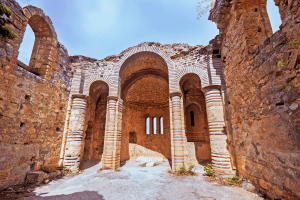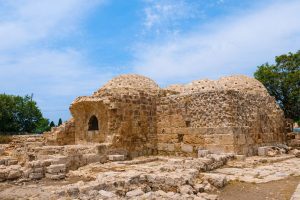
In the heart of Paphos lies one of Cyprus’s most significant archaeological landscapes, where over 1,600 years of urban and architectural history remain visible. The Chrysopolitissa site preserves the remains of a large late Roman basilica, along with later medieval and Ottoman-period structures, offering a layered record of continuous settlement and rebuilding.
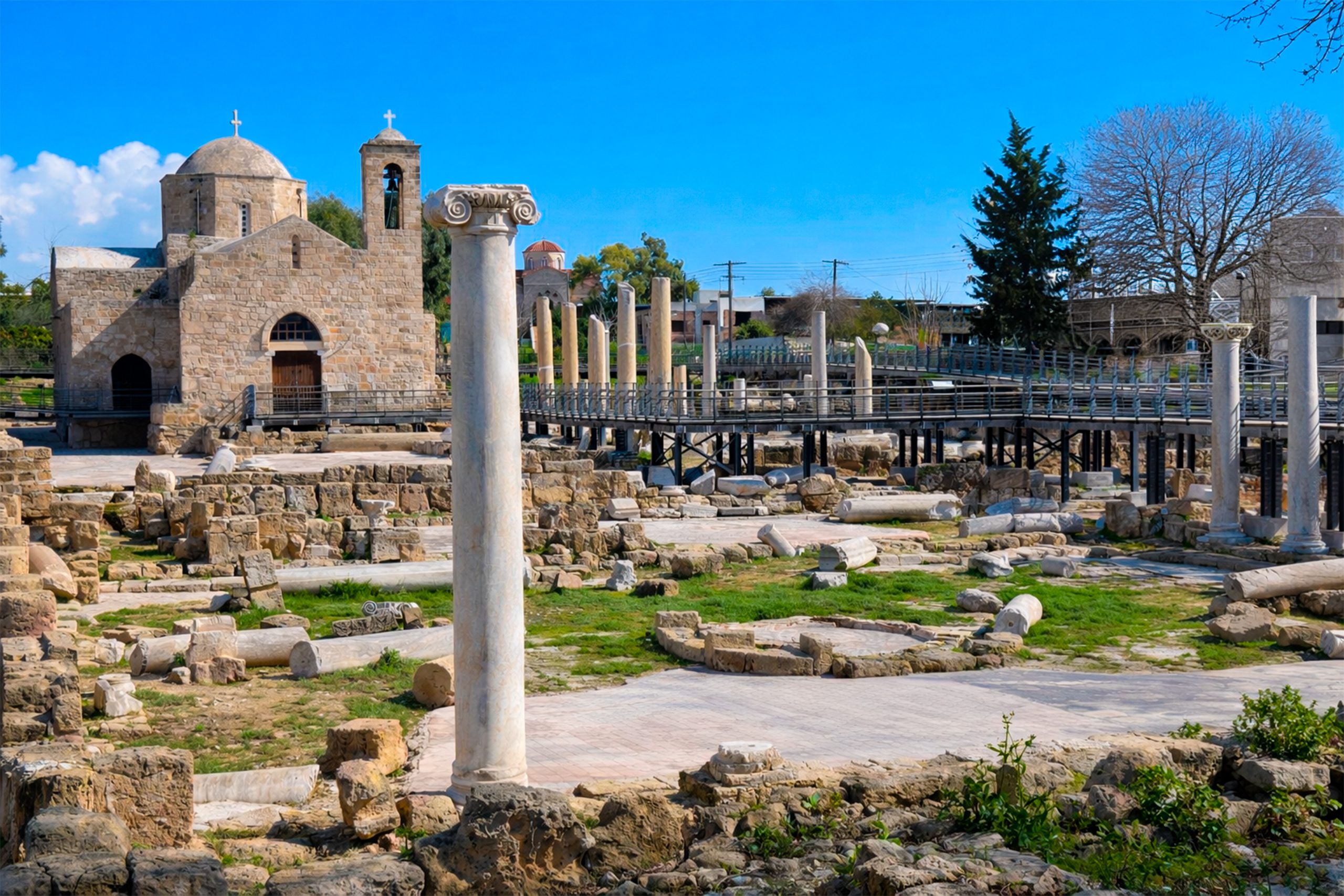
Today, the complex includes the ruins of the basilica, a later parish church (Agia Kyriaki), fragments of a medieval Franciscan structure, and the remains of Roman and Byzantine-era installations.
Historical Background
Archaeological evidence confirms that the basilica was constructed in the second half of the 4th century AD, during a period when Cyprus was integrated into the administrative and cultural systems of the late Roman Empire. Paphos served as an important provincial center, and the construction of large-scale public and religious buildings reflects the city’s urban significance during this period. The basilica was built on or near earlier Roman foundations, possibly replacing an earlier civic or domestic structure. Its scale indicates a major investment in public architecture, typical of the late Roman transition into the early Byzantine period.
What Makes the Basilica Unique
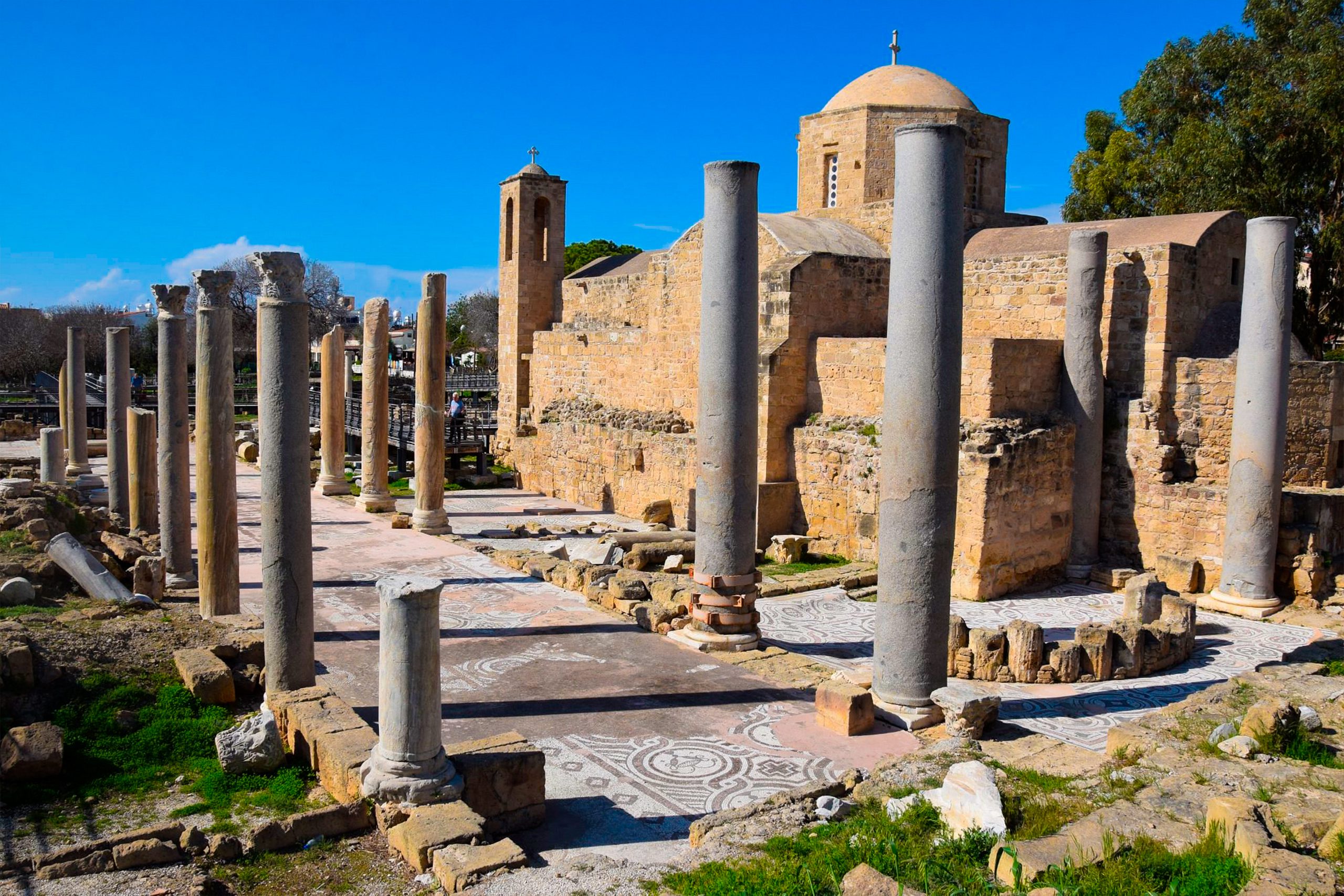
The original structure was one of the largest of its kind in Cyprus. It featured a multi-aisled layout divided by rows of columns and covered an area of approximately 1,600 square meters.
Key architectural features included:
- Granite and marble columns with Corinthian-style capitals
- A basilica layout with multiple aisles
- An attached administrative or residential building, likely used by local ecclesiastical authorities
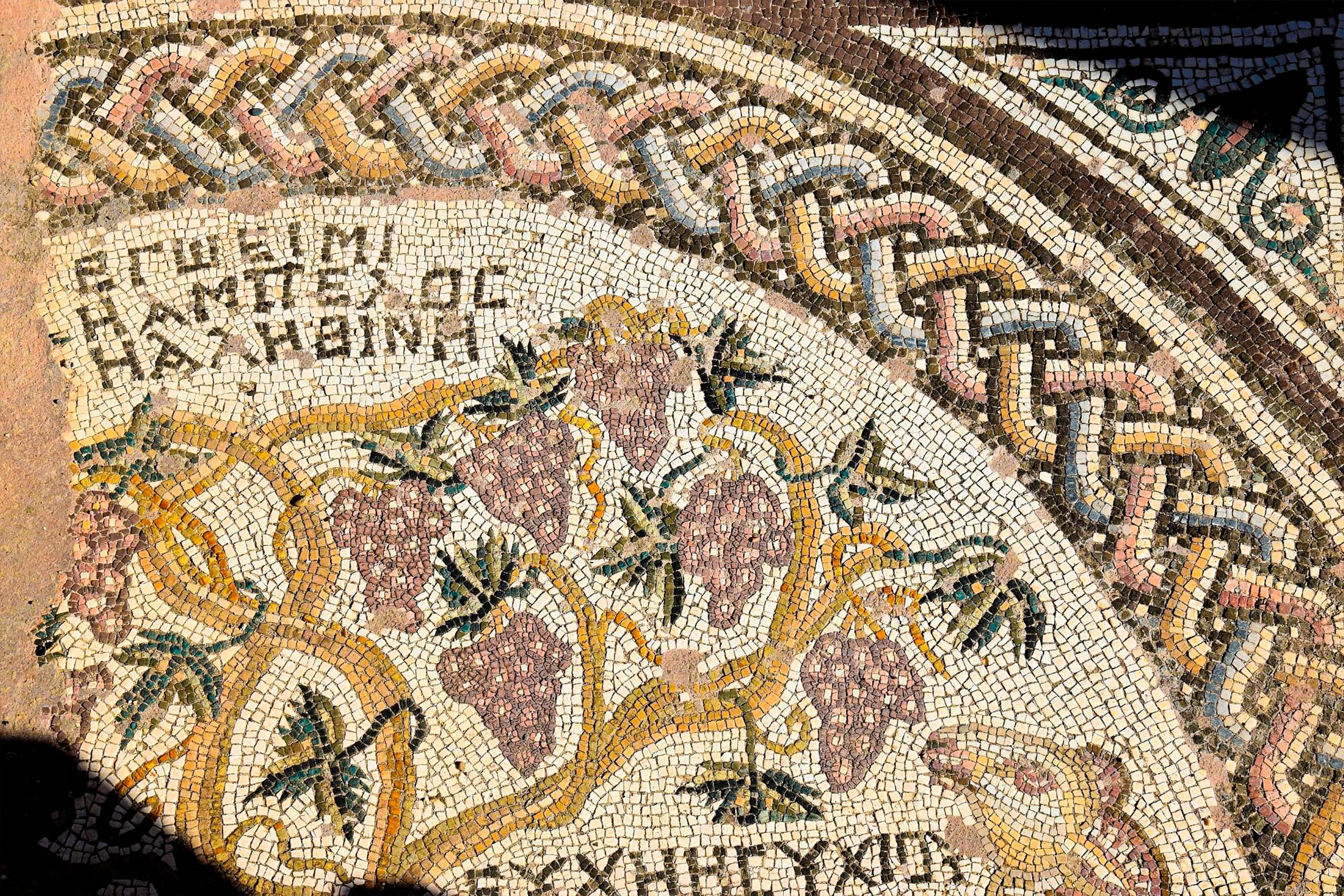
- Decorative mosaic flooring across large sections of the interior
In the 6th century AD, the building underwent significant modifications. The number of aisles was reduced, and new flooring was installed. These changes reflect evolving architectural practices in the early Byzantine period.
Destruction and Abandonment
The basilica was heavily affected by a combination of seismic activity and 7th-century regional conflicts, which led to widespread destruction across many coastal settlements in Cyprus.
Following these events, the structure was gradually abandoned. Over time, the site was buried under debris, leaving only columns, foundations, and fragmented mosaic floors visible.
Mosaic Floors and Artistic Remains
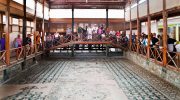
One of the most important surviving elements of the site is its mosaic flooring. These mosaics include geometric patterns such as interlocking circles, vines, crosses, and stylized natural motifs.
The decorative designs reflect artistic traditions of the late Roman and early Byzantine periods, combining local craftsmanship with wider Mediterranean influences.
Although fragmented, the mosaics provide valuable insight into the artistic and cultural practices of urban Cyprus during late antiquity.
Architectural Features
Several architectural elements remain visible today:
- Freestanding granite and marble columns
- Corinthian-style capitals carved with classical motifs
- Mosaic fragments preserved in situ
- Foundations from multiple construction phases
Modern elevated walkways allow visitors to view these remains without causing damage to the fragile surfaces below.
The combination of exposed ruins and reconstructed pathways makes the site a clear example of layered archaeological preservation.
Later Historical Phases
After the collapse of the original basilica, the site continued to evolve:
Byzantine Period (11th century)
A smaller structure was built using material from earlier ruins, reflecting continued settlement activity in the area.
Frankish Lusignan Period (14th century)
A Gothic-style church was constructed nearby, associated with monastic activity during Latin rule in Cyprus.
Venetian Period (16th century)
A new parish church, Agia Kyriaki, was constructed on or near earlier foundations. This structure remains intact and is still in use today.
Each phase reflects the changing political and cultural landscape of Cyprus over several centuries.
Roman and Later Facilities
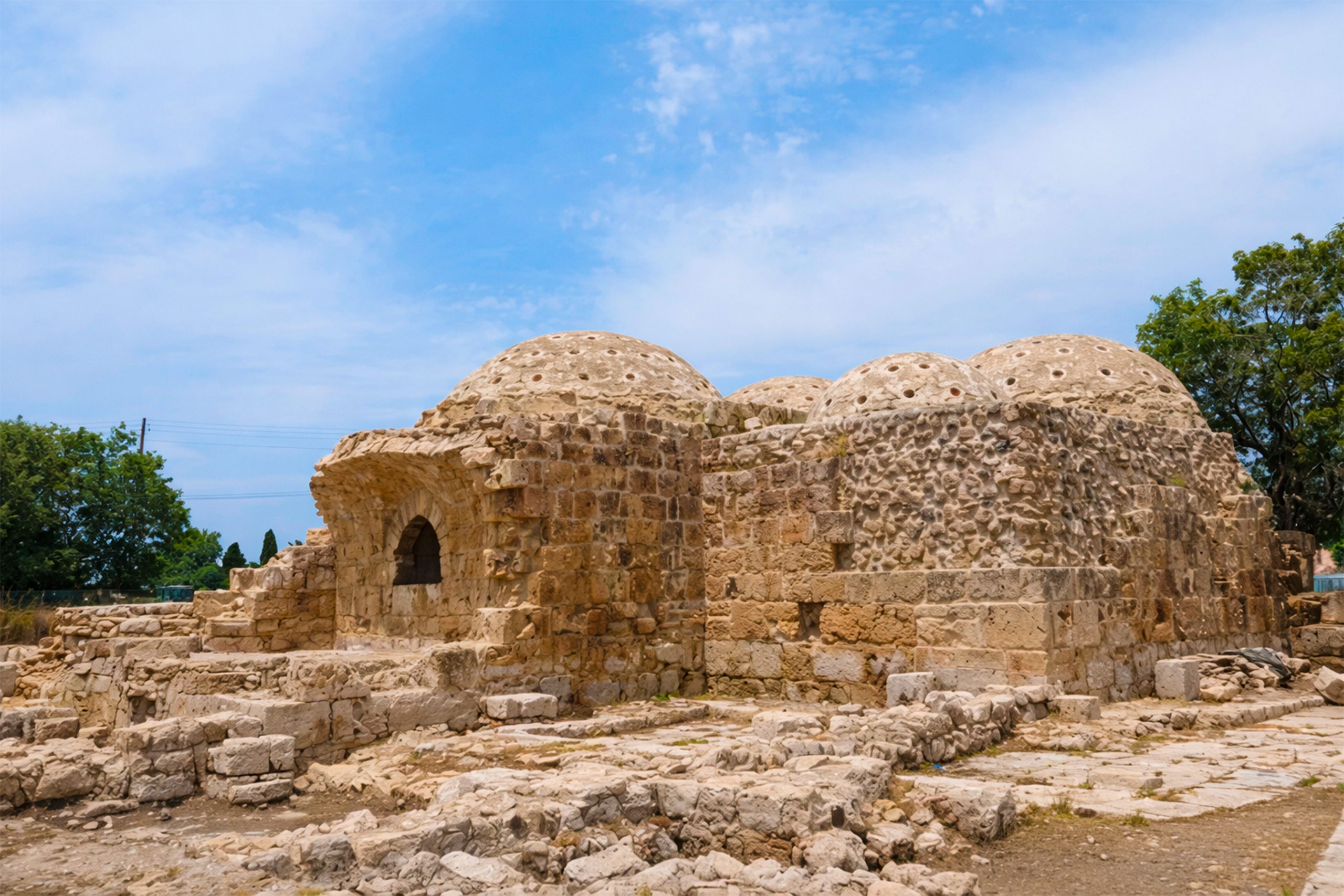
To the north of the site, archaeological remains indicate the presence of bath complexes used during Roman and later periods. These facilities show adaptation of classical bathing architecture over time, incorporating design elements from Roman, Byzantine, and Ottoman traditions.
The remains include sequences of heated, warm, and cooled rooms typical of ancient bathing systems.
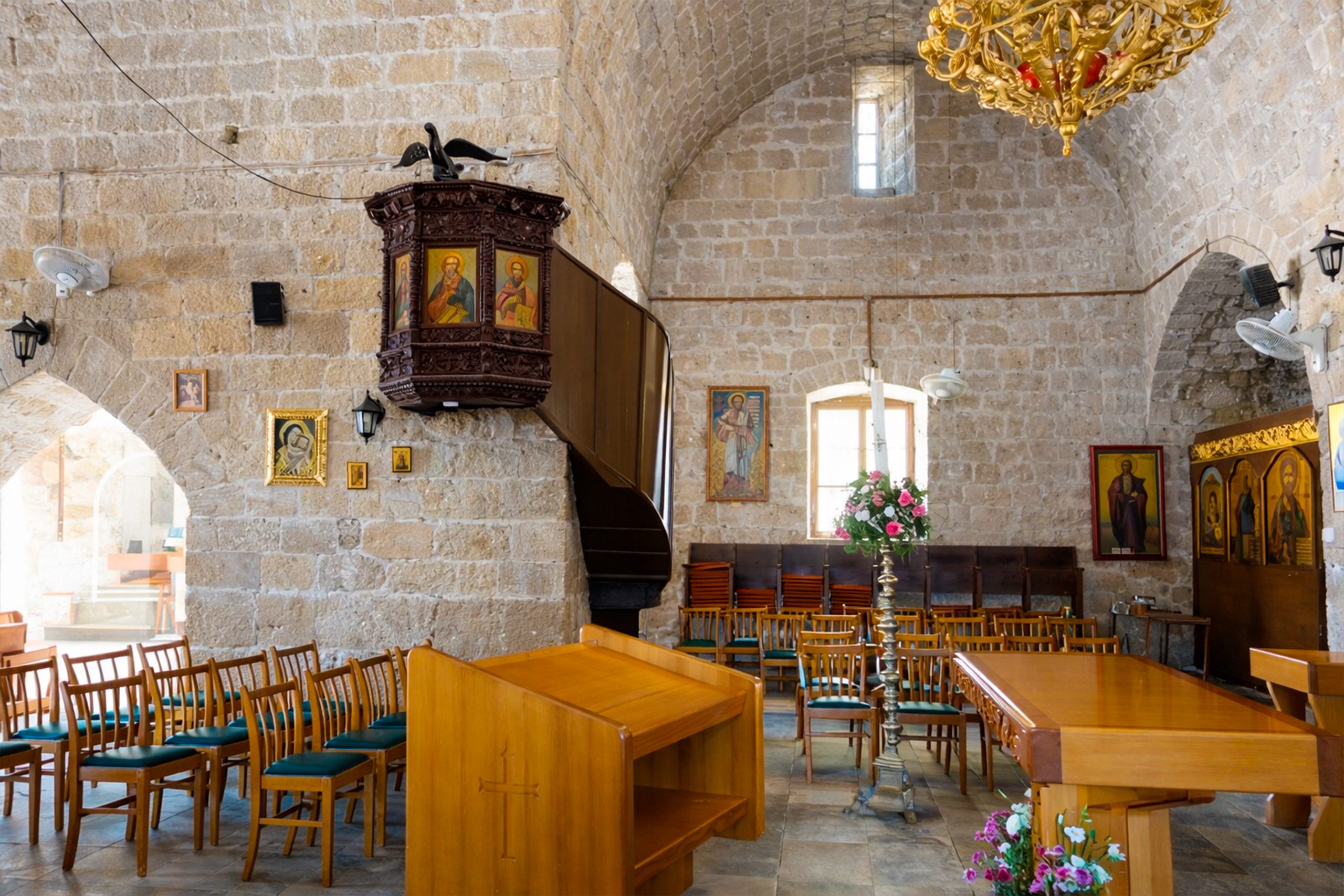
Agia Kyriaki Church
The present-day church of Agia Kyriaki was constructed around 1500 AD. It is built on earlier foundations and represents the final major architectural phase of the site.
Unlike the earlier basilica, this structure is smaller and more modest, reflecting the architectural style of the late medieval period in Cyprus.
It continues to function as an active parish church and is one of the longest continuously used religious buildings in Paphos.
Cultural and Historical Significance
The Chrysopolitissa complex is important for understanding the long-term development of Paphos as an urban center.
It provides evidence of:
- Roman urban infrastructure
- Early Byzantine architectural transformation
- Medieval rebuilding during Frankish rule
- Venetian-era religious architecture
- Continuous adaptation through Ottoman administration
The site demonstrates how a single urban location can evolve repeatedly across different historical eras while maintaining continuous occupation.
The Site Today
The archaeological site is open year-round and is freely accessible to visitors.
- Location: Central Kato Paphos, near the harbor
- Opening hours: Seasonal (morning to late afternoon)
- Entry: Free
The site includes interpretive signage, protected walking platforms, and visible remains from multiple historical periods.
Its location within walking distance of other major archaeological areas makes it part of a larger cultural zone in Paphos.
Conclusion
The Basilica of Chrysopolitissa is best understood as a layered archaeological landscape rather than a single monument. Its remains document the transformation of Paphos from a Roman administrative center into a continuously evolving urban settlement shaped by shifting political and cultural systems.
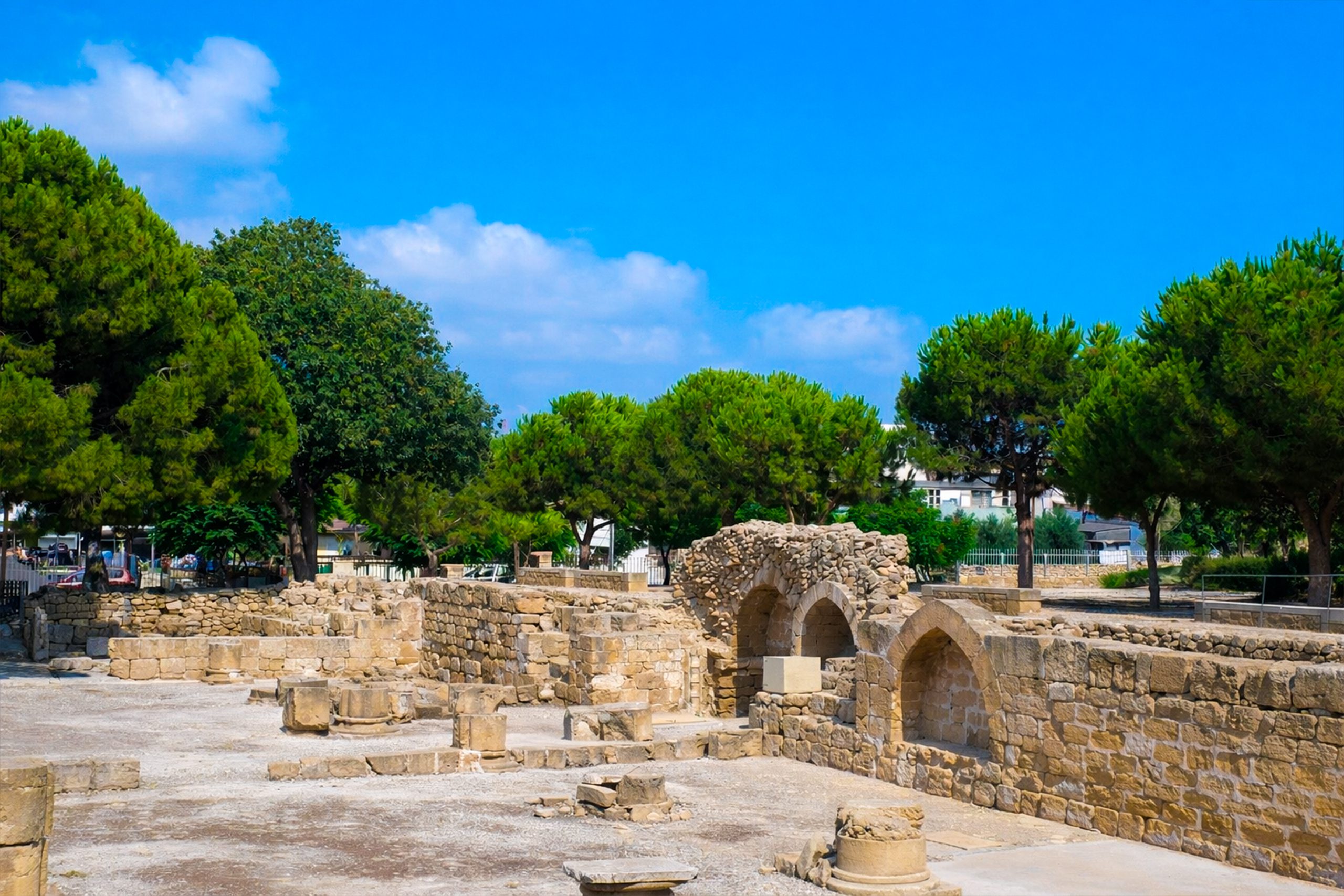
Today, the site stands as one of the clearest physical records of Cyprus’s long architectural history, preserved through ruins, mosaics, and later structures that together form a continuous timeline of change and adaptation.