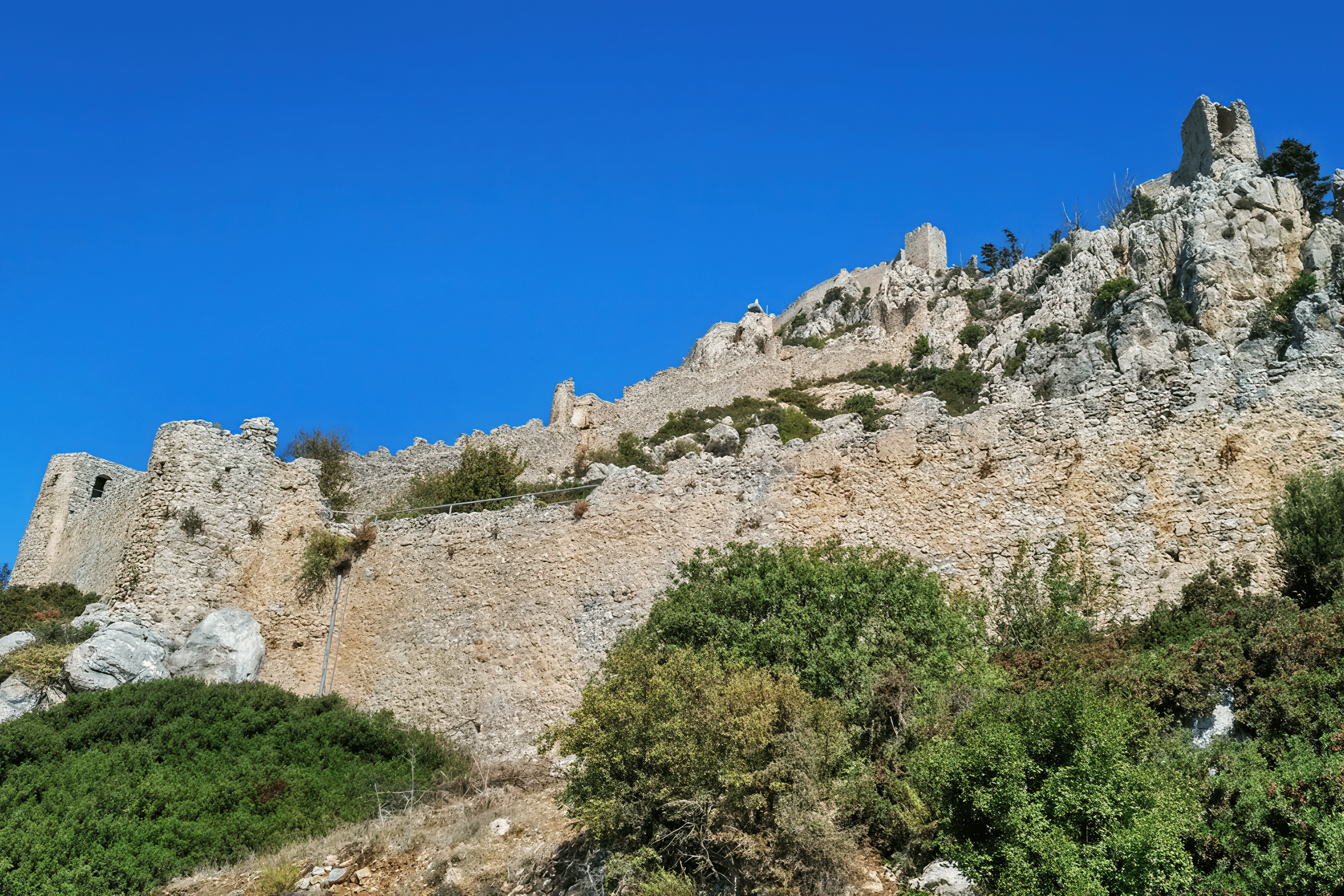
St. Hilarion Castle stands 732 meters above sea level in the Kyrenia mountain range of Cyprus. This medieval fortress features stone walls and towers that appear to grow directly from the rocky peaks. Located just off the main Kyrenia to Nicosia highway, the castle commands the mountain pass between the coast and the central plain.
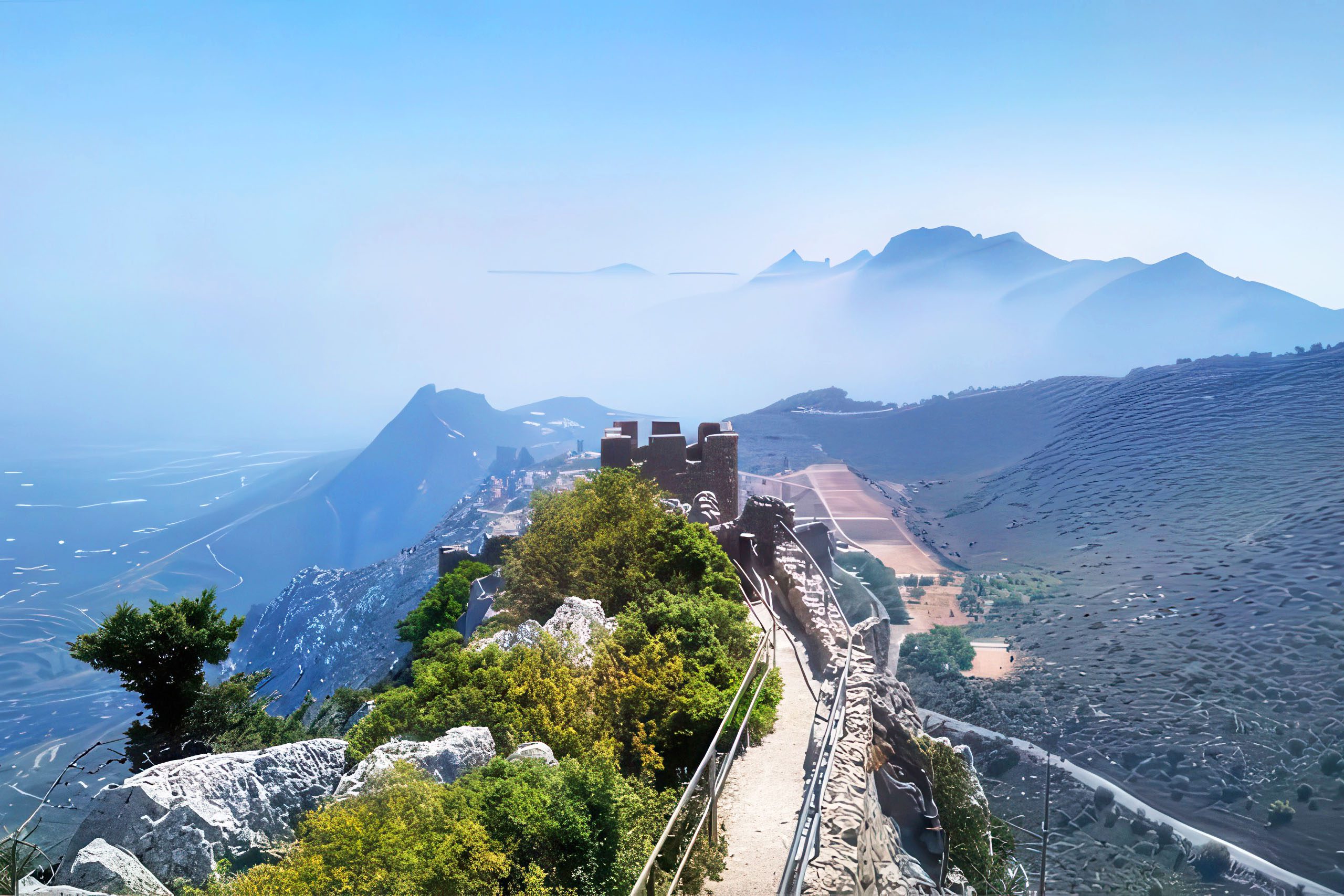
The castle is the best preserved of three Byzantine strongholds built along the Kyrenia mountain range, the others being Kantara to the east and Buffavento further west. The fortress consists of three main sections built at different elevations on the mountainside. The lower ward contained stables and living quarters for soldiers. The middle ward housed royal apartments, kitchens, a church, and a large cistern for water storage. The upper ward, surrounded by 1.4-meter-thick Byzantine walls made of rough masonry, served as the royal residence and includes Prince John’s Tower perched on a rocky cliff.
Historical Background
The castle takes its name from an obscure Christian hermit who fled to Cyprus after the Arab conquest of the Holy Land in the 7th century. This saint, known for living in a cave on the mountain, is not the same as the more famous St. Hilarion, who was active in Palestine and died near Paphos in 371 AD. Local tradition holds that the hermit spent his final years on this mountain purging it of pagan demons. According to legend, the hermit was stone deaf, which allowed him to resist the tempting calls of the demons. Eventually the demons gave up and left the mountain in peace.
An English traveler reported finding the hermit’s relics preserved at the site during the 14th century. Some historians believe a monastery was built around his tomb as early as 800 AD, though substantial evidence for this theory is limited. What is certain is that a Byzantine church and monastery existed on the mountain by the 10th century.
The castle had another name during the Lusignan period. It was called Dieu d’amour, meaning “God of Love” in French. This name came from a corruption of the Greek word Didymus, meaning “Twins,” which referred to the twin mountain peaks on which the fortress was built.
Byzantine Construction
The Byzantines began fortifying the mountain in the 11th century. The strategic position overlooking the pass made it ideal for defense against Arab raids that plagued the Cyprus coast during the 7th and 8th centuries. The castle served as a watchtower and beacon, forming part of a communication chain with Buffavento and Kantara castles further east.
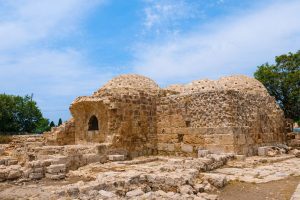
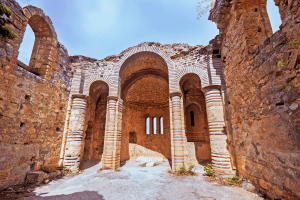
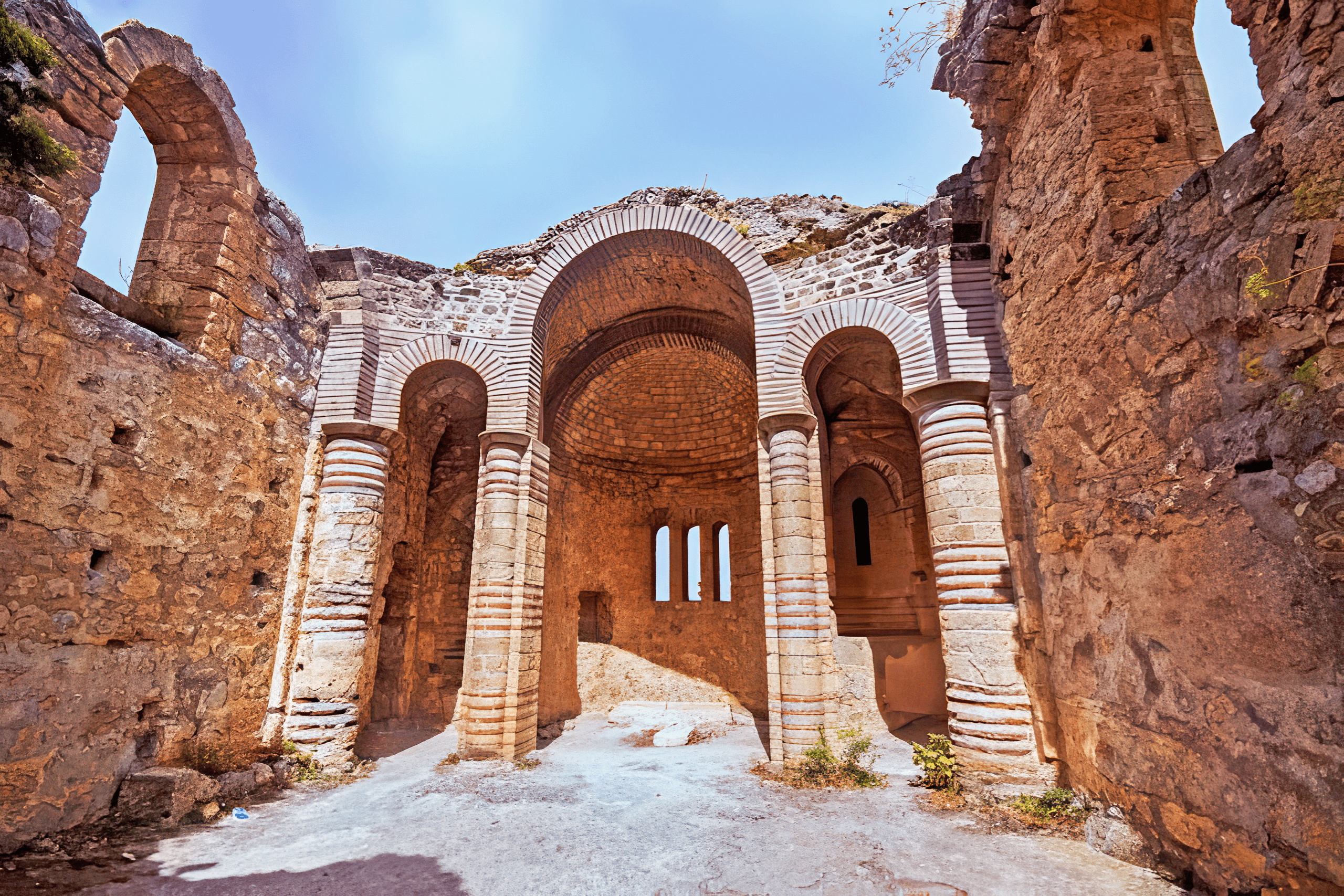
A series of revolts in 1092 forced Emperor Alexis I to strengthen the island’s defensive capabilities. This confirmed St. Hilarion’s transformation from a monastery to a military installation. The Byzantine construction included the outer walls, main gate, and the chapel that still stands today. The chapel, built of bricks and stone blocks, was in danger of collapse before restoration work in 1959. Traces of religious paintings remain visible on the walls, their style suggesting they date to around 1150.
20th Century Military Use
Although the castle had been neglected for centuries, it returned to military prominence in the 20th century. In 1964, when Turkish Cypriots established defensive enclaves during the island’s ethnic conflict, they used St. Hilarion as headquarters for their main enclave.
This enclave included several Turkish Cypriot communities along the main Kyrenia-Nicosia road. A small garrison of teenage activists successfully defended the castle against attacks, and Turkish Cypriots maintained control thereafter.
The castle played a role again in 1974 during the Turkish military invasion. It was the center of a battle for control of the important pass between Nicosia and Keryneia. Today, although the castle is open to the public, the approach road passes through a military area and is occasionally closed for security reasons.
St. Hilarion Castle Layout
The lower ward is the largest section, protected by long walls embedded with seven semi-circular towers. This area housed stables for horses and living quarters for the men-at-arms. A still-usable cistern provided water storage. The entrance features a main gatehouse with an arch that originally closed with a drawbridge.
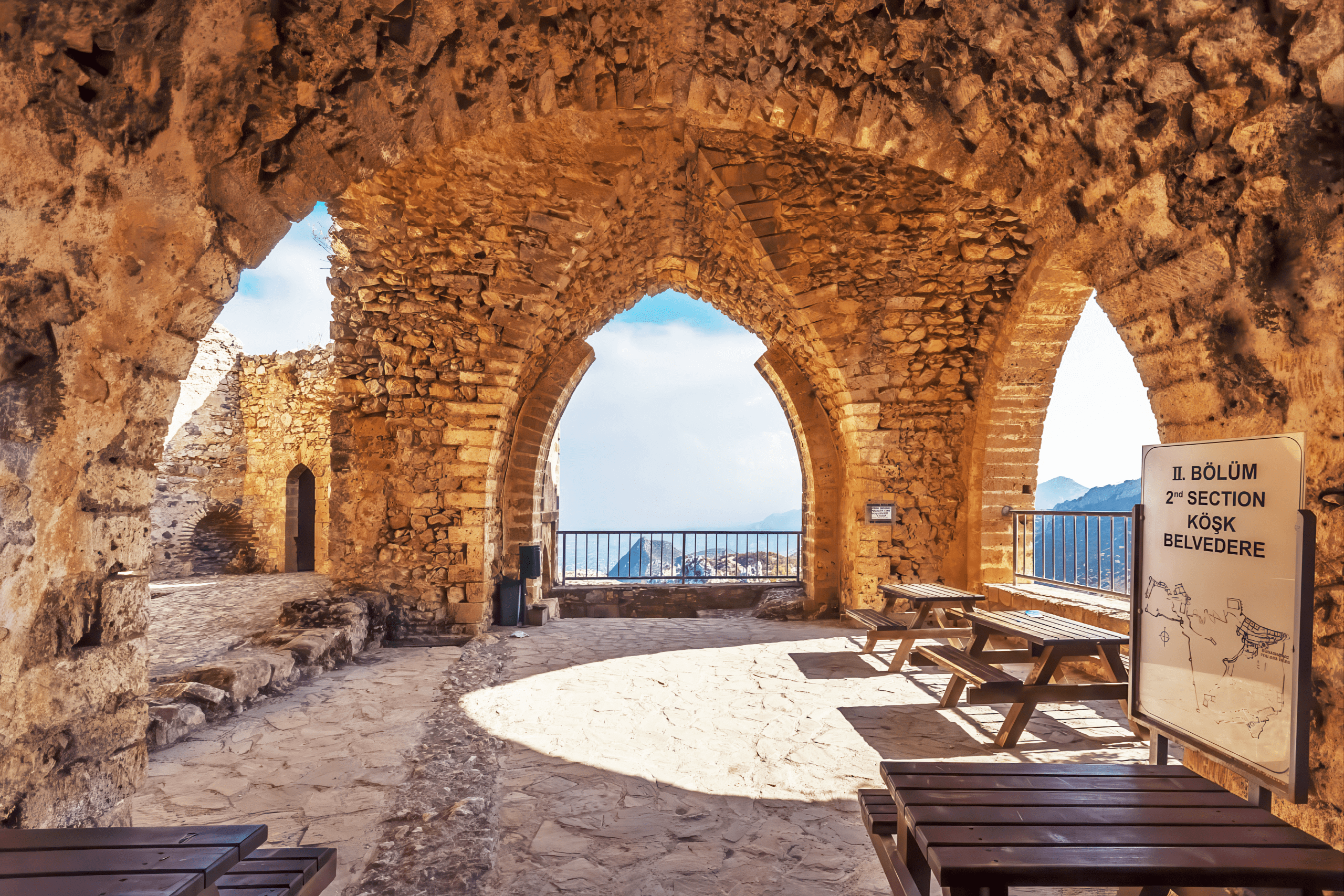
The middle ward contains the Byzantine chapel, the Great Hall, and various chambers. The area around the church was originally part of the monastery, with rooms to the north and east serving as cellars, kitchen, and refectory. Below this section are additional rooms thought to be barracks for crusader knights from the 14th century.
The upper ward contains the royal apartments arranged around a central courtyard. The nobility resided in the eastern section while kitchens and rooms for daily use occupied the western section. This area includes what is believed to be Queen Eleanor’s chamber and another great hall. The very top of the castle is marked by Prince John’s Tower on the southern peak.
Views and Setting
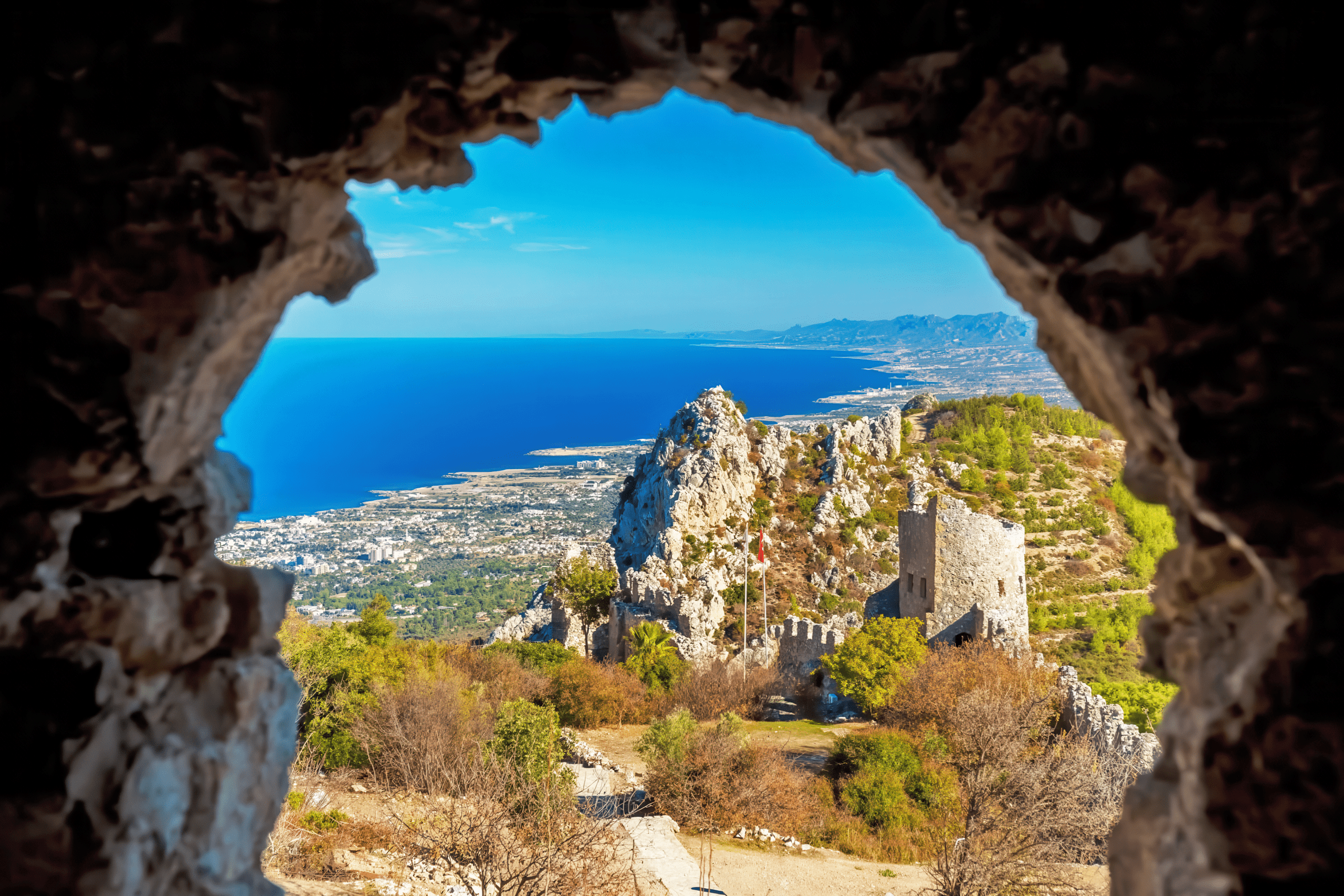
The castle provides exceptional views in all directions. To the north, visitors can see across the narrow coastal plain to Kyrenia harbor and the Mediterranean Sea. On clear days, the Taurus Mountains of Turkey are visible approximately 100 kilometers away across the water. To the south, the Five Finger Mountain Range stretches across the landscape. The mountain village of Karaman is visible to the east.
The exposed rocky terrain around the castle creates a dramatic landscape. In spring, wild flowers grow in damp patches on the castle walls and adorn the mountain crags. The natural vegetation consists mainly of hardy plants adapted to the rocky, dry conditions and high altitude.
Archaeological and Historical Value
The castle represents an important example of medieval military architecture adapted to challenging terrain. The construction techniques show how Byzantine, Crusader, and Lusignan builders worked with the natural rock formations rather than against them. Many structures are carved directly from the living rock or built using stone quarried from the mountainside.
The progression of architectural styles visible in different sections of the castle provides evidence of its long occupation and multiple construction phases. The Byzantine lower walls, Crusader middle sections, and Lusignan royal apartments create a physical timeline of Cyprus’s medieval history.
Visiting the Castle
The castle is located just west of the main Kyrenia-Nicosia highway in the Kyrenia mountain range. A narrow road curves around rocky peaks to reach the parking area near the entrance. Visitors can also walk and climb the peak, though this is challenging and best avoided during midday heat in summer months.
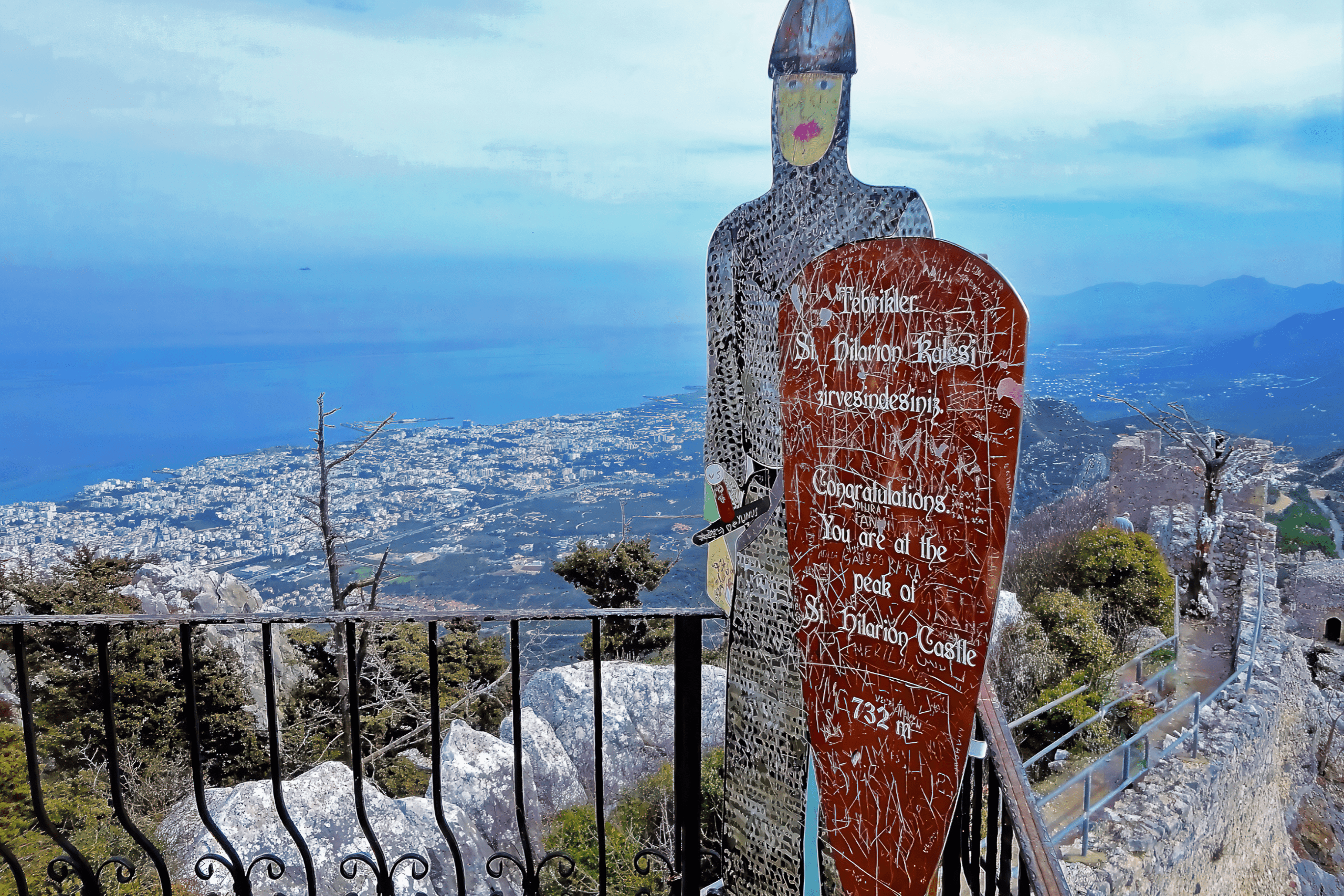
From the parking area, the ascent to the top takes approximately one hour, longer with stops to admire views and explore different sections. The first section begins with concrete steps and paved paths, but upper sections feature uneven stone steps worn smooth by centuries of use. Some walkways can be slippery, particularly after rain.
The climb involves numerous staircases connecting the different levels. The ground is often uneven, and there are many long drops without railings. The site charges a modest entrance fee. Operating hours vary by season, and the castle may occasionally close for military reasons given its proximity to the military zone.
Cultural Significance
St. Hilarion represents Cyprus’s medieval heritage and serves as one of the region’s most popular tourist attractions. The castle demonstrates the island’s strategic importance throughout history and the lengths various powers went to control the mountain passes and coastal access.
The structure shows how military architecture evolved from Byzantine defensive installations through Crusader fortifications to Lusignan palatial additions. Each layer of construction reflects the priorities and capabilities of the builders, from pure defense to a comfortable royal residence.
The castle has appeared in various works of fiction, including the 1958 novel Exodus by Leon Uris, the 1999 novel Race of Scorpions by Dorothy Dunnett, the 2009 video game Assassin’s Creed: Bloodlines, the 2015 novel The Lost Treasure of the Templars by James Becker, and Death in Cyprus by M. M. Kaye. These cultural references demonstrate the castle’s enduring appeal to storytellers and audiences.
Preservation Status
The castle is currently maintained as a historical site open to the public. While significant portions remain intact, particularly compared to the other Kyrenia mountain castles, ongoing preservation work is needed to prevent further deterioration. Weather exposure, visitor traffic, and the castle’s age all contribute to gradual decay.
The 1959 restoration of the Byzantine chapel represents one of the major conservation efforts. However, many sections remain in various states of ruin. The balance between public access and preservation continues to be managed, with some areas restricted to prevent damage or danger to visitors.
The castle’s location in Cyprus affects its access to international conservation funding and expertise. Despite these challenges, the site remains one of the best-preserved examples of medieval fortifications in the Eastern Mediterranean region.
St. Hilarion Today
The castle functions primarily as a tourist destination and historical monument. Unlike some fortresses that have been heavily restored or converted to other uses, St. Hilarion retains its character as a romantic ruin. The combination of intact structures and crumbling towers creates the fairy-tale appearance that attracts visitors.
The site provides an authentic medieval experience where visitors can explore freely through chambers, climb narrow staircases, and stand where kings and queens once lived. The lack of extensive modern intervention allows imagination to fill in the details of daily life in a mountain fortress eight centuries ago.