All Articles

Othello Castle, Famagusta Medieval Fortress

Othello Castle, Famagusta Medieval Fortress

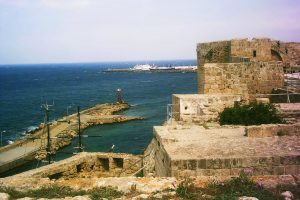
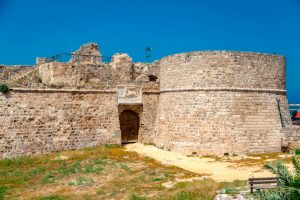
Othello Castle, also known as Othello's Tower, is a medieval fortress in Famagusta in in the Turkish-occupied part of Cyprus. The castle sits at the northeastern corner of the city's fortified walls, directly controlling access to the historic harbor. This location made it both the primary defensive stronghold and the main entrance to the walled city during the medieval period. The site had fortifications even before the current castle. A tower and defensive works were built here by the Prince of Tyre around 1310. The Lusignan rulers of Cyprus recognized the strategic importance of this harbor entrance and constructed a more substantial fortress in the 14th century. Originally called the Harbour Citadel, it served dual purposes as a military stronghold…

Read more
Kantara Castle Cyprus

Kantara Castle Cyprus

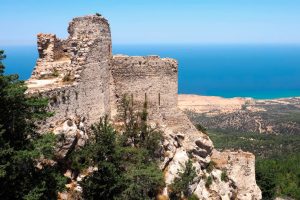
Kantara Castle is a Byzantine and medieval fortress located in the eastern Kyrenia mountain range in the Turkish-occupied part of Cyprus. The name comes from the Arabic word “qantara,” meaning bridge or arch, though some sources translate it as observation point. The castle sits at the easternmost position of three famous mountain castles in Cyprus, with Buffavento Castle to the west and St. Hilarion Castle further west. The castle occupies a strategic position with views over both the northern coast and the Mesaoria Plain. On clear days, visitors can see the Karpasia Peninsula, Famagusta Bay, and distant mainland coasts. This commanding location made Kantara essential for Cyprus’s defense for nearly 500 years. Historical Background The exact construction date remains unknown,…

Read more
Former Government House, Nicosia

Former Government House, Nicosia

The Former Government House in Nicosia stands as a tangible reminder of British rule in Cyprus. Constructed during the colonial period, it served as the administrative center of British governance on the island. The building symbolized centralized control, colonial administration, and imperial authority during that era. While its function has changed over time, it continues to carry significant political and historical importance. Today, the building remains closely linked to state authority and modern governance. Historical Background British administration in Cyprus began in 1878, when the island came under British control while remaining formally part of the Ottoman Empire. Cyprus was later annexed by Britain in 1914 and officially became a Crown Colony in 1925. During this period, British authorities worked…

Read more
The History of Christianity in Cyprus

The History of Christianity in Cyprus

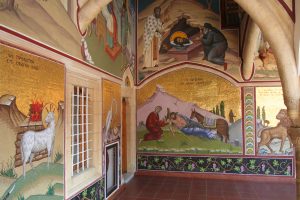
Cyprus became one of the very first Christian lands in the world, converting to the faith within just a few years of Christ's death. The island's story of Christianity stretches back nearly 2,000 years, filled with apostles, saints, emperors, and devotional art that still survives today. An Ancient Christian Heritage Christianity didn't slowly trickle into Cyprus — it arrived with explosive speed in the hands of the apostles themselves. Around 45 AD, St. Paul and St. Barnabas landed on the island and began preaching, converting Cyprus's Roman governor and establishing what would become one of the oldest Christian communities in the world. Today, the Greek Orthodox Church remains central to Cypriot identity. Ancient monasteries cling to mountain peaks, Byzantine frescoes…

Read more
Fig Tree Bay: Cyprus’s Most Famous Beach

Fig Tree Bay: Cyprus’s Most Famous Beach

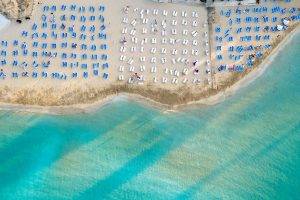
Fig Tree Bay is one of Cyprus’s most recognizable beaches, yet its appeal has never depended on novelty or spectacle. Located in the heart of Protaras on the island’s eastern coast, the bay combines clear, shallow water, soft sand, and a naturally sheltered shape that makes it easy to enjoy without effort. It is popular without feeling overwhelming, developed without feeling artificial, and familiar without becoming dull. This balance explains why Fig Tree Bay continues to attract visitors year after year and why it remains just as important to local life as it is to tourism. A Beach Defined by Shape, Not Hype At its core, Fig Tree Bay is a gently curved, sandy bay facing the Mediterranean Sea. Unlike…

Read more
Omodos Traditional Village & Monastery

Omodos Traditional Village & Monastery

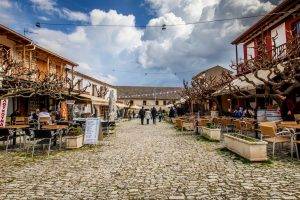
Omodos is a historic mountain village in Cyprus’s Troodos range, known for its Byzantine monastery, traditional architecture, and wine-making heritage. Located 42 kilometers northwest of Limassol at an elevation of 800 meters, the village lies within the Krasochoria district, the traditional wine-producing region of Cyprus. Its location in this wine heartland has shaped the local economy and identity for centuries. The village centers around a large cobblestone square, possibly the largest in Cyprus at 3,000 square meters, dating back to 1910. Stone houses with red-tiled roofs, wooden balconies, and flower-filled courtyards line narrow streets that wind through the settlement. The architecture reflects a careful balance between preservation and modern use, with many traditional homes now serving as guesthouses, wine cellars,…

Read more
Modern Naval Heritage & Maritime Identity

Modern Naval Heritage & Maritime Identity

Cyprus has never treated the sea as a boundary. For centuries, its coastline functioned as a working edge where trade, defense, administration, and daily life met. In the modern period, this relationship was shaped most clearly by two naval powers: the Ottoman Empire and the British Empire. Their presence did not simply leave behind forts and harbors. It reshaped how the island was governed, how its ports functioned, and how Cypriots understood their place within the wider Mediterranean world. This article explores how Ottoman and British naval priorities transformed Cyprus from a regional outpost into a strategic maritime asset, and why that legacy still defines the island’s identity today. An Island Positioned to Be Watched Cyprus sits at a crossroads…

Read more
Kition Temples Phoenician Hellenistic Period

Kition Temples Phoenician Hellenistic Period

Kition, located beneath modern Larnaca on Cyprus's southeastern coast, served as a major Bronze Age settlement before the Phoenicians arrived. The site contains five successive temples dated from the late 13th to the late 11th century BC, built during the Late Bronze Age when Mycenaean Achaeans inhabited the city. These early temples were connected to copper smelting workshops, revealing an unusual integration of industrial and religious activities. The copper industry was central to Cyprus's prosperity, and scholars believe this placement suggests either worship of a deity related to copper production or a ritual significance attached to metallurgy itself. Around 1000 BC, the religious part of the city was abandoned, though life continued in other areas. This abandonment created a gap…

Read more
Kakopetria Historic Village Byzantine Churches

Kakopetria Historic Village Byzantine Churches

Kakopetria is a mountain village in the Troodos range that combines well-preserved traditional architecture with important medieval heritage sites. Located about fifty-five kilometers from both Nicosia and Limassol at an altitude of 667 meters, the village offers a clear example of rural Cypriot life shaped by its natural environment and long historical continuity. Two rivers, the Kargotis and the Garillis, flow through the settlement and merge to form the Klarios River, which continues toward Morphou Bay. This constant water supply has played a central role in the village’s development, supporting fertile greenery, dense vegetation, and year-round cultivation. Plane trees, orchards, pine forests, and cultivated gardens create a landscape that stands out in comparison to much of the island’s drier terrain.…

Read more