All Articles

Vouni Palace Reliefs

Vouni Palace Reliefs

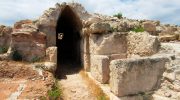
Vouni Palace was a Cypro-Classical hilltop complex built around 500 BC to control coastline movement and project authority over a contested landscape near Soli. Its architectural reliefs and capitals show Persian imperial symbols, including Hathor imagery, rosettes, and royal protection motifs, translated through local limestone carving and later blended with Greek spatial elements as political alignment shifted. This article explains why the site’s position mattered, how decoration was used to regulate experience inside the palace, and what the surviving fragments reveal about Cyprus negotiating empire without simply copying it. A Hilltop Built to Watch Soli Vouni was never meant to be subtle. Rising roughly 250 meters above sea level, the hill offers uninterrupted views across the coast and inland plains.…

Read more

Cyprus Film Culture

Cyprus Film Culture

Contemporary Cypriot music is increasingly shaping how the island appears in film, television, and online media. Instead of generic Mediterranean soundtracks, local artists and recognisable sonic textures are being used to support storytelling, atmosphere, and identity. This shift matters because sound influences memory as much as image. When Cyprus is accompanied by its own modern musical voice, representation becomes more specific, more confident, and harder to reduce to cliché. This article explores how that change is happening, where it comes from, and why it matters now. From Background Noise to Cultural Signal For a long time, music in visual media connected to Cyprus served a functional role. It filled silence, supported mood, or softened transitions, but rarely carried cultural weight.…

Read more
Omodos & Lefkara – Iconic Mediterranean Fields

Omodos & Lefkara – Iconic Mediterranean Fields

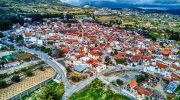
Two villages in the Troodos Mountains represent the essence of Cyprus's cultural heritage. Omodos and Lefkara stand as living museums where centuries-old traditions continue to thrive. Omodos produces some of the island's finest wines, while Lefkara creates intricate lacework recognized by UNESCO. Both villages showcase traditional Cypriot architecture with limestone houses, narrow cobbled streets, and red-tiled roofs. Located within the Limassol and Larnaca districts respectively, these settlements offer visitors a glimpse into Mediterranean village life that has remained largely unchanged for generations. The villages sit at elevations between 650 and 900 meters, providing cooler temperatures and spectacular views of surrounding vineyards and valleys. Historical Background Omodos likely emerged at the end of the Byzantine period, possibly around the 12th century.…

Read more
Most Beautiful Coastal Routes to Drive

Most Beautiful Coastal Routes to Drive

Cyprus offers some of the Mediterranean's most spectacular coastal drives. The island's shoreline stretches across hundreds of kilometers, combining turquoise waters with dramatic cliffs, hidden coves, and beaches rich in mythology. These routes showcase Cyprus's natural beauty while connecting historical sites, traditional villages, and protected nature areas. The B6 coastal road between Paphos and Limassol provides one of Cyprus's most scenic drives. This route covers approximately 70 kilometers and takes about 90 minutes without stops, though the attractions along the way deserve considerably more time. The parallel A6 motorway offers faster travel, but the B6 keeps drivers closer to the coastline for better sea views. The route's highlight arrives at Petra tou Romiou, known internationally as Aphrodite's Rock. Located roughly…

Read more
Cyprus Archaeological Museums

Cyprus Archaeological Museums

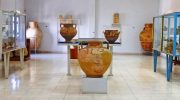
Most people think of museums as dusty repositories of old things, but Cyprus's archaeological museums are different - they're time machines that transform scattered ruins into coherent human stories. From Stone Age tools to sunken Roman ships, these institutions preserve not just artifacts but memory itself, showing how an island at the crossroads of three continents became a meeting place of cultures, faiths, and civilizations. Stepping inside, visitors encounter objects once held by real people whose lives weren't so different from the present day. Guardians of an Island's Memory Cyprus's archaeological museums form a network across the island, each one telling the story of its region while contributing to a larger narrative of continuity and change. These aren't just buildings…

Read more
Modern Housing and Business in Cyprus

Modern Housing and Business in Cyprus

Cyprus housing market experienced substantial transformation over the past decade, with residential prices rising approximately 4.8% year-on-year in Q1 2025 according to Central Bank data. The average apartment cost reached €250,000 while houses averaged €320,000 island-wide. Price per square meter stands near €2,500-2,600, though coastal properties in cities like Limassol command significantly higher premiums starting from €700,000 for modern apartments. The business environment evolved equally dramatically as Cyprus positioned itself as a Mediterranean technology hub. The information and communications sector grew an average 17.7% annually from 2015 to 2024, becoming the largest economic sector by value. This transformation attracted international companies and created a startup ecosystem that ranked Cyprus as the EU's fastest-growing in 2025 with 305 startups, representing 71%…

Read more
Cyprus’s Beaches and Coastlines

Cyprus’s Beaches and Coastlines

Cyprus's beaches aren't just beautiful stretches of sand and sea - they're ancient gateways where civilizations arrived, traded, and shaped Mediterranean history for over 11,000 years. From the legendary birthplace of Aphrodite rising from sea foam to remote turtle nesting grounds, from Bronze Age harbors buried beneath modern sand to medieval fortresses guarding strategic bays, the island's 650 kilometers of coastline blend natural beauty with deep cultural memory. Step onto these shores and visitors will find themselves standing where prehistoric sailors first landed, where ancient traders shipped copper to distant empires, and where myths were born from the meeting of land and water. An Island Defined by Its Edges Cyprus has over 650 kilometers (about 400 miles) of extraordinarily diverse…

Read more
Mediterranean Work Culture and Daily Life

Mediterranean Work Culture and Daily Life

Cyprus combines Mediterranean traditions with European business practices to create a work culture centered on relationships, balance, and quality of life. The standard work week runs 38 to 40 hours, but the rhythm of daily life follows patterns shaped by climate, family values, and ancient hospitality customs. Work is important to Cypriots, yet it occupies a specific place in life rather than dominating it. Family gatherings, long meals, and social connections receive equal priority. This approach reflects a philosophy where professional success and personal wellbeing exist in harmony rather than competition. How Work Patterns Developed on the Island Cyprus sits at the crossroads of Europe, Asia, and Africa. Its position made it a vital trading hub for millennia. Ancient Phoenicians,…

Read more
Cyprus Three Continents Landscape

Cyprus Three Continents Landscape

Cyprus isn't just sitting on the Mediterranean - it's rising from deep inside the Earth itself. The island's mountains, plains, and dramatic coastlines tell a story millions of years in the making, a story written by colliding continents, ancient oceans, and forces powerful enough to lift the ocean floor into the sky. Understanding Cyprus's geography means understanding why civilizations flourished here, why copper made the island famous, and why the landscape itself feels almost mythical. An Island Shaped by Deep Forces Cyprus stands where Europe, Asia, and Africa nearly touch, and this position at the crossroads of three continents isn't just cultural - it's geological. The island's dramatic landscape reflects its location along active tectonic boundaries where massive plates of…

Read more