All Articles

Traditional Crafts of Cyprus – Weaving Pottery Wood

Traditional Crafts of Cyprus – Weaving Pottery Wood

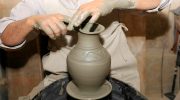
Traditional crafts in Cyprus represent centuries of accumulated artisan knowledge passed through family workshops from medieval times to the present. The island's strategic position between three continents created distinctive craft traditions blending Byzantine, Venetian, and Ottoman influences with indigenous Cypriot techniques. Weaving, pottery, basketry, woodcarving, and metalwork sustained village economies when farming alone could not support families, with an old saying advising "learn a craft even if you don't need to and if you get hungry, practice it." The government-run Cyprus Handicraft Service, established in 1975, operates workshops in Nicosia that preserve these traditional skills through training programs, research, and marketing support. Several villages maintain craft specializations including Fyti for weaving, Kornos and Foini for pottery, Lefkara for lace and…

Read more


Cyprus Coastal Ecosystem Protection

Cyprus Coastal Ecosystem Protection

Cyprus sits in the Eastern Mediterranean, home to some of the most diverse ecosystems in the region. The island features dramatic contrasts, from the Troodos Mountains reaching 1,952 meters at Mount Olympus to extensive coastal zones with unique marine habitats. These environments support rare species found nowhere else on Earth, while 29% of terrestrial and marine areas currently fall under protected status. The island's location between three continents has created a biodiversity hotspot where European, Asian, and African influences converge. Historical Foundation of Conservation Efforts Cyprus joined the European Union in 2004 and faced the challenge of adjusting conservation strategies to meet EU obligations. Before this milestone, the island had limited formal protection mechanisms. The first LIFE Nature project financed…

Read more
Traditional Cypriot Cooking with Olive Oil, Lemon, and Herbs

Traditional Cypriot Cooking with Olive Oil, Lemon, and Herbs

Traditional Cypriot cooking relies on three essential ingredients: olive oil, lemon, and fresh herbs such as mint, oregano, and parsley. This simple trinity defines the island's approach to food, creating dishes that emphasize natural flavors rather than complex techniques. Traditionally, cumin and coriander seeds make up the main cooking aromas of the island. Olive oil serves as the primary fat for salad dressings and vegetable preparations, though not for cooking meat dishes. Lemon juice appears in nearly every savory dish, from marinades to finishing touches. Fresh herbs grow abundantly across Cyprus, with mint being particularly important. Mint grows abundantly in Cyprus, and locals use it for everything, particularly in dishes containing ground meat. This cooking philosophy developed over centuries of…

Read more
Jewish Quarter of Famagusta

Jewish Quarter of Famagusta

The Jewish Quarter of Famagusta stood as one of the most significant Jewish settlements in the eastern Mediterranean during the medieval period. Famagusta was one of the most cosmopolitan cities of its era, with distinct quarters for different communities including Greeks, Syrians, and Jews. The Jewish quarter was called zuecha or zudecha in Venetian documents, with its location clearly marked on a 1571 map of the city. Medieval Famagusta contained more Jews than any other Greek island according to the 12th century traveler Benjamin of Tudela, who documented three distinct Jewish sects living on Cyprus. The community prospered as money lenders, merchants, and traders who connected Europe with the Eastern Mediterranean. By the 16th century, approximately 2,000 Jews lived in…

Read more
Traditional Cypriot Cuisine

Traditional Cypriot Cuisine

Cypriot cuisine developed at the crossroads of Greek, Turkish, Middle Eastern, and Levantine culinary traditions. The island's fertile red soil, Mediterranean climate, and proximity to three continents created a food culture that combines fresh local produce with flavors from distant trading partners. Cyprus has more than 300 days of sunshine annually, producing vegetables, fruits, and herbs that burst with intensity. The cuisine prioritizes simple preparation methods, seasonal ingredients, and shared eating experiences over complex techniques. Olive oil, fresh herbs, charcoal grilling, and slow cooking define the core approach. What separates Cypriot food from neighboring Greek cuisine is the stronger Middle Eastern and Turkish accent, visible in dishes using tahini, bulgur, and caul fat that you rarely encounter on mainland Greek…

Read more
Traditional Cypriot Coffee Fortune Telling

Traditional Cypriot Coffee Fortune Telling

Coffee fortune telling, known as kafemanteia in Greek, represents one of Cyprus's most enduring folk traditions, blending social ritual with mystical practice. After drinking a coarsely ground coffee such as Cypriot coffee, a skilled reader interprets the shapes formed by the coffee grounds left in the cup, which indicate the fortune of the drinker. The Ottomans brought this form of divination to Cyprus alongside coffee itself after conquering the island in 1571. Over centuries, tasseography became deeply woven into Cypriot culture, practiced in homes, traditional coffee shops, and family gatherings as entertainment, spiritual guidance, and a way to address life's uncertainties through symbolic interpretation. The Ottoman Roots of Cyprus Coffee Culture Coffee drinking arrived in Cyprus during Ottoman rule beginning…

Read more
The Living Pulse of Cyprus

The Living Pulse of Cyprus

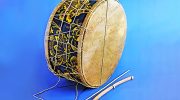
Traditional percussion in Cyprus is not decoration. It is structured. Long before written music or formal performance spaces, rhythm organised ritual, movement, and social life on the island. From village squares to wedding processions, the drum provided a shared pulse that told people when to gather, how to move, and when a moment mattered. Cypriot percussion did not evolve to impress an audience. It evolved to hold a community together. Why Rhythm Comes First in Cypriot Music Cyprus sits at a cultural crossroads between the Eastern Mediterranean, Anatolia, and the Levant. Melodies travelled easily across these regions, but rhythm was what anchored them locally. Percussion gave Cypriot music its internal order, allowing dances, songs, and rituals to remain recognisable even…

Read more
Marriage and Birth Traditions of Cyprus

Marriage and Birth Traditions of Cyprus

Marriage and birth stand as the most significant life transitions in traditional Cyprus society, each marked by elaborate rituals that involve entire communities. Wedding customs symbolize separation from childhood families and entry into adult society, while birth traditions welcome new members into both family and village. Orthodox Christianity frames these milestones through sacraments of marriage and baptism, but older customs dating to pre-Christian times persist beneath the religious overlay. The preservation and transmission of these customs falls mainly to new couples, their families, musicians who perform traditional songs, and folkloric groups that keep practices alive through demonstration and participation. Engagement and Marriage Preparations The engagement is usually arranged by the families of the bride and groom, who agree on the…

Read more
Cyprus Traditional Dance Competitions

Cyprus Traditional Dance Competitions

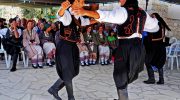
Traditional dance competitions in Cyprus are not performances staged for spectacle alone. They are structured moments where history, regional identity, and communal memory are actively tested and refined. Across village squares, coastal towns, and formal festival stages, dancers are judged not only on technique but on how faithfully they carry movements shaped by centuries of Cypriot life. What emerges is not nostalgia, but discipline. Not a postcard version of tradition, but a living standard that Cyprus expects its dancers to meet. More Than Dance: Why Competition Matters in Cyprus In Cyprus, dance has never been separate from daily life. For generations, it accompanied weddings, harvests, religious festivals, and seasonal gatherings. Competition emerged naturally from this environment, not as rivalry for…

Read more