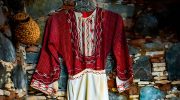
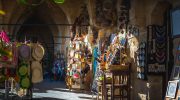
Traditional crafts in Cyprus represent centuries of accumulated artisan knowledge passed through family workshops from medieval times to the present. The island’s strategic position between three continents created distinctive craft traditions blending Byzantine, Venetian, and Ottoman influences with indigenous Cypriot techniques.
Weaving, pottery, basketry, woodcarving, and metalwork sustained village economies when farming alone could not support families, with an old saying advising “learn a craft even if you don’t need to and if you get hungry, practice it.” The government-run Cyprus Handicraft Service, established in 1975, operates workshops in Nicosia that preserve these traditional skills through training programs, research, and marketing support.
Several villages maintain craft specializations including Fyti for weaving, Kornos and Foini for pottery, Lefkara for lace and silverwork, and scattered communities for basketry. These crafts now serve cultural tourism and export markets while maintaining their role as living heritage connecting modern Cyprus to its artisan past.
Weaving Traditions Across Specialized Villages
Byzantine period sources document highly developed weaving traditions that continued evolving through successive civilizations. The Paphos village of Fyti became particularly renowned for its distinctive textiles called Fythkiotika, featuring colorful geometric patterns woven on undyed cotton cloth. The textiles serve as napkins, tablecloths, and bed covers with designs that have remained consistent for over 500 years. Artisans work on traditional looms called voufa, weaving patterns passed through generations of family instruction.
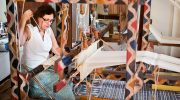
The technique involves setting up vertical warp threads on the loom frame, then interlacing horizontal weft threads in specific sequences that create the geometric designs. The bright colors come from dyed cotton threads woven into the natural undyed base fabric, creating contrast that makes patterns visible. Each weaver develops signature variations while maintaining core design principles that identify work as authentically Fythkiotika.
Cyprus produced multiple regional weaving styles beyond Fyti. Karpasitika from the Karpas Peninsula, Lefkonitziatika with bright colors and decoration, and various other village traditions created textile diversity across the island. Women handled most weaving labor, working in courtyards where natural light aided detailed work. The income supplemented agricultural earnings, providing crucial cash during crop failures or economic downturns.
Red Clay Pottery and Ancient Techniques
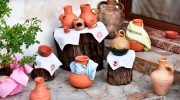
Pottery represents one of Cyprus’s oldest crafts, with archaeological evidence dating production to prehistoric times. The tradition particularly flourished in Kornos village in the Larnaca region and Foini in the Limassol region, where distinctive red clay deposits provided ideal material for vessel production. The local clay, described as ashes of volcanic eruptions, possesses qualities that allow shaping without cracking while maintaining strength after firing.
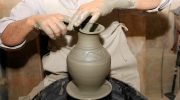
Traditional pottery served utilitarian purposes including storage and transport of liquids like wine, water, and olive oil, as well as preservation of agricultural products including grains and dried fruits. The large porous jars called pitharia became Kornos’s signature product, with sizes ranging from small household containers to massive storage vessels exceeding one meter in height. These unglazed terracotta pieces used natural clay color and texture as decoration, though some potters applied simple painted designs.
Basketry Using Natural Island Materials
Basket making dates to ancient times when woven containers served specific practical purposes from carrying agricultural produce to dressing bottles to prevent liquid leakage. Cyprus basketry traditionally uses two primary materials, reed and a slender cane called sklinitsia, both harvested from wild stands near rivers and wetlands. Northern Cyprus also developed date palm leaf basketry, though this tradition has declined and become difficult to find.

The process begins with harvesting whole date branches or reed stalks, drying them for at least two weeks, then removing leaves. The dried material is soaked in water to restore flexibility, split into workable pieces, and woven into rope-like strands. These strands are then sewn into shapes using thread created from more plant strips and large needles designed for heavy work. The resulting baskets range from simple carrying containers to elaborately decorated wall pieces.
The colorful flat talari baskets became popular as wall decorations in modern times, with weavers using vegetable dyes to create colored strands that form intricate geometric patterns. Each weaver develops unique techniques and designs that distinguish their work, with patterns requiring substantial practice and patience to master. Villages including Ineia in Paphos, Akrotiri in Limassol, and Xylotympou and Avgorou in Famagusta maintained active basketry traditions into the late 20th century.
Woodcarving and Traditional Furniture
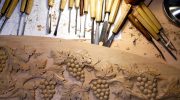
Woodcarving produced both decorative objects and functional furniture that filled Cyprus homes for centuries. Artisans created intricately designed chests featuring traditional motifs carved into solid wood panels, chairs with elaborate backs and arms, and religious items including iconostases for churches and home altars. The carved desk at the Cyprus Handicraft Centre entrance demonstrates the sophistication achievable in traditional woodworking.
Fini village developed particular reputation for wooden chair production, with craftsmen creating distinctive designs that became identified with that community. These chairs featured woven reed seats that provided comfort while reducing weight, making them practical for households lacking extensive furniture budgets. The combination of wooden frame and natural fiber seat created durable products suitable for daily use over decades.
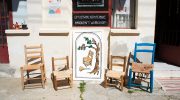
Modern practitioners like George Zavros in Paphos maintain traditional chairmaking despite declining demand for handcrafted furniture. His workshop in the old town demonstrates techniques passed through generations, with visitors observing live demonstrations of the complex process. Reed-woven chairs remain popular across Cyprus, valued for their lightweight construction and traditional aesthetic that connects modern homes to village heritage.
Silverwork and Filigree Techniques
The art of filigree called trifouri represents Cyprus’s most delicate metalwork tradition, involving twisting fine silver wire into intricate patterns resembling cobwebs. Artisans create jewelry including earrings, pendants, and brooches, as well as decorative cutlery and tableware that demonstrate technical mastery. Lefkara village maintains this tradition alongside its famous lacework, with silversmiths employing techniques including engraving, filigree, and casting.
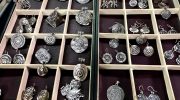
The process requires heating silver until malleable, drawing it into fine wires, then twisting multiple strands together while forming complex three-dimensional structures. The delicate nature demands steady hands and keen eyesight, with apprenticeships lasting years before craftsmen achieve competency in producing marketable pieces. The resulting jewelry combines traditional motifs with contemporary design, creating timeless pieces that function as wearable art.
Cyprus’s identity as the copper island historically made metalwork crucial to the economy. Bronze Age copper mining established metallurgical traditions that continued through successive civilizations. The Cyprus Handicraft Centre metalwork workshop produces copper items with representations copied from archaeological museum artifacts and ancient Paphos and Kourion frescoes, maintaining direct links to classical heritage.
Contemporary Preservation and Tourism
The Cyprus Handicraft Service operates eight experimental workshops in Nicosia covering embroidery, weaving, woodcarving, pottery, metalwork, basketry, leatherwork, and garment production. These facilities serve multiple functions including research on traditional folk art, creation of new products based on historical designs adapted to modern needs, and training courses for people wanting to learn crafts. The workshops welcome visitors who observe live demonstrations, transforming the center into a major tourist attraction.

Government programs support private craftsmen through technical assistance, quality improvement initiatives, and marketing help. The service purchases work on piecework basis from approved artisans, ensuring income stability while maintaining quality standards. Handicraft shops in Nicosia, Larnaca, Limassol, and Paphos sell authenticated traditional crafts, providing retail outlets that might otherwise be unavailable to small producers.
The Deputy Ministry of Tourism developed workshop schemes promoting traditional and contemporary crafts through free classes held in villages across the Heartland of Legends region. Participants create pottery in Kornos, weave textiles in Fyti, produce lacework in Lefkara, and learn silversmithing, icon painting, and mosaic creation in various communities. These programs serve both cultural preservation and agrotourism development, attracting visitors seeking authentic experiences beyond beach resorts.