The Jewish Quarter of Famagusta stood as one of the most significant Jewish settlements in the eastern Mediterranean during the medieval period. Famagusta was one of the most cosmopolitan cities of its era, with distinct quarters for different communities including Greeks, Syrians, and Jews.
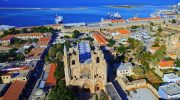
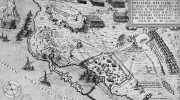
The Jewish quarter was called zuecha or zudecha in Venetian documents, with its location clearly marked on a 1571 map of the city. Medieval Famagusta contained more Jews than any other Greek island according to the 12th century traveler Benjamin of Tudela, who documented three distinct Jewish sects living on Cyprus.
The community prospered as money lenders, merchants, and traders who connected Europe with the Eastern Mediterranean. By the 16th century, approximately 2,000 Jews lived in Famagusta, making it one of the largest Jewish populations in the region. The quarter contained synagogues, schools, and the full infrastructure of a thriving Jewish community.
From Ancient Roots to Medieval Flowering
Jewish presence in Cyprus dates back possibly to the 3rd century BC during the Roman conquest of the island. Ancient synagogues existed in at least three locations on Cyprus including Golgoi, Lapethos, and Constantia-Salamine, with an inscribed column from the 4th century recording the 3rd century renovation of a synagogue. Cypriot Jews participated in the diaspora-wide Kitos War revolt against Rome in 117 CE, resulting in severe Roman reprisals and a temporary ban on Jewish residence, though Jews returned afterward.
By the 7th century, a large Jewish community had established itself in Famagusta. During the Lusignan period from 1192 to 1489, when French nobility ruled Cyprus as a Crusader kingdom, Jews were guaranteed equal status to non-Jews and greatly boosted the island’s economy. In 1110 CE, Jews were engaged in tax collecting on the island. Benjamin of Tudela reported in 1163 that Cyprus hosted three distinct Jewish communities: Karaites, Rabbanites, and the heretical Epikursin who observed Shabbat on Saturday evenings.
Economic Success and Periodic Persecution
Under Lusignan rule, Jews thrived as money lenders, merchants, and traders who connected Cyprus with broader Mediterranean commerce networks. King Peter I in the 14th century enticed Egyptian Jewish traders to come to Cyprus by promising them equal treatment. This royal protection encouraged commercial activity and population growth. However, prosperity alternated with periods of repression and restrictions.
A statute passed in the 13th century forbade usury, forced Jews to wear a distinguishing badge, and levied an annual poll tax. These discriminatory measures reflected broader European anti-Jewish policies of the medieval period. The Genoese occupation from 1373 to 1463 brought particular hardship, as Genoese forces stole Jewish property in both Famagusta and Nicosia.
During Ottoman preparations to conquer Cyprus, rumors reached Venice that Joseph Nassi was plotting to betray the Famagusta fortress to the Ottomans. Investigations failed to confirm the report, but as a counter measure, Venetian authorities decided to expel all non-native Jews from the island while leaving the Famagusta community intact.
The Terrible Burning of the Books
In the mid 16th century, Pope Julius III ordered the burning of the Talmud throughout Christian lands. Authorities in Famagusta rounded up fifty books which were incinerated in the town square. In those times, handwritten manuscripts were extremely rare and precious, and this destruction was considered a terrible tragedy. Each manuscript represented months or years of scribal labor, and the loss of fifty volumes meant the destruction of irreplaceable knowledge and religious texts.
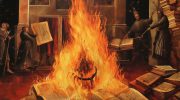
The book burning demonstrated how religious authority could be weaponized against minority communities. The event also showed the reach of papal edicts even to distant Cyprus, where local authorities felt compelled to enforce orders from Rome. The destruction of these texts would have dealt a significant blow to Jewish religious and cultural life in Famagusta, depriving the community of essential materials for study and worship.
The Ottoman Conquest and Decline
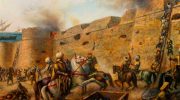
The Ottoman conquest of Cyprus culminated in the fall of Famagusta on August 1, 1571, after an 11-month siege. This precipitated an immediate and sharp contraction of the Jewish community. Venetian records from 1568 indicate around 50 Jewish households in Famagusta, but the subsequent Ottoman tahrir census registered only 26 heads of Jewish households there.
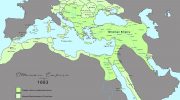
This reduction reflected heavy losses from wartime disruptions including flight, casualties, and enslavement during the brutal Ottoman assaults. The broader population of Cyprus fell to approximately 80,000 amid famine, disease, and massacres targeting resistors. Jews, some of whom had initially welcomed the Ottomans as liberators from Venetian restrictions, faced similar perils as urban non-combatants.
Surviving Jews dispersed or integrated into the Ottoman millet system, which afforded them legal protections as dhimmis with rights to synagogues and internal community governance. Famagusta became the main center of the Ottoman Jewish community in Cyprus, though numbers remained modest compared to the medieval peak.
The British Period and Refugee Camps
British administration of Cyprus began on July 1, 1878, following the Cyprus Convention between the United Kingdom and the Ottoman Empire. At the time of transfer, the Jewish community numbered only a few dozen individuals, primarily merchants concentrated in ports such as Famagusta, Larnaca, and Nicosia.
From the end of the 19th century, following the British conquest and the rebirth of Zionism, dozens of Jewish families settled on the island hoping to reach Palestine. Several attempts were made to establish Jewish agricultural settlements. The first organized attempt occurred in 1883, when several hundred Russian Jews established a colony in Marki near Nicosia, funded by private philanthropists. However, harsh terrain, water scarcity, and lack of farming experience led to failure.
During World War II and the Holocaust, Cyprus played a pivotal role for Jewish communities of Europe. After 1945, Britain established internment camps for Holocaust survivors caught attempting to enter Palestine. From 1946 until the establishment of Israel in 1948, the British confined over 50,000 European Jewish refugees on the island. Detention camps were located in cities such as Limassol, Nicosia, Kyrenia, Larnaca, and Famagusta, as well as in summer camps at Dhekelia, Xylotymbou, and Karaolos.
Life in the Detention Camps
The number of Jews detained in these camps between 1946 and 1949 was 52,384, with an additional 2,000 children born in the camps. The Jewish refugees were led by the Chief Rabbi of the camps, Yehoshua Mendel Ehrenberg, who was dedicated to ensuring Jews in the camps had all their religious and spiritual needs met.
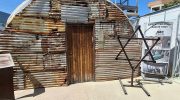
Despite the difficult conditions in the camps, the detainees organized schools, kosher slaughtering, circumcisions, synagogues, and cultural events, and even published their own newspapers. The camps were often expansive tent cities where families waited for permission to enter Palestine. Many detainees spent months or years confined to Cyprus, within sight of the Promised Land but unable to reach it.
The British claimed the Jews lived in good conditions and were well cared for, but survivors told different stories of hardship and frustration. Once the State of Israel was created in 1948, most of the Jewish community moved there. In 2014, a Garden of Peace was opened in Xylotymbou to commemorate the plight of the thousands of Jewish refugees imprisoned in the British camps.
What Remains Today in Divided Famagusta
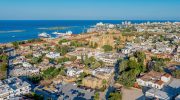
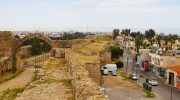
Famagusta itself became a ghost town after 1974 when Cyprus was divided into Turkish and Greek sections. The historic walled city of Famagusta now sits in the Turkish-occupied part of Cyprus, sealed off from Greek Cypriots who fled during the invasion. The medieval Jewish Quarter location is marked on old maps, though identifying specific buildings proves difficult due to the passage of time and lack of remaining Jewish presence.
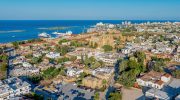
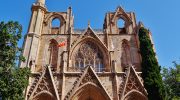
The area around the Ben Ezra Synagogue and other medieval structures remains largely inaccessible for research and preservation. In the occupied part of the island there was a Jewish settlement with a synagogue and cemetery, but access is not permitted due to the occupation. The division of Cyprus in 1974 created a United Nations-policed Green Line that separated the island into two sections. The Greek section, or Republic of Cyprus, is not recognized by Turkey, while the Turkish-controlled north part of Cyprus, the self-styled Turkish Republic of Northern Cyprus, is recognized only by Ankara.
The Legacy of Famagusta’s Jewish Community
The Jewish Quarter of Famagusta represents an important chapter in Mediterranean Jewish history. The community served as a crucial link in trade networks that connected Europe, North Africa, and the Eastern Mediterranean. Jews in Famagusta participated in the broader currents of medieval commerce while maintaining distinct religious and cultural identity.
The alternating periods of prosperity and persecution reflected the precarious position of Jewish minorities throughout medieval Europe. The community’s ability to survive and even thrive under successive rulers from Byzantines to Lusignans to Venetians to Ottomans demonstrated remarkable resilience and adaptability. The destruction during the Ottoman conquest of 1571 marked the beginning of a long decline that continued through the Ottoman period.
The use of Cyprus as a detention center for Holocaust survivors adds another layer to the island’s Jewish history, connecting ancient communities with modern struggles for statehood. For understanding medieval Jewish life in the Eastern Mediterranean, Famagusta provides essential evidence of how Jewish communities functioned in cosmopolitan port cities where multiple cultures and religions coexisted.