All Articles

Pelendri Church

Pelendri Church

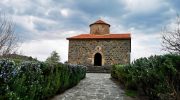
The Church of Timios Stavros in Pelendri is a layered Troodos interior built and repainted between the 12th and 16th centuries, preserving multiple fresco phases within a single working church. Dated inscriptions, shifting styles, and later aisle additions make the building a readable archive of rural devotion, local patronage, and Lusignan-era overlap rather than a single “perfect” moment. This article explains how the structure expanded, how the fresco programs differ by period, and why the church remains one of Cyprus’s clearest examples of belief accumulating without erasing what came before. A Church Shaped by Reuse Pelendri lies high in the Pitsilia region, surrounded by steep slopes and dense forest, far from the coastal cities that usually dominate Cyprus's medieval history.…

Read more

Traditional Animal Farming in Cyprus Rural Life

Traditional Animal Farming in Cyprus Rural Life

Traditional animal farming formed the economic and cultural foundation of Cyprus villages for millennia, with sheep, goats, cattle, pigs, and poultry sustaining rural communities through meat, milk, eggs, and raw materials for clothing and tools. The Bronze Age village of Politiko-Troullia from 2050 to 1850 BC already showed evidence of copper metallurgy alongside sheep, goat, cattle, and pig consumption, establishing patterns that persisted for 4,000 years. Sheep and goat farming developed particular importance due to their suitability for Cyprus's rocky terrain, scrubland vegetation, and semi-arid climate. These hardy animals provided the milk for halloumi, Cyprus's most famous product, which traditionally used only sheep and goat milk before modern commercial production began adding cow milk. The island maintained approximately 3,500 shepherds…

Read more
Tourism-Driven Mobility Patterns Across Cyprus

Tourism-Driven Mobility Patterns Across Cyprus

Cyprus welcomed over 4 million tourists in 2024, marking a 5.1% increase from the previous year. This surge in visitors creates distinct movement patterns across the island, from concentrated coastal resort areas to scattered mountain villages. The way tourists navigate Cyprus differs dramatically from how residents travel, shaped by seasonal preferences, transportation choices, and destination priorities. Tourist arrivals cluster heavily in specific zones rather than spreading evenly across Cyprus. Paphos dominates visitor accommodation with 31.5% of tourists choosing to stay there, followed by Ayia Napa at 15.9%, Larnaca at 14.2%, Limassol at 12.4%, and Paralimni at 11.4%. This concentration reflects both infrastructure development and marketing efforts directed at international markets. The United Kingdom supplies 34% of all tourist arrivals, maintaining…

Read more
Tourism and Conservation Research Partnerships in Cyprus

Tourism and Conservation Research Partnerships in Cyprus

Research partnerships in Cyprus bring together tourism operators, conservation organizations, universities, and government agencies to address environmental challenges while supporting the island's economy. These collaborations develop science-based solutions for protecting natural and cultural resources that attract visitors. The partnerships combine local knowledge with international expertise, creating programs that benefit both ecosystems and communities. The Cyprus Institute operates as a regional center of excellence for the Eastern Mediterranean and the Middle East, focusing on climate change, environmental sciences, high-performance computing, and cultural heritage. These arrangements ensure that tourism development proceeds alongside meaningful protection efforts. How Partnerships Evolved Over Time The Cyprus Sustainable Tourism Initiative formed in 2006 following a two-year project by the Travel Foundation that created a partnership of UK…

Read more
Traditional Building Materials of Cyprus Villages

Traditional Building Materials of Cyprus Villages

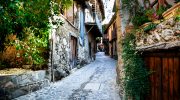
Since the arrival of the first permanent settlers of Cyprus during the early phase Neolithic, people have been living in houses made of stone and mud brick. The island's vernacular architecture uses local materials such as stone, clay, and wood, with traditional Cypriot houses featuring thick stone walls, small windows, and flat or pitched roofs designed to keep interiors cool in the hot Mediterranean climate. These materials came directly from the landscape, with builders quarrying limestone from hillsides, digging clay from valley floors, and cutting timber from mountain forests. The reliance on local materials created regional variations in building styles while establishing construction methods that persisted for millennia until modern industrialization introduced concrete, steel, and imported materials. Stone as the…

Read more
Paralimni Wetlands, Cyprus

Paralimni Wetlands, Cyprus

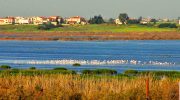
Located in the southeastern corner of Cyprus near the town that shares its name, Paralimni Lake stands as one of the island's eight remaining natural wetlands. This 350-hectare seasonal wetland hosts an extraordinary variety of bird species and rare reptiles despite severe threats from development and poor management. The name Paralimni translates to "by the lake," a reminder that this wetland once defined the entire region's identity. Paralimni Lake occupies a natural depression between the villages of Paralimni, Sotira, and Deryneia in the Famagusta district. The basin collects rainwater runoff from surrounding areas, primarily through the Plati torrent flowing from the east. During winter and early spring, water accumulates in this shallow pan, creating crucial wetland habitat. By summer, the…

Read more
Traditional Cypriot Baskets and Handwoven Village Crafts

Traditional Cypriot Baskets and Handwoven Village Crafts

Cyprus developed distinctive basket weaving and textile traditions that stretch back to ancient times. These crafts include water reed baskets from marshy regions, colorful Fythkiotika woven fabrics, and intricate Lefkaritika lace work. Each village specialized in particular techniques using locally available materials like reeds, cotton, and silk. The crafts served essential practical purposes in daily life while demonstrating artistic skill passed through generations. From storage vessels to dowry items, these handmade goods connected families to their heritage and provided economic livelihood in rural communities. Historical Background Basket weaving dates to Neolithic times, with techniques remaining essentially unchanged over millennia. Archaeological evidence shows woven items existed since the earliest settlements, with the craft spreading across all cultures worldwide. In Cyprus, basketry…

Read more
Larnaca Synagogue Cyprus

Larnaca Synagogue Cyprus

The Larnaca Synagogue represents the revival of Jewish religious life in Cyprus after centuries of minimal presence. Also known as the Great Synagogue of Cyprus or Cyprus Central Synagogue, the building was completed in 2005 and inaugurated on September 12, 2003. Located at Apollodorou 4 in Larnaca, this Orthodox Jewish congregation serves as the spiritual center for approximately 3,500 Jews currently living in Cyprus. The synagogue's establishment marked a historic moment, as Cyprus had been the only European Union nation without an active synagogue. The site serves multiple purposes beyond worship, housing a Jewish community center with educational facilities, kosher restaurants, and plans for a museum documenting Jewish history on the island. Historical Background The Jewish connection to Cyprus dates…

Read more
Roman Paphos Mosaics

Roman Paphos Mosaics

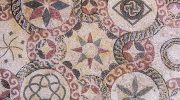
The Roman mosaics of Nea Paphos, especially in the House of Dionysos and the House of Theseus, were designed to do more than decorate elite homes: they signalled status, shaped movement, and communicated authority through myth. In the island’s administrative capital, these floors turned private reception rooms and official spaces into visual statements about leisure, order, and governance. This article explains how the two houses use different mosaic programs, what the imagery was meant to achieve, and why Paphos remains one of the clearest places to read Roman power at ground level. Nea Paphos, Built for Rule Nea Paphos rose to prominence because of its political role. From the late Hellenistic period onward, the city served as the administrative capital…

Read more