All Articles

Stavros tou Agiasmati

Stavros tou Agiasmati

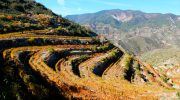
Stavros tou Agiasmati, near Platanistasa in the eastern Troodos, is one of Cyprus's most complete late-medieval painted churches, with frescoes dated to 1494 covering the interior and parts of the exterior. Its steep timber roof and sheltered mountain setting protected the paintings, so the church still reads as a coherent visual program rather than scattered fragments. This article explains how the Holy Cross dedication shaped the imagery, why the painter Philippos Goul matters, and what makes Agiasmati’s Last Judgment and village-facing messages unusually powerful. A Painted Church Near Platanistasa Stavros tou Agiasmati stands a few kilometres outside the village of Platanistasa, surrounded by forested slopes and mountain air that feels deliberately removed from the coast. Its location was not accidental.…

Read more


Solar Energy Projects in Cyprus

Solar Energy Projects in Cyprus

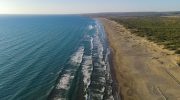
Cyprus has positioned itself as a European leader in solar energy adoption, capitalizing on one of the continent's strongest solar resources. The island receives between 2,500 and 3,500 sunshine hours annually, with coastal areas averaging 19 to 20 megajoules per square meter daily. This exceptional solar potential has driven two parallel developments: a world-leading adoption of solar thermal water heaters dating back to the 1960s, and a rapid expansion of photovoltaic installations over the past decade. By the end of 2024, Cyprus had installed 797 megawatts of solar photovoltaic capacity, with renewables generating approximately 25 percent of the island's electricity. These achievements demonstrate how geographic advantage combined with supportive policies can transform energy infrastructure, though serious challenges around grid management…

Read more
Why Rural Areas in Cyprus Rely on Private Vehicles

Why Rural Areas in Cyprus Rely on Private Vehicles

Rural buses connect most villages to their nearest town, but service frequency remains minimal. Routes typically operate one to three times daily, with some villages receiving just two departures on weekdays and no service on Sundays. This sparse schedule forces residents to plan their entire day around fixed bus times. The Troodos mountain region demonstrates these limitations clearly. Route 64 from Limassol to Troodos Square departs once daily in the morning and returns in the late afternoon. This single round trip provides enough time for a tourist visit but cannot support regular commuting or flexible daily activities for residents. Villages between major cities often receive even less attention. Small communities along the Nicosia to Limassol corridor might see buses pass…

Read more
Panigyria Festivals and Village Traditions

Panigyria Festivals and Village Traditions

Village festivals in Cyprus, known as panigyria, are feast-day gatherings where worship, food, music, and shared space briefly restore villages to their fullest social life. Anchored to patron saints and seasonal rhythms, they pull families back from cities and the diaspora, turning squares and streets into places of blessing, hosting, and collective memory. This article explains how panigyria work from procession to shared tables, why each village’s celebration feels distinct, and how visitors can participate without disrupting the local rhythm. At a glance • What they are: village feast days tied to saints, seasons, or harvests• Where they thrive: rural and mountain villages across Cyprus• Best time: late spring through early autumn• What defines them: faith, food, music, shared space,…

Read more
Use of Talismans and Herbs in Cyprus

Use of Talismans and Herbs in Cyprus

Cyprus maintains ancient traditions of protective talismans and healing herbs that defend against supernatural harm and physical illness. The blue glass evil eye amulet appears everywhere across the island, worn as jewelry, pinned on babies, hung in homes and vehicles. These nazar charms ward off envious gazes that cause spiritual and physical suffering. Garlic cloves dangle near doorways to keep evil forces away, combining multiple protective strategies. Silver crosses provide Christian spiritual protection while pre Christian symbols offer additional safeguards. Both Greek and Turkish Cypriot communities share remarkably similar talisman traditions despite political division, proving that folklore unites the island. These protective objects operate alongside modern medicine rather than replacing it, with Cypriots using both systems without seeing contradiction. The…

Read more
Cyprus Commandaria Wine and Its Heritage

Cyprus Commandaria Wine and Its Heritage

Commandaria is an amber-colored sweet dessert wine made exclusively in the Commandaria region of Cyprus on the southern slopes of the Troodos Mountains. It represents an ancient wine style documented back to 800 BC and holds the distinction of being the world's oldest named wine still in production. The wine is made from sun-dried grapes of two indigenous varieties, Xynisteri and Mavro. Production takes place only in 14 designated villages at altitudes between 500 and 900 meters within the Limassol District. The name Commandaria dates to the Crusades in the 12th century when Knights Templar and Knights Hospitaller controlled the region. From Ancient Nama to Medieval Commandaria The Greek poet Hesiod first described a dried grape wine from Cyprus in…

Read more
Ayia Irini Sanctuary 

Ayia Irini Sanctuary 

Nestled near the northwestern coast of Cyprus, close to Morphou Bay, stands one of the Mediterranean's most important archaeological discoveries.  Ayia Irini was a sacred sanctuary that served the people of ancient Cyprus for over a thousand years, from 1200 B.C. until around 500 B.C. The site became famous after excavations revealed thousands of terracotta statues left as offerings to the gods.   Today, it remains a testament to how people in ancient Cyprus expressed their religious beliefs through art and ritual. The sanctuary's discovery transformed our understanding of Cypriot religion and culture during the Iron Age, making it one of the most studied sacred sites of the ancient Mediterranean. From Bronze Age Shrine to Iron Age Center of Devotion The…

Read more
Almyras Mudstones

Almyras Mudstones

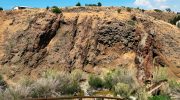
Almyras mudstone is a clay-rich badlands landscape in central Cyprus where ancient marine sediments, lifted from the Tethys Ocean, are exposed in sharply eroded hills and gullies. Its colours, microfossils, and altered volcanic ash make the area one of the island’s clearest geological records, and the same clays later supported early copper-smelting activity at Agia Varvara–Almyras. This article explains how Almyras formed, what the terrain reveals, and how people learned to use the land’s materials for industry. Quick essentials (for skimmers) Image Credit: like.philenews.com Where: Central Cyprus, mainly around Agia Varvara–Almyras, south of Nicosia  What it is: Marine mudstones and clay formations shaped into badlands  Why it matters: Records Cyprus's emergence from the sea and supports early metallurgy  Best time…

Read more
Cyprus Museum Nicosia

Cyprus Museum Nicosia

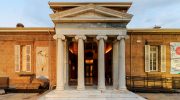
The Cyprus Museum stands on Museum Street in central Nicosia as the oldest and largest archaeological museum in Cyprus. Founded in 1882 during British occupation, the museum houses the most extensive collection of Cypriot antiquities in the world. The institution displays only artifacts discovered on the island, creating a focused narrative of Cyprus's archaeological heritage from the Neolithic period through the Roman era.  The museum building itself carries historical importance, with construction commencing in 1908 and completing in 1924 when Cyprus remained a British colony. Extensions added in 1961 created additional galleries, storerooms, and offices that surround a central square area housing auxiliary offices, a library, and laboratories for preserving and studying items. Fourteen display halls follow chronological and thematic…

Read more