Cyprus has positioned itself as a European leader in solar energy adoption, capitalizing on one of the continent’s strongest solar resources. The island receives between 2,500 and 3,500 sunshine hours annually, with coastal areas averaging 19 to 20 megajoules per square meter daily. This exceptional solar potential has driven two parallel developments: a world-leading adoption of solar thermal water heaters dating back to the 1960s, and a rapid expansion of photovoltaic installations over the past decade.
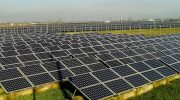
By the end of 2024, Cyprus had installed 797 megawatts of solar photovoltaic capacity, with renewables generating approximately 25 percent of the island’s electricity. These achievements demonstrate how geographic advantage combined with supportive policies can transform energy infrastructure, though serious challenges around grid management and energy storage threaten to undermine further progress.
From Israeli Innovation to National Standard
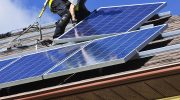
Solar water heating arrived in Cyprus in the late 1960s when Israeli companies introduced the technology to the island. The timing proved fortunate. Many rural areas lacked electricity infrastructure, and solar thermal systems offered a practical solution for hot water without requiring grid connections. The technology was remarkably simple: solar panels heat water that circulates through copper pipes into an insulated storage tank. Within two hours of installation, households had access to free hot water powered entirely by sunshine. This simplicity drove rapid adoption across both urban and remote communities.

By 2024, an estimated 93.5 percent of Cypriot households had installed solar water heaters, the highest penetration rate in the European Union by a substantial margin. This widespread adoption created an entire domestic industry. A union of solar thermal industrialists was established in 1977, and since then more than 962,564 square meters of solar collectors have been installed across the island. Local manufacturers produce panels and tanks, while installation companies employ hundreds of workers. Some installers complete up to four installations daily, with each setup taking approximately two hours from start to finish.
The economic benefits are significant. While installation costs have risen over the decades, government subsidies and EU grants typically allow households to recover their investment within one year. After that payback period, households enjoy essentially free hot water for the system’s lifetime, which can exceed 20 years with minimal maintenance. A typical 200-liter tank heated by a few hours of midday sunshine provides enough hot water to last 48 hours. On rare cloudy days, electric backup systems can heat water, but this represents a tiny fraction of typical energy consumption. Cyprus’s tourism sector has also embraced the technology, with nearly 100 percent of hotels using solar thermal systems to reduce operating costs.
The Photovoltaic Boom Since 2015
While solar thermal systems dominated Cyprus’s renewable energy landscape for decades, photovoltaic installations remained minimal until recently. The turning point came after 2015, when dramatically falling panel costs, new EU renewable energy targets, and restructured national support schemes accelerated deployment. From 2015 to 2024, Cyprus’s installed photovoltaic capacity grew at a compound annual rate exceeding 25 percent. In 2024 alone, Cyprus added 159 megawatts of new solar capacity, bringing the total to 797 megawatts by year end.
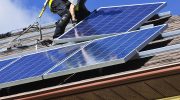
This growth occurred across multiple segments. The self-consumption program, which includes both net metering for residential systems and net billing for commercial installations, has contributed approximately 350 megawatts of cumulative capacity. Under net metering, residential generators receive credits at the retail electricity rate for power they send to the grid. Net billing applies to commercial and industrial systems, crediting at the wholesale rate. These programs made rooftop solar financially attractive for thousands of households and businesses.
Subsidy-free power purchase agreements represent the second major growth driver, contributing approximately 200 megawatts. These commercial projects sell electricity directly to the wholesale market at prices determined by supply and demand. In 2024, developers added about 59 megawatts under these contracts. Recent competitive auctions have cleared at prices between 56 and 62 euros per megawatt-hour, compared to 90 to 100 euros just five years earlier. This dramatic cost reduction reflects global trends in solar technology while demonstrating that utility-scale solar can compete economically in Cyprus without subsidies.
The Critical Challenge of Energy Curtailment
Despite rapid capacity growth, Cyprus faces a severe challenge that threatens to undermine its solar energy transition. The island operates an isolated electricity system with no interconnections to other countries, creating unique grid management difficulties. When solar production exceeds demand and storage capacity is insufficient, operators must curtail renewable generation to maintain grid stability. This curtailment has increased dramatically as solar capacity has grown.
In 2024, Cyprus curtailed 167 gigawatt-hours of renewable energy, representing 29 percent of potential generation from assets connected to the distribution network. This marked a substantial increase from 13.4 percent in 2023 and just 3.3 percent in 2022. The situation worsened considerably in 2025. Between January and May 2025, Cyprus curtailed 145 gigawatt-hours at a 58 percent curtailment rate. For the full year 2025, curtailment reached 306 gigawatt-hours, wasting nearly half of potential distributed renewable generation.
These curtailments increasingly affect residential solar installations, not just utility-scale projects. In early 2025, Cyprus curtailed 19,850 megawatt-hours from residential and small commercial photovoltaic systems, approximately 14 percent of total curtailed energy. This development has raised concerns about fairness and consumer expectations. Households that invested in solar systems based on promised savings now find their panels remotely shut off for extended periods. Since 2023, all new net metering installations must include ripple control functionality, allowing system operators to remotely switch systems on or off to balance supply and demand.
Storage Solutions and Grid Modernization
Cyprus has recognized the critical need for battery energy storage systems to reduce curtailments. As of early 2024, approximately 25 megawatts and 45 megawatt-hours of battery storage were operational. The government launched a subsidy scheme targeting approximately 350 megawatt-hours of storage capacity, while the transmission system operator approved about 400 megawatt-hours of strategic storage assets. In 2024, the Apollon photovoltaic park commissioned a 3.3 megawatt-hour battery system, representing an important milestone for integrated solar-plus-storage projects.
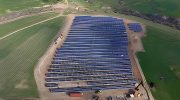
The government has also allocated funding under the EU’s 101 million euro RepowerEU program to expand solar capacity on government and municipal buildings. Energy Minister George Papanastasiou announced this initiative would add between 60 and 100 megawatts while providing free energy to vulnerable households. The program received cabinet approval in 2024 as part of broader efforts to reduce dependence on imported fossil fuels.
The long-term solution involves the EuroAsia Interconnector, a subsea cable project that would connect Cyprus to Greece and eventually to Israel. This interconnection would allow Cyprus to export excess solar production during peak generation hours and import electricity when needed. The project carries Project of Common Interest status from the European Union, though its high cost and technical complexity have raised questions about economic viability. If completed, the interconnector could reduce curtailments significantly and allow higher solar penetration without overwhelming the isolated grid.
Cyprus Solar Energy Today
Solar energy has become central to Cyprus’s energy strategy and economic planning. The island’s exceptional solar resource provides a natural advantage that few European nations can match. Government policies, including net metering programs, competitive auctions, and building regulations requiring solar-ready roofs, have created favorable conditions for continued growth. The successful deployment of solar thermal systems over six decades demonstrates that Cyprus can effectively harness its climate advantages when technology, policy, and economic incentives align.

However, the curtailment crisis reveals the limitations of isolated grid systems in managing high renewable penetration. Cyprus currently wastes enormous quantities of clean energy while simultaneously buying emission allowances and burning fossil fuels. The 2025 curtailments correspond to more than 200,000 tonnes of carbon dioxide emissions and approximately 15 million euros in additional costs for emission allowances. This paradox where clean energy is discarded while dirty energy continues burning highlights the urgent need for storage infrastructure and grid interconnections.
Cyprus demonstrates both the promise and the challenges of rapid solar deployment in small island systems. The island’s solar capacity will likely continue growing toward the 2030 target of 50 percent renewable electricity. Whether this growth delivers genuine environmental and economic benefits depends critically on solving the storage and curtailment problems that currently plague the system.
Success requires substantial investment in batteries, demand management systems, and international interconnections. With these elements in place, Cyprus could transform from a cautionary tale about grid limitations into a model for how small nations can achieve high renewable energy penetration through comprehensive system planning.