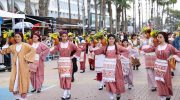
Village festivals in Cyprus, known as panigyria, are feast-day gatherings where worship, food, music, and shared space briefly restore villages to their fullest social life. Anchored to patron saints and seasonal rhythms, they pull families back from cities and the diaspora, turning squares and streets into places of blessing, hosting, and collective memory. This article explains how panigyria work from procession to shared tables, why each village’s celebration feels distinct, and how visitors can participate without disrupting the local rhythm.

At a glance
• What they are: village feast days tied to saints, seasons, or harvests
• Where they thrive: rural and mountain villages across Cyprus
• Best time: late spring through early autumn
• What defines them: faith, food, music, shared space, and continuity
• Why they matter: they keep village identity active, not symbolic
A Festival Built on Return
For most of the year, Cypriot villages move quietly. Families live apart, younger generations work in cities, and daily life stays contained behind closed doors. A festival changes that rhythm.
A panigyri is a reason to return. People come back to their village not as visitors but as participants. Doors open. Food is prepared in quantities meant for sharing. The village square stops being a shortcut and becomes the centre again. What might look like a celebration from the outside is, at its core, a temporary restoration of how village life once functioned every day.
Faith That Steps Outside the Church
Most village festivals are anchored to a religious feast day, usually honouring the patron saint of the local church. The spiritual centre of the celebration is not hidden indoors. It moves outward.
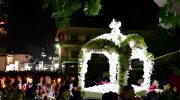
On the eve or morning of the feast, the icon of the saint is carried through the streets in a slow procession known as the Litania. This walk is deliberate and symbolic. By passing through lanes, doorways, and fields, the ritual extends blessing beyond the church walls and into everyday life. It turns the village itself into a sacred space, even if only for a short time.
Later, bread, wine, and oil are blessed and shared. This act is not about ceremony alone. It reinforces something practical and deeply Cypriot: faith is experienced together, through physical presence and shared nourishment.
Food as Social Language
As the religious rituals give structure to the day, food gives it warmth and continuity. Long before music begins or tables are fully set, cooking becomes a form of quiet coordination that pulls households into a shared rhythm.
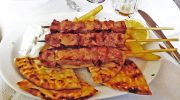
Large cuts of meat roast slowly in outdoor ovens or turn steadily over open fires, filling narrow streets with familiar scents. Trays of pastries emerge from kitchens at irregular intervals, carried by hand rather than announced. No single table belongs to one family alone. Dishes move freely, crossing boundaries without introduction, guided more by instinct than instruction.
Eating together during a panigyri is not simply about nourishment. It dissolves hierarchy. Conversations begin without formality. Time stretches in ways that daily routines rarely allow. Meals unfold slowly because their purpose is connection, not completion.
Music, Movement, and Unspoken Order
As daylight fades, sound takes over the village square. Traditional instruments lead melodies that many recognise long before they consciously identify them. These are not performances staged for applause. They are invitations extended carefully, shaped by familiarity with place and people.
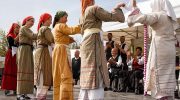
Dance follows its own logic. Circles form naturally, often around families or long-established groups. Participation is guided by awareness rather than instruction. Some dances are open, welcoming anyone willing to follow the rhythm. Others are closed, marked by subtle signals understood by those who belong to them.
This structure is not restrictive. It preserves balance. Celebration remains grounded because it respects local patterns rather than overriding them.
Each Village Keeps Its Accent
Across Cyprus, festivals take on the character of the villages that host them, reflecting local history rather than generic tradition.
In Omodos, celebrations intertwine closely with wine-making and religious life. The monastery anchors the calendar, while surrounding vineyards and craft traditions shape the atmosphere. Faith and daily labour coexist visibly, neither overshadowing the other.
In Monagri, festivals centre on Commandaria wine, connecting present-day gatherings to centuries of cultivation and trade. Grapes dried in the sun and stories passed across generations make the past feel continuous rather than distant.

In Athienou, traditions recognised by UNESCO demonstrate how festivals survive when communities protect their own practices. Music, food, and preparation remain local, resisting commercial replacement and preserving meaning over scale.
Each village celebrates differently, yet all share a common purpose: maintaining continuity through participation.
Generations Overlap Without Planning
One of the quiet strengths of village festivals is the way generations overlap naturally. Children move freely through the square, absorbing sound, gesture, and rhythm long before they understand their meaning. Adults manage preparation and hosting, keeping the event flowing without drawing attention to themselves. Elders watch, remember, and occasionally intervene, correcting details that might otherwise fade.
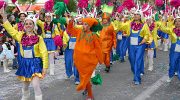
Nothing about this exchange is formalised. Knowledge transfers through presence, repetition, and observation. Songs endure because they are heard repeatedly. Recipes survive because they are cooked together. Identity persists because it is practised rather than explained.
Visiting With Care and Awareness
For visitors, a panigyri offers access to a living tradition that is not curated for display. This access requires attentiveness rather than entitlement.
Dressing modestly near churches shows respect. Observing before participating helps preserve rhythm. Accepting offered food or drink matters, as refusal can unintentionally create distance. Most importantly, understanding that the festival exists for the village, not for documentation or convenience, allows genuine connection to form.
Those who approach patiently are often welcomed not as observers but as temporary participants in the space.
What Panigyria Keep Alive
Village festivals endure because they resist compression. They cannot be rushed, condensed, or replicated elsewhere. They depend on presence, shared effort, and time given freely.
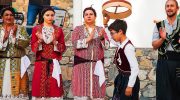
A panigyri is not nostalgia performed for comfort. It is proof that the community remains functional when allowed to gather on its own terms. In Cyprus, these festivals are not cultural remnants. They are active systems of belonging, renewing village life each year through faith, food, and shared ground.