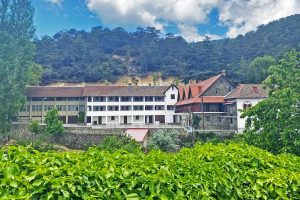
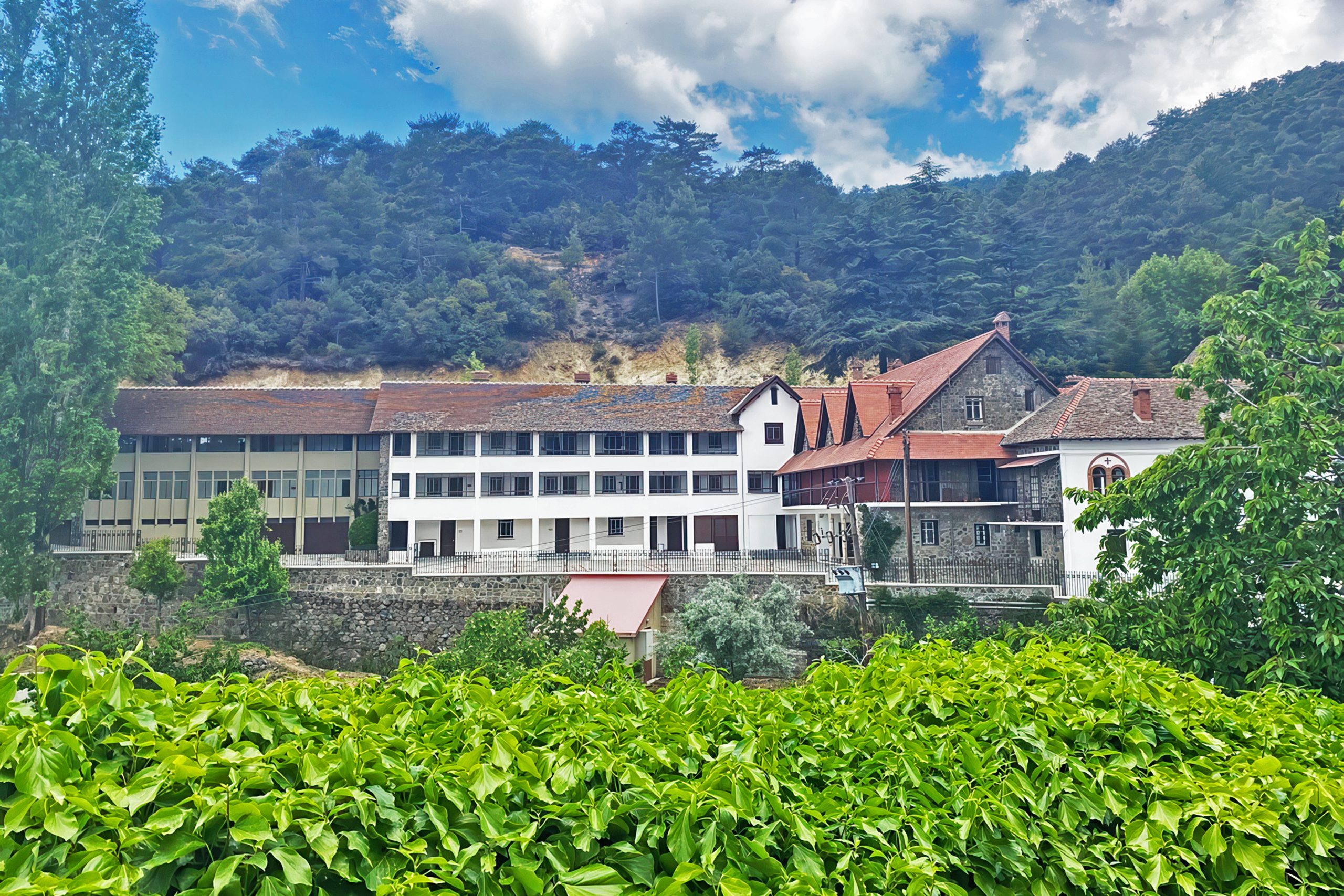
Trooditissa Monastery is a historic monastic site located on the southern slopes of the Troodos Mountains at an altitude of around 1,300 meters. It lies near the village of Platres and is surrounded by dense pine forests. The monastery is officially known as Panagia Trooditissa, a name that reflects its geographical setting within the Troodos mountain range.
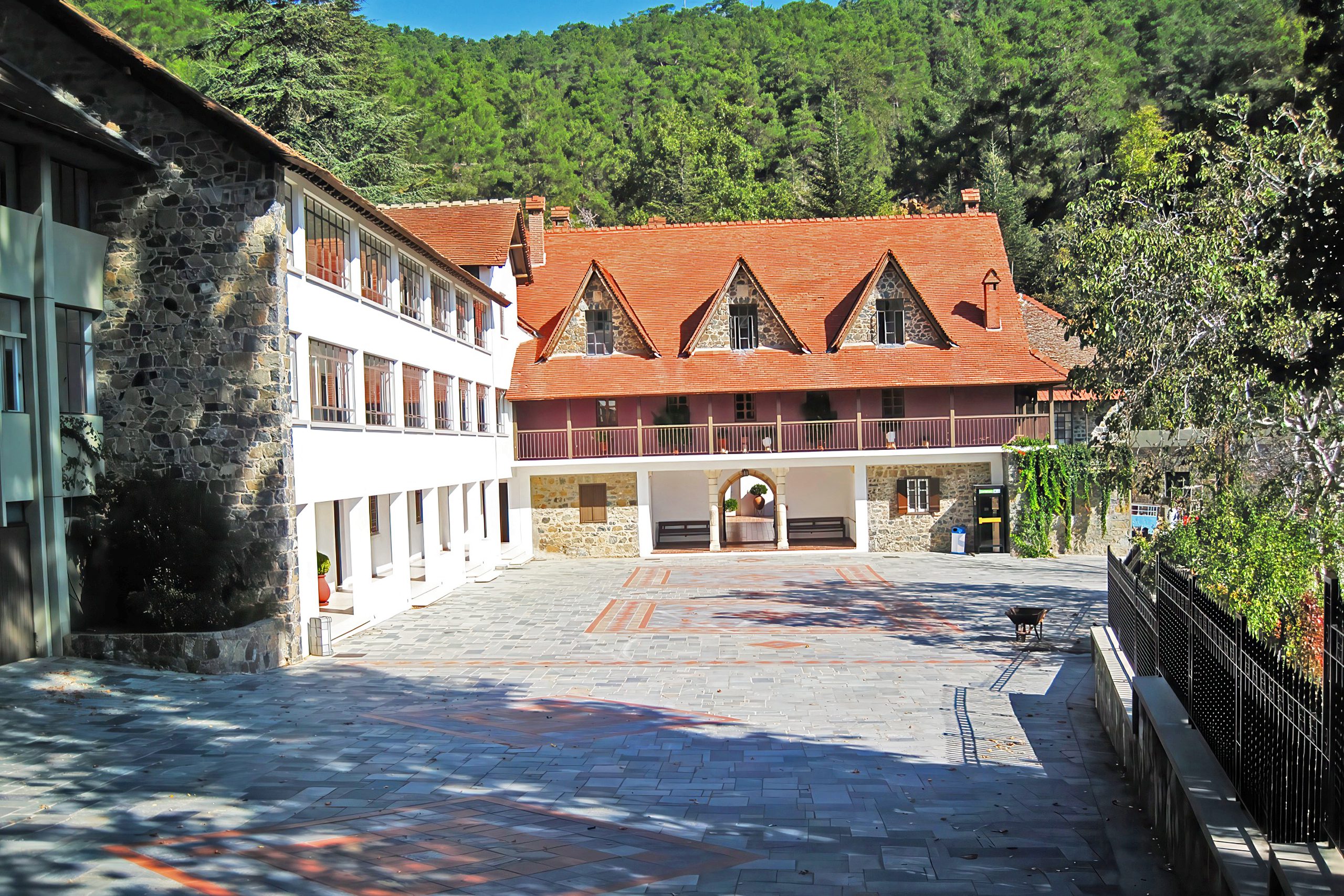
Historical references place the origins of the monastery around the late 10th century, shortly after the Byzantine iconoclasm period. While the present buildings are later reconstructions, the site is recognized for its long-standing monastic presence and its role in the religious and cultural landscape of Cyprus.
Historical Background
During the 8th and 9th centuries, the Byzantine Empire experienced a period in which religious imagery was officially restricted and many icons were removed or destroyed. In this broader historical context, some monks and religious communities migrated to remote regions such as Cyprus, where local monastic life continued with less direct imperial enforcement.
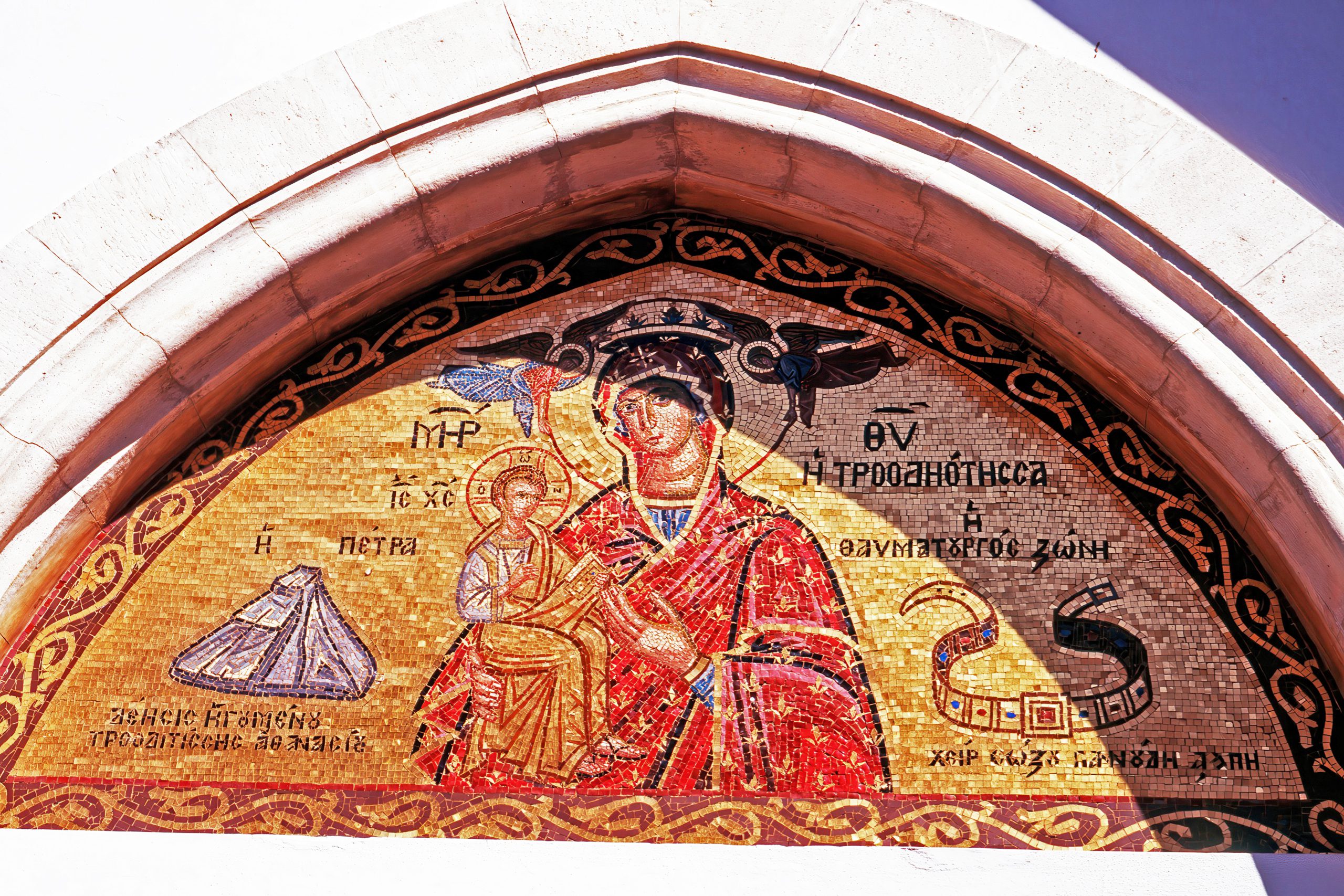
According to traditional accounts, a monk associated with this period brought a religious icon from Constantinople and initially settled at a monastic site near Limassol, later associated with the Monastery of Saint Nicholas. After spending many years there, he is described in local tradition as moving toward a more isolated monastic lifestyle in the Troodos Mountains, eventually establishing a hermitage in a cave on the eastern slopes.
A local narrative also describes a shepherd from the village of Afames observing unusual light in the mountain area around the late 10th century. This account became part of local oral tradition explaining how the site gained religious importance. Such stories are commonly found in medieval Cypriot monastic histories, where natural phenomena and local belief systems often shaped the founding narratives of sacred sites.
Development of the Monastic Site
Over time, the cave site evolved from an isolated hermitage into a structured monastic settlement. Early monastic activity in the region likely followed the typical pattern of small hermit communities gradually forming organized religious institutions.
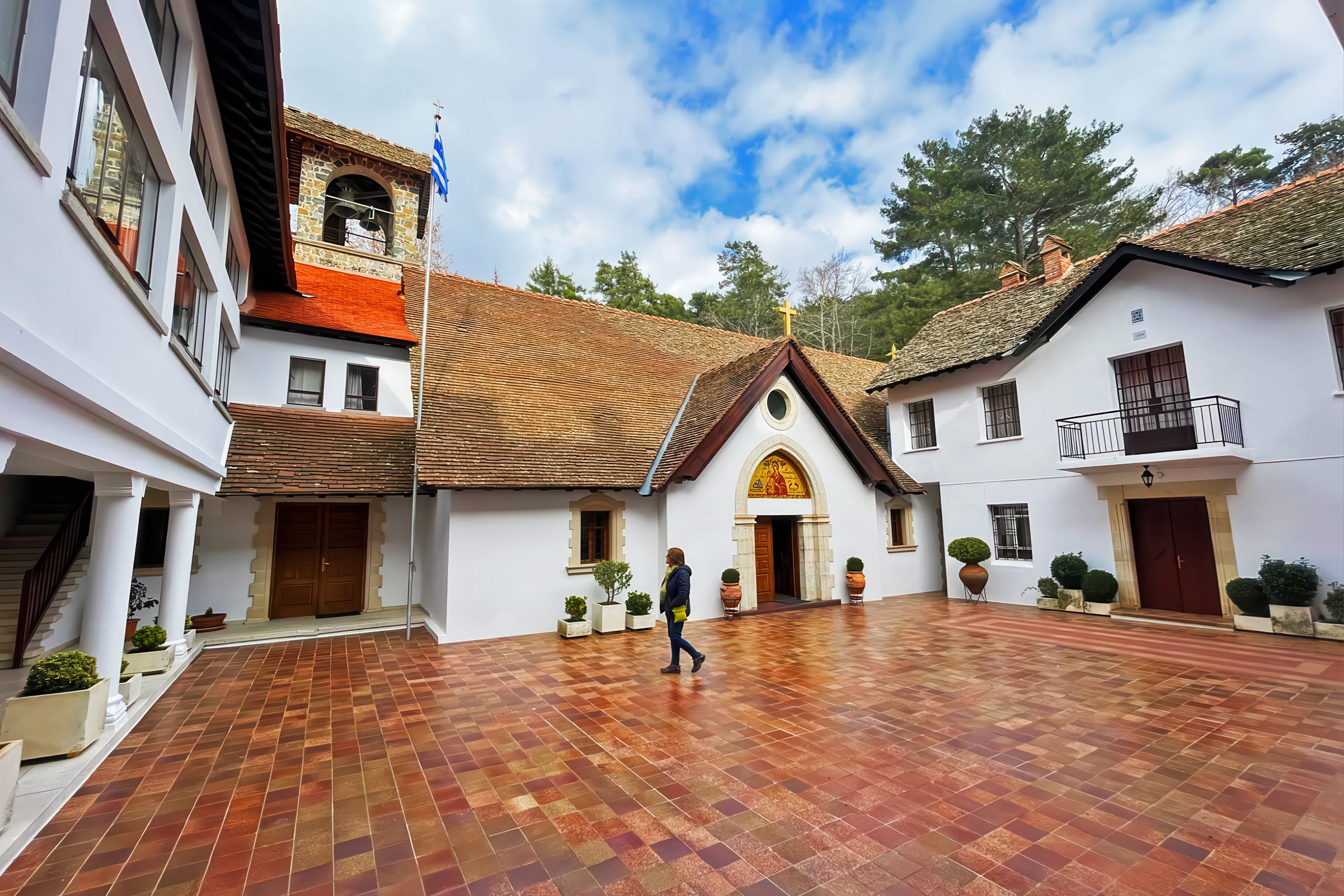
The monastery suffered multiple periods of destruction and rebuilding. Historical records indicate that in 1585, during the Ottoman period, the original church structure was damaged by fire. A second fire in 1842 further destroyed much of the earlier architecture, resulting in the loss of medieval building elements.
The current main church dates primarily to 1731, with additional renovations and expansions carried out during the 18th, 19th, and 20th centuries. As a result, the monastery today reflects a layered architectural history rather than a single preserved medieval structure.
Architecture and Interior Features
Trooditissa Monastery follows a traditional monastic architectural layout typical of mountain monasteries in Cyprus. The complex includes the main church, residential quarters, and supporting monastic facilities arranged within a forested mountain environment.
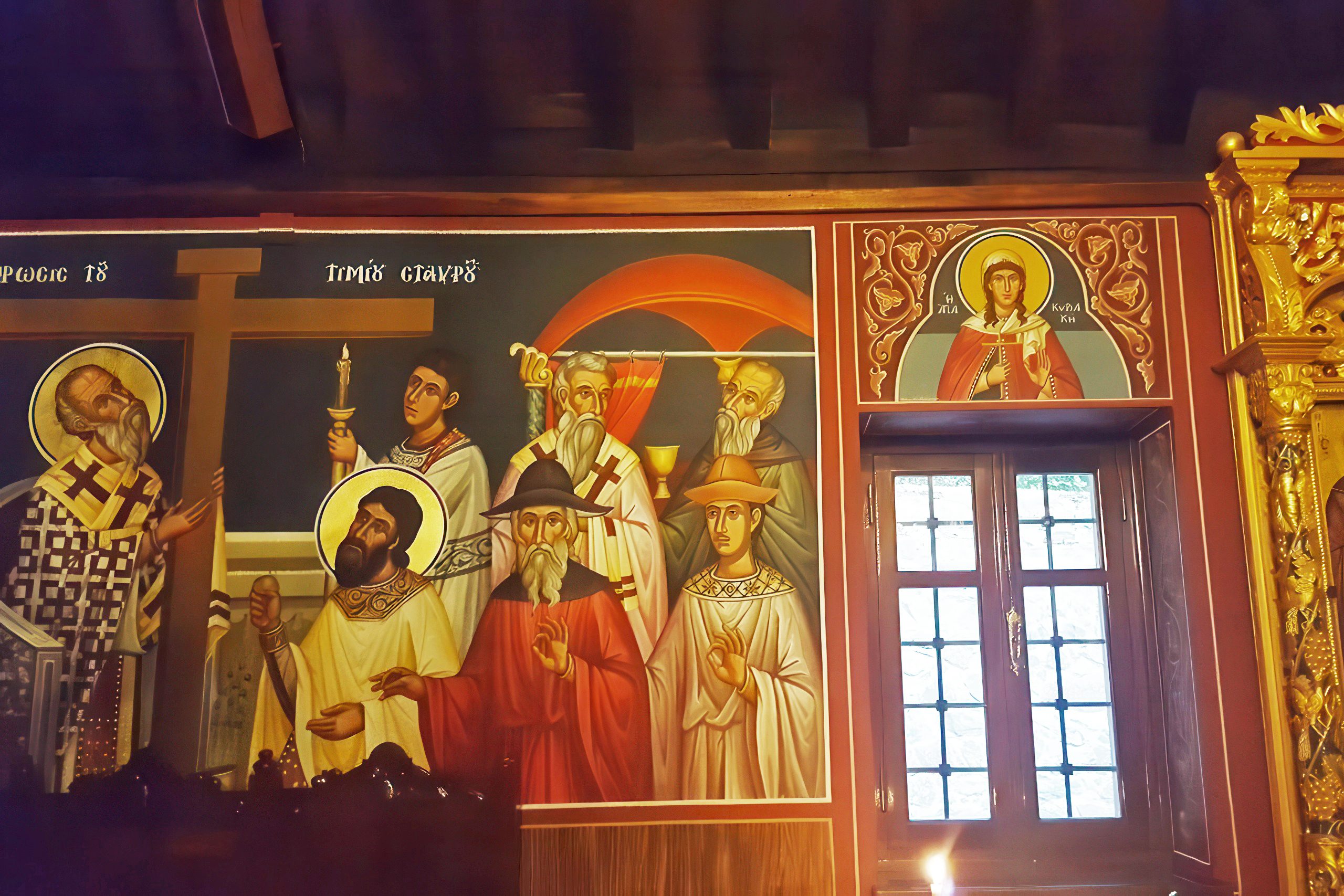
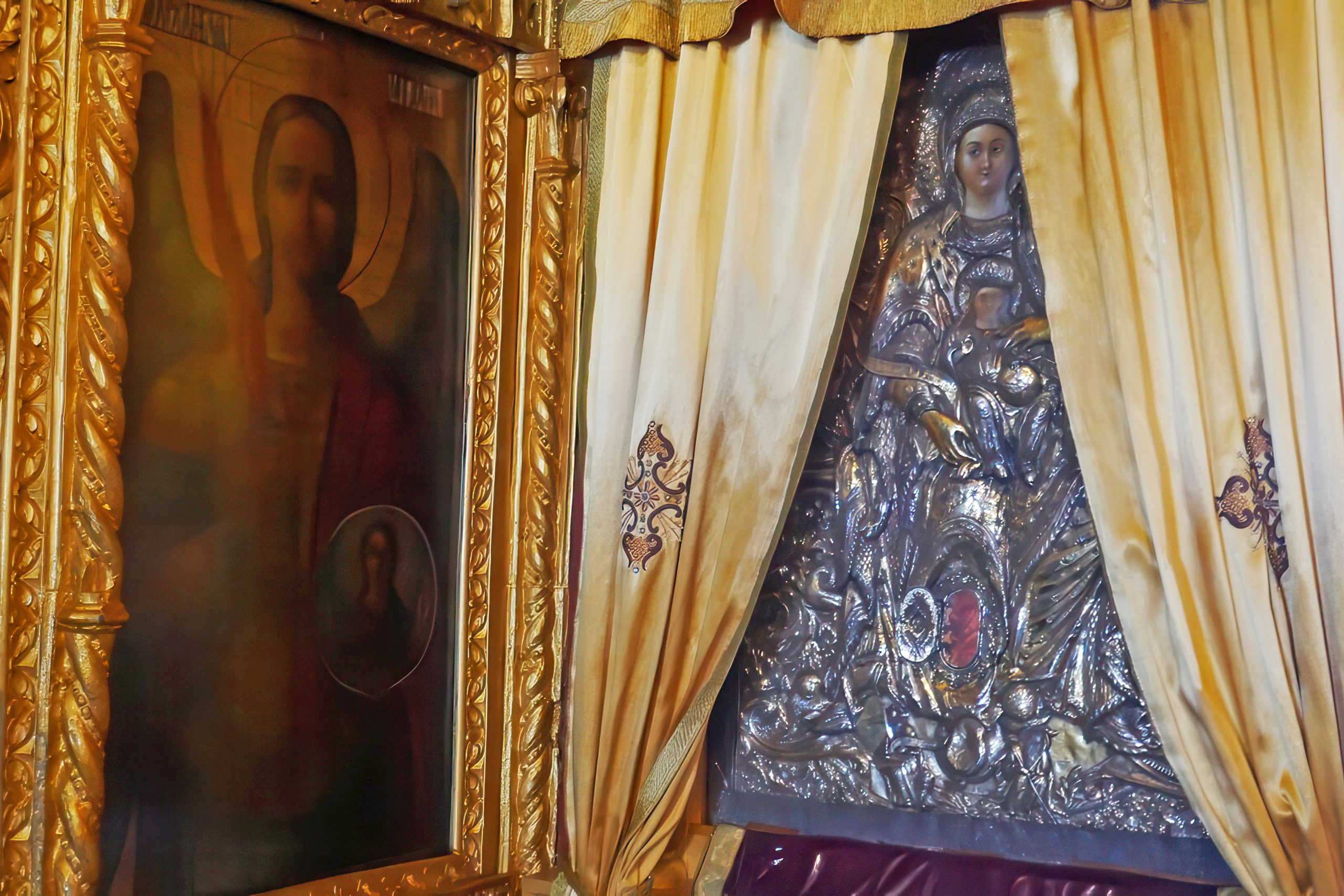
The interior features painted icons, carved wooden elements, and decorative frescoes added in later centuries. The iconostasis, a central feature of Orthodox church architecture, is carved in wood and reflects 18th-century craftsmanship traditions found across Cypriot ecclesiastical art.
Why Trooditissa Continues to Matter
Trooditissa Monastery is historically associated with traditions linked to fertility and family life. Over time, local belief systems connected the site with hopes related to childbirth and family continuation. These associations are part of the broader cultural history of Cyprus, where many mountain monasteries and rural shrines developed specialized devotional roles within local communities.
Inside the monastery, visitors may observe offerings and photographic displays left by families over time. These reflect personal testimonies and cultural practices rather than universally verified outcomes, and they form part of the broader social history of pilgrimage traditions in Cyprus.
The monastery also preserves various icons of historical and artistic value. These include depictions of widely recognized religious themes common in Byzantine and post-Byzantine iconography. A number of these works are attributed to monks and local iconographers active in the 19th and 20th centuries.
Visiting Trooditissa Monastery
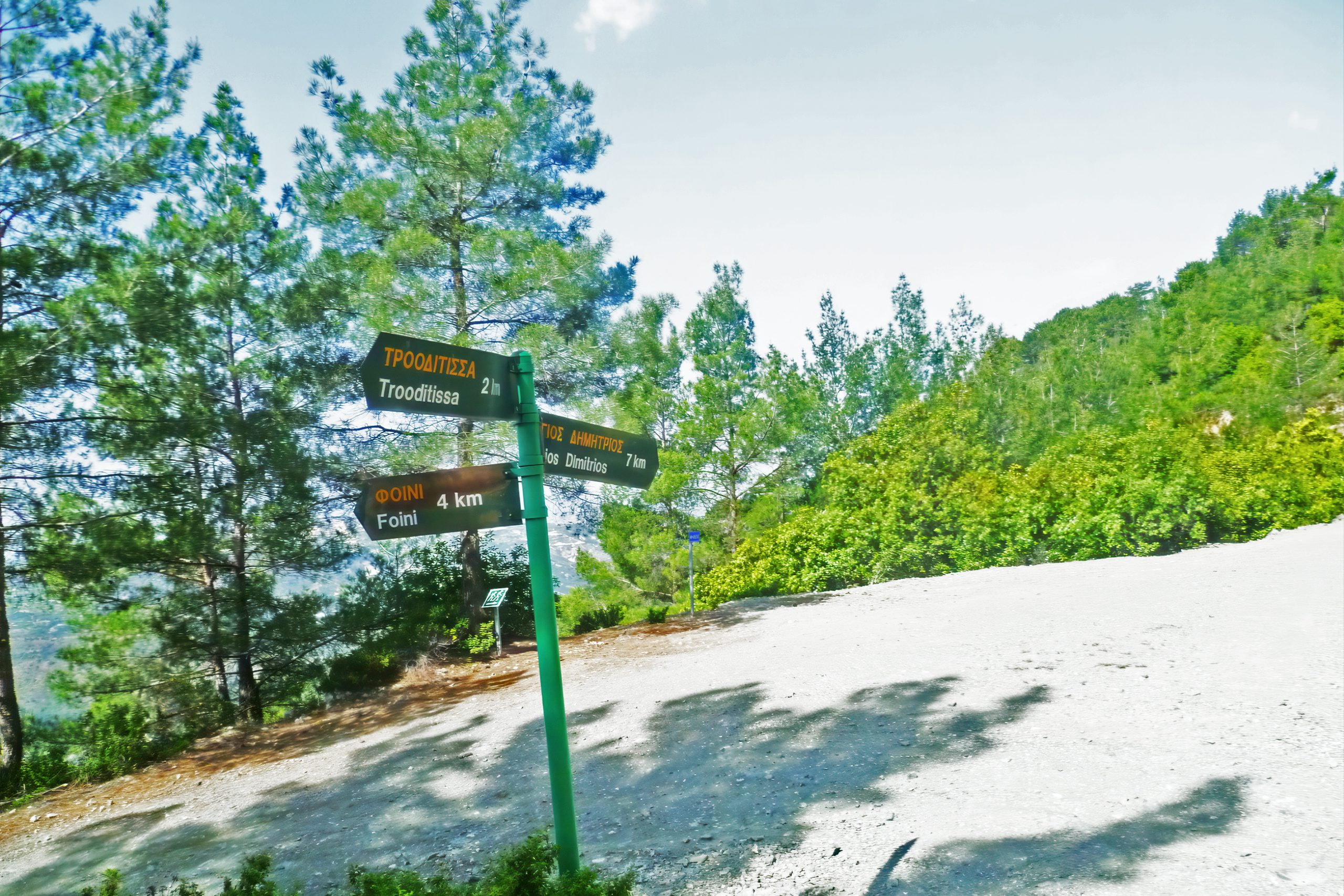
Trooditissa Monastery is accessible by road from Platres via a forested mountain route. The journey passes through pine-covered slopes and offers views of the surrounding Troodos landscape. Visitors typically arrive by private car or organized tours. Entry to the monastery grounds is generally free. Access policies may vary depending on the internal use of certain monastic areas, which remain reserved for resident monks and religious functions.
Modest dress is required, with covered shoulders and knees recommended for all visitors. Photography is restricted inside the church and certain interior areas to preserve artworks and maintain the conditions of the historical space.
The site is not fully accessible for visitors with mobility limitations due to uneven terrain and steps, although some external areas can be reached more easily. Nearby attractions include forest walking routes and sections of the Caledonia Nature Trail, which passes through river valleys and forest landscapes popular for hiking and nature tourism.
Historical and Cultural Legacy
Trooditissa Monastery represents a long-standing example of mountain monasticism in Cyprus, shaped by centuries of rebuilding, local tradition, and regional history. Although its original medieval structures have not survived, the site continues to reflect the architectural and cultural evolution of Cypriot monastic life from the Byzantine period through the Ottoman and modern eras.
Today, the monastery is recognized primarily for its historical architecture, mountain setting, and role in local cultural traditions. It remains part of the wider network of monastic sites across the Troodos region, contributing to the understanding of Cyprus’s religious, artistic, and social history over time.