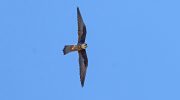
High above the silent pine forests of the Troodos and the jagged ridgeline of the Pentadaktylos, a large, powerful bird rides the thermals with effortless authority. It is not the most colourful bird in Cyprus, nor the most famous, but it is, without question, the mightiest. This is Bonelli’s Eagle (Aquila fasciata), the only large eagle that still breeds on the island of Cyprus. And once you know its story, you will never look at a mountain skyline here quite the same way again.
Meet the Booted Eagles – A Family of Champions
Eagles are among the most recognisable birds on Earth, symbols of power, freedom, and wildness across virtually every culture in human history. Bonelli’s Eagle belongs to the family Accipitridae, and its feathered legs mark it as a member of the Aquilinae, or booted eagle subfamily, a distinguished group of at least 38 species all sharing the signature of well-feathered tarsi. Think of it as a very exclusive club within an already elite group.
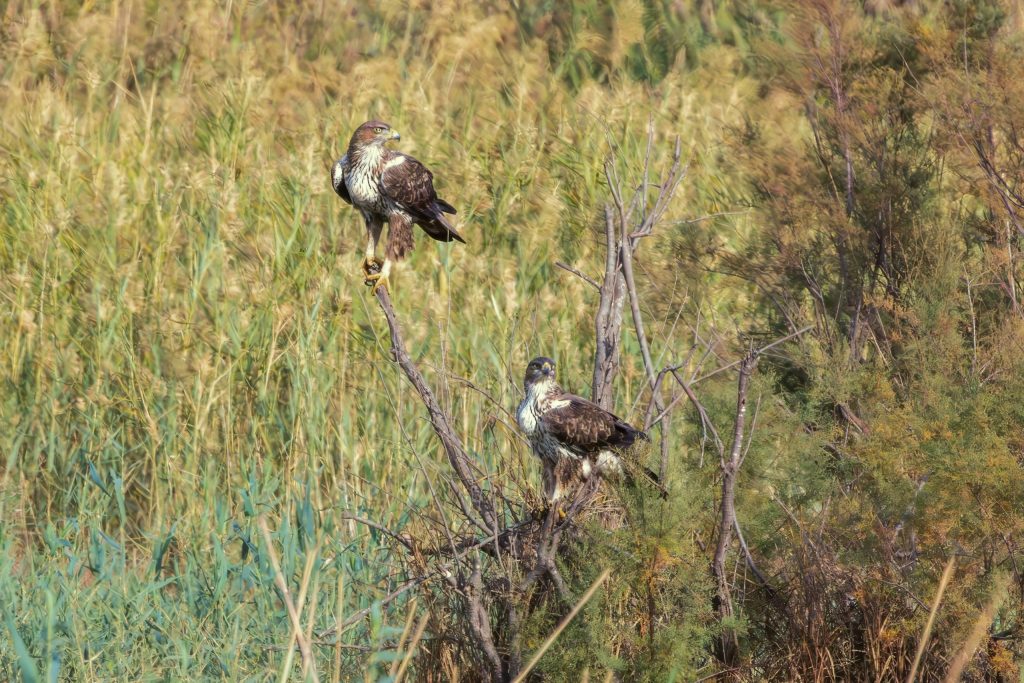
Genetically, Bonelli’s Eagle turns out to be closely related to some of the grandest birds on the planet – the golden eagle, Verreaux’s eagle, and the wedge-tailed eagle of Australia. In evolutionary terms, this compact, agile hunter shares deep roots with giants. What it lacks in sheer bulk compared to its cousins, it more than makes up for in speed, precision, and raw hunting intelligence.
A Name, a Man, and a Bird Born of the Mediterranean
The common name of the bird commemorates Franco Andrea Bonelli, an Italian ornithologist and collector, who is credited with gathering the type specimen most likely from an exploration of Sardinia. It is a fitting legacy: a bird of the rugged Mediterranean sun-lands, named after a man who devoted his life to understanding them.
The species breeds from southern Europe, across Africa on the montane perimeter of the Sahara Desert, and stretches all the way across the Indian subcontinent to Indonesia. It is, in the truest sense, an Old World eagle – ancient in its range, deeply embedded in landscapes that humans have shared with wildlife for thousands of years.
In Cyprus, its presence almost certainly predates written history. By the late 1950s, the species was considered common on the island, with a population estimated at more than 50 pairs. What happened next is a cautionary tale worth telling.
Portrait of a Predator
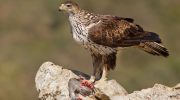
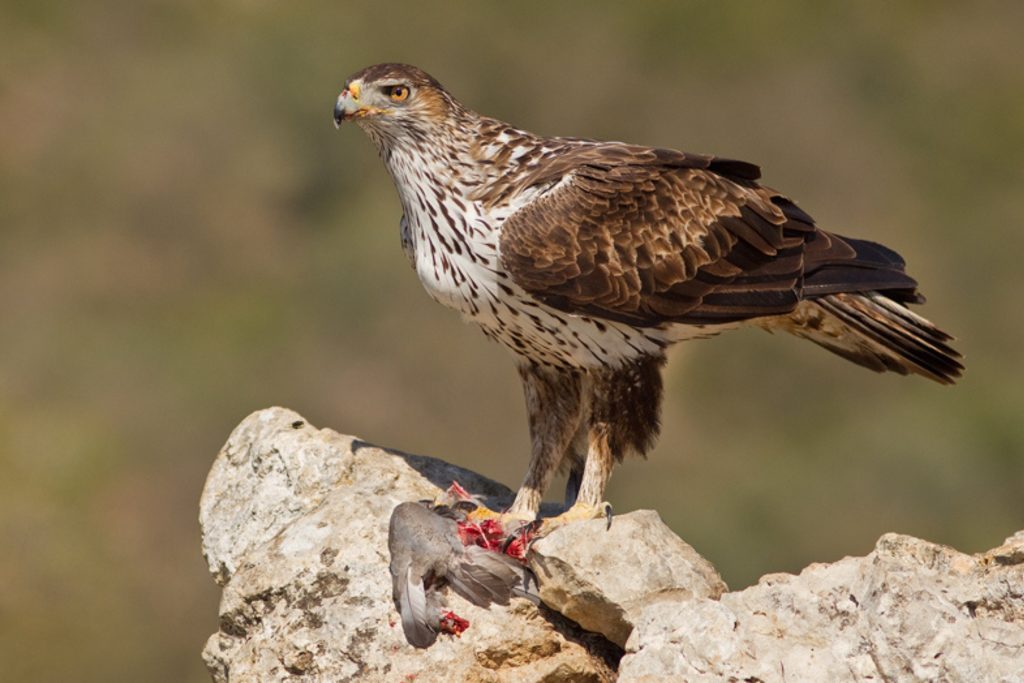
Bonelli’s Eagle is a small- to medium-sized eagle, measuring 55–65 cm in length. The upperparts are dark brown, and the underside is white with dark streaks. The wings are relatively short and rounded, and the long tail is grey on top and white below, ending in a single broad black terminal band. The feet and eyes are yellow.
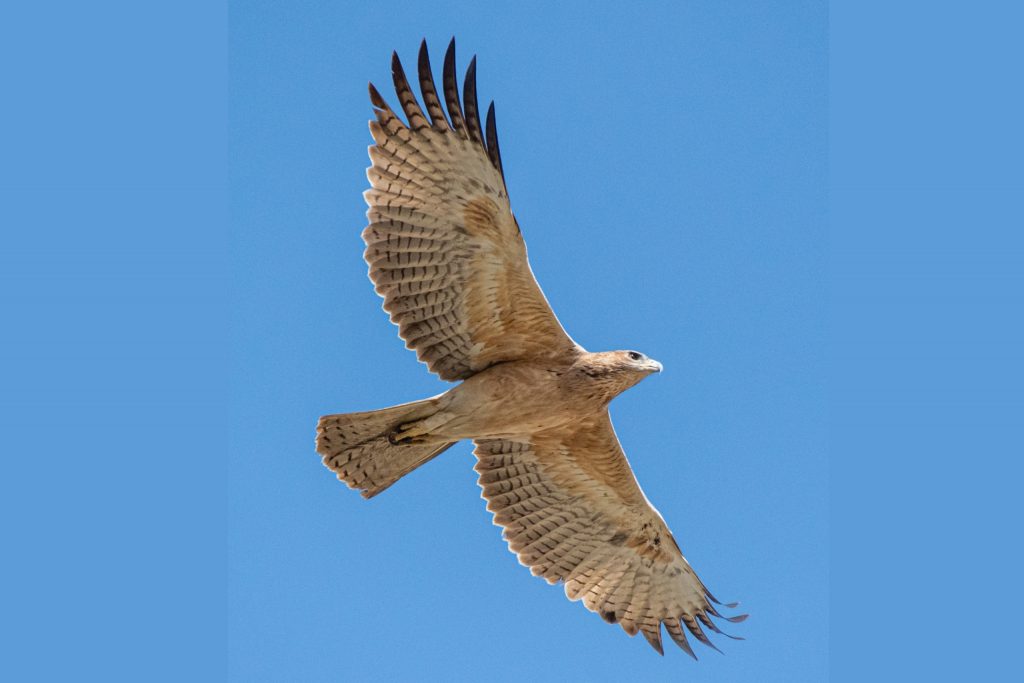
It is, in short, a beautifully designed hunting machine – built not for soaring endlessly over plains, but for speed and manoeuvrability in mountainous terrain. It usually hunts from cover with a quick dash from inside a tree, but will also catch prey by quartering hillslopes like other eagles, or by making a stoop from a soaring position.
In Cyprus, these eagles typically inhabit mountainous terrain, with nests often found at the forest edge, while hunting primarily occurs in more open areas. They are birds of the threshold – nesting in the safety of the trees, hunting in the open spaces beyond.
Fun Facts Worth Sharing
- The Cypriot name Περτικοσιάχινο (Pertikossiáchino) literally reflects the bird’s nature as a “partridge hawk” – a nod to its reputation as a lethal hunter of game birds.
- Bonelli’s Eagle is the sole large-sized eagle species known to breed on the island of Cyprus – making every individual here genuinely irreplaceable.
- The majority of nests in Cyprus – some 70% – are built on large Calabrian pine trees, typically at an average altitude of around 600-700 metres.
- Across its wide range, the prey spectrum of Bonelli’s Eagle has been known to include nearly 200 species – making it one of the most versatile predators in the bird world.
- Bonelli’s Eagles will foster orphaned chicks of the same species in an empty nest – but only if egg or chick loss has happened just a few hours earlier. A remarkably precise window of compassion.
A Closer Look at Life in Cyprus
The current Cyprus population is estimated at 31–39 breeding pairs, equating to roughly 0.52–0.65 pairs per 100 km². The Special Protection Area (SPA) network covers 80% of all nest sites.
Between 1999 and 2002, researchers examined 32 pairs totalling 64 breeding attempts, during which 116 eggs were laid. Of these, 71 hatched, and an impressive 92.6% of pairs successfully fledged young, with a mean breeding success of 1.6 fledglings per pair.
In the world of large eagles, these are remarkable numbers – a sign that, when left in peace, Bonelli’s Eagles are capable and devoted parents. The Cyprus population has been cited as the 4th largest in Europe – a striking statistic for a small island, and a reminder of just how significant Cyprus is as a refuge for this species.
The Fight to Survive – Then and Now
The story is not without shadows. Despite its continued classification as a Least Concern species by the IUCN Red List globally, Bonelli’s Eagle has declined precipitously across much of its European range, and may face potential local extinction in several countries. Its decline is due to widespread habitat destruction, electrocution from electricity pylons, and persistent persecution.
In Cyprus specifically, radio telemetry studies have shown that shooting and poisoning remain the most significant causes of direct mortality.
The species is listed on Annex I of the EU Birds Directive, and the Cyprus population is protected through the NATURA 2000 network, with major breeding areas designated as Wildlife Conservation Areas where hunting is prohibited under Cypriot law.
More recently, a LIFE project – the East Mediterranean Bonelli’s Eagle Network (EMBoNet) – has been launched with the goal of ensuring the long-term favourable conservation status of interconnected eagle populations in both Greece and Cyprus, which together represent over 30% of the eastern Mediterranean population.
In northern Cyprus, the BonBonTrack project is tracking eagles from breeding sites in the Five Finger Mountain Range – the first such study for the species in this region – to identify foraging areas and movement corridors essential for the species’ protection.
Seeing the King for Yourself
The best chance of spotting a Bonelli’s Eagle in Cyprus is in the quieter mountainous areas – the Paphos Forest, the Troodos range, and the Pentadaktylos (Five Fingers) mountains in the north are the heartlands of this species here. Early mornings, particularly in late winter and early spring when pairs are most active around nest sites, offer the best opportunities. Look for a large, fast-moving silhouette low over forested ridgelines – unlike the slow, majestic soaring of a vulture, this eagle moves with purpose and speed.
Birdwatchers, hikers, and anyone who simply loves wild places will find that sharing a hillside with this bird, even for a moment, is an experience that stays with you.
Why This Eagle Matters
Cyprus punches far above its weight when it comes to wildlife. A small island at the crossroads of three continents, it has, against considerable odds, held on to one of Europe’s most significant populations of a threatened eagle. While many European countries have seen their Bonelli’s Eagle populations collapse, Cyprus was one of the few places where numbers remained relatively stable through the late 20th century.
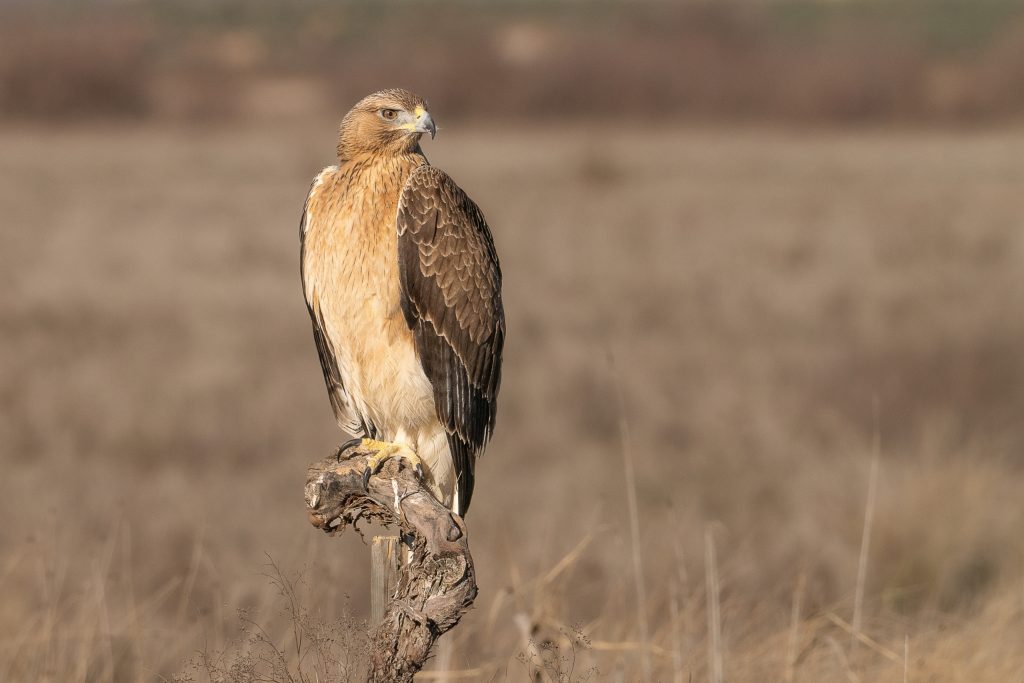
That stability was not an accident – it was the result of legislation, protected areas, dedicated researchers, and the sheer wildness that Cyprus has managed to preserve in its mountains. The Περτικοσιάχινο is not just a bird. It is a measure of how well this island is caring for its natural inheritance. And as long as it still wheels over the Troodos pines, there is reason for quiet optimism.