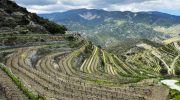
The story of Cypriot wine took a remarkable turn when the French House of Lusignan established their kingdom on the island in 1192. Guy de Lusignan received Cyprus after Richard the Lionheart conquered it during the Third Crusade, and what followed was nearly three centuries of transformation that would shape the island’s wine culture forever. The Lusignans brought French nobility, Gothic architecture, and a deep appreciation for fine wine that matched their homeland’s traditions.
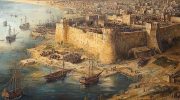
Historical Background
Wine production in Cyprus dates back over 6,000 years, but the Lusignan period gave the island its most famous legacy: Commandaria. The sweet wine previously known as Nama was produced primarily in the region around Kolossi Castle, where the Knights Templar and later the Knights of St. John established their headquarters called “La Grande Commanderie.”
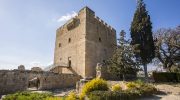
This feudal estate gave the wine its enduring name. Richard the Lionheart celebrated his wedding to Berengaria of Navarre in Limassol with this wine, declaring it “the wine of kings and the king of wines.”

The Lusignan economy relied heavily on agriculture, and wine emerged as a major export product alongside sugar and cotton. The Latin Church owned extensive estates throughout Cyprus that produced cereals, oil, and wine, with the clergy playing an important role in distributing these products, including the famous Maroa wine, to destinations outside the island such as the papal curia in Avignon. The vineyards of Limassol diocese generated substantial revenue, with historical records showing 589 bezants earned from wine sales in medieval times.
The Wine That Won Europe’s First Competition
Commandaria gained international recognition during the Lusignan era. Legend has it that in the 13th century, French King Philip Augustus held the first wine tasting competition, branded The Battle of the Wines and recorded in Henry d’Andeli’s 1224 poem, where a sweet wine from Cyprus believed to be Commandaria won the event. This victory cemented the wine’s reputation across European courts, where it became a sought-after luxury item.

The production method remained remarkably consistent with ancient traditions. Grapes are left to overripe on the vine, then laid out in the sun to increase sugar density through evaporation, with fermentation taking place in reservoirs and arresting naturally due to high alcohol levels around 15%. The wine must be aged for at least two years in oak barrels, though quality producers age it much longer.
Fascinating Details About Medieval Cypriot Wine
During Lusignan rule, wine production was so significant that it shaped the island’s economic structure. The villages producing Commandaria formed a protected designation that survives today, with only 14 specific villages permitted to produce the wine. These villages, located in the mountains above Kolossi Castle near Limassol, maintain traditions established over 800 years ago.
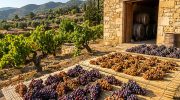
By the time the Ottoman Empire conquered Cyprus in 1571, peak production had reached modern New Zealand levels, but religious prohibition and heavy taxation reduced output dramatically. The wine was stored secretly in buried pots for home consumption during this difficult period.
The connection between Commandaria and church life runs deep. The wine became the traditional choice for Holy Communion in Cypriot churches, linking everyday worship with the island’s winemaking heritage. Medieval travelers consistently praised the wine’s richness, describing it as thick as honey and capable of aging for many years in earthenware jars.
Revival and Renaissance
British control after 1878 brought revival to the wine industry. The phylloxera epidemic that devastated European vineyards left Cyprus untouched due to strict quarantine controls, creating massive demand for Cypriot grapes and wine. Four major companies emerged: ETKO (founded 1844), KEO, LOEL, and SODAP, which dominated production throughout the 20th century.
The industry faced challenges when Cyprus joined the European Union and lost the right to call its fortified wines “Cyprus Sherry.” This crisis forced a complete restructuring. The Cyprus Wine Products Council launched reforms focused on quality over quantity, introducing new grape varieties, encouraging small regional wineries, and establishing Protected Designations of Origin based on EU regulations.
Modern Winemaking Excellence
Today, Cyprus hosts approximately 50 independent wineries that represent a remarkable transformation. Pioneers like Akis Zambartas led the charge by identifying and recording 14 lost indigenous grape varieties after years of research. His son Marcos, trained in Australia, continues this work at Zambartas Wineries in Agios Amvrosios, producing 120,000 bottles annually with a focus on native varieties like Maratheftiko and Xynisteri.

Vlassides Winery exemplifies modern approaches. Founded by Sophocles Vlassides, who studied at UC Davis in California, the winery combines new world techniques with indigenous grapes. The modernist facility in Koilani manages 21 hectares of vineyards between 700 and 1,100 meters altitude, producing 150,000 bottles yearly using gravity-fed systems and sustainable practices.
Kyperounda Winery operates Europe’s highest vineyards at 1,480 meters elevation, where the cool climate creates conditions similar to Bordeaux. The facility uses state-of-the-art equipment and maintains an underground cellar with 250 oak barrels. Their flagship Petritis wine, made from 100% Xynisteri, represents half their production.
Connection to Contemporary Cyprus
The wine industry contributes significantly to modern Cypriot identity through cultivation, employment, tourism, and cultural preservation. The movement called WineCore (Wineries of Cyprus Own-Rooted Evolution) unites 14 growers committed to defining and promoting indigenous varieties. Modern winemakers plant vineyards up to 1,535 meters elevation, where temperature swings of over 20 degrees between day and night preserve aromatics and natural acidity.
Cyprus now holds seven Protected Designations of Origin and four Protected Geographical Indications covering the major wine districts of Nicosia, Limassol, Larnaca, and Paphos. The focus on indigenous varieties like Xynisteri, Maratheftiko, Promara, and Yiannoudi highlights Cyprus’s commitment to preserving viticultural heritage while applying modern techniques.
Visiting Cypriot Wineries Today
The Troodos Mountain region offers exceptional wine tourism experiences. Most wineries welcome visitors by appointment, offering tours through facilities and vineyards followed by tastings paired with local cheeses and traditional foods. The Limassol Wine Festival each September celebrates the island’s wine heritage with tastings, music, and traditional dances.

Popular routes include the villages of Omodos, Koilani, and Agios Amvrosios, where visitors can experience multiple wineries in a single day. The Cyprus Wine Museum in Erimi village, located where archaeologists discovered 5,500-year-old wine vessels, provides historical context through exhibits, ancient jars, and audiovisual presentations documenting winemaking evolution.
A Living Legacy Worth Celebrating
Cyprus wine represents an unbroken tradition spanning millennia, with the Lusignan period establishing practices and reputations that endure today. From Richard the Lionheart’s wedding toast to contemporary boutique wineries championing indigenous varieties, the island’s wine culture connects past and present. Commandaria remains the world’s oldest named wine in continuous production, while modern producers prove that ancient grape varieties can produce world-class wines using contemporary methods. This combination of heritage and innovation makes Cypriot wine a unique expression of Mediterranean culture, worthy of discovery by anyone interested in wines with genuine historical significance and distinctive character.