Traditional Cypriot houses were designed as working systems for heat, privacy, and shared family life, using local stone, inward-facing layouts, and courtyards that cooled and organised daily routines. Over centuries, builders added layers rather than replacing the whole, blending arches, timber projections, and flexible rooms into a coherent domestic logic that still feels practical today. This article explains how courtyards, materials, and spatial features like the kamara and sachnisi made these homes resilient, and why restoration efforts aim to preserve function as well as appearance.
- Architecture That Accumulated Over Centuries
- Living inward in a demanding environment
- Courtyard as Climate Engine
- Stone Walls and Thermal Mass
- Arches That Organise Daily Life
- Wooden projections and the life above the street
- Rooms That Change Function Daily
- Sound, Light, Smell, Memory
- From necessity to living heritage
- What These Houses Still Teach
Architecture That Accumulated Over Centuries
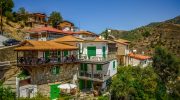
Cyprus rarely erased its past when new powers arrived. Instead, architectural ideas accumulated. Neolithic stone foundations, Byzantine masonry, Lusignan arches, Venetian defensive logic, and Ottoman wooden additions coexist within a single vernacular tradition. The traditional house became a quiet record of this continuity.
Rather than following stylistic purity, Cypriot builders reused, adapted, and layered. A medieval structure might gain an Ottoman timber projection. A Venetian urban plan might absorb domestic courtyards. The result was not uniformity, but coherence. Houses responded to climate, density, and social needs long before sustainability became a concept.
Living inward in a demanding environment
One defining feature unites almost all traditional Cypriot homes: they turn inward.
High stone walls and modest street-facing facades protected families from heat, dust, noise, and unwanted attention. Life unfolded inside, around a courtyard that functioned as both a climate regulator and a social centre. Whether in dense urban quarters or rural villages, the house formed a protected micro-world.
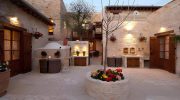
This inward orientation was not defensive paranoia. It was environmental intelligence. Shade, airflow, and privacy were more valuable than display.
Courtyard as Climate Engine
The courtyard, or avli, was never a decorative space. It was the engine of the house.
Surrounded by thick walls, it created shade throughout the day and encouraged air movement. Vegetation and water cooled the space naturally through evaporation. Rooms opened onto it strategically, allowing families to migrate through the house as temperatures changed.
Socially, the courtyard was where daily life happened. Cooking, washing, bread baking, childcare, and conversation all took place here. It blurred the line between indoors and outdoors, creating a living space that adapted to season and need.
Stone Walls and Thermal Mass
The defining material of the traditional Cypriot house is stone. Limestone and sandstone were readily available and offered a crucial advantage: thermal mass.
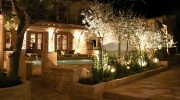
Thick stone walls absorbed heat slowly during the day and released it gradually at night. This delayed temperature change kept interiors cooler during peak heat and warmer after sunset. In an era without mechanical cooling, this passive system was essential.
In rural areas, mudbrick, known locally as plithari, was often used for upper floors. Lighter and more insulating, it complemented stone foundations while reducing structural load. Material choice followed logic, not fashion.
Arches That Organise Daily Life
Inside the traditional house, stone arches did more than support weight. They shaped how space was experienced. The kamara allowed rooms to extend without heavy timber beams and created gentle divisions that guided movement rather than restricting it.
In shared rooms, especially the dikhoro, arches separate sleeping, working, and storage areas while maintaining visual continuity. Daily life flowed beneath them, adapting as needs changed. In wealthier homes, finely cut arches carried symbolic value, yet their primary role remained practical. They distributed load, cooled interiors, and organised space quietly and efficiently.
Beyond the interior, arches framed courtyards, sunrooms, and thresholds. They marked transitions between shade and light, between rest and activity, without enforcing rigid boundaries.
Wooden projections and the life above the street
As towns grew denser, particularly during the Ottoman period, homes expanded upward rather than outward. The sachnisi, a timber projection extending over the street, emerged as an elegant solution to spatial pressure.

These wooden extensions increased upper-floor living space while shading the street below. Latticed windows captured breezes from multiple directions and allowed residents to observe public life discreetly. From within, the street could be seen without being entered. From outside, domestic life remained protected.
The sachnisi balanced participation and privacy. It acknowledged the street without surrendering to it, reflecting a social rhythm where observation, restraint, and connection coexisted.
Rooms That Change Function Daily
The traditional Cypriot house mirrored the organisation of family life. Extended families lived together across generations, and homes were designed to expand gradually as needs changed. Rooms were rarely fixed to a single function. A sleeping space could become a work area by day, or a storage room could transform during celebrations.
Inheritance patterns and dowry customs gave houses economic and emotional weight. Property was not only shelter but security. Storage chests, shared courtyards, and adaptable layouts reflected a life built around continuity rather than mobility.
While certain spaces carried gendered expectations, boundaries remained fluid. Courtyards and semi-open rooms allowed interaction that felt natural rather than exposed, balancing privacy with connection.
Sound, Light, Smell, Memory
Traditional Cypriot houses were not designed to impress the eye alone. They were designed to shape experience.
Thick stone walls softened sound, turning the noise of the street into a distant murmur. Courtyards filtered voices, footsteps, and water into a familiar domestic rhythm. Light entered gradually, bouncing off stone and timber instead of flooding rooms harshly. Smells of bread, citrus, wood smoke, and earth became part of memory.
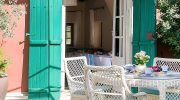
The contrast between narrow streets and bright inner courtyards created a powerful sense of arrival, one that still resonates when these spaces are entered today.
From necessity to living heritage
Today, traditional houses are no longer built out of necessity, yet their relevance has not faded. Restoration projects across villages and historic quarters aim to preserve not just their appearance, but their logic.
Many homes have been adapted for modern living through careful renovation. Plumbing, electricity, and insulation have been added, but the core principles remain intact. Courtyards still regulate temperature. Thick walls still store heat. Space still flows rather than fragments.
What These Houses Still Teach
The traditional Cypriot house offers more than historical insight. It presents a model of building that responds intelligently to climate, materials, and social life.
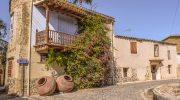
At a time when sustainability is often framed as innovation, these houses remind us that resilience once emerged from restraint, patience, and accumulated knowledge. They endure not because they are picturesque, but because they continue to work.