Cherry blossoms, known in Japanese as sakura, are among the most recognized natural spectacles in the world. Every spring, these trees produce large pink and white flowers that last only a few weeks before falling. In Japan, the bloom season draws millions of visitors each year and holds deep cultural significance.
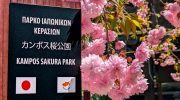
Cyprus may seem like an unlikely place to find sakura, but a small mountain village in the Nicosia district has changed that. Today, Cyprus has its own dedicated Sakura Park, where both Japanese and local cherry trees bloom side by side each spring, offering visitors a genuinely rare experience on the island.
How Sakura Came to Cyprus
The village of Kambos, already well known for its cherry orchards, was selected as the most suitable location for the park. It sits in the northwestern part of the Marathasa valley in the Nicosia district, at an altitude of around 900 meters above sea level. The cooler temperatures at that elevation create conditions close enough to what Japanese cherry trees need to thrive.
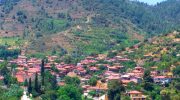
The Sakura Park in Kambos was inaugurated in 2022 as part of the celebrations marking 60 years of diplomatic relations between Cyprus and Japan. The park was established on the initiative of then Japanese Ambassador Iseki Izumi. It was a joint effort between the Japanese Embassy and Cyprus’s Forestry Department, and it stands as a visible symbol of the friendship between the two countries.
What Sakura Actually Looks Like
Sakura trees belong to the Prunus family and are ornamental cherry trees, meaning they are grown for their flowers rather than their fruit. Cherry blossoms carry a faint vanilla-like scent, which comes from a natural compound called coumarin. The flowers are typically pink or white, and they appear in dense clusters along the branches before the leaves come out, which gives the trees their distinctive full, cloud-like look.
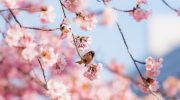
Most of the ornamental cherry trees planted in parks around the world are cultivars developed specifically for viewing, bred from wild species over centuries. Japan has produced hundreds of varieties through selective cultivation since the Heian period, roughly the 8th to 12th centuries.
Facts Worth Knowing About Sakura
Almost 8.5 million tourists visit Japan during the cherry blossom season between March and May. That figure alone gives a sense of how seriously the bloom is taken.
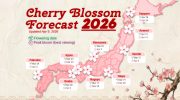
The Japanese Meteorological Agency tracks what is called the “cherry blossom front” each year, a line that moves northward across Japan as temperatures rise, and daily forecasts follow its progress.
The tradition of gathering under cherry trees, known as hanami, dates back over a thousand years to the Heian period, when the imperial aristocracy would meet to admire the blossoms and compose poetry. Over time it became a national custom practiced by everyone.
In Cyprus, cherry blossoms and cherry fruit in the mountain villages tend to bloom at nearly the same time, which is unusual compared to many other regions.
What Sakura Represents in Japanese Culture
Cherry blossoms are seen as a symbol of the transient nature of life, a concept rooted in the Buddhist idea of “mono no aware,” which acknowledges both beauty and impermanence together. The flowers bloom for only a week or two, and their brief appearance is precisely what gives them meaning. In Japan, the blossom season also coincides with the end of the school year and the start of new careers, making it a time associated with transitions and fresh starts.
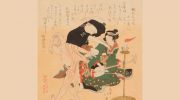
The cherry blossom image appears throughout Japanese culture, from traditional woodblock prints to modern manga and everyday objects like lunch boxes.
Sakura in Cyprus Today
Sakura Park in Kambos has been enriched with Japanese and rare local plants, making it a site worth visiting beyond the bloom season as well. It sits near the village’s old spring, the traditional olive mill, an exhibit of decorative gourds, and the only park in Cyprus with wild ducks.

Since 2024, an annual Sakura Cherry Blossom Festival has been organized at the park, run by the Kampos Community Council together with the Japanese Embassy and the Kampos Cultural Development Association. The 2025 edition took on additional meaning because it fell on Lazarus Saturday, the day before Palm Sunday in the Orthodox calendar, connecting the Japanese tradition with a local religious occasion.
Visiting Sakura Park in Kambos
The bloom period runs from late March to early April, and the flowers last around three weeks.The park is located in the heart of the village, at around 650 meters elevation, surrounded by pine trees and the wider landscape of the Troodos foothills.
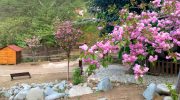
The annual festival brings food, music, and activities for all ages, and the Japanese Embassy typically sends a representative. Outside of the festival, the park remains accessible and the broader village offers taverns, a folklore museum, nature trails, and proximity to Kykkos Monastery, one of the most important monasteries on the island.
A Rare Combination Worth Seeing
Kambos is the only place in Cyprus where you can see Japanese sakura trees in a dedicated setting. The park is small by global standards, but its story is genuinely interesting. It was born out of a diplomatic milestone, planted on terrain that Cyprus’s cherry-growing history made suitable, and has grown into an annual event that brings together two very different cultures around a shared appreciation for nature. For anyone on the island in late March or early April, the drive into the mountains to see the blossoms is a short one, and the setting in the Troodos foothills makes it well worth the visit.