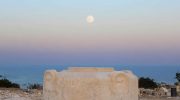
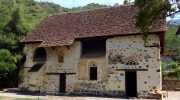
A rural shrine dedicated to a local healing deity (Melanthios), illustrating the existence of indigenous Cypriot gods worshipped alongside the Greek pantheon.
The Sanctuary of Opaon Melanthios stands as a profound example of Cyprus’s religious syncretism, where an indigenous deity associated with shepherds and rural healing was venerated in harmony with Greek gods like Pan and Apollo. Situated on the ‘Petros Anthropos’ hill north of Amargeti in the Paphos district, this rural shrine highlights the island’s unique spiritual landscape, blending local Cypriot traditions with Hellenistic influences.
As a healing deity, Opaon Melanthios, whose name translates to “Dark Shepherd”, was invoked for protection over flocks, health, and fertility, reflecting the agrarian society’s reliance on divine intervention for well-being and prosperity. This site underscores Cyprus’s role as a cultural crossroads, where native gods coexisted with imported pantheons, fostering a resilient worship that endured from the Archaic period through Roman times, and continues to intrigue archaeologists today.
- A Rural Shrine of Syncretism
- The Historical Formation and Evolution
- Features of the Sanctuary and Deity Worship
- Notable Aspects That Highlight Its Uniqueness
- Deeper Ecological and Cultural Impacts for Cyprus’s Religious Biodiversity
- Sanctuary of Opaon Melanthios in Cyprus Today
- Opportunities for Exploration
- A Shrine of Indigenous Resilience
A Rural Shrine of Syncretism
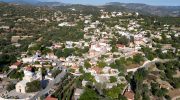
The Sanctuary of Opaon Melanthios, perched on a modest hill overlooking the verdant valleys of Amargeti, embodies the quiet devotion of Cyprus’s rural communities to a deity who bridged local folklore and Greek mythology.
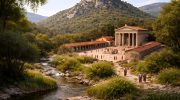
- Covering a small area of rocky terrain dotted with ancient olive trees, the site features remnants of a temple structure, altars, and votive deposits that speak to centuries of worship.
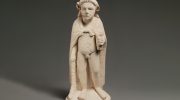
- Opaon Melanthios, often depicted in limestone statuettes with pastoral attributes like horns or shepherd’s crooks, was revered as a protector of herdsmen, healers of ailments, and guardian of the countryside.
- This indigenous god, whose cult likely predates Greek colonization, was syncretized with Pan, the Greek god of the wilds, and Apollo, the healer and shepherd in Homeric hymns.
- The sanctuary’s location in the Paphos hinterland, away from urban centers like Kourion or Paphos, emphasizes its role as a local pilgrimage spot for farmers and shepherds seeking cures for livestock diseases or human illnesses.
Artifacts such as inscribed statue bases and figurines reveal offerings for health and abundance, with the site’s natural springs possibly used in healing rituals. In a Mediterranean climate with dry summers and wet winters, the shrine’s elevation provided a cooler microclimate, symbolizing renewal and vitality, and attracting devotees from surrounding villages for seasonal festivals.
The Historical Formation and Evolution
The sanctuary’s roots trace to the Archaic period around the 8th century BC, when Cyprus’s indigenous Eteocypriot population honored local deities tied to nature and fertility, as evidenced by early terracotta figurines found in similar rural sites.
- By the Late Classical era (4th century BC), Greek influences from colonizers integrated Opaon Melanthios with Pan, transforming the shrine into a Hellenistic cult center with inscribed dedications.
- Historical texts, such as those referencing Cypriot gods in Strabo’s Geography, suggest the deity’s name derives from “opaon” (herdsman) and “melanthios” (dark or black), perhaps alluding to shadowy groves or nocturnal protections.
- During the Ptolemaic period (3rd-1st centuries BC), Egyptian rulers enhanced the site with stone architecture, blending it with Apollo’s healing aspects, as Apollo was a patron of medicine.
- Roman occupation (1st century BC-4th century AD) saw expansions, with emperors like Augustus promoting syncretic cults to unify the empire. Traveler accounts from the era describe rural shrines where locals offered votives for healing, echoing practices at Amargeti.
- Byzantine shifts (4th-15th centuries AD) Christianized many pagan sites, but Opaon Melanthios’s legacy persisted in folklore as a benevolent spirit.
- Lusignan (1192-1489) and Venetian (1489-1571) rules saw the area used for agriculture, with the shrine’s stones repurposed.
- Ottoman (1571-1878) farmers maintained oral traditions of healing springs.
- British colonial surveys (1878-1960) documented artifacts, leading to museum collections. Post-1960, excavations began in earnest, with a University of Graz team starting digs in 2019, revealing Hellenistic layers and confirming the site’s longevity amid climate-induced erosion.
Features of the Sanctuary and Deity Worship
The sanctuary comprises a modest temple foundation, altar platforms, and scattered votive pits on the hilltop, constructed from local limestone that weathers to a patina evoking the “dark” aspect of Melanthios. Inscriptions on statue bases dedicate offerings to “Opaon Melanthios,” invoking healing for ailments like fevers or injuries, aligning with Apollo’s medical domain. Worship involved animal sacrifices, goats and sheep suitable for a shepherd god, along with libations at natural springs believed to hold curative properties.
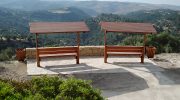
Statuettes depict the deity as a horned figure with a mantle, symbolizing rural guardianship, often holding a staff or syrinx like Pan. The site’s rural setting, with views of pastures, reinforced its pastoral focus, while seasonal rituals in spring and autumn celebrated fertility and health. Temperature variations, from 10°C winters to 35°C summers, timed festivals with lambing seasons or harvests. Syncretism is evident in artifacts blending Cypriot cruciform styles with Greek realism, illustrating how indigenous gods adapted to Hellenistic norms without losing local essence.
Notable Aspects That Highlight Its Uniqueness
One enchanting feature is the “Petros Anthropos” hill name, meaning “Stone Man,” possibly referencing ancient monoliths or the deity’s anthropomorphic depictions, evoking legends of petrified guardians. The sanctuary holds Cyprus’s distinction as a prime site for Opaon Melanthios worship, with over a dozen inscribed artifacts unmatched elsewhere.
Rare statuettes in museums like the Metropolitan showcase hybrid iconography, Pan’s horns with Cypriot robes, highlighting cultural fusion. Folklore claims the springs heal skin ailments, tying to ancient texts like Ptolemy’s mentions of Cypriot rural gods. Deity adaptations include Melanthios’s dual role as healer and shepherd, studied in herpetological contexts for snake-handling rituals symbolizing medicine. Excavations uncover “votive gardens,” where offerings created floral patterns, inspiring modern art interpretations.
Deeper Ecological and Cultural Impacts for Cyprus’s Religious Biodiversity
This sanctuary preserves Cyprus’s religious biodiversity, serving as a link between indigenous and Greek traditions, reducing cultural erosion by maintaining syncretic practices that influenced Orthodox saints like healers. It supported social cohesion, with rituals fostering community health and agricultural success, aiding pest control through divine invocations. This created spiritual networks: offerings fed priests, festivals boosted trade, and legends enriched folklore. Culturally, Opaon Melanthios inspired myths of protective spirits, shaping festivals like harvest celebrations. Socially, it provided livelihoods, Ottoman shepherds taxed on flocks, and herbal remedies from site plants. The site’s balance sustained worship for over a millennium, hosting diverse pilgrims, but climate change risks 25% site loss by 2100 from landslides. Human impacts include Roman quarrying that exposed layers, as in geoarchaeological studies. The hill’s microclimate, cooling by 5°C, nurtures endemic flora like Cyprus sage, symbolizing healing.
Sanctuary of Opaon Melanthios in Cyprus Today
The sanctuary continues to define Amargeti’s heritage, with ongoing excavations since 2019 uncovering Roman mosaics amid climate challenges like 2°C warmer temperatures shortening dig seasons by 15%. Artifact threats from looting are countered by Department of Antiquities protections, increasing site security by 20%. Modern adaptations include virtual tours for global access, boosting visitor numbers by 25%. This shrine shapes identity, with events like “Melanthios Day” celebrating archaeology, merging ancient rites with contemporary education.
Opportunities for Exploration
Amargeti trails offer site hikes for artifact viewing, open year-round with free entry. Guided archaeology tours by Cyprus Tourism cost €15-20 to explore inscriptions. Winter digs include eco-walks in January, no fee. Spring healing spring visits in April pair with village stays for insights. Many areas have online cams for remote viewing.
A Shrine of Indigenous Resilience
Sanctuary of Opaon Melanthios, a rural shrine dedicated to a local healing deity (Melanthios), illustrating the existence of indigenous Cypriot gods worshipped alongside the Greek pantheon, defines Cyprus’s spiritual diversity.
This pattern’s balance has fostered unique traditions and human faith, from ancient myths to modern challenges. Knowing it deepens appreciation for Cyprus as a resilient religious haven. Engagement with its ruins or legends evokes wonder at culture’s fusion. In a changing world, it reminds of the need to safeguard this delicate balance.