Asinou Church (Panagia Phorviotissa), near Nikitari in the Troodos foothills, preserves one of the Mediterranean’s most complete sequences of Byzantine wall painting, built up in phases from the 12th to the 17th century. Its modest scale, secluded setting, and protective timber roof helped the frescoes survive when many urban churches were altered or lost. This article explains how the church evolved, how its painted program is structured, and what its layered imagery reveals about faith, community life, and historical change in Cyprus.
A Church Protected by Its Own Isolation
Asinou sits in the foothills of the Troodos range, away from coastal cities and major trade routes. That distance shaped its survival. While many urban churches were altered, damaged, or rebuilt, Asinou remained relatively untouched, sheltered by geography as much as intention.
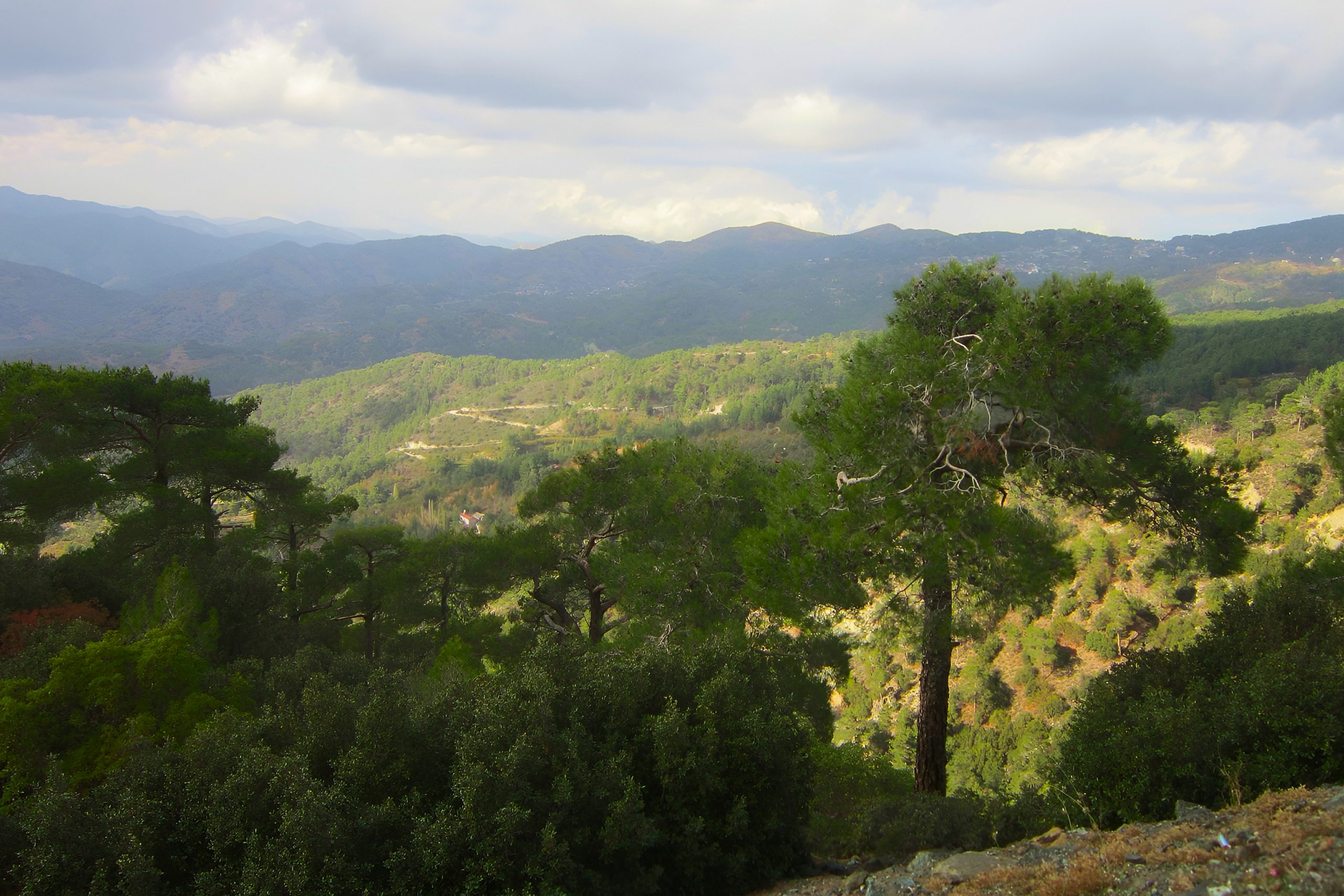
The setting still feels deliberate. Almond trees and pines surround the church, and the valley softens sound. This sense of removal is not accidental. Byzantine monasteries often sought quiet landscapes where spiritual life could unfold without interruption. At Asinou, that isolation became a form of protection, preserving paintings that would otherwise have been lost.
Why It Is Called Panagia Phorviotissa
The church’s formal name, Panagia Phorviotissa, refers to the ‘Monastery of Forvion’ (or ‘of the vetches’/’of the spurges’), a title linked to rural life and the surrounding landscape. It hints at a devotion shaped by agriculture, seasons, and survival rather than urban ceremony.
Locally, the church is simply known as Asinou, a name tied to an earlier settlement in the area. Like many places in Cyprus, its identity comes from continuity rather than reinvention. Names changed slowly, meanings accumulated, and nothing was designed for visitors. That is part of what gives the site its authenticity.
Built Small, Built to Endure
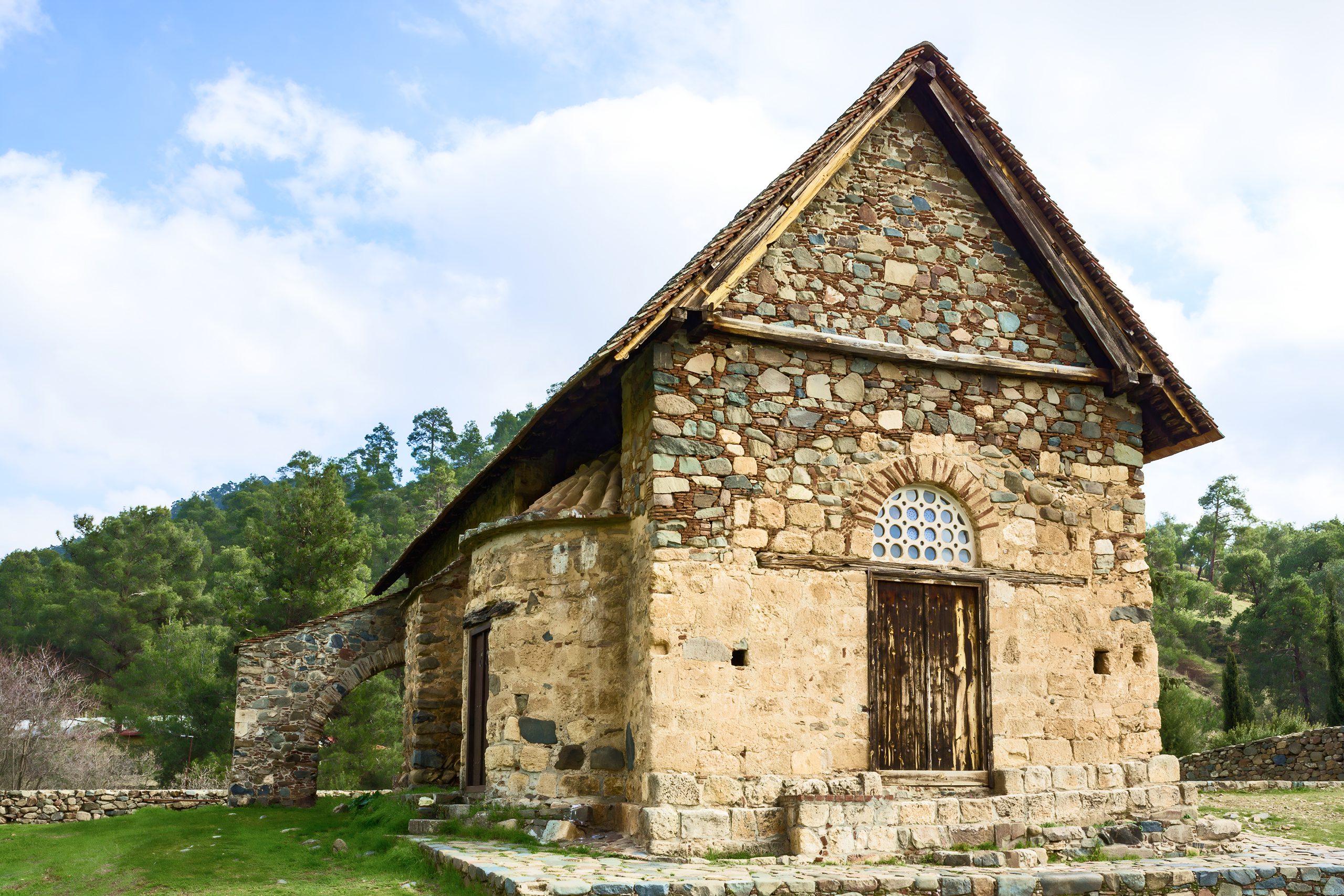
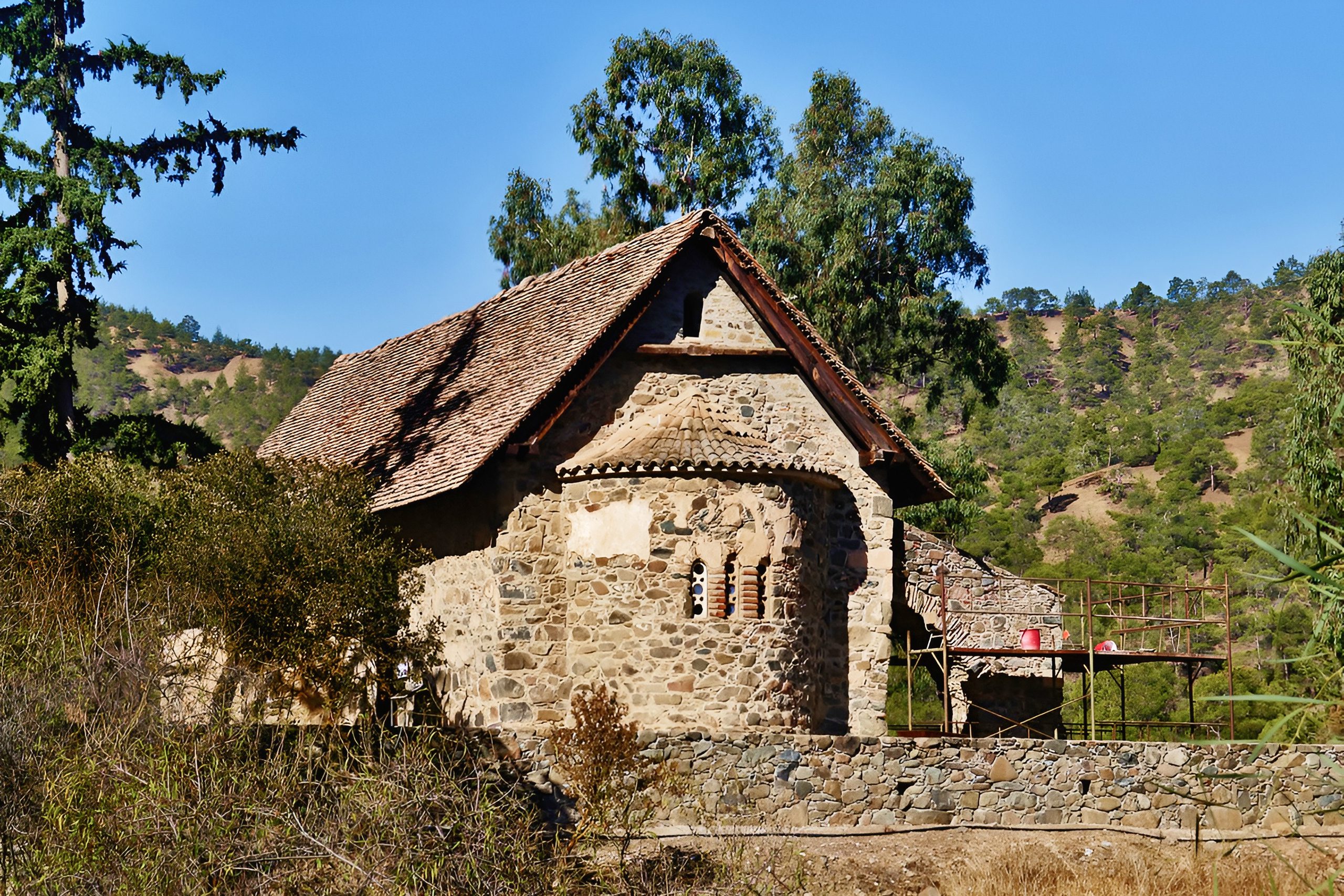
The core of the church was built in 1099 as a single-aisled structure with a barrel-vaulted roof. Later additions, including a narthex and external buttressing, were responses to time, earthquakes, and climate rather than ambition.
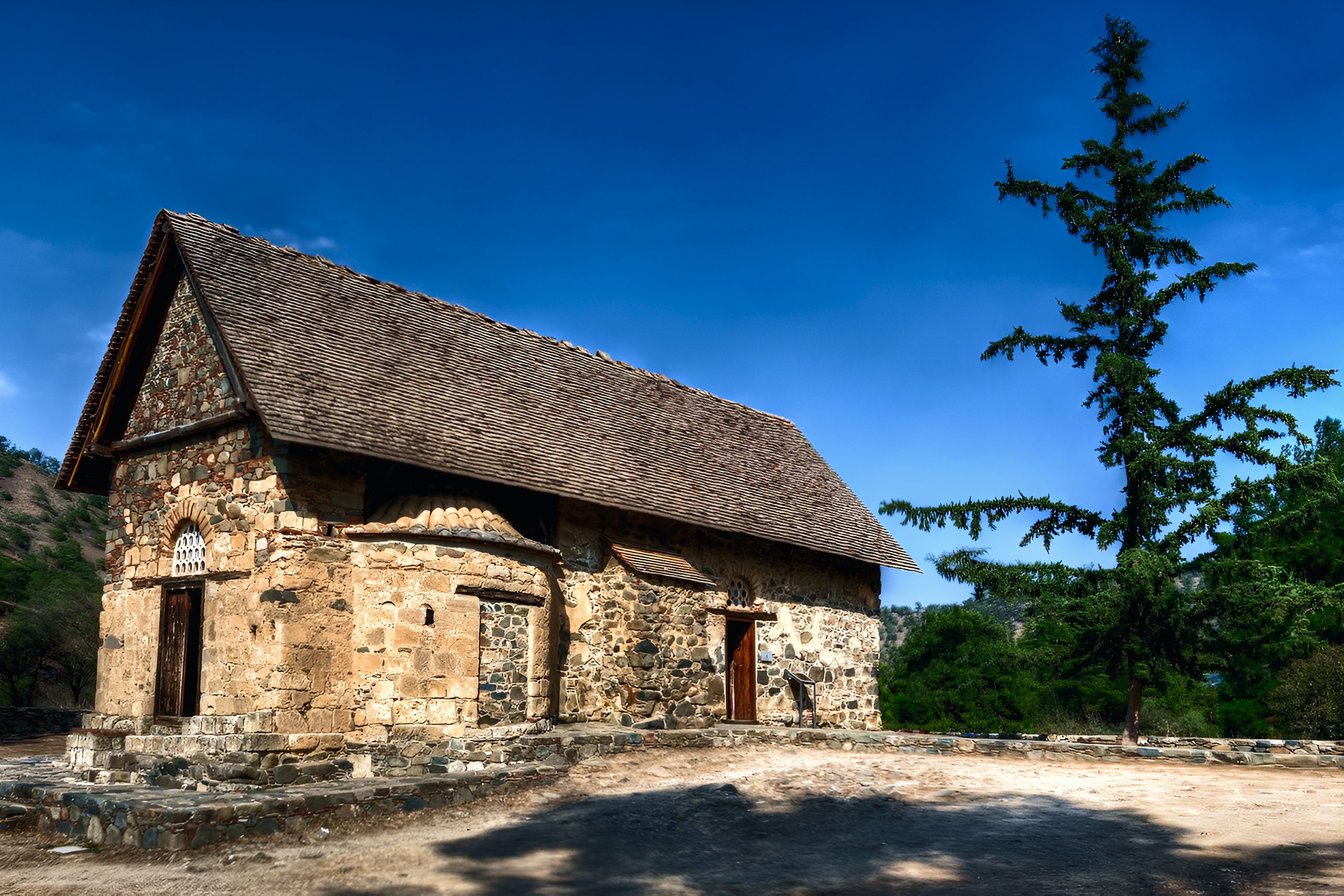
One feature defines its exterior: the steep, timber roof that sits above the stone vaults. This “double roof” is typical of the Painted Churches of the Troodos region. It was not decorative. It was practical, designed to protect the interior from snow, rain, and humidity. Without it, the frescoes would not have survived.
The Double Roof That Protected Paint
Inside, the scale changes completely. Every wall, arch, and vault is covered in frescoes, painted in distinct phases between the 12th and 17th centuries. Together, they form a continuous visual theology rather than a collection of separate artworks.
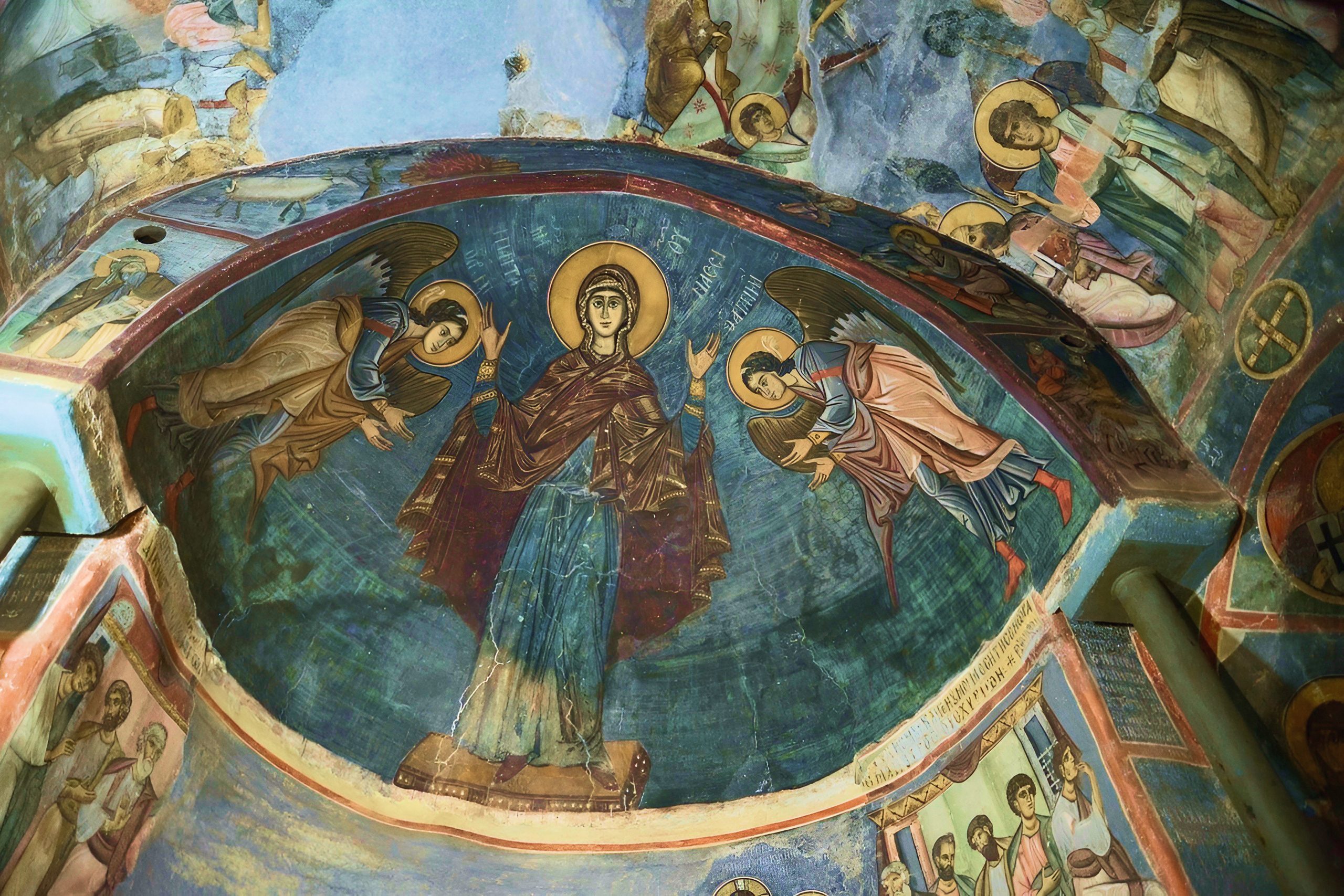
The earliest paintings, dating to 1105–1106, are among the finest examples of Middle Byzantine art. Figures are calm but intense, carefully proportioned, and deeply expressive without exaggeration. Faces feel present rather than symbolic, giving the space a strong emotional pull.
Later layers did not replace earlier ones. They were added alongside them, creating a rare visual timeline of how Byzantine art evolved under changing political and cultural conditions.
Stories Written Across the Walls
The frescoes at Asinou follow a carefully structured visual logic that mirrors the spiritual priorities of Byzantine worship. Scenes from the life of Christ unfold across the vaults, guiding the eye upward and forward, while saints, martyrs, and donors occupy the walls at human level. In the sanctuary, the imagery turns inward, centring on the Virgin Mary and the Eucharist, reinforcing the theological core of the space.
What makes these paintings especially compelling is their attention to detail and emotion. A small inscription error in the Resurrection scene famously labels Abel as “Cain,” a quiet human mistake preserved rather than corrected. Elsewhere, suffering is conveyed without theatrical excess. In the depiction of the Forty Martyrs of Sebaste, bodies lean and strain against the cold, their endurance expressed through posture and restraint rather than spectacle.
These images were not created to impress strangers. They were designed to surround a small community, teaching through repetition and familiarity, shaping belief gradually over years of worship rather than moments of awe.
When East Meets West in Paint
By the 14th century, Cyprus had passed into Latin rule, and Asinou absorbed that political shift without losing its visual identity. Frescoes added to the narthex from this period show subtle Western influences in clothing, facial modelling, and composition. These elements do not dominate the space. Instead, they are carefully folded into an existing Byzantine framework.
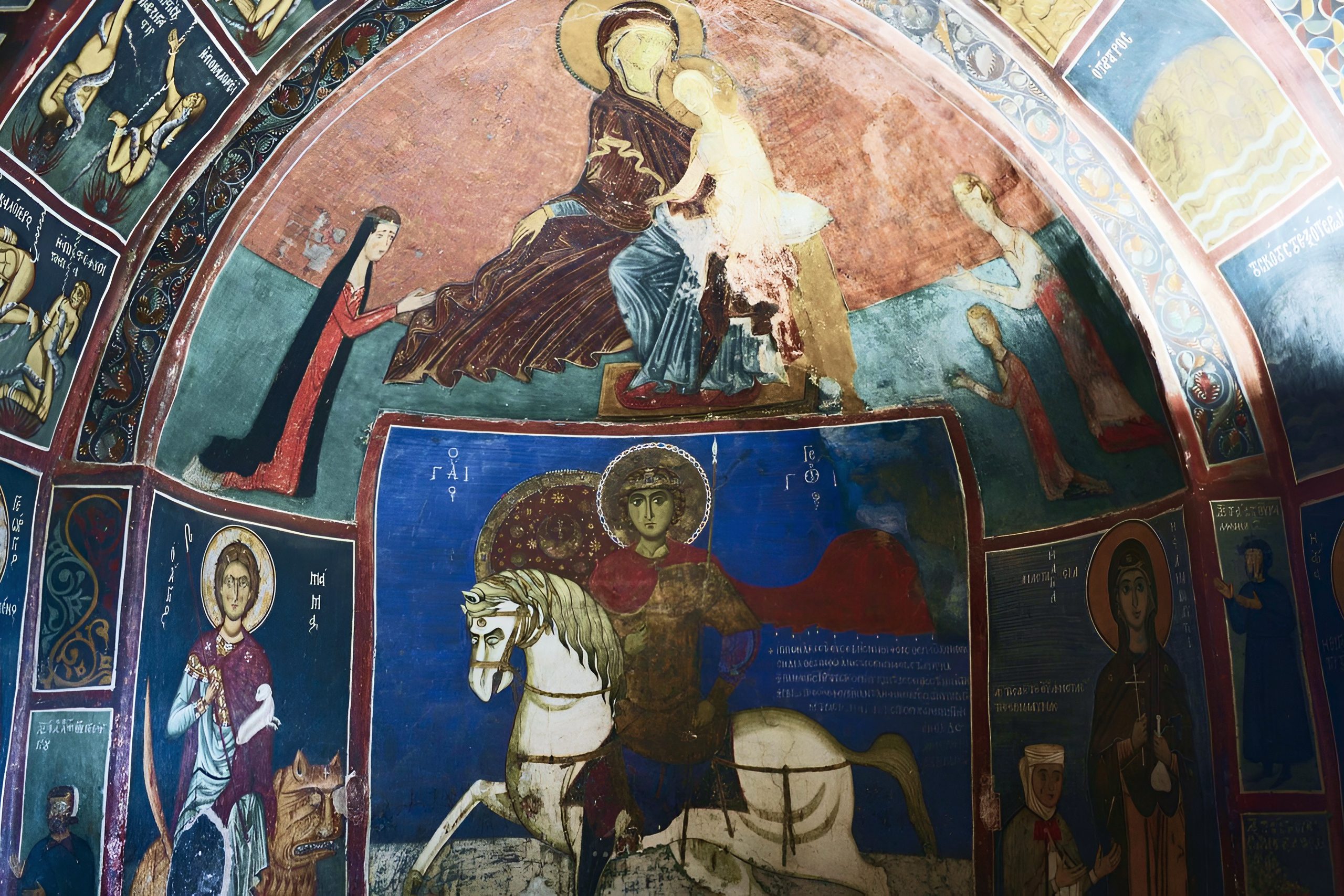
One of the most striking examples is the Virgin of Mercy, shown extending her cloak over a group of donors. Among them are figures believed to represent displaced families from the eastern Mediterranean, suggesting that the church also served as a quiet record of migration and refuge. In this way, Asinou documents social history alongside sacred narrative, without separating the two.
Worship First, Tourism Second
Despite its historical importance, Asinou has never been frozen in a museum state. It remains an active place of worship, and that status shapes how it is experienced today. Access is controlled, photography inside is restricted, and visitors are expected to approach the space with care.
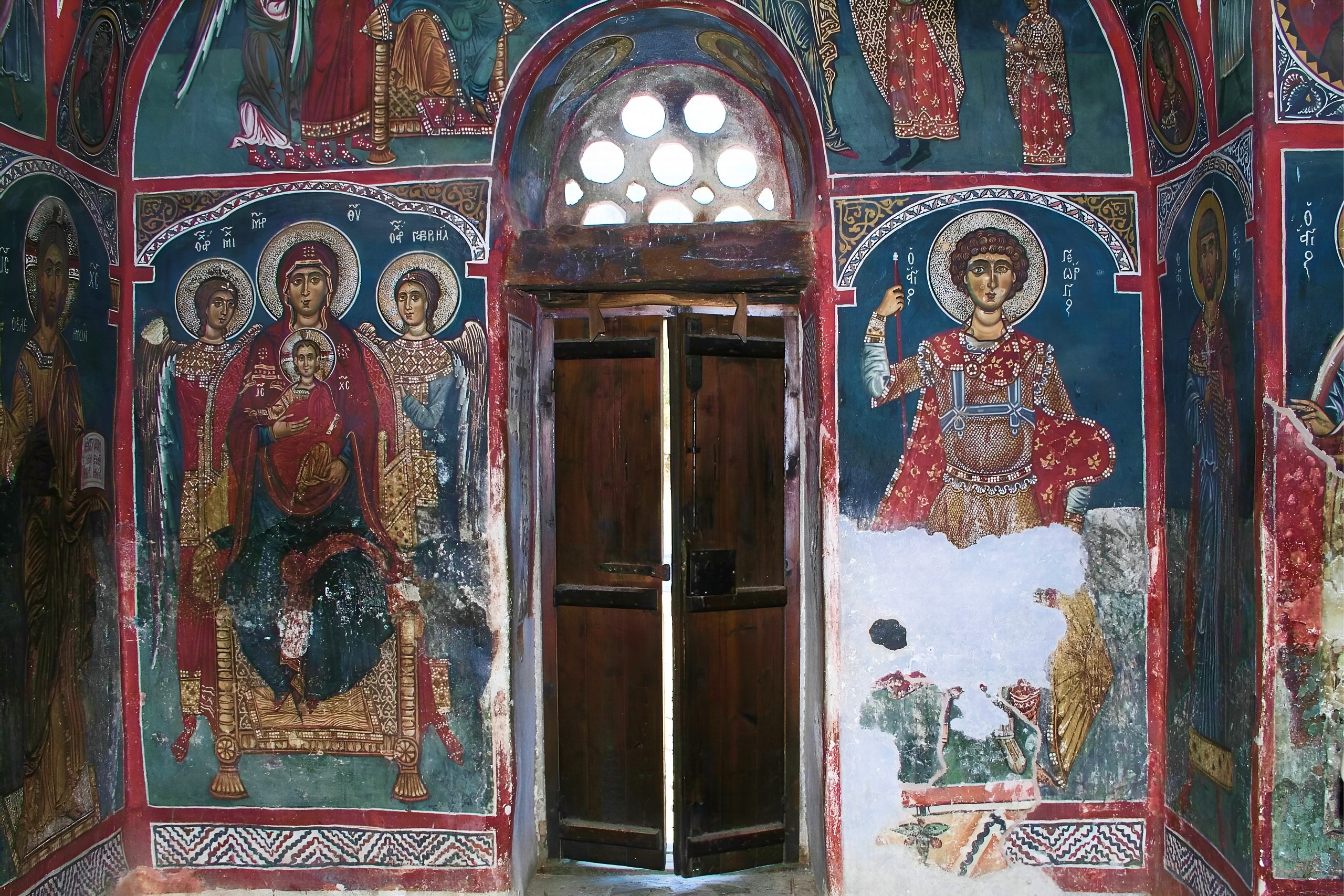
These measures are practical rather than ceremonial. The frescoes are sensitive to light, humidity, and temperature. Conservation efforts, particularly those undertaken in the mid-20th century, focused on stabilisation rather than reconstruction. Hidden layers were revealed carefully, damage was arrested rather than disguised, and the structure was reinforced without altering its character.
What survives is not a restored ideal, but an authentic accumulation of time.
Conservation Without Rebuilding
Asinou matters because it shows what happens when art is allowed to remain in place, absorbing centuries instead of being replaced by them. Within its walls are five hundred years of belief, anxiety, devotion, and adaptation, all layered within a single, modest mountain building.
As part of the UNESCO-listed Painted Churches of the Troodos region, it is often discussed in terms of heritage. Yet its real power lies elsewhere. Standing inside Asinou feels less like visiting a monument and more like stepping into a complete worldview, one where faith was experienced visually, collectively, and repeatedly.
You leave without memorising dates or names. What stays with you is something quieter. A sense of how deeply art once shaped spiritual life in Cyprus, patiently and continuously, without spectacle, and without interruption.