Explore Cyprus with Our Interactive Map

Explore our top stories and discover ideas worth your time.

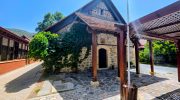
Pierides Museum Cyprus

Pierides Museum Cyprus

The Pierides Museum is the oldest private museum in Cyprus and operates in the ancestral home of the Pierides family, a colonial-style mansion built in 1825. The institution houses more than 2,500 artifacts that document 9,000 years of Cypriot civilization. The collection was initiated by Demetrios Pierides in the 19th century (1811-1895), with the aim of protecting and preserving Cyprus' antiquities and preventing the loss of the island's history. Today the museum functions under the management of the Bank of Cyprus Cultural Foundation and serves as a testament to five generations of dedicated collecting. The building sits in the heart of Larnaca and provides visitors with a journey through the major periods of Cypriot prehistory and history. Historical Context Demetrios Pierides was a Greek Cypriot banker, vice consul of Great Britain and collector of ancient Cypriot artifacts. Born in 1811, he studied history and literature in England and served as a private tutor of Greek for the Duke of Sutherland before becoming a professor of English language in Greece. He was the Director of Ottoman Bank in Larnaca and participated in an 1849 expedition led by Royal Navy Captain T. Graves to compile the first proper map of Cyprus. Demetrios Pierides began purchasing artifacts to preserve them and keep them in Cyprus rather than allowing foreign dealers to remove the…

Read more
Church of Stavros tou Agiasmati Wall Painting

Church of Stavros tou Agiasmati Wall Painting

The Church of Stavros tou Agiasmati, situated in the Troodos Mountains near the village of Platanistasa, is one of the monuments included in the UNESCO World Heritage group known as the Painted Churches of the Troodos Region. Dating to the late 15th century, the church represents a mature phase of Cypriot ecclesiastical art during a period of political change and cultural interaction. Its decoration is attributed to the painter Philip Goul, a master whose work reflects the continued vitality of Orthodox artistic traditions under Venetian rule. The church’s importance lies in the completeness and narrative richness of its fresco cycle, which preserves a vivid visual expression of late medieval theology and devotion. ayda-ru During the 15th century, Cyprus stood at a crossroads between Byzantine heritage and Western influence. Although the island was under Venetian administration, Orthodox communities maintained their religious and artistic traditions. Stavros tou Agiasmati embodies this continuity, demonstrating that rural mountain churches remained centers of creative expression and theological instruction. Its remote location contributed to the preservation of its paintings, allowing modern viewers to experience a nearly intact example of late medieval Cypriot religious art. Architectural Form and Environmental Adaptation Architecturally, the church follows the characteristic Troodos mountain type: a small, single-aisled structure built of local stone and covered by a steeply pitched wooden roof. This roof, extending…

Read more
Famagusta, Cyprus – History & Facts

Famagusta, Cyprus – History & Facts

Famagusta sits on the eastern coast of Cyprus, surrounded by two miles of massive stone walls built when Venice controlled the Mediterranean. The old town contains ruins of over 300 churches from an era when the city rivaled Constantinople in wealth. During the Middle Ages, this port served as the gateway between Europe and the Levant, where merchants traded silks and spices in multiple languages. The deepest harbor in Cyprus made Famagusta essential for naval powers across eight centuries of occupation by Crusaders, Venetians, Ottomans, and the British. The city was founded around 274 BCE by Ptolemy II after an earthquake damaged nearby Salamis. Originally called Arsinoe after the Ptolemaic queen, the settlement grew from a small fishing village into a major commercial hub. By the 14th century, Famagusta had become one of the wealthiest cities in the known world. Today, the fortified old town preserves Gothic cathedrals, Venetian bastions, and Ottoman mosques within walls that still bear scars from a siege that lasted nearly a year. Historical Background Famagusta rose to prominence after the fall of Acre in 1291. When Crusaders lost their last stronghold in the Holy Land, merchants and nobles fled to Cyprus. The Lusignan Kingdom ruled the island, and Famagusta became its richest port. Ships carrying goods from Syria, Egypt, and Palestine anchored in the deep…

Read more