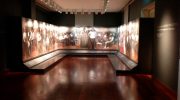
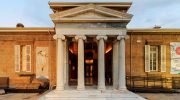
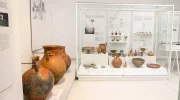
The Pierides Museum is the oldest private museum in Cyprus and operates in the ancestral home of the Pierides family, a colonial-style mansion built in 1825. The institution houses more than 2,500 artifacts that document 9,000 years of Cypriot civilization.
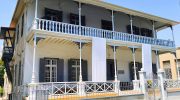
The collection was initiated by Demetrios Pierides in the 19th century (1811-1895), with the aim of protecting and preserving Cyprus’ antiquities and preventing the loss of the island’s history.
Today the museum functions under the management of the Bank of Cyprus Cultural Foundation and serves as a testament to five generations of dedicated collecting. The building sits in the heart of Larnaca and provides visitors with a journey through the major periods of Cypriot prehistory and history.
Historical Context
Demetrios Pierides was a Greek Cypriot banker, vice consul of Great Britain and collector of ancient Cypriot artifacts. Born in 1811, he studied history and literature in England and served as a private tutor of Greek for the Duke of Sutherland before becoming a professor of English language in Greece.
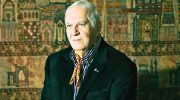
He was the Director of Ottoman Bank in Larnaca and participated in an 1849 expedition led by Royal Navy Captain T. Graves to compile the first proper map of Cyprus. Demetrios Pierides began purchasing artifacts to preserve them and keep them in Cyprus rather than allowing foreign dealers to remove the island’s cultural heritage.
European intellectuals who knew him called him “The Wise Greek” for his scholarship, and he wrote scientific articles on Cypriot antiquities in both English and French. His father Pierakis, a merchant and landowner, was hanged by Turkish authorities on July 10, 1821 as punishment for the Greek uprising. The family motto is “Emmenein,” which translates to “Persistence.”
Key Holdings and Exhibition Halls
Objects on display date from 4000 BC to the 15th century AD, and are an important testimony to a centuries-old civilization that flourished in Cyprus. The museum divides its collection across five halls. Hall 1 presents prehistoric finds from approximately 7000 to 475 BC. Hall 2 displays objects from the Archaic to Roman times.
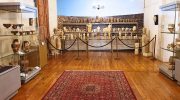
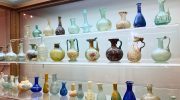
Hall 3 features cartography from the mid-15th century through 1960, including old maps and charts of Cyprus and the Eastern Mediterranean. Halls 4 and 5 exhibit Hellenistic and Roman glass collections, along with Franconian ceramics. Prized items in the collection are the red polished ware from the Early Bronze Age, Roman glassware, and medieval ceramic dishes.
The Roman glass collection ranks among the most important in Europe. Red Polished Ware, first identified by archaeologist Porphyrios Dikaios in 1942, represents a significant change in Cypriot ceramic tradition and marks the transition from the Chalcolithic to the Bronze Age between 2450 and 2200 BC.
Remarkable Pieces Worth Attention
The museum’s Roman glassware demonstrates the delicacy and sophistication of ancient glass production techniques. Many vessels survived intact despite their extreme fragility, showcasing burial practices that protected valuable grave goods. The medieval ceramic dishes reflect Cyprus’s position as a crossroads between East and West during the Byzantine and Frankish periods.
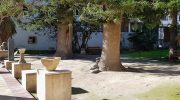
The courtyard displays Modern Greek and Cypriot sculptures, connecting ancient traditions with contemporary artistic expression. The museum also has a tactile exhibit station for persons with a sensory disability to explore the island’s history using different senses. This inclusive feature allows visually impaired visitors to experience the texture and form of archaeological replicas.
Five Generations of Collecting
After Demetrios Pierides died in 1895, his sons Zeno (1839-1911) and Kyprael (1852-1928) inherited his archaeological collections. The collection passed through Demetrios Z. Pierides, Consul for Austria, who preserved it and handed it to his son Zeno D. Pierides (1900-1967).
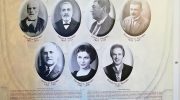
Zeno D. Pierides added the Roman glass collection and Medieval glazed pottery from the Byzantine period, plus an important collection of old Cyprus maps. He served as Mayor of Larnaca, Vice President of the Greek Communal Chamber (Parliament), Consul General for Sweden, and Consul for Germany.
When Zeno died in 1967, his wife Theodora Z. Pierides (1904-2001) devoted herself to preserving the archaeological collection and decided to open it to the public in 1974. She created the Pierides Foundation with her son Demetrios Z. Pierides II, who continued the family tradition as Consul General in Sweden. Today Peter H. Ashdjian, born in 1978, manages the museum as the eighth generation of the Pierides family.
Current Role in Cypriot Culture
The museum operates as part of the Bank of Cyprus Cultural Foundation, which was established in 1984. The Foundation manages three museums: the Pierides Museum in Larnaca, the Museum of the History of Cypriot Coinage in Nicosia, and the Museum of the George and Nefeli Giabra Pierides Collection in Nicosia. The Pierides Museum connects to the Aphrodite Cultural Route, integrating it into broader cultural tourism initiatives.
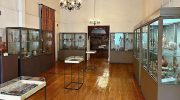
Educational programs for primary and secondary school students run regularly with approval from the Ministry of Education and Culture. The museum hosts annual children’s educational programs and occasionally features special exhibitions and cultural events. Free brochures are available in six languages: Greek, Italian, English, French, German, Russian, and Swedish. The institution demonstrates how private initiative can preserve national heritage and make it accessible to the public.
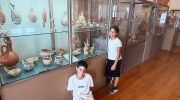
Visiting the Historic Residence
The museum operates Monday through Thursday from 9:00 to 16:00 and Friday to Saturday from 9:00 to 13:00. Adult admission costs €3.00, children and students pay €1.00, and groups of 10 or more receive a special price of €2.00 per person.
Limited parking is available upon request, and the museum is accessible to wheelchair users by prior arrangement. The museum shop sells replicas of antiquities, ceramics, jewelry, maps, books, and postcards, accepting both cash and credit cards. Most visitors spend one to two hours exploring the exhibits.
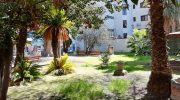
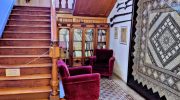
The colonial mansion itself serves as part of the experience, with araucaria trees in the garden that are 154 years old. Virtual tours are available online as part of the Larnaka Virtual Museums project. The museum sits near the Finikoudes Promenade and Larnaca’s beaches, making it convenient to combine with other city attractions.
Why This Collection Matters Today
The Pierides Museum represents more than archaeological preservation. It demonstrates how individuals can protect cultural heritage during periods when antiquities face threats from looters and dealers. The family’s persistence across five generations shows commitment to Cyprus’s identity and history.
The collection provides evidence of Cyprus’s central role in Mediterranean trade, cultural exchange, and artistic development across millennia. The artifacts document technological innovations in pottery, glassmaking, and metalwork. The cartography collection reveals how European powers viewed and mapped Cyprus throughout history, reflecting the island’s strategic importance.
The museum makes sophisticated archaeological material accessible to general audiences without requiring specialist knowledge. By remaining in private hands while accepting public responsibility, the Pierides Museum offers a unique model of heritage stewardship that balances family legacy with community benefit.