Explore Cyprus with Our Interactive Map

Explore our top stories and discover ideas worth your time.

The Cyprus Cedar

The Cyprus Cedar

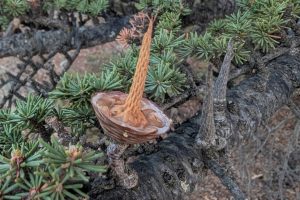
High in the Troodos Mountains of western Cyprus, ancient cedars stand like silent guardians of the island's wild heart. The Cyprus Cedar, an endemic conifer found only here, grows in scattered groves with its distinctive short needles and broad, layered branches. Encountering these majestic trees feels like stepping into a timeless forest where nature has preserved a rare piece of Mediterranean heritage. Description and naming The Cyprus Cedar, Ο κέδρος, known scientifically as Cedrus brevifolia s a large evergreen coniferous tree unique to Cyprus that forms pure or mixed stands in high mountain areas. Although it is sometimes treated as a variety of Cedrus libani, the famous cedars of Lebanon, Cyprus Cedar can be distinguished by its shorter, thicker and bluntish leaves, hence the scientific epithet — brevifolia (short-leaved). This cedar has thrived in Cyprus's mountainous landscapes for millennia, adapted to the island's isolated geography and igneous soils. Confined to a small region of 290 hectares in the western Troodos, it has evolved alongside other endemic species, surviving through ancient climatic shifts and becoming a key part of the local ecosystem long before human settlement. Appearance The Cyprus Cedar grows to 15–30 metres tall (sometimes more in ideal conditions), pyramidal at first and with a broad, umbrella-shaped crown in mature trees. Horizontally spreading branches create layered tiers. Its needles are…

Read more
The Soli Basilica Frescoes

The Soli Basilica Frescoes

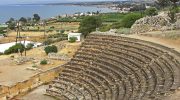
The Soli Episcopal Basilica preserves rare fragments of early Christian wall painting from a period when church imagery in Cyprus was still being invented rather than standardised. Painted above the site’s famous mosaics, the fresco remains show Roman decorative habits being adapted into a new visual language for worship, before later Byzantine rules became fixed. This article explains Soli’s rise as an ecclesiastical centre, what the surviving plaster fragments suggest about the original interior, and why the basilica’s destruction ended up preserving an important artistic transition. Trade, Farmland, Copper, Harbour Ancient Soli, also known as Soloi, occupied a strategic position near fertile farmland, copper-rich foothills, and a natural harbour. This combination sustained the city for centuries, from its legendary foundation in the Archaic period through its Roman peak and into the Christian era. By Late Antiquity, Soli was no longer just a trading hub. It had become an important ecclesiastical centre, serving the surrounding region as Christianity spread across Cyprus. The basilica that rose here in the 4th century was not a modest village church. It was one of the largest early Christian complexes on the island, reflecting both wealth and confidence during a period of profound cultural change. A Basilica Built on Confidence The Soli Episcopal Basilica went through multiple phases, mirroring the development of Christian worship itself. The…

Read more

Nea Paphos Harbor

Nea Paphos Harbor

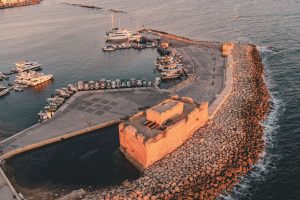
Nea Paphos emerged as one of the most strategically important harbor cities in the ancient Mediterranean. Founded in the late 4th century BC on the southwest coast of Cyprus, this planned city replaced the older settlement of Palaipaphos and quickly became the island's capital. The harbor served dual purposes as both a major naval base and a thriving commercial port, connecting Egypt with the broader Mediterranean world. Today, the archaeological remains spread across 100 hectares near modern Kato Paphos, offering a window into ancient maritime power. Historical Background King Nikokles, the last monarch of Palaipaphos, founded Nea Paphos around 320 BC. After Alexander the Great's death, Cyprus fell under Ptolemaic Egyptian control in 294 BC, where it remained for over 250 years. The site offered exceptional advantages. The city occupied a peninsula between two hills, with a natural bay providing shelter from storms. Strabo reported that the harbor offered protection from winds in all directions. Nearby forests supplied abundant cedar wood for shipbuilding, while the location sat on the critical maritime route between Rhodes and Alexandria. Urban planners designed Nea Paphos according to the Hippodamian grid system, heavily influenced by Alexandria. Regular streets intersected at right angles, creating rectangular blocks called insulae. Defensive walls separated the urban area from the mainland, while public buildings faced the large harbor. The city…

Read more