Cyprus operates a bus-based public transportation network that serves all major cities and most tourist areas across the island. The system consists of urban buses within cities, intercity buses connecting major towns, airport shuttle services, and rural routes linking villages to nearby urban centers.

Since the last passenger railway closed in 1951, buses represent the only form of public mass transit available to Cypriots and visitors. However, despite having 3.2 buses per 1,000 inhabitants, double the EU average of 1.6, Cyprus records some of Europe’s lowest public transport usage. Only 3 percent of journeys in Greater Nicosia use public transportation, while the island maintains one of the world’s highest car ownership rates at 658 automobiles per 1,000 people.
This paradox reveals a fundamental challenge: Cyprus has invested in buses but has not created conditions that make public transport a practical alternative to private cars for most residents.
How the Bus System Works Across Cyprus
Public transportation in Cyprus operates under a concession model, with different private companies managing services in each district under contracts awarded by the Ministry of Transport, Communications and Works. Cyprus Public Transport handles Nicosia and Larnaca, operating as NPT and LPT respectively. The Transport Company for Limassol District runs services in Limassol. Pafos Transport Organisation manages the Paphos district. The Famagusta District Transportation Organization, known as OSEA, operates all routes within the non-occupied Famagusta district, including communities like Xylofagou, Xylotymbou, and Ormideia.
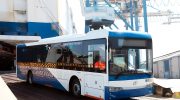
Intercity services connect all major towns on a daily basis with frequent routes. L.L.L.A Intercity Buses Ltd operates these connections, providing links between cities throughout the day. Urban buses run frequently during daytime hours within towns, with some tourist area routes extending service until late evening during summer months. Rural buses connect almost all villages with the nearest town, though these services operate with limited frequency and may run only a few times per day.
The government has modernized ticketing systems across the network. In 2023, Spanish technology company GMV implemented a modern ticketing system on the 750 buses that make up the national fleet. Passengers can now pay using contactless cards, phones, smartwatches, and bank cards. The account-based ticketing system stores passenger accounts in the cloud rather than on physical cards, allowing greater flexibility in generating fares and tickets. This technology reduces operator workload and provides passengers with a common fare system across the country.
The 2022 Nicosia Public Transport Overhaul
In 2022, Cyprus Public Transport implemented comprehensive changes to Nicosia’s public transport system. The overhaul introduced new route numbers, added bus hubs, and modernized the entire fleet. The plan rolled out in two phases and has been completed. These changes aimed to make the system more intuitive for users while improving coverage across the capital region.

Larnaca followed with its own modernization efforts. Toward the end of 2025, the Municipality of Larnaca began implementing its Sustainable Urban Mobility Plan to create a safer, more accessible, and sustainable transport system. Over 16 months until January 2027, the plan will deliver new cycling lanes, redesigned bus corridors, improved pavements, safer junctions, and upgraded traffic systems. The initiative prioritizes public transport, pedestrians, and cyclists while enhancing road safety and urban quality.
Why So Few Cypriots Use Public Transport
The statistics reveal a stark reality about public transport usage in Cyprus. Despite having twice as many buses per capita as the EU average, Cyprus achieves only 3 percent public transport usage in Greater Nicosia compared to significantly higher rates in cities with similar populations elsewhere in Europe. The Fiscal Council’s 2025 report included a damning assessment of the transport ministry’s priorities, noting that spending continues to expand the road network without substantial infrastructure spending or medium-term planning to strengthen public or mass transportation.
Several factors contribute to this low usage. Cyprus lacks alternative forms of public transport such as trams, light rail systems, or metros that exist in most EU countries. The bus network, while extensive on paper, often operates on schedules that do not align well with commuter needs. A two-hour commute with a bus change to cross town makes public transport impractical for many workers compared to a 20-minute car journey. The island’s dispersed settlement patterns and limited urban density also work against effective public transport coverage.

Cyprus’s extraordinary car ownership rate of 1.72 cars per household means almost every family has two vehicles. This abundance of private transport creates a self-reinforcing cycle where low public transport usage leads to reduced service frequency, which in turn pushes more people toward private cars. As a legacy of British rule, Cyprus is one of only three EU nations where vehicles drive on the left, which has no impact on public transport effectiveness but does complicate vehicle imports and maintenance.
Airport Connections and Tourist Services
Airport transfer buses link all major towns to Larnaca International Airport and Paphos International Airport. Kapnos & Sons Transport Ltd operates routes between both airports and Nicosia, Larnaca, and Ammochostos. The Transport Company for Limassol District runs connections between Limassol and both airports. These services provide essential links for both residents and the millions of tourists who visit Cyprus annually.
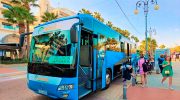
The tourism industry places unique demands on Cyprus’s public transport system. Buses serving popular tourist areas like Ayia Napa, Protaras, Paphos harbor, and coastal zones extend their operating hours during summer months. However, many tourists ultimately rely on rental cars, taxis, or organized tour buses rather than public transport. This pattern reflects the broader challenge facing Cyprus’s bus network: it functions adequately for point-to-point journeys on main routes but struggles to serve the diverse travel patterns of modern life.
The Missing Railway Connection
Cyprus has no functioning railway system. The last narrow gauge passenger railway was dismantled in 1952, and the island has relied entirely on road transport since then. There have been studies and preparatory work to establish a modern rail system between major cities, motivated by worsening traffic congestion.

In 2018, Nicosia municipal authorities requested an opinion from the European Investment Bank’s JASPERS strategists on constructing a tram network. The experts concluded that a phased approach would be needed, but no concrete plans have materialized. In October 2024, a company in England expressed interest in constructing a new railway system in Cyprus, though no specific proposals or timelines were announced.
Why Cyprus Needs Better Public Transport
Cyprus faces mounting pressure to reduce car dependency and develop effective public transport alternatives. The European Investment Bank provided 100 million euros in July 2025 for road infrastructure improvements, but critics argue these investments perpetuate car-centric development rather than solving underlying mobility problems. The island’s high car ownership creates severe traffic congestion in urban areas, particularly in Nicosia and Limassol during peak hours. Air quality suffers from vehicle emissions, while parking scarcity plagues city centers.

Effective public transport could address these challenges while reducing household transportation costs and carbon emissions. However, achieving meaningful change requires more than just buses and ticketing systems. Cyprus needs integrated land use planning that creates higher-density developments around transport corridors, dedicated bus lanes that provide speed advantages over private cars, and service frequencies that make spontaneous travel practical without consulting timetables. Without these systemic changes, Cyprus will continue to have buses that few people ride despite substantial public investment in the system.