The Cyprus Tulip (Tulipa cypria)

5 minutes read See on map

Among the many wildflowers that brighten Cyprus in spring, few capture the imagination quite like the Cyprus Tulip. This rare beauty, found nowhere else in the world, emerges each year with its deep, velvety petals – often appearing almost black against the sunny landscape. Spotting one in the wild feels like uncovering a small treasure hidden on the island.
www.inaturalist.org

How does it look like and where it grows

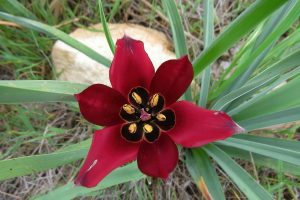
The Cyprus Tulip, or Tulipa cypria, is a perennial bulbous plant that belongs to the lily family. There are three species of tulips on the island – Tulipa cypria, Tulipa akamasica and the parent specie of which both endemics originated – Tulipa agenensis.

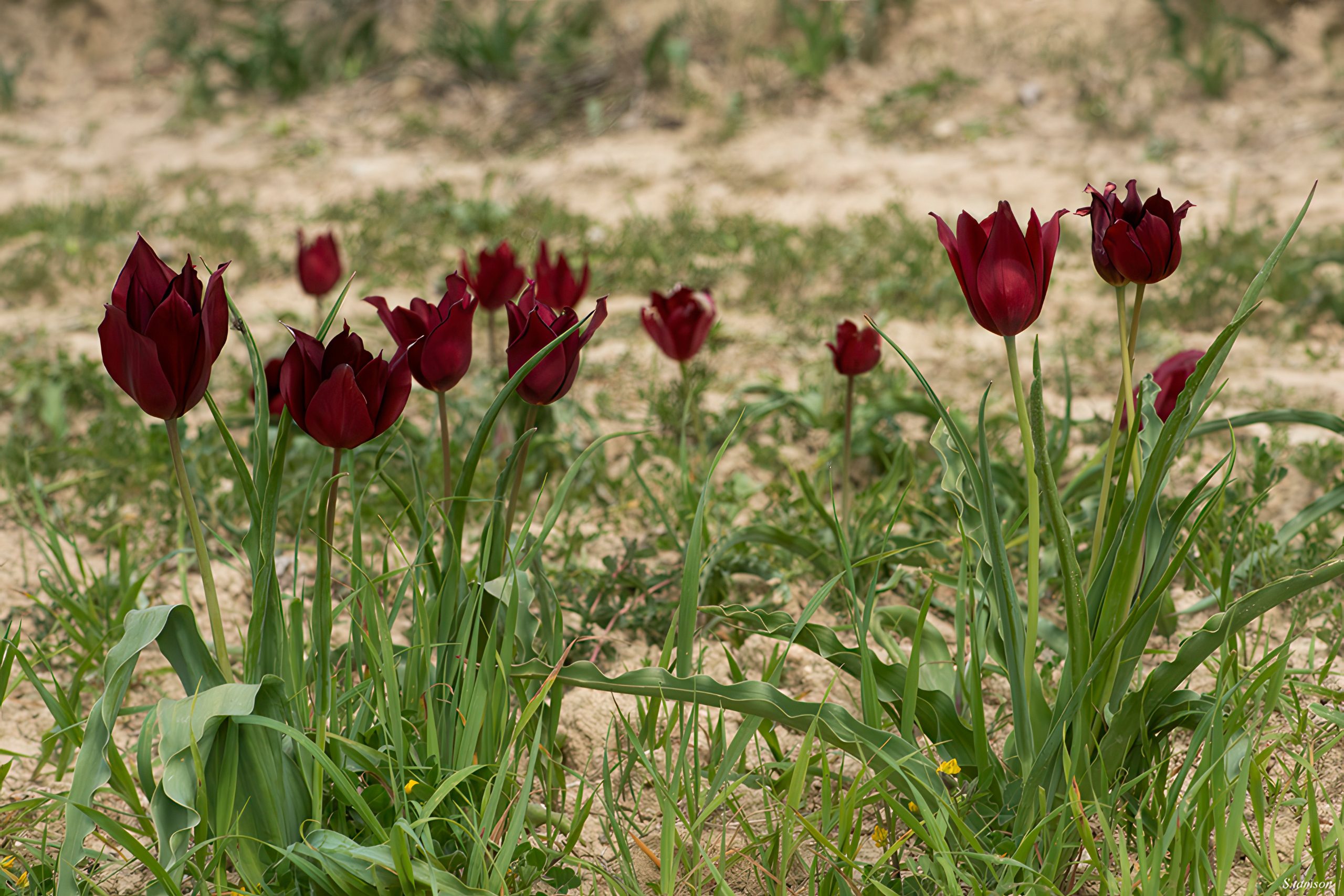
Tulipa cypria has been part of Cyprus’s flora for around 5 million of years, shaped by the island’s isolated geography into a separate specie during last Glacial cycles. It grows in Juniperus phoenicea maquis, pastures and cereal fields on limestone.

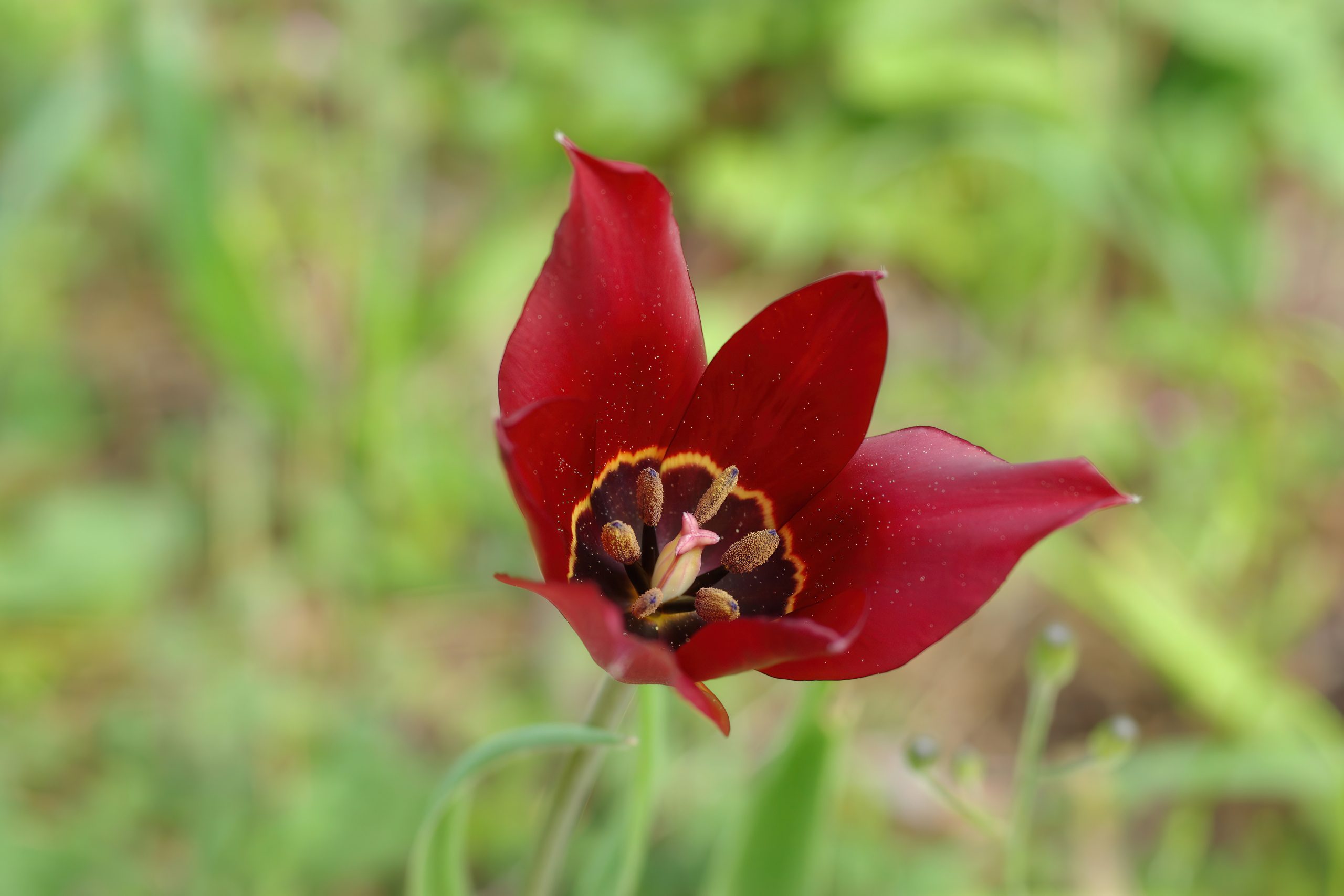
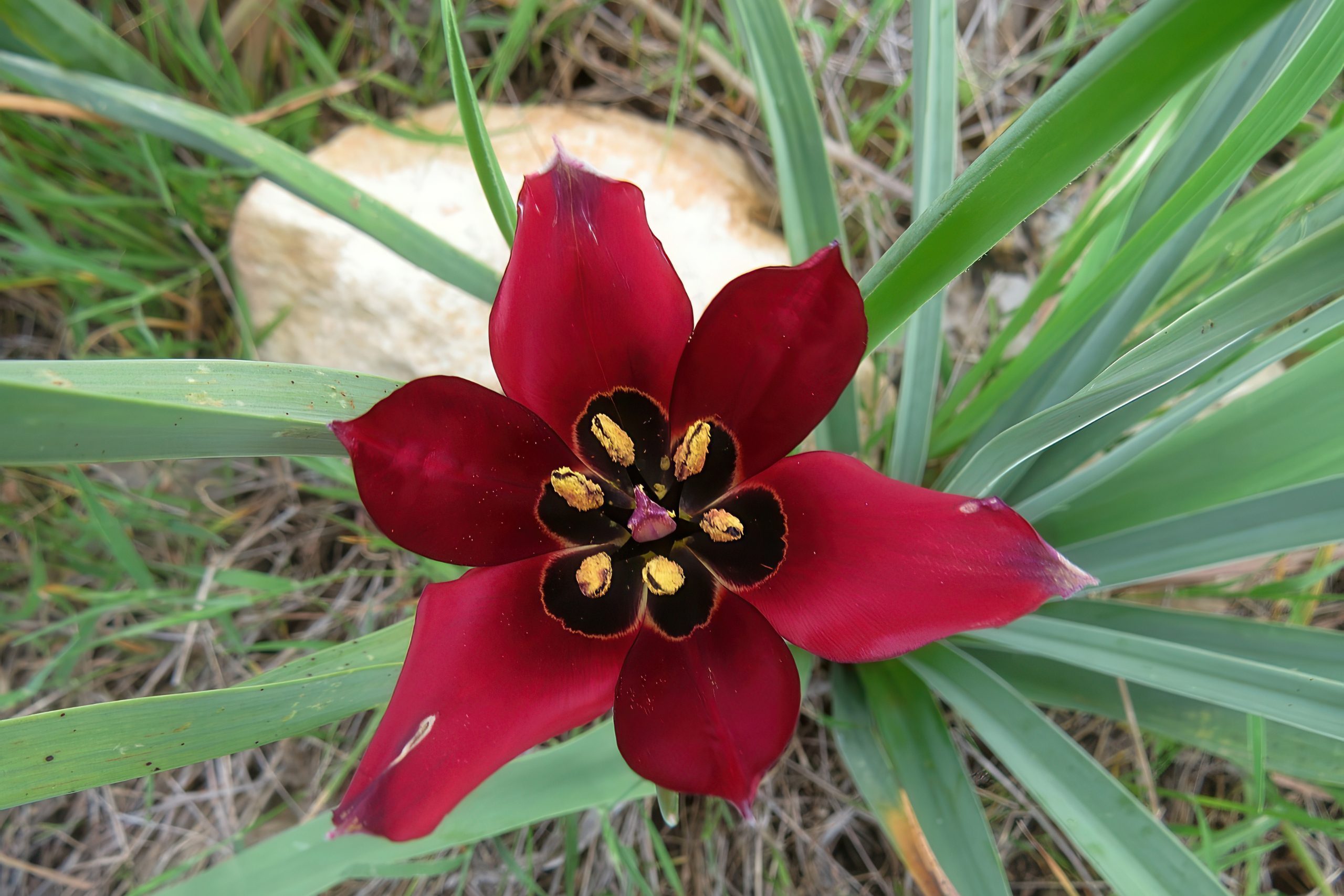
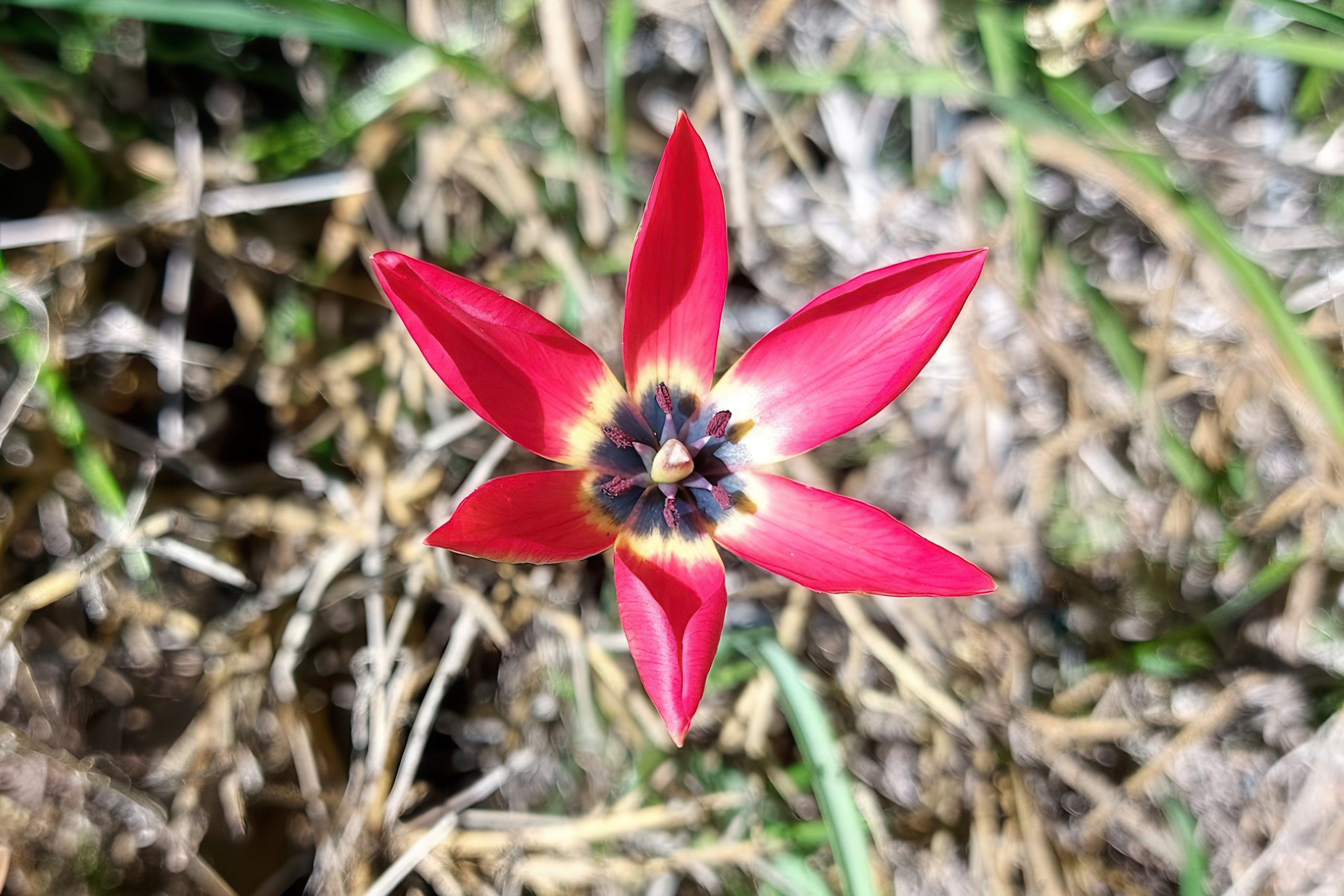
The plant grows 15–40 cm tall, usually with four smooth, fleshy slightly bluish-green leaves, two at the base which are larger and lanceolate, and the two upper leaves which are much smaller and almost linear. Petals are deep blood-red colour with distinctive internal black blotch bordered by a yellow zone, earning the plant its nickname as the “black tulip” of Cyprus – a rare trait that makes it stand out among its relatives.

Quick facts about Cyprus tulip

• The “black” colour isn’t actually a black pigment (which is rare in plants). It is a dense concentration of anthocyanins—the pigments that make flowers purple or blue.
• Black blotch serves two purposes — it’s a “nectar guide” for the pollinators and the solar heater for the delicate inner parts of the flower.
• Local festivals celebrate its arrival, turning quiet villages into colourful gathering spots for flower lovers.
www.inaturalist.org

Is it rare or endangered?

Tulipa cypria is classified as Endangered on the IUCN Red List due to habitat loss from development and agriculture. The species is protected by both Cypriot and international laws, and conservation efforts continue to monitor and safeguard its remaining populations.

Tulips in Cypriot cultural heritage

For generations, the endemic Tulipa cypria has served as a significant source of inspiration for the island’s craftspeople. Its form has been integrated into the foundation of Cypriot iconography, appearing frequently in traditional embroidery, ceramics, and various folk motifs that define the island’s cultural heritage.

The Story and Name of the Tulip

The word “tulip” comes from the Ottoman Turkish word for turban, tülbent. There are two main versions about how this happened. The first is simply because of how the flower looks: a blooming tulip has rounded petals that resemble the folds of a traditional turban.
www.inaturalist.org

The second is about a misunderstanding when early European travellers pointed to a tulip tucked into someone’s headwear and asked for its name, the person thought they were asking about the headwear itself and replied, “tülbent.” The travellers brought this name back to Europe, where it eventually became “tulip.”

In the Ottoman Empire, tulips were often used as a turban decoration because they were symbols of pure love. This meaning comes from the tragic legend of a young man named Farhad and a princess named Shirin. When Farhad was falsely told that his beloved Shirin had died, he was so heartbroken that he took his own life. According to the legend, red tulips began to grow wherever his blood hit the ground.

In Turkish language tulip is called -Lale. The word Lale is of Persian origin, as the flower itself, and means “God’s flower”.

While the flower physically existed in Cyprus for millennia, its cultural “fame” was born with the Ottomans. Prior to 1571, the tulip lived “quietly” in the landscape and appeared in art simply as a generic symbol of spring or fertility rather than the specific national icon it is today. Today it appears on stamps, in local artwork, and in environmental campaigns that highlight the need to protect Cyprus’s endemic species.

Where and when to observe?

The best time to see the Cyprus Tulip is during its short blooming season in March and April. Prime locations include the Akamas Peninsula in the west, the Kyrenia (Pentadactylos) mountain range, and areas around villages such as Tepebaşı (Diorios) and Avtepe in the north, where local tulip festivals often take place. Walking quietly through these habitats at dawn or late afternoon offers the most rewarding views – fields dotted with dark blooms against the green landscape. Remember that the flowers are protected: admire them from the path and never pick or disturb the bulbs.
www.inaturalist.org

The blooming of Tulipa cypria offers a worthy reason to explore the island’s natural landscape. Deeper understanding of its history and unique biological adaptations will foster greater respect for this endemic species, ultimately contributing to its long-term conservation in the wild.
Discover more about the fascinating edges of Cyprus

Endangered Plants of Cyprus

Endangered Plants of Cyprus

Cyprus hosts approximately 2,000 plant species, with 146 being endemic to the island. This means they exist nowhere else on Earth. The flora of Cyprus developed over millions of years through a combination of geographic isolation, diverse geology, and varying climate zones. Today, around 258 plant taxa are classified as threatened according to international conservation standards. These include species listed as Critically Endangered, Endangered, or Vulnerable by the International Union for Conservation of Nature. Historical Background The island's plant diversity reflects its position at the crossroads of three continents. Cyprus sits in the eastern Mediterranean where Europe, Asia, and Africa meet. This location allowed species from different regions to colonize the island over time. The Troodos Mountains, formed from ancient oceanic crust pushed above sea level, created unique habitats on igneous and serpentine rocks. These challenging soils fostered the evolution of specialized plants found only in Cyprus. Human activity has shaped the landscape since 8200 BC. Traditional agriculture created semi-natural habitats where wild plants thrived alongside cultivated crops. However, modern development pressures have accelerated habitat loss, particularly in coastal areas where tourism infrastructure expands rapidly. Notable Endangered Species The Cyprus Cedar (Cedrus brevifolia) grows exclusively in five small locations within the Troodos Mountains at elevations of 1,200 to 1,900 meters. This tree is classified as Vulnerable, with only about 16,000…

Read more
Rare Plants and Animals of Cyprus High-Elevation Zones

Rare Plants and Animals of Cyprus High-Elevation Zones

Cyprus hosts an extraordinary concentration of endemic species in its high-elevation zones, particularly within the Troodos Mountains. At altitudes between 1,000 and 1,952 meters, unique geological conditions combine with Mediterranean climate variations to create habitats found nowhere else on Earth. The island supports 143 endemic plant species, with 47 of these confined exclusively to the Troodos range above 1,000 meters. These mountains function as a natural laboratory where volcanic soils, steep valleys, and climate extremes have shaped remarkable biodiversity over millions of years. The Troodos Mountain Environment Mount Olympus, also called Khionistra, rises to 1,952 meters and represents the highest point in Cyprus. The Troodos range occupies roughly half the island's total area, its core composed of igneous rocks formed from elevated ocean shell and lithospheric mantle. This volcanic substrate creates serpentine soils with mineral compositions drastically different from the island's lowlands. Deep valleys carved by streams such as Pedios, Yelias, Serakhias, Ezousa, Diarizos, and Xeropotamos provide north and northwest-facing slopes where humidity accumulates and temperatures moderate. Between the thermophilous lower slopes and the semi-alpine summit zone, elevation creates distinct vegetation bands. Black pine forests dominate from 1,300 to 1,950 meters, replacing Calabrian pine at the transition point. The highest slopes support foetid juniper in what approaches an alpine environment. Annual precipitation ranges from 300 millimeters on the central plains…

Read more
Whispers from the Wild Stalks

Whispers from the Wild Stalks

Imagine wandering through the sun-drenched fields of Cyprus, where a plant towers like a sentinel from ancient myths, its yellow blooms catching the breeze. This article invites you on a gentle journey to discover the giant fennel, a resilient Cypriot native that bridges legends of fire-thieves and hidden fungal treasures, leaving you pondering the quiet wonders hidden in everyday landscapes. A Gentle Giant's Greeting The giant fennel, known scientifically as Ferula communis, is a member of the vast carrot family, Apiaceae, which includes familiar herbs like parsley and dill. It's a perennial plant that dies back each summer only to burst forth anew, standing tall in open meadows and reminding us of nature's enduring cycles in the Mediterranean world. Echoes from Mythical Times In the mists of ancient history, giant fennel played starring roles in Greek legends that echoed across the sea to Cyprus. Prometheus, the daring Titan, famously hid stolen fire from the gods inside its hollow stem to gift humanity warmth and light. Followers of Dionysus, the god of wine and revelry, wielded staffs made from its stalks wrapped in ivy and topped with pine cones as symbols of joy and fertility during ecstatic festivals. On Cyprus itself, historical accounts from 19th-century explorers describe locals crafting stools and decorative items from its sturdy wood, a practice rooted in…

Read more